Unfortunately, there are all too many bullies in the workplace — and, all too often, their abusive behavior has led to violent, even fatal, employee rampages that have made the headlines. It makes sense for business owners and managers to deal with on-the-job bullying before it escalates into a potentially deadly situation.
Recognizing a bully in the workplace can be difficult. These people often have “Jekyll and Hyde” personalities: They can be extremely charming, polite, and respectful in public. However, as a rule, bullies: 1) don’t believe in following the rules of society; 2) crave negative attention; 3) try to put others down by manipulating and degrading them in front of their peers; 4) seek power; and 5) spread untrue rumors in the workplace, disrespect their victims, and refuse to listen to them.
Because there are no federal or state laws against workplace bullying, it might be hard to fire a bully right away. However, there are ways to deal with this problem.
Institute a zero-tolerance policy toward bullying. Your employee handbook and codes of conduct should set a clear definition of the consequences and punishment for bullying, with a specific list of actions for dealing with it.
Enforce the policy. When it’s time to discipline a bully, sit down with the accused person, their supervisor, and someone from your human resources department. If the bully offers to apologize and promises never to repeat the behavior, you might settle the matter by writing a letter of reprimand to be kept in their personnel file. You might also put the employee on probation, with close supervision by their supervisor, and let them know that any further bullying will result in termination.
If you’d like advice on creating and implementing an anti-bullying policy for your workplace, just give us a call.
A lot of companies say “Safety is our Number One priority.” However, when the chips are down and production needs to increase, safety might suddenly become Number Two.
In an effective workplace health and safety program, the employer places a high priority on a safe workplace, employees participate willingly in keeping themselves safe on the job — and the company’s Workers Comp premiums stay low!
To develop and maintain safety as a “core value” among your employees, we’d recommend following these guidelines:
Encourage employees to think about safety 24/7.
Talk about safety all the time.
Make sure employees work safely. This job falls largely to your supervisors, who need to have good safety attitudes. You and your staff should keep checking up, monitoring performance, and being visible.
Encourage employee participation, suggestions, questions, and even complaints about unsafe conditions.
Set an example. If workers see you and your safety staff wearing PPE, following rules, eliminating hazards, and investigating incidents, they’ll follow your lead in taking safety seriously.
Provide positive feedback for safe performance and attitudes. People love recognition and praise for doing the right thing.
Correct reported safety hazards immediately. Nothing shows that you have a good safety attitude more than demonstrating that you care and are looking out for your workers.
Industry experts expect a 13% average hike in Workers Compensation premiums in 2013, driven by a variety of reasons, from widespread fraud to the growth of lawsuits for work-related injuries.
One factor in these increases: Higher medical expenses for treatment of obese workers for the “co-morbid” ailments (such as diabetes and heart attacks) that stem from their expanding waistlines. A 2007 Duke University Medical School study found that overweight workers file more Comp claims, have higher medical costs, and miss more workdays due to job-related injuries than do their non-obese counterparts.
A recent nationwide study of insurers doing business in 40 states confirms this conclusion. The survey by NCCI Holdings, Inc. found that the length of Workers Comp indemnity benefits paid to the most severely obese workers is more than five times greaterthan that of non-obese workers who file comparable claims. When the study included the duration of permanent partial disability, the multiple climbed to more than six to one.
This relationship between worker obesity and Workers Comp costs reinforces the need for employers to offer their workers weight management programs. In addition to keeping these costs under control, these plans will help to reduce absenteeism and increase workplace productivity — not to mention help employees get, and remain, healthy. What’s not to like?
Our agency’s Workers Comp professionals stand ready to help you develop and implement a weight reduction program for your employees. Feel free to get in touch with us at any time.
When it comes to workplace safety, have you considered the company parking lot or garage? Your workers use it at least twice a day to stow and shelter their vehicles, but beyond that it’s fairly invisible. A closer look reveals that predators might easily be lurking there. To minimize this threat, experts recommend ensuring that workers (as well as visitors) take these precautions:
Stay alert for cruising vehicles, whose drivers can stop suddenly and jump out to rob or assault you.
If you’re using a parking lot, park near the building in a visible, lighted area.
In a parking garage, park near the parking attendant (if there is one) or near a well-lit exit. Women should avoid using stairs and elevators, if possible.
Use the main exit/entrance rather than a side or secluded one.
Lock any valuables (including GPS, shopping, other bags, etc.) out of sight. If you’re walking to your vehicle after hours, ask a co-worker or security officer to accompany you.
If you have to walk alone, ask someone to watch from inside, if possible. Turn around frequently to make sure you’re not being followed and pretend that you’re waving to someone ahead to give the impression you’re not alone.
Don’t talk on your cellphone or listen to music with ear pods — predators are looking for victims who seem distracted or unaware.
Have your car keys and personal alarm or whistle ready as you approach your vehicle.
If someone nearby looks suspicious, keep walking and get to a safe place where you can call for help.
Before you unlock the door, take a good look around, inside, and behind the vehicle.
Once you enter the vehicle, lock all doors promptly and keep your windows up until you’ve exited the lot or garage.
Pop quiz time. What’s more secure; financial records locked in a filing cabinet or financial records stored in the cloud?
If you don’t understand how cloud security works, you probably said the filing cabinet. It’s time for a little mythbusting about how secure your paperless office could be.
Last week, Cindy Bates posted on the Microsoft SMB Blog about the benefits of a completely paperless office. Like Delta Airlines, who recently switched to the paperless cockpit, it’s possible for any office or organization to ditch the dead trees and move entirely into the digital space.
One of the first questions decision makers ask when considering the paperless office is “how
secure is this?” It’s a fair question, so let’s consider Delta’s paperless cockpit example and overall data security.
The problem with paper is that, well, it’s paper. Paper gets lost, it burns, it can be misfiled and disappear. It’s only as secure as its physical location. If that location is a locked filing cabinet (or a vault under Fort Knox), if someone really wanted to get to it, they could.
A file in the cloud cannot burn, be stolen, accidentally left behind in a restroom, or any other number of things that could affect a hard copy of important information. For a recent example, take a look at the Internet Archive, whose scanning facility in San Francisco recently caught fire. Although no data was stored in their San Francisco office, if it had been, cloud redundancies would have prevented any loss.
But what about a data center, such as what powers Windows Azure or Office 365? Let’s start with physical security: data centers are monitored 24 hours a day, 365 days a year. A team of ninjas could, in theory, break in, but they’d still have to know which of the thousand machines contained your exact data—so unless you’ve upset the cast of Ocean’s 11, it’s significantly less likely than an office fire that could destroy physical data.
In addition, with Office 365, data transmitted across networks is encrypted—so if some agency (or other villain) happens to tap the wires, they still won’t be able to read your files.
While a move to a paperless office does not entirely guarantee data security—there are still those ninjas to think about—it is significantly more secure than leaving your information in paper form, where it could be destroyed or stolen with greater ease.
“Cybersecurity is definitely no longer a server room issue,” says David Finn, Executive Director at the Microsoft Cybercrime Center. “It’s a boardroom issue.” He notes that on average, it takes 243 days before an organization even knows that it was penetrated by a cybercriminal.
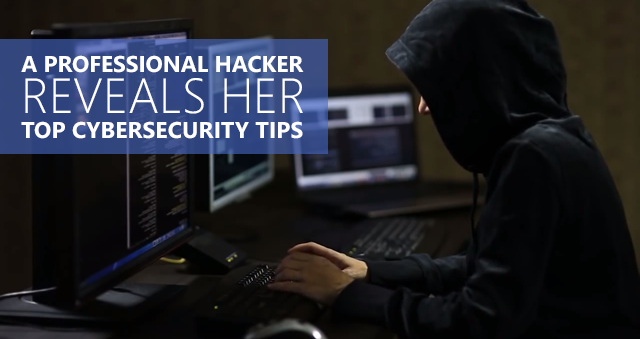
Today, when one in five businesses are the target of a security breach, bad things are inevitably going to happen. That’s why looking at your organization from “the bad guy’s perspective,” says Tiffany Rad, is crucial. Rad is rated one of Bloomberg’s top “white hat” hackers (computer specialists who break into protected networks to test security and advise organizations on improvements).
One of the most difficult things in Rad’s industry is protecting against insider threats. But she notes there are products entering the market that have “an algorithm to check for abnormal patterns, when it looks like someone’s going to sites perhaps that they shouldn’t be during working hours or they’re on different hours than normal.”
In terms of external threats, there’s a lot of attention on protecting businesses as they move to the cloud. Ken Biery Jr., Verizon’s Managing Principal of Governance, Risk and Compliance, explains that it’s important to provide physical and logical security. Rad agrees, noting that in addition to firewalls and antivirus software, protection against malware is critical as more and more hackers look to steal intellectual property to give themselves or your organization’s competitors a heads-up on what your organization is planning.
You’re “only as safe and secure as your weakest link,” says Finn, admitting that when you rely on the cloud, “you trust that an organization is going to invest enormously in your security.”
But, as Biery sees it, “the good thing about a lot of the cloud providers that are out there is their default security, and the security they built into their environments are often better—especially for small and medium businesses—better than what they could do themselves.”
Biery also points out that companies need to stay in control with the advent of BYOD (Bring Your Own Device). With mobile device management, “you can take and keep your sensitive information in an encrypted container on that employee’s phone. So it kind of exists as its own virtual machine in that environment,” he says, explaining that you can delete access and the encrypted container without affecting personal data such as photos.
The bottom line, agree the experts, is that companies of all sizes need to amp up protection. Even if you think your business information isn’t of interest to others, Rad assures us that there will always be hackers that find your digital footprint interesting and will do something with it—if only because they can.
Let us know how you keep your own business safe on Facebook and Twitter.

 Unfortunately, there are all too many bullies in the workplace — and, all too often, their abusive behavior has led to violent, even fatal, employee rampages that have made the headlines. It makes sense for business owners and managers to deal with on-the-job bullying before it escalates into a potentially deadly situation.


 Pop quiz time. What’s more secure; financial records locked in a filing cabinet or financial records stored in the cloud?
 Today, when one in five businesses are the target of a security breach, bad things are inevitably going to happen. That’s why looking at your organization from “the bad guy’s perspective,” says Tiffany Rad, is crucial. Rad is rated one of Bloomberg’s top “white hat” hackers (computer specialists who break into protected networks to test security and advise organizations on improvements).
 One of the most difficult things in Rad’s industry is protecting against insider threats. But she notes there are products entering the market that have “an algorithm to check for abnormal patterns, when it looks like someone’s going to sites perhaps that they shouldn’t be during working hours or they’re on different hours than normal.”
 You’re “only as safe and secure as your weakest link,” says Finn, admitting that when you rely on the cloud, “you trust that an organization is going to invest enormously in your security.”