
OSHA’s cranes and derricks operator certification standard becomes effective on Nov. 10, 2017.
Employers that use cranes and derricks in construction must comply with this standard. Employers should also become familiar with this standard if their employees work in areas or sites where cranes and derricks are in use. Finally, crane lessors that provide operators or maintenance personnel with the equipment they lease also have duties under the standard.
This Compliance Overview presents some frequently asked questions and answers compiled by OSHA regarding operator and signal person qualifications and operator certification.
LINKS AND RESOURCES
- OSHA’s cranes and derricks in construction website
- OSHA’s cranes and derricks FAQs
- OSHA’s small entity Compliance Guide for cranes and derricks in construction standard
OPERATOR QUALIFICATION & CERTIFICATION
IMPORTANT: On Sept. 26, 2014, OSHA published a final rule that extends the deadline for crane operator certification in the cranes standard at
29 CFR 1926.1427 for three years, to
Nov. 10, 2017 (published in the
Federal Register). The final rule also extends the employer’s duty to ensure that operators are competent to operate the crane safely for the same three-year period. During this extension, OSHA will address operator qualification through additional rule-making. OSHA will provide updated information about the crane operator certification and qualification requirements as it becomes available on OSHA’s
cranes and derricks in construction page.
What must employers do before the operator certification requirements go into effect to ensure the competency of their operators?
Employers must ensure that equipment operators are competent through training and experience to operate the equipment safely (see 29 CFR 1926.1427(k)(2)). If an employee assigned to operate a crane does not have the required knowledge or ability to operate the equipment safely, the employer must train that employee before allowing him or her to operate the equipment and must evaluate the operator to confirm that he or she understands the information provided in the training (see 29 CFR 1926.1427(f) training requirements).
Does OSHA require operators to be certified under existing state, county or city licensing programs?
The answer depends on whether the licensing criteria meets the minimum requirements (“federal floor”) in 29 CFR 1926.1427(e)(2) and (j). If a state or local jurisdiction has a licensing program that meets the federal floor, OSHA requires the employer to ensure that all operators operating within that jurisdiction are licensed by that state or local jurisdiction, unless they are qualified by the U.S. military (see §1926.1427(a)(1)).
This requirement went into effect in November 2010. Note, however, that the crane standard’s operator certification requirements do not supersede state or local licensing laws. If the licensing program does not meet the federal floor, OSHA does not require operators to be licensed in accordance with that program, although the operator may still be subject to action by the state or local authority for failure to comply with its requirements.
Who will determine if a state or local operator certification process meets the federal floor requirements in 29 CFR 1926.1427?
Initially, states or local governments are responsible for determining if a state or local operator certification program meets the requirements of 29 CFR 1926.1427(e)(2)(i-ii) (see §1926.1427(e)(2)(iii)).
OSHA does not require compliance with a state or local licensing requirement unless the state or local authority that oversees the licensing department or office assesses that program and determines that it meets the minimum requirements in §1926.1427(e)(2)(i) and (ii), including satisfying the substantive testing criteria of §1926.1427(j) through written and practical tests and providing testing procedures for relicensing.
OSHA does not intend to require compliance with a state or local licensing requirement absent a public statement by the authority with oversight responsibility for the licensing office that the licensing program meets OSHA’s minimum requirements and the reason for that determination. However, OSHA has the final authority in determining that the program meets minimum OSHA requirements.
Is the option for qualification by the U.S. military available to employees of private contractors working under contract to the Department of Defense?
No. This option is only available to civilian and uniformed employees of the Department of Defense. When the operator certification requirements are in effect, private contractors must use one of the other options for operator certification/qualification available under 29 CFR 1926.1427.
Does OSHA endorse or approve testing bodies for operator certification or other purposes under the cranes standard?
No. OSHA does not evaluate or approve crane operator training courses or crane operator certification testing bodies. Under the cranes standard, operator certification testing bodies must be accredited by a nationally recognized accrediting agency (29 CFR 1926.1427(b)(1)(i)). Currently the American National Standards Institute (ANSI) and the National Commission for Certifying Agencies (NCCA) are the two organizations that OSHA has identified as nationally recognized accrediting agencies.
SIGNAL PERSON QUALIFICATIONS
What qualifications must a signal person possess?
A signal person must:
- Know and understand the type of signals used;
- Be competent in the application of the type of signals used;
- Have a basic understanding of equipment operation and limitations, including the crane dynamics involved in swinging and stopping loads and boom deflection from hoisting loads; and
- Know and understand the relevant requirements of the provisions of the standard relating to signals.
How does an employer know whether a signal person is qualified?
Under 29 CFR 1926.1428, employers must determine that a signal person is qualified through the assessment of a qualified evaluator, who must meet one of the following definitions in §1926.1401:
- Third-party qualified evaluator (“an entity that, due to its independence and expertise, has demonstrated that it is competent in accurately assessing whether individuals meet the qualification requirements in this subpart for a signal person”). The signal person must have documentation from a third-party qualified evaluator showing that he or she meets the qualification requirements.
- Employer’s qualified evaluator (not a third party) (“a person employed by the signal person’s employer who has demonstrated that he or she is competent in accurately assessing whether individuals meet the qualification requirements in this subpart for a signal person”). The employer’s qualified evaluator assesses the individual, determines that the individual meets the qualification requirements and provides documentation of that determination. This assessment may not be relied on by other employers.
(See 1/9/12 Interpretation Letter to William Irwin, Jr. and 6/28/11 Interpretation Letter to Walter Wise.)
Must the required training and qualification of a signal person be performed by an accredited organization?
No, but employers must have documentation of the signal person’s qualifications available at the worksite, either in paper form or electronically. For example, the documentation may be accessed from a laptop or tablet, via email or be transmitted from an off-site location by facsimile. While a physical card may serve as proof of a signal person’s qualifications, it is not the only means allowed by the cranes standard.
The documentation must specify each type of signaling (e.g., hand signals, radio signals, etc.) for which the signal person is qualified under the requirements of the standard. The purpose of this documentation is to ensure the on-site availability of a means for crane operators and others to determine quickly whether a signal person is qualified to perform a particular signal for the hoisting job safely.
(See 1/9/12 Interpretation Letter to William Irwin, Jr. and 6/28/11 Interpretation Letter to Walter Wise.)
Do Union and Trade Association Apprenticeship Certification Programs qualify as third party qualified evaluators for purposes of evaluating signal person qualifications in accordance with 29 CFR 1926.1428(a)(1)?
OSHA’s cranes standard requires each employer of a signal person to use a qualified evaluator (a third party or an employee) to verify that the signal person possesses a minimum set of knowledge and skills (29 CFR 1926.1428(a)). In general, OSHA does not evaluate or endorse specific products or programs, and, therefore, makes no determination as to whether a certification program meets the definition of a “qualified evaluator (third party).”
It should be noted, however, that in the preamble to the cranes standard, OSHA stated that “labor-management joint apprenticeship training programs that train and assess signal persons would typically meet the definition for a third-party qualified evaluator…”
(See the preamble to the cranes standard in the Federal Register at 75 FR 48029.)
With regard to training, the employer is ultimately responsible for assuring that its employees are adequately trained regardless of whether the employees’ qualification is assessed by the employer or a third party.
(See 1/9/12 Interpretation Letter to William Irwin, Jr. and 6/28/11 Interpretation Letter to Walter Wise.)
Does a certified operator automatically satisfy the criteria for being a qualified signal person under 29 CFR 1926.1428?
No. To qualify as a signal person, the operator would need to be evaluated by a qualified evaluator, satisfy the specified testing requirements for signal persons under 29 CFR 1926.1428 and documentation must identify the types of signaling (e.g., hand, radio, etc.) for which the operator has been evaluated.
In some cases, the operator’s certification process may also satisfy the signal person qualification requirements, depending on the qualifications of the certifying organization, the content of the certification exam and the documentation provided by the certifying organization. In general, the qualifications of a signal person and an equipment operator are not considered one in the same.
I received a license or certificate from an accredited organization as a trainer in signaling. Does this qualify me to be an evaluator of the qualifications of signal persons?
Not necessarily. While being an accredited trainer may indicate that the trainer possesses the skills for effectively communicating subject matter to trainees, a qualified evaluator must also have demonstrated that he or she is competent in accurately assessing whether individuals have the qualifications required by the cranes standard. For further information regarding signal person qualifications, refer to related fact sheets.
Read more

Safety programs not only have a positive impact on your bottom line, they improve productivity and increase employee morale. But how can you measure this?
According to the Occupational Safety and Health Administration (OSHA), workplaces that establish safety and health management systems can reduce their injury and illness costs by 20 to 40 percent. Safe environments also improve employee morale, which positively impacts productivity and service. When it comes to the costs associated with safety, consider the following statistics from OSHA:
- U.S. employers pay almost $1 billion per week for direct workers’ compensation costs alone, which comes straight out of company profits.
- Injuries and illnesses increase workers’ compensation and retraining costs.
- Lost productivity from injuries and illnesses costs companies roughly $63 billion each year.
In today’s business environment, these safety-related costs can be the difference between reporting a profit or a loss. Use these tips to understand how safety programs will directly affect your company’s bottom line.
The Cost of Safety – How Can You Measure This?
Demonstrating the value of safety to management is often a challenge because the return on investment (ROI) can be cumbersome to measure. Your goal in measuring safety is to balance your investment vs. the return expected.
Where do you begin?
There are many different approaches to measuring the cost of safety, and the way you do so depends on your goal. Defining your goal helps you to determine what costs to track and how complex your tracking will be.
For example, you may want to capture certain data simply to determine what costs to build into the price of a product, or you may want to track your company’s total cost of safety to show increased profitability, which would include more specific data collection like safety wages and benefits, operational costs and insurance costs.
Since measuring can be time consuming, general cost formulas are available. A Stanford study conducted by Levitt and Samuelson places safety costs at 2.5 percent of overall costs, and a study published by the Economist Intelligence Unit (EIU) estimates general safety costs at about 8 percent of payroll.
If it is important for your organization to measure safety as it relates to profitability, more accurate tracking should be done.
For measuring data, safety costs can be divided into two categories:
Direct (hard) costs, which include:
- Safety wages
- Operational costs
- Insurance premiums and/or attorney’s fees
- Accidents and incidents
- Fines and/or penalties
Indirect (soft) costs, which go beyond those recorded on paper, such as:
- Accident investigation
- Repairing damaged property
- Administrative expenses
- Worker stress in the aftermath of an accident resulting in lost productivity, low employee morale and increased absenteeism
- Training and compensating replacement workers
- Poor reputation, which translates to difficulty attracting skilled workers and lost business share
When calculating soft costs, minor accidents costs are about four times greater than direct costs, and serious accidents are about 10 to 15 times greater, especially if the accident generates OSHA fines or litigation costs. According to IRMI, just the act of measuring costs will drive improvement.
In theory, those providing the data become more aware of the costs and begin managing them. This supports the common business belief that what gets measured gets managed. And, as costs go down, what gets rewarded gets repeated.
The Value of Safety
OSHA studies indicate that for every $1 invested in effective safety programs, you can save $4 to $6 as illnesses, injuries and fatalities decline. With a good safety program in place, your costs will naturally decrease. It is important to determine what costs to measure to establish benchmarks, which can then be used to demonstrate the value of safety over time.
Also, keep in mind that your total cost of safety is just one part of managing your total cost of risk. When safety is managed and monitored, it can also help drive down your total cost of risk. For example, a fall protection program implementation reduced one agribusiness’ accident costs by 96 percent – from $4.25 to $0.18 per person/hour.
Considering the statistics, safety experts believe that there is direct correlation between safety and a company’s profit. We are committed to helping you establish a strong safety, health and environmental program that protects both your workers and your bottom line. Contact us today at 831-661-5697 to learn more about our value-added services.
Read more

The Internal Revenue Service (IRS) Office of Chief Counsel has recently issued several information letters regarding the Affordable Care Act’s (ACA) individual and employer mandate penalties. These letters clarify that:
- Employer shared responsibility penalties continue to apply for applicable large employers (ALEs) that fail to offer acceptable health coverage to their full-time employees (and dependents); and
- Individual mandate penalties continue to apply for individuals that do not obtain acceptable health coverage (if they do not qualify for an exemption).
These letters were issued in response to confusion over President Donald Trump’s executive order directing federal agencies to provide relief from the burdens of the ACA.
ACTION STEPS
These information letters clarify that the ACA’s individual and employer mandate penalties still apply. Individuals and ALEs must continue to comply with these ACA requirements, including paying any penalties that may be owed.
Background
The ACA’s employer shared responsibility rules require ALEs to offer affordable, minimum value health coverage to their full-time employees or pay a penalty. These rules, also known as the “employer mandate” or “pay or play” rules, only apply to ALEs, which are employers with, on average, at least 50 full-time employees, including full-time equivalent employees (FTEs), during the preceding calendar year. An ALE may be subject to a penalty only if one or more full-time employees obtain an Exchange subsidy (either because the ALE does not offer health coverage, or offers coverage that is unaffordable or does not provide minimum value).
The ACA’s individual mandate, which took effect in 2014, requires most individuals to obtain acceptable health insurance coverage for themselves and their family members or pay a penalty. The individual mandate is enforced each year on individual federal tax returns. Individuals filing a tax return for the previous tax year will indicate, by checking a box on their individual tax return, which members of their family (including themselves) had health insurance coverage for the year (or qualified for an exemption from the individual mandate). Based on this information, the IRS will then assess a penalty for each nonexempt family member who doesn’t have coverage.
On Jan. 20, 2017, President Trump signed an executive order intended to “to minimize the unwarranted economic and regulatory burdens” of the ACA until the law can be repealed and eventually replaced. The executive order broadly directs the Department of Health and Human Services and other federal agencies to waive, delay or grant exemptions from ACA requirements that may impose a financial burden. However, the executive order does not include specific guidance regarding any particular ACA requirement or provision, and does not change any existing regulations.
IRS Information Letters
Office of Chief Counsel issued a series of information letters clarifying that the ACA’s individual and employer mandate penalties continue to apply.
- Letter numbers 2017-0010 and 2017-0013 address the employer shared responsibility rules.
- Letter number 2017-0017 addresses the individual mandate.
According to these letters, the executive order does not change the law. The ACA’s provisions are still effective until changed by Congress, and taxpayers are still required to follow the law, including paying any applicable penalties.
More Information
For additional information on the ACA Executive Order and the current tax filing season, please visit www.irs.gov/tax-professionals/aca-information-center-for-tax-professionals.
Read more
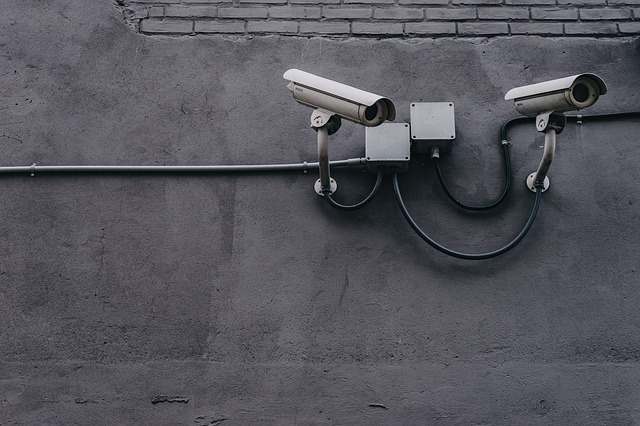
In the retail industry, having a system in place to protect your inventory and prevent loss is essential to your bottom line. Since its inception, closed circuit television (CCTV) has helped retailers prevent theft by allowing as few as one or two employees to monitor an entire store at once.
While CCTV provides overwhelming possibilities to not only catch crimes in progress but also to deter them from even being attempted, where you install CCTV equipment is extremely important. Ill-advised camera placement can potentially lead to costly invasion of privacy suits by your customers and employees.
Expectation of Privacy
CCTV cameras are legal to use in public areas because they are just that–public areas. When an individual is in a public area where they can be clearly observed by those around them, they cannot have a reasonable expectation of privacy. However, in areas deemed to be private spaces, individuals do have a right to expect a certain amount of privacy. Most commonly, private spaces are places like a person’s home or a restroom in which, by law, an individual can expect a certain protection from unwanted intrusions.
Problems can arise when it comes to CCTV placement in private spaces that exist in public settings. When a customer or employee uses a public restroom or changing room, they have a reasonable expectation of privacy even though that space may be part of a larger public space. CCTV cameras installed in these areas could be seen as an invasion of privacy that could, in turn, open the door for legal action.
While installing cameras in restrooms is never a good idea, how CCTV monitoring is conducted inside changing rooms is a chief concern in the retail industry. While it can deter shoplifting, its legality exists in a grey area when it comes to privacy law. Retailers must be extremely careful how they use CCTV equipment in this situation. Unless you are experiencing an abnormally high amount of loss that cannot be contributed to other factors, the level of return on CCTV cameras in changing rooms is not likely to offset the liability risks.
Instead of CCTV, try instituting a different method of loss control that does not make privacy an issue. Staff changing rooms so there is someone to monitor what is being brought in and out. Also, you may consider using an electronic tagging system that will activate an alarm if customers try to leave the store without paying for an item.
Notifying the Customer
A good way to protect your business from invasion of privacy claims is to establish procedures that lower the expected amount of privacy. Post signs at the entrances to the building notifying the use of security cameras on the premises. Many privacy cases involve a discrepancy between the amount of privacy an individual believes they were entitled to and how much they were actually provided with. Proper notification can make it clear to both customers and employees as to what expectations they can have for their privacy upon entering an establishment.
This type of notification is especially important when it comes to CCTV cameras in changing rooms. Notifying customers of any monitoring and the procedures that are being used, alerts them of exactly how much privacy they can reasonably expect. Often times, when CCTV cameras are located in changing rooms, posted notices inform customers that camera operators are of the same gender. In such cases it is important that you back up these notices by enforcing the claims that they make.
CCTV Policy
Establishing a company CCTV policy can also help. The policy should outline the provisions for camera placement and proper camera use. By instituting a company policy for CCTV use, camera operators will know what practices are acceptable and which could put the company at risk for litigation.
Read more

Customer personal injury claims can be costly and very damaging to a retail establishment’s reputation. They can be much more frequent than employee claims in some types of stores, especially warehouses that allow customer access.
Employee safety programs are not sufficient to protect customers, who are at risk for many more accidents than employees for three primary reasons:
- Customers expect the store to be safe.
- Groups like children and the elderly are predisposed to injury.
- Customers do not receive safety training.
Understand to what extent you are liable for customer injuries on your premises and take steps to prevent injury.
Your Liability
You are required to maintain safe premises for your customers; in legal terms, you have a high duty of care. This includes the duty to warn customers of non-obvious, dangerous conditions that you know about, to use ordinary care in active operations in the business and to make reasonable inspections to discover dangerous conditions and make them safe.
Most customer accidents are preventable, so it is important to take steps to make your establishment safer and less exposed to the risk of customer injury and litigation.
Common Injuries
Common injuries that could become your liability include:
- Slip and falls as a result of wet floors, torn carpets, poor lighting or escalators. This type of injury is extremely common.
- Head and body injuries from falling objects, retail displays, out-of-reach objects or other mishaps.
- Shopping cart injuries as a result of the cart tipping
- Overcrowding injuries, e.g., trampling.
- Parking lot injuries as a result of cracked, improperly designed lots or failure to remove ice or snow.
Methods of Prevention
Steps you can take to minimize the risk of a customer claim include the following:
- Identify high-risk areas of the facility (such as where liquids are frequently spilled or tracked), and set up an employee inspection schedule to ensure it does not become a dangerous condition.
- Install video cameras to more efficiently monitor the premises for dangerous conditions and provide proof in case of a claim.
- During snowy, icy or rainy weather conditions, take care of dangerous situations on sidewalks, stairs and parking lots promptly.
- Ensure proper lighting in all areas of the store, and check on a regular basis that all bulbs are functioning. Document your inspections.
- Ensure that displays are stable, and always put heavy items near the bottom of shelves.
- Properly maintain and inspect shopping carts, and discard those that present a risk of tipping.
- Control crowds, especially during busy seasons or large sale events, through physical methods, such as entry turnstiles.
- Design parking lots to avoid injury. Repave, repair and check for hazardous conditions regularly. Document these inspections.
Detecting Fraud
Criminal accident teams can stage injuries, targeting several businesses in the same area. This fraud could cost you millions of dollars in unwarranted payouts. Evaluate this possibility in the event of a customer injury claim, and notify the National Insurance Crime Bureau if you have a suspicion.
Transfer Risk
Liability insurance addresses the cost of legal damages and claims up to policy limits. Work with Scurich Insurance to design the liability package that fits your business–you will be able to select from a wide range of coverage options that you can tailor for your unique needs.
Read more

No industry is exempt from cyber crime, and the real estate industry has become a common target. As hackers devise plans to obtain sensitive information about real estate transactions, real estate professionals need to take particular interest in cyber security to protect their clients and themselves from wire fraud.
What is Wire Fraud?
In instances of wire fraud, a common ploy involves hackers breaking into a real estate agent’s email account to obtain details about upcoming transactions. Once the hackers have all the information they need, they send an email to the buyer, pretending to be the agent or a representative of the title company.
In an email to the buyer, the hackers state that there has been a change in the closing instructions and that the buyer needs to follow new wire instructions listed in the email. If a buyer falls victim to the scam and wires money to the fraudulent account, they’re unlikely to see the money again.
Red Flags
A potential indicator of wire fraud is an email that makes any reference to a Society for Worldwide Interbank Financial Telecommunication (SWIFT) wire transfer, which is sent via the SWIFT international payment network and indicates an overseas destination for the funds.
However, since the emails tend to include detailed information pertaining to the transaction—due to the perpetrator having access to the agent’s email account—many people make the mistake of assuming the email is from a legitimate source. The email addresses often appear to be legitimate, either because the hacker has managed to create a fake email account using the name of the real estate company or because they’ve hacked the agent’s actual email account.
How to Avoid It
Wire fraud is one of many types of online fraud targeting real estate professionals and their clients. To prevent cyber crime from occurring, every party involved in a real estate transaction needs to implement and follow a series of security measures that include the following:
- Never send wire transfer information, or any type of sensitive information, via email. This includes all types of financial information, not just wire instructions.
- If you’re a real estate professional, inform clients about your email and communication practices, and explain that you will never expect them to send sensitive information via email.
- If wiring funds, first contact the recipient using a verified phone number to confirm that the wiring information is accurate. The phone number should be obtained by a reliable source—email is not one of them.
- If email is the only method available for sending information about a transaction, make sure it is encrypted.
- Delete old emails regularly, as they may reveal information that hackers can use.
- Change usernames and passwords on a regular basis, and make sure that they’re difficult to guess.
- Make sure anti-virus technology is up to date, and that firewalls are installed and working.
- Never open suspicious emails. If the email has already been opened, never click on any links in the email, open any attachments or reply to the email.
If You’ve Been Hacked
Take the following steps if you suspect that your email, or any type of account, has been hacked:
- Immediately change all usernames and passwords associated with any account that may have been compromised.
- Contact anyone who may have been exposed to the attack so they too can change their usernames and passwords. Remind them to avoid complying with any requests for financial information that come from an unverified source.
- Report fraudulent activity to the FBI via the Internet Crime Complaint Center at www.ic3.gov/default.aspx. Also contact the state or local realtor association, which will alert others to the suspicious activity.
Contact Scurich Insurance today for more information on avoiding real estate fraud and other types of cyber crime.
Read more
