
A revision to the formula for calculating Workers Compensation rates is saving premium dollars for companies in a large number of states since the first of this year.
The change involves the experience modification (“mod”), the premium credit or debit that businesses receive for their claims experience. The mod compares your claim experience to that of other firms in your industry; if your experience is good, you’ll get a premium credit if not, you’ll receive a debit.
What has changed is the “split point” between the primary and excess portions of a claim. This value is important because the primary portion of each claim has a far larger impact on predicting an employer’s mod than does the excess portion. For the past two decades, the split point has been $5,000. However, inflation has both eroded the primary/excess split point and hurt its predictive power; the mod doesn’t give enough credit to good experience and doesn’t penalize poor experience enough. The change raises the split point to $10,000 in 2013, $13,500 in 2014, and an estimated $17,000 in 2015.
In 26 of the 38 states that have approved the new formula, a survey of more than 75,000 businesses by the National Council on Compensation Insurance found that 62% of them will see their rates fall by 5% or less this year. Another 11% will enjoy decreases of 5% to 10%, while rates will stay unchanged for 4.5%. Fewer than one in four (22.5%) – mostly larger businesses – would see a rate increase.
Our Workers Comp specialists would be happy to discuss the revised experience mod formula with you – and make sure that you enjoy the cost savings that it can provide. Feel free to get in touch with us at any time.
Read more

Nearly six million traffic accidents occur in the U.S. every year – more than 16,000 a day (or one every 10 seconds).
If your company owns, operates, or uses motor vehicles – or if you have employees who use their cars for business purposes – you need Commercial Auto Insurance to provide financial protection against losses from mishaps that occur behind the wheel.
This valuable policy provides these coverages:
- Bodily Injury Liability pays the cost of bodily injury to others from accidents for which you are responsible. If you’re sued, it also pays your defense and court costs.
- Property Damage Liability picks up the tab for property damage to others for which you are responsible, as well as defense and court expenses.
- Personal Injury/Medical Payments usually covers medical and funeral expenses for bodily injury from an accident that involves an insured vehicle.
- Collision pays for a covered vehicle that is damaged by a collision with another vehicle or object.
- Comprehensive Coverage pays for a covered auto that is stolen or that is damaged by causes other than collision or reckless driving.
- Uninsured/Underinsured Motorists covers injuries and, in some cases, property damage, when you’re involved in an accident with another person who either doesn’t have Auto Insurance or carry enough coverage.
Before you purchase or renew your Commercial Auto Insurance ask yourself these questions: 1) how much Liability Coverage you should buy, and 2) how large of a deductible should you choose?
We’d be happy to help you choose the most cost effective policy for your needs. Just give us a call.
Read more
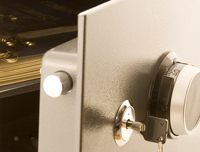
In today’s increasingly complex and litigious business environment, your corporate officers and board of directors – the brains of the company – need protection against personal financial liability arising from their corporate activities.
These people are highly vulnerable to lawsuits by investors, employees, vendors, competitors, customers, regulators and others, alleging misconduct for a wide variety of activities, such as:
- Providing inaccurate or unlawful advice.
- Fraud and malfeasance.
- Misrepresentation of company assets.
- Failure to comply with workplace laws.
- Poor hiring decisions. (A Towers Perrin survey found that 40% of all reported D&O claims involved flawed employment practices.)
Directors & Officers Liability (D&O) Insurance will pick up the tab for legal fees, settlements, and other expenses from such litigation. This gives your officers and directors financial peace of mind in carrying out their corporate activities, and provides a valuable incentive for attracting, and keeping quality people who can help grow your business.
There’s a widespread need for this coverage. One in six company executives (17%) surveyed by Inc. Magazine believe that their business will experience a D&O-related loss within the next year.
These policies usually offer two types of coverage known as “sides.” Side A protects directors and officers from personal financial liability if the company is unable to indemnify them. (For example, during a bankruptcy or dissolution.) Side B coverage reimburses the company if it indemnifies directors and officers. (For example, when shareholders file suit against them.) A third coverage – sometimes known as Side C – comes into play when both the company and individual officers and directors face lawsuits.
To learn more about how D&O Insurance can help minimize the financial risks of litigation for your company and your top people, feel free to get in touch with us at any time.
Read more

Product Liability Insurance helps protect your company from damages for losses related to manufacturing or selling products or other goods.
These claims can, and do, put businesses out of business – just ask the officers of any asbestos manufacturer.
Companies are vulnerable to three types of products claims
- Manufacturing or production flaws that create an unsafe defect in the product. For an example, just recall the recent claims against Chinese manufacturers for using dangerous chemicals in their products.
- Design defects that make the product inherently unsafe. (The series of lawsuits against Toyota vehicles for defective acceleration controls during the past two years comes to mind.)
- Inadequate warnings or instructions, such as failing to label a product properly or advise consumers about potential risks. A famous example is the McDonald’s “hot coffee case.”
Damages can include medical costs, compensatory damages, economic damages, and (in some instances) attorney fees and costs, as well as any punitive damages.
Some sellers and retailers choose not to buy Product Liability Insurance because they don’t actually “manufacture” anything. However, most states follow the “stream of commerce” model of liability, meaning that if your company sells a product, you can be held liable for damages to the end user.
“Business Owners” and Commercial General Liability policies usually include some type of Product Liability Coverage (Sometimes known as Product/Completed Operations Insurance).
Premiums are based upon the type of product and sales volume. If you try to reduce premiums by underreporting sales or insuring only a percentage of your sales, you’ll probably face a hefty “underinsurance” penalty. Make sure to identify your products properly, too. For example; if you supply stepstools, you don’t want them categorized as ladders, which have a higher premium because of their greater risk potential.
For more information, feel free to get in touch with our Business Insurance professionals.
Read more
Business Property insurance protects your building and property against loss or damage from theft, accident, and a variety of other causes. The policy will pay for replacing or repairing covered property or providing compensation for irreplaceable items.
If you don’t own your building you’ll still need to cover its contents: fixtures, furniture, office equipment, inventory and the supplies stored at your location or off-site.
The premium will depend on whether you choose to insure the replacement cost or actual cash value (ACV) of the property. Most Business Property coverage is written on a replacement-cost basis, which will reimburse you for replacing lost or stolen goods with new items at current market prices. This feature can help your business recover from the loss or theft quickly. (If you’re leasing equipment, the leaseholder might require you to cover it at replacement value.) You’ll need to revise your coverage when you acquire or dispose of property. Be sure to update replacement values over time; a computer worth $1,000 two years ago might cost half that today – on the other hand, the price of a desk might well increase.
Actual cash value coverage, which generally costs less, provides reimbursement for the depreciated value of covered property. If your business owns its own equipment, which you could replace easily with comparable goods at depreciated market value, the lower premium of an ACV policy might make it a more cost-effective choice.
As always, our agency’s Business Insurance specialists stand ready to offer their advice on choosing the coverage that’s best for you. Just give us a call.
Read more

Business Interruption (BI) insurance makes sense. Consider Allison Dorst, a New Jersey resident who operates three e-commerce web sites selling sportswear. Last fall, Superstorm Sandy brought a prolonged power failure that shut down Dorst’s customer-service lines, causing sales to evaporate. She’ll also see lower sales because of a month-long delay in the delivery of next season’s styles. Fortunately, her Business Interruption coverage will reimburse the profits lost because of this lost revenue.
Although most middle-market business owners and managers understand the need for BI, they don’t always have the information they need to choose the right coverage. Some companies don’t have enough insurance to remain in business after they suffer a major loss, while other businesses might be buying more coverage than they need. When it comes time to renew your BI insurance, be sure to take a close look at the insured or reported values for the policy, as well as on the various coverage extensions that apply to your business, based on its operations. It also makes sense to consider additional coverages such as:
- Contingent Business Interruption
- Claim preparation fees
- Extended period of indemnity
- Expediting expense
- Service interruption/power outage, including overhead transmission and off-premises lines
- Extra expenses
- Ordinary payroll coverage
- Selling price of finished goods inventory
- Ingress/egress
- Loss of attraction
- Civil authority
- Sue and labor
We’d be happy to offer our advice, free of charge, in selecting the amount and types of coverage that can minimize your financial risk and keep you in business after disaster strikes. Feel free to get in touch with us at any time.
Read more
