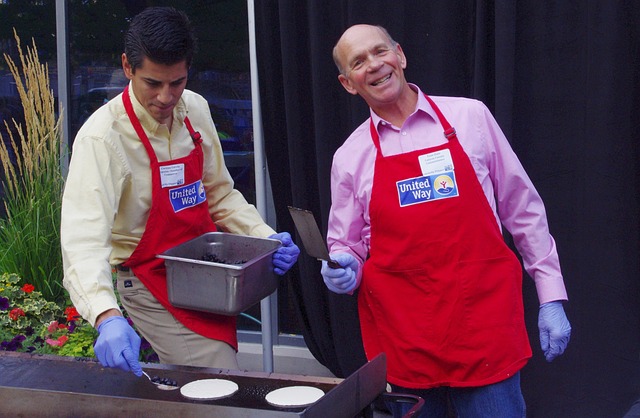
The challenge in running a non-profit is that it still takes money and resources. Just because you’re not interested in getting rich off of this idea doesn’t mean that money is not an issue. If a worker suffers an injury on the job, their compensation has to come from somewhere.
Something that may come as a surprise to many: Volunteers are not typically covered by worker’s compensation policies. In more states than not, worker’s compensation only covers, well, workers. If you are paying actual employees at food banks workers’ compensation insurance will cover their injuries. Likewise Meals on Wheels insurance policy will cover the organization’s workers. If you’re working with unpaid volunteers this is not the case.
Your volunteers may wind up covered by a general liability claim, but this is not always the case. If you want to make sure that your people are covered no matter what, then you’re probably going to have to bring them in as paid employees, or at the very least, under an internship program that includes medical and worker’s compensation benefits and so on.
A problem with relying exclusively on volunteers for your workforce is that you don’t really get to pick your staff from the best and brightest. Many who volunteer will bring their A-game, they will take the task just as seriously as they would take their day job. This isn’t always the case, unfortunately, and without any payment or compensation or even the safety net of worker’s compensation to draw talent, you wind up taking what you can get.
Non-profit doesn’t mean nobody gets paid. Non-profits are usually devoted to a humanitarian cause and their primary concern is not making anybody rich, but making a difference, but that doesn’t mean that everyone involved is simply donating time and resources without compensation. Typically you’re going to have benefactors and other income streams that will allow you to hire qualified people for your food bank, and provide them with the appropriate coverage they need in order to provide them, and you, with peace of mind.
To put it bluntly: a volunteer force is a great idea in concept. In reality, you’re asking some of the kindest, most generous people in the world to foot the bill themselves if they get hurt on the job. That’s a recipe for, if not a lawsuit, at least a guilty conscience. The most effective way to make a difference in the long term is to get some money behind your cause and treat your workers like you would paid employees at any other business.
Read more

Buffer Liability Insurance is a useful risk transfer tool as the P&C insurance cycle transitions from a soft to hard market. A “soft” market is ideal for consumers, as it is the best time to find insurance coverage and the lowest premiums.
On the other hand, a “hard market” occurs as insurance companies, who have had to pay out a lot in claims for catastrophic events, subsequently increase premiums and decrease the amount of coverage they’re willing to underwrite. For the last two decades, the insurance industry has largely experienced a soft market period, and Buffer Liability Insurance was usually not needed. However, with today’s changing market, this insurance is becoming more popular.
Buffer Liability Insurance Basics
Buffer Liability Insurance is any layer of insurance (or risk retention) that resides between the primary layer and the excess layers. For example, if the primary layer coverage is $100,000 and the excess layer attachment point is $500,000, a buffer layer of $400,000 is required. In the past, if you had both Primary Layer Insurance and Excess Insurance, there was essentially no gap between those coverages; if your primary layer capped at $1 million, the excess layer insurance would kick in at that point.
However, now insurance carriers are less willing to write high primary insurance limits. That, coupled with a hardening market, will make excess insurance more expensive to purchase; this means the excess layer will kick in at a significantly higher point than the primary cap. This creates a gap between the primary layer and the excess layer, indicating the need for Buffer Liability Insurance. The wider the gap, the more Buffer Liability coverage that’s needed.
Who Should Consider Buffer Liability Insurance?
Buffer Liability Insurance is important for large risks that can be difficult to insure, such as the following:
- Truckers, emergency vehicles and auto fleets with more than 500 vehicles
- Employers who self-insure their workers’ compensation
- Companies with a poor loss history that want liability coverage over the usual primary layer
- Condo owners and apartment building owners who have Habitational Insurance
As the insurance market begins to harden, protect your business from all of the risks that can occur. To learn more about adding Buffer Liability Insurance to your current insurance coverage, contact us today.
Read more

Taking the time to understand the language and symbols on your commercial automobile insurance policy may seem like trying to learn a new language, but it is important to fully understand your policy so you know how you’re protected.
Here are a few general guidelines that are helpful when deciphering your policy:
- Each symbol represents the type of vehicle protected by the applicable liability or physical damage limit.
- The symbol may apply to the type of vehicle covered or the vehicle’s ownership status.
- The various terms within your policy have specific definitions that you should become familiar with.
- The symbols are different on coverage for liability as compared to physical damage coverage.
Liability Coverage Auto Symbols
1 = Broadest symbol; covers any “auto.” (ANY AUTO)
2 = Covers any “auto” owned by the insured, including those attained after the policy begins. It also applies to trailers used with owned vehicles. (OWNED AUTOS ONLY)
3 = Covers only private passenger “autos” owned by the insured. (OWNED PRIVATE PASSENGER AUTOS ONLY)
4 = Covers all “autos,” other than private passenger vehicles owned by the insured. This includes vehicles that are attained after the policy begins and also applies to trailers used by an owned vehicle. (OWNED AUTOS OTHER THAN PRIVATE PASSENGER AUTOS ONLY)
5 = Applies to “autos” owned by the insured that are garaged or licensed in no-fault benefit law states. (OWNED AUTOS SUBJECT TO NO-FAULT)
6 = Applies to “autos” that are garaged or licensed in states where uninsured motorist coverage is required. (OWNED AUTOS SUBJECT TO A COMPULSORY UNINSURED MOTORIST LAW)
7 = Covers only the “autos” and trailers listed on the policy. (SPECIFICALLY DESCRIBED AUTOS)
8 = Covers “autos” that the insured leases, hires, rents or borrows for their own use. It does not cover “autos” that are leased, hired, rented or borrowed for employee or family member usage. (HIRED AUTOS ONLY)
9 = Covers “autos” that the insured does not own, lease, hire, rent or borrow, but are used for business purposes. These “autos” may be owned by employees or family members, but must be used for the insured’s business or personal matters. (NON-OWNED AUTOS ONLY)
Physical Damage Coverage Automobile Symbols
1 = Covers “autos” owned by the insured, including those attained after the policy begins. (OWNED AUTOS ONLY)
2 = Covers only private passenger “autos” that are owned by the insured. (OWNED PRIVATE PASSENGER AUTOS ONLY)
3 = Covers all “autos” other than private passenger vehicles owned by the insured. (OWNED AUTOS OTHER THAN PRIVATE PASSENGER AUTOS ONLY)
4 = Applies to “autos” that are listed on the policy. This also covers trailers used with a listed vehicle. (SPECIFICALLY DESCRIBED AUTOS)
5 = Covers “autos” that the insured leases, hires, rents or borrows for his/her own use. This does not cover “autos” leased, hired, rented or borrowed for use by an employee or family member. (HIRED AUTOS ONLY).
At times, there may not be an applicable symbol for the type of coverage provided. In those instances, a special symbol is used and added to the policy by way of an endorsement. The endorsement will contain a complete description and explanation of the symbol’s meaning, and the symbol will also appear with the applicable coverages on the policy.
It is imperative that you understand these symbols to ensure that you are properly covered. Consult Scurich Insurance today to learn more automobile insurance policy symbols, their meanings and how this applies to your coverage.
Read more

Directors and officers are responsible for making the tough choices that can make—or break—a company’s fortunes. In doing so, they must consider the best interests of employees, customers and shareholders, while also keeping in mind corporate best practices. Limited or imperfect information and tight deadlines add to the overall complexity of the decision-making process and can lead to poor outcomes or even outright mistakes.
D&O insurance protects executives against the consequences of any alleged or actual “wrongful acts” they commit while performing regular supervisory duties.
To hire and retain talented directors and officers, companies need to give them the freedom to make corporate decisions without the fear of being personally liable for losses stemming from those decisions. Directors & officers (D&O) insurance protects executives against the consequences of any alleged or actual “wrongful acts” they commit while performing regular supervisory duties. Without D&O coverage, executives’ personal assets are at risk in the event of a lawsuit.
A class action lawsuit was brought against a mining company and its board of directors, accusing them of allegedly misrepresenting the cost of construction on one of their mines. When the costs exceeded the initial prediction and were projected to keep increasing, share prices plunged. The suit was filed on behalf of shareholders that had bought shares at the prices calculated after the construction costs were misrepresented. Defense costs reached about $7 million, which D&O insurance helped cover when the lawsuit was successfully defended.
Keep in mind that there are some limitations to D&O coverage. It does not cover cases in which fraudulent, criminal or intentional wrongful acts are committed, or when acts are committed for personal gain.
No matter the size of your company, costly mistakes made by directors and officers can happen, which is why it’s important to take steps to insure your executives against losses stemming from an incident. Contact Scurich Insurance today to learn about the D&O coverage solution that’s right for you.
Read more
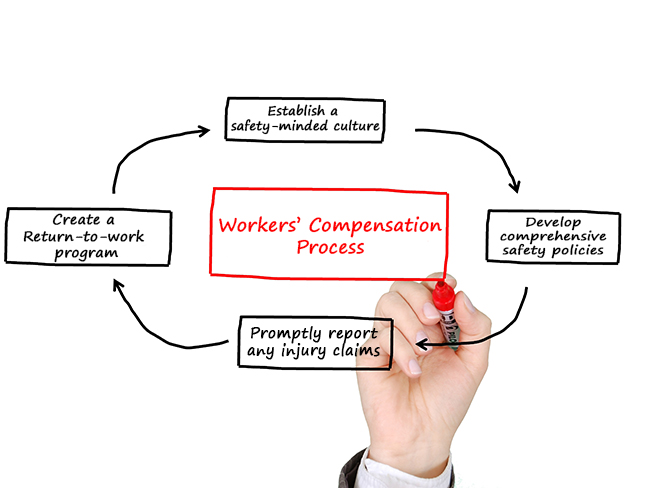
For the unprepared, workers’ compensation (WC) issues can be both confusing and costly. Fortunately for employers, there are ways to actively engage WC issues to influence their outcomes.
Through management controls and active involvement in the WC process, your organization can effectively influence related costs. To do so you will have to establish a number of your own processes that guide decision making throughout your organization.
By developing a cohesive workers’ compensation process, you can play an active role in reducing related costs.
Areas requiring WC management can be divided into three main categories. These categories include facets that may range from the simple to the complex, but as a whole, address vital issues that can negatively influence WC costs in your company.
Workplace Safety Means Fewer Claims
Simply put, reducing claims reduces costs. Establishing a safety-minded culture throughout every level of your company is essential to keeping workers injury free. However, establishing such a culture isn’t an overnight solution. To be successful, an ongoing commitment to safety must be made. Such a commitment must be supported by management and given the necessary resources to succeed.
Developing comprehensive safety policies for employees builds a firm foundation for your safety culture to grow. Such policies also encourage OSHA compliance, further improving your safety efforts while helping you avoid costly fines.
Mitigate Loss After an Injury
Unfortunately, even with all the right programs in place, it is still possible for accidents to happen. When a workplace incident occurs how you respond can greatly influence the outcome of the claim. Prompt claim reporting is essential to keeping costs down.
It is also important to have a designated injury management coordinator, someone who can supervise open claims and work with both employees and medical personnel to facilitate the timely recovery.
The longer an employee is out of work the more expensive their claim will be. Return-to-work programs that allow injured employees to come back to work at a limited capacity during the recovery process, are one of the most effective tools business owners have to reduce the severity of a claim.
Managing Your Mod
Insurers use what is known as an experience modification factor, or mod, to calculate the premiums you pay for workers’ compensation coverage. By managing your exposures and promoting safety it is possible to manage your mod and decrease your premium rates.
Like a good safety program, controlling your mod is an ongoing process. To reap the benefits of lower premiums you will have to keep in regular contact with your insurance provider to ensure they have the most accurate data to use in their calculations.
Read more

Social media and networking websites are extremely popular. Creating a social media presence for your company is something that should be thought through carefully, taking into account many factors. Interacting on social media just because “everyone else is doing it” is not a good enough reason when you consider the risks social media presents. However, the benefits can include the ability to help your company connect with tech bloggers, current and future clients, and potential job candidates.
Social networking has the ability to get your message across to thousands of people very quickly, which makes it a priceless public relations and viral marketing tool. However, popular social networking sites, such as Facebook, MySpace and Twitter, can present a significant hazard to your company and its reputation, depending on how you and your employees use them.
Social networking sites can help your company connect with clients and recruit job candidates. The key to social networking is to use it in a way that not only gets your name out there, but maintains a positive image of your company.
Industry leaders are constantly recommending social networking sites as places to advertise, and as tools to interact and connect with current and future customers. Although, not all publicity is good publicity. It is important to project a positive company image, which you can do through setting up your own social networking account; but it is just as imperative that you control other users’ conversations about you.
What Others Are Saying About You
Facebook, the largest social networking site today based on monthly unique visitors, has more than one billion active users. According to Facebook’s user statistics, the fastest-growing group of users is people older than 35, which means it is becoming increasingly likely that your workforce is getting involved with social networking.
While this has many potential benefits, you also want to be careful no one — whether it is a competitor, former or current employees — is tarnishing your company’s name or reputation. The same holds true for blogs, where damaging content may appear without your consent.
The key to keeping your risk low is identity management. The best way to prevent Internet buzz from becoming a hazard is to monitor the use of your company name. Set up an alert or periodically type it into a search engine to make sure that your official website is the top hit and that nothing offensive comes up in the first 20 hits, which is statistically as far as most people will dig in a search.
If you do find references to your company name in the first 20 hits that could be hazardous to your business or your reputation, you have a few options. If social networking sites are the culprit, consider enacting a policy prohibiting employees from mentioning the company name on their personal sites. Explain the negative outcomes this could have for business and help employees understand how acting as poor representation of the company through scandalous photos or negative comments on a social networking site could affect them directly.
How to Handle the Negative
If negative or derogatory comments about your company have seeped into other sites outside the control of your employees, however, the risk to your business is even greater. What’s more, this type of hazardous publicity is more difficult to manage. One approach is to try to increase the amount of positive information about your company on the Internet so that the negative write-ups are no longer within the top search results. Contacting sites and asking them to remove fictitious and defamatory material is another option.
If you have a serious public relations issue and your company’s reputation or legitimacy is on the line because of material on the Internet or social networking sites, it could cost you thousands of dollars in lost business. Consider hiring an identity management or public relations company, which will help organize, analyze and control the information about your organization that appears on the Internet.
Using Social Networks to Learn More About Candidates
The practice of using social networking sites to further research potential employees and weed out candidates based on content in these sites is risky. Not only does it cause you to dabble in issues of legality, but it also could place you in thorny situations when it comes to personal differences you become aware of via social networking tools.
A study conducted by Harris Interactive for CareerBuilder.com revealed that 45 percent of employers are already using social networking sites to screen job candidates. This is nearly double the number of employers who did this one year ago. Before you engage in this practice, know what types of hazards you face.
The most obvious problem with this practice is how difficult it is to draw lines between appropriate and inappropriate behavior. According to the Harris Interactive study, more than half the employers interviewed said provocative photos on a social networking site were the largest contributing factor when a potential employee was not hired.
But who gets to define what constitutes provocative, and does the candidate have the right to find out this is the reason he or she was not hired? Social networking is such a new trend, especially among the older workforce, that there are currently no ethical benchmarks in place.
By using social networking sites as a filtering tool, you are exposing yourself to potential lawsuits. Many users post personal information such as their religion and age. Even if you decide not to hire them for legal reasons, such as improper educational qualifications, the candidate could accuse you of basing the decision not to hire on information obtained from their social networking site.
There is no right or wrong answer regarding whether Internet research on candidates is a good idea, so it is up to your company to weigh the options. Whatever you choose, remember to examine the underlying risks and consider all feasible scenarios and outcomes to make the most informed decision possible.
Please contact Scurich Insurance for more information about this increasingly popular trend.
Read more
