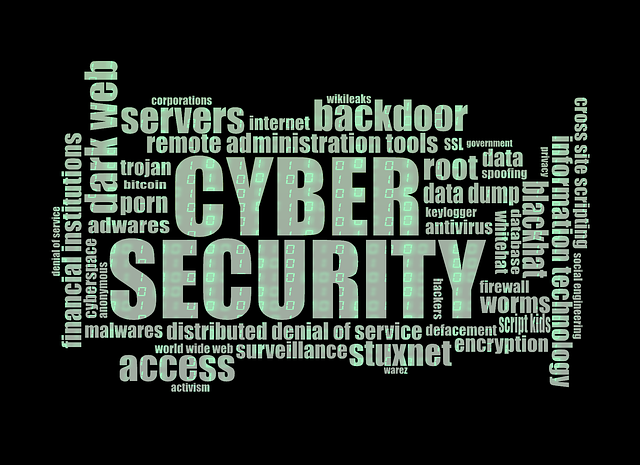
McAfee Report Projects Top Cyber Threats of 2016
The McAfee Labs 2016 Threat Predictions report identifies top threats for the coming year as well as predictions for future cyber threats through 2020. The following is a summary of the report’s findings:
Hardware
Attacks that exploit flaws in both hardware and firmware components are expected to continue; security experts recommend being mindful of this potential avenue of exploitation below the level of the operating system.
Ransomware
Target Agrees to Pay a Nearly $40 Million Settlement
Target has just agreed to settle another huge class-action lawsuit stemming from the retailer’s 2013 data breach. Read on to learn who is getting paid and just how costly that data breach has been for the company.
Target has agreed to pay $39.4 million to settle a class-action lawsuit stemming from its 2013 data breach. The suit was filed on behalf of card issuers, banks and credit unions that had to give new cards to customers after their data was stolen from the retailer. This is just one of a number of lawsuits that have been filed since the data breach, and Target claims that it’s paid about $290 million in costs related to the breach.
Survey Finds Global Companies Worried About Cyber Threat Detection and Defense
According to EY’s Global Information Security Survey (GISS) 2015, “Creating trust in the digital world,” 88 percent of global organizations believe that their information security architecture doesn’t meet their current security needs. In fact, 36 percent aren’t confident that they even have the ability to detect sophisticated cyber attacks.
When asked about the source of cyber attacks, respondents named criminal syndicates (59 percent), employees (56 percent) and hacktivists (54 percent) as their top concerns. To meet this threat, 69 percent of respondents said that they’d like to increase their cyber security budgets by as much as 50 percent.
Cyber Information Sharing Act Passed as Part of Spending Bill
The Cyber Information Sharing Act (CISA), a significant piece of cyber security legislation, was added to the omnibus spending bill passed by Congress and signed into law by President Barack Obama last month. CISA is designed to encourage companies to cooperate with one another and with governmental agencies when disclosing and sharing information about identified cyber security threats, in part, by offering immunity to companies as a result of sharing that information.
Proponents of CISA say that sharing information will allow both the government and the private sector to respond to threats more quickly and efficiently. Critics, however, worry about the privacy of sensitive customer and patient data.
Ransomware attacks will likely become more common and more sophisticated. “Ransomware-as-a-service” is expected to continue growing, which will allow inexperienced cyber criminals access to the ransomware. Additionally, experts predict that ransomware will expand beyond Windows and also start targeting the increasingly popular Mac OSX.
Wearables
Wearable devices are becoming much more popular. While these devices don’t store very sensitive data themselves, they do connect to smartphones via Bluetooth, offering criminals a new potential “back door” into a user’s smartphone. The report suggests that cyber criminals might, for instance, use GPS data gathered from a user’s fitness tracker to create spear-phishing email attacks that the user is more likely to open.
Automobiles
Wired magazine stunned the automotive world in July 2015 when it ran a feature story outlining how a couple of enterprising hackers remotely commandeered a Jeep Cherokee. Experts predict a rise in the number of exploited zero-day vulnerabilities, but even identified threats pose a problem, because some companies cannot issue remote updates to certain car models.
Integrity
Integrity attacks represent a new, and potentially costly, type of cyber attack that most companies have seen in the past. Unlike other cyber attacks in which criminals simply damage or steal data, integrity attacks involve criminals selectively and surgically altering data in communications or transactions in ways that benefit them.
Experts anticipate integrity attacks will heavily affect the financial sector in 2016 as criminals find methods of intercepting and redirecting their targets’ legitimate transactions to their own bank accounts.
The report also mentioned that employees’ home systems, Cloud services and cyber espionage are likely cyber threats in the coming year. Regardless of the source, it’s clear that guarding yourself from cyber attacks involves identifying your exposures and developing strategies to protect yourself from each developing risk. Contact your advisor at Scurich Insurance today to ensure your cyber risks are appropriately covered.
Moody’s to Consider Cyber Attacks in Credit Assessments
Moody’s Investors Service announced recently that cyber attacks are becoming a larger part of the agency’s credit assessment and analysis processes. While Moody’s made it clear that it doesn’t consider cyber risk a principal credit factor, the agency has begun assessing cyber attacks as “event risks.” An event risk is a rare but potentially severe risk, much like a storm or other natural disaster that the company includes in its stress tests as it runs its credit analyses.
The growing number and severity of cyber attacks have made such a move necessary, as companies find themselves sometimes paying hundreds of millions of dollars to counteract the damage of a single data breach. Moody’s has released a report highlighting three important areas for companies to think about when considering the credit impact of a cyber attack:
- The type and importance of the affected asset or business
- The duration of the service disruption
- The scope of the business or assets affected by the cyber attack
For help assessing your cyber liabilities, contact Scurich Insurance today.
Read more
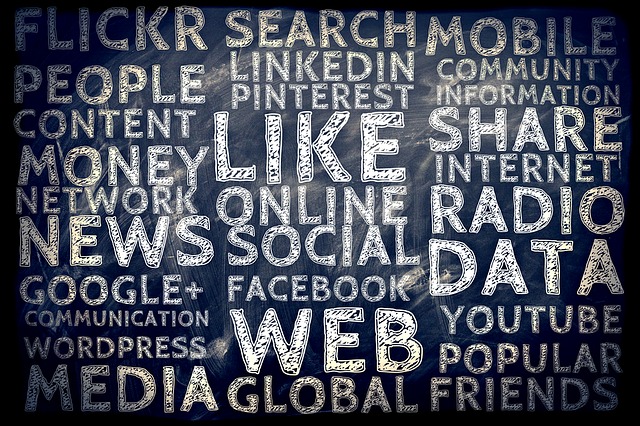
Social media and networking websites are extremely popular. Creating a social media presence for your company is something that should be thought through carefully, taking into account many factors. Interacting on social media just because “everyone else is doing it” is not a good enough reason when you consider the risks social media presents. However, the benefits can include the ability to help your company connect with tech bloggers, current and future clients, and potential job candidates.
Social networking has the ability to get your message across to thousands of people very quickly, which makes it a priceless public relations and viral marketing tool. However, popular social networking sites, such as Facebook, MySpace and Twitter, can present a significant hazard to your company and its reputation, depending on how you and your employees use them.
Social networking sites can help your company connect with clients and recruit job candidates. The key to social networking is to use it in a way that not only gets your name out there, but maintains a positive image of your company.
Industry leaders are constantly recommending social networking sites as places to advertise, and as tools to interact and connect with current and future customers. Although, not all publicity is good publicity. It is important to project a positive company image, which you can do through setting up your own social networking account; but it is just as imperative that you control other users’ conversations about you.
What Others Are Saying About You
Facebook, the largest social networking site today based on monthly unique visitors, has more than one billion active users. According to Facebook’s user statistics, the fastest-growing group of users is people older than 35, which means it is becoming increasingly likely that your workforce is getting involved with social networking.
While this has many potential benefits, you also want to be careful no one — whether it is a competitor, former or current employees — is tarnishing your company’s name or reputation. The same holds true for blogs, where damaging content may appear without your consent.
The key to keeping your risk low is identity management. The best way to prevent Internet buzz from becoming a hazard is to monitor the use of your company name. Set up an alert or periodically type it into a search engine to make sure that your official website is the top hit and that nothing offensive comes up in the first 20 hits, which is statistically as far as most people will dig in a search.
If you do find references to your company name in the first 20 hits that could be hazardous to your business or your reputation, you have a few options. If social networking sites are the culprit, consider enacting a policy prohibiting employees from mentioning the company name on their personal sites. Explain the negative outcomes this could have for business and help employees understand how acting as poor representation of the company through scandalous photos or negative comments on a social networking site could affect them directly.
How to Handle the Negative
If negative or derogatory comments about your company have seeped into other sites outside the control of your employees, however, the risk to your business is even greater. What’s more, this type of hazardous publicity is more difficult to manage. One approach is to try to increase the amount of positive information about your company on the Internet so that the negative write-ups are no longer within the top search results. Contacting sites and asking them to remove fictitious and defamatory material is another option.
If you have a serious public relations issue and your company’s reputation or legitimacy is on the line because of material on the Internet or social networking sites, it could cost you thousands of dollars in lost business. Consider hiring an identity management or public relations company, which will help organize, analyze and control the information about your organization that appears on the Internet.
Using Social Networks to Learn More About Candidates
The practice of using social networking sites to further research potential employees and weed out candidates based on content in these sites is risky. Not only does it cause you to dabble in issues of legality, but it also could place you in thorny situations when it comes to personal differences you become aware of via social networking tools.
A study conducted by Harris Interactive for CareerBuilder.com revealed that 45 percent of employers are already using social networking sites to screen job candidates. This is nearly double the number of employers who did this one year ago. Before you engage in this practice, know what types of hazards you face.
The most obvious problem with this practice is how difficult it is to draw lines between appropriate and inappropriate behavior. According to the Harris Interactive study, more than half the employers interviewed said provocative photos on a social networking site were the largest contributing factor when a potential employee was not hired.
But who gets to define what constitutes provocative, and does the candidate have the right to find out this is the reason he or she was not hired? Social networking is such a new trend, especially among the older workforce, that there are currently no ethical benchmarks in place.
By using social networking sites as a filtering tool, you are exposing yourself to potential lawsuits. Many users post personal information such as their religion and age. Even if you decide not to hire them for legal reasons, such as improper educational qualifications, the candidate could accuse you of basing the decision not to hire on information obtained from their social networking site.
There is no right or wrong answer regarding whether Internet research on candidates is a good idea, so it is up to your company to weigh the options. Whatever you choose, remember to examine the underlying risks and consider all feasible scenarios and outcomes to make the most informed decision possible.
Please contact Scurich Insurance for more information about this increasingly popular trend.
Read more
In today’s high-tech world, individuals can carry thousands of client files on flash drives in their pockets or purses. People are conducting business on the go and sensitive information is accessible at the click of a button. Managers are using their laptops or tablets through “hot spots” at local coffee shops to access customer databases. Healthcare professionals shopping at supermarkets can get patient files on their smartphones.
If you think of information security breaches primarily in terms of malicious hackers cracking the networks of big corporations from thousands of miles away, think again.
The hacking of such corporate giants as Global Payments, Epsilon, and Sony prove that size and sophistication can’t stop data thieves. However any company that stores customer information in electronic format is vulnerable to cyber privacy liability exposures than can cost megabucks – or even put a firm out of business – which means they need insurance against these risks.
Cyber Liability coverage can protect your business against breaches of privacy from unauthorized access, physical taking, or the mysterious disappearance of confidential information that leads to third-party losses resulting from identity theft.
Depending on your needs, the policy can also provide a variety of coverages, such as:
- Business Interruption
- Cyber Extortion
- Systems and Data Recovery
Other options can cover the cost of contacting those affected by the data breach, computer forensics to analyze the breach, fines and penalties, potential HIPAA (client medical records) exposures, and online activities on your company site.
The development and expansion of Cyber Liability coverage during the past two decades has paralleled the explosive growth of computer technology: Today’s policies are increasingly comprehensive – and inexpensive. Contact us today to discuss your Cyber Liability Insurance needs.
Read more
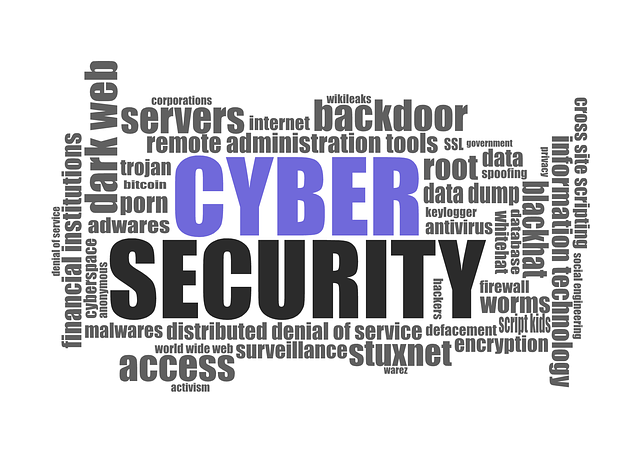
We’ve covered the subject of cyber-security myths before, but all it takes is one critical misunderstanding to harm your network, and we could write a phone book’s worth of content on all the misunderstandings floating around out there.
The Internet’s Safer Now
Some users are under the impression that the Internet is no longer the Wild Wild West that it was in the late nineties and early 00’s. Your computer is probably safer, cyber-security software has gotten more advanced, the general public has gotten smarter about web safety, but the Internet itself is still a Petri dish of viruses and worms that have only had greater opportunities to evolve and proliferate over the last two decades. Viruses don’t disappear from the Internet, they keep floating around out there, finding new means of distribution. The Internet is more dangerous than ever, we’ve just gotten a lot tougher.
Security is the Tech Team’s Job
Put simply: leaving security to the techies on staff is a little bit like leaving a tire to the mechanic when it’s low on air. There are a lot of things that you and the rest of your team can do to make the tech team’s job a little easier, and to keep the ship running a little more smoothly. Brief your people on basic security protocol, and you’ll be far less likely to have your tech guy come to you saying that he needs to hire three more people to handle all this extra workload.
It’s All in the Cloud, so What’s at Risk?
Your definition of valuable data might not quite be the same as a hacker’s. You’re thinking about work-related data and personal information. A hacker is looking for any access they can find. A hacker who gains access to your network might not even have any interest in accessing the encrypted information you keep on the cloud, they might be satisfied with simply using your system as a proxy through which to attack other users. Your system is a gateway, it isn’t just a locker for sensitive data, so keeping it empty won’t keep it safe.
Keeping your network safe isn’t that great of a challenge. All it takes is the right software, a little bit of common sense, and a basic sense of responsibility. Invest a little time, money and effort into your system, and it’s not hard to keep it running clean.
Read more
 Going online has become part of everyday life, whether it is for everyday activities such as shopping, sending email or paying bills, and managing your accounts. But data breaches, in all their forms, can potentially expose the personal information that we share online, putting consumers at risk of identity theft.
According to the 2015 Travelers Consumer Risk Index, 59% of Americans worry about online identity theft. Fortunately, there are steps that consumers can take, including not opening unsolicited emails and avoiding unsecure websites, to protect their personal information while online.
The following tips can help you learn how to help stay safe online:
Online Shopping
- Research potential retailers to make sure they are reputable and have a secure network and website. Try to avoid buying from a site that does not have a secure socket layer (SSL) encryption installed. In order to do this, look for the ‘s’ at the beginning of a URL – HTTPS:// instead of HTTP:// – to help determine if a site is SSL secured.
- Read the site’s privacy policy to learn how the personal information you provide will be used.
- Use only one credit card for online purchases. Be sure to read statements when received to check for fraudulent or unknown charges or activity.
- If you receive an email regarding sales or discounts from a particular retailer, log on directly to the official website for the business. Avoid linking to it from an unsolicited email.
Emails and Attachments
- Do not send personal information in email or instant messages. Emails are out of your control once sent, and can be easily intercepted.
- Do not click on links you receive by email or encounter online that are suspicious or from unknown sources. Only accept and click if it:
- Comes from someone you know.
- Comes from someone you have received mail from before.
- Is something you were expecting.
- Does not look odd with unusual spellings or characters.
- Passes your anti-virus program test.
- Be cautious of emails you receive regarding your financial accounts. If you are not sure of the email’s validity, contact your financial institution directly.
General Online Safety
- Try to limit the personal information you put on the Internet. Social media sites can be good for networking, but identity thieves can use the information you share.
- Remember to keep your Web browser up to date. This can help ensure the latest security features are installed.
- Avoid storing personal information, account numbers and personal identification numbers on your computer.
- Install firewall and anti-virus software. This can help protect you from exposure to malicious cyber attacks.
- Choose strong passwords and keep them private.
Read more

How can you oversee your employees’ use of company e-mails without violating their privacy?
According to a recent nationwide survey, more than 40% of businesses monitor their workers’ e-mails. If you’re one of these companies, a disgruntled employee might well sue you for invasion of privacy (the number of privacy lawsuits has skyrocketed by 3,000% during the past decade).
The best way to protect yourself against this risk is to create a written policy warning employees that you might be monitoring their use of e-mail. Bear in mind that because your business owns the e-mail system – software, network access, and computers – you have the legal right to oversee workers for misusing it to violate company policy or break the law.
The first step in implementing this policy is to have all employees sign a disclaimer that acknowledges the company’s right to monitor their e-mail. You can do this when an employee is hired, at contract renewal, or at a company meeting – and don’t forget to circulate any updates to the policy throughout the company. Apply e-mail monitoring as uniformly as possible, because singling out an individual without a clear reason to do so could leave you vulnerable to a discrimination lawsuit. Finally, be sure to have your attorney review the policy.
A comprehensive e-mail policy can:
1) provide an effective defense against invasion of privacy litigation
2) educate your employees on the proper use of e-mail – which should go far to reduce potential problems from misusing the system.
If you’d like to learn more about how to balance protecting the integrity of your company’s e-mail system with your employees’ right to privacy, please get in touch with us. As always, we’re here to help.
Read more
