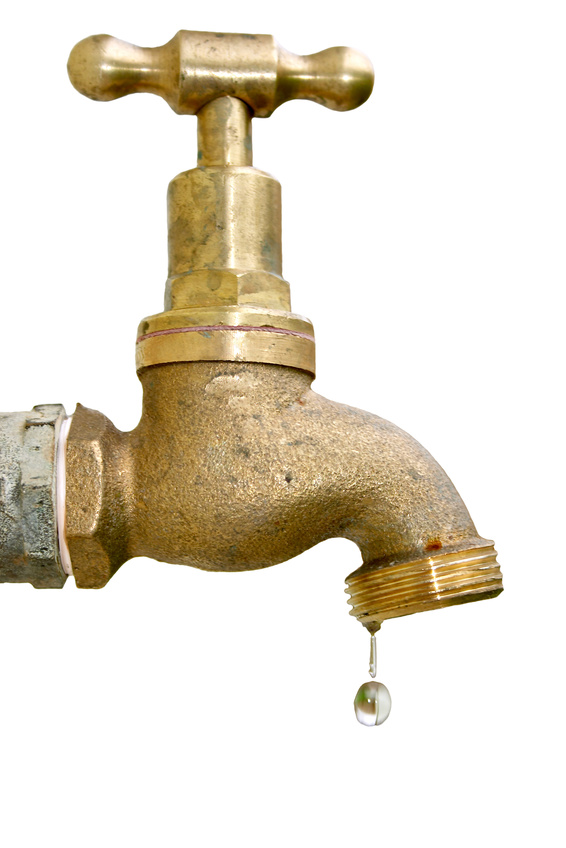
Of all Homeowners insurance losses, those from water damage are among the most common. Many people often don’t consider the potential risks in their own homes until it’s too late.
To minimize hazards that can cause water damage claims, we’d like to recommend these steps:
- Check for leaks. Periodically inspect the area around the refrigerator, washer, dishwasher, water heater, sinks, and toilets for drips, puddles, and discolored, warped, or soft flooring.
- Pay attention to your water bill. Monthly fluctuations could indicate a leak.
- Periodically check your water pressure. Water losses often occur due to excessive water pressure. Buy a pressure gauge at your local hardware store, and hook it up to a hose bib. If it’s above 65 psi, install a water pressure regulator.
- Before you go on vacation, take precautions. If temperatures in your area could dip below freezing, make sure that any exposed pipes are insulated, turn off the water supply to individual fixtures, and turn your furnace to low so that the pipes will stay warm enough to avoid bursting.
If you need to file a claim, follow these guidelines:
- Stop the source of the water by turning off the water main.
- Call your insurance company immediately. Most companies have staff 24/7 to help you set appointments with contractors who can dry out your house. Your insurer will also send an adjuster to assess the damage.
- Don’t start any major repair efforts until the adjuster has been to your home!
- Determine what was lost and document it. Even if things were ruined, don’t throw them away. Keep pieces of the damaged floor or ceiling, along with any valuable personal property, such as electronics or furniture. At a minimum, take photos or video of the damage.
For more information, give us a call at any time.
Read more
 You pull into the grocery store parking lot to pick up a few snacks, and park. As you head for the door, you push a button on your keyless remote to lock it. You don’t hear that faint chirp, but you’re in a hurry. Fifteen minutes later, you discover that your car is gone. Welcome to the world of 21st-century auto theft!
On the surface, things appear to be improving. Vehicle thefts fell 3.3% nationwide in 2011 (the most recent data) for the eighth straight year. However, auto theft still costs the nation an estimated $5.8 billion a year, thanks to streetwise thugs who feed chop shops and supply lucrative international black markets. These days, car thieves are becoming smarter, more tech-savvy, and harder than ever to stop.
Anyone can go to a home-improvement store and buy a $20 device that jams the remote keyless entry transmitter on a vehicle. If you aren’t paying attention, you walk away from your vehicle, press the button on the remote, and assume that it locks. However, a thief might be two cars over in the parking lot, punching a button to block the signal. The vehicle doesn’t lock, and the thief can take your laptop, portable GPS, or whatever else is inside. With enough time, he can even steal the vehicle!
To guard against jammers, pay attention to your surroundings and make sure your car doors do indeed lock when you press the button. Listen for the click or chirp, or look for the quick flash of lights that confirmations locking on most cars. If the vehicle doesn’t lock, try again. However, if locking doesn’t work on the second attempt – or if you see someone lurking nearby – move your car to a different spot.
An ounce of prevention..
Read more
 Wrap-up or “Wrap” Construction insurance can provide a highly effective tool to reduce costs and avoid headaches in insuring large, complex projects and the workers building them.
Wrap policies usually offer superior coverage, higher policy limits and greater contract certainty than traditional Commercial General Liability, Workers Compensation, and (often) Builders Risk insurance written for individual subcontractors and types of risk. What’s more, Wrap coverage can minimize potential cross-litigation on construction projects.
Although they’ve been available for decades, these policies have become widespread in recent years, due to the skyrocketing costs of raw materials, financing, and litigation. There are two types of Wrap coverage; owner-controlled insurance policies (OCIP), and contractor-controlled insurance policies (CCIP). Either variety allows the owner to spread the risk among different parties, while providing a seamless insurance safety net for every company and individual involved – which can translate into profit, based on loss experienced over the life of the policy.
Because of their extensive coverage, Wrap policies are usually more expensive than other types of Construction insurance for the owner or primary contractor, who will pass on the extra cost among the general contractors and sub-contractors on the project. This is a small price to pay considering the peace of mind that comes from having all coverages and insured parties protected under a single policy.
Because of their complexity, insurance companies often tailor Wrap policies for each project, writing them on a customized (“manuscript”) basis. Our agency’s professionals would be happy to work with you and your insurer in creating coverage that’s comprehensive and cost-effective. That’s what we’re here for.
Read more
 More and more businesses are offering workers quality legal services as a voluntary employee benefit, according to a nationwide survey of more than 300 human resource and benefits professionals. The study, sponsored by MetLife, found that the top reasons for the popularity of these services were improved employee satisfaction (69%) higher retention and loyalty (44%), and the ability to compete with other companies’ benefit programs (32%).
A majority of survey respondents cited these benefits of Group Legal plans:
- Helping employees achieve peace of mind when dealing with legal issues.
- Reducing employees’ levels of stress.
- Lowering the cost of legal services.
- Minimizing workplace time in dealing with personal issues.
- Providing quality legal services (57%).
More than 90% of survey respondents found that legal plans are easier, or as easy, to administer than other voluntary benefits plans. These programs also have high persistency rates for both employers and employees.
Says Bill Brooks, CEO of Hyatt Legal Plans, “This is a benefit that spans the generations and suits a diverse workforce because there’s a broad range of situations where an attorney can help.
Legal assistance at a cost of less than some attorneys may bill per hour can be an effective way to generate employee loyalty.” There’s a clear need for this coverage: According to the American Bar Association, 71% of people encounter a legal problem every year.
Will preparation and estate planning are the most frequently offered services under Group Legal plans, followed by family matters, home purchases and sales, and credit problems, among others.
If you’d like to add a comprehensive, cost-effective Group Legal plan to your voluntary Employee Benefits portfolio, please free to get in touch with the professionals at our agency. As always, we’re here to help!
Read more

By decreasing work time lost from to job-related injuries and illnesses, Return-to-Work (RTW) programs can reduce your insurance costs (Workers Compensation, Disability, and Medical insurance), strengthen workplace morale, boost productivity – and help protect you against ADAAA litigation.
Here are ten common mistakes by businesses when using RTW:
- Failure to manage the higher number of employees covered by the ADAAA. An expanded definition of disability has increased the number of employees under the ADA to the point that some attorneys advise against fighting disability claims.
- Insisting on employee release to “full duty” before returning to work. This raises Workers Comp costs and the possibility of the employee not returning to work when medically possible.
- Ignoring co-morbidities. Health issues that complicate or delay an employee’s recovery (such as diabetes, obesity, and hypertension) can increase Comp claims.
- Failure to commit the necessary budget or resources. The costs of absences and non-compliance with government rules is usually far higher than that of implementing an RTW.
- Reluctance to set transitional assignments because employees “might get reinjured.” It’s even riskier to have them stay at home and develop a “disability attitude” that extends the absence and boosts costs.
- Failure to distinguish “light duty” from “transitional work.” The ADAAA permits employers to reserve less physically demanding or “light-duty” jobs for those with work-related disabilities – and these jobs should be distinct from transitional tasks.
- Relying on physicians to guide the RTW process. Although physicians are medical experts, they’re not familiar with workplace policies, job demands, and the availability of transitional work.
- Failure to understand overlapping and conflicting laws. The clashing requirements of insurance companies and state and local governments can be a nightmare.
- Inability to focus on the goal. An Integrated Benefits Institute study ranked a focus on the employee’s job as the major success factor in successful RTW programs.
- Believing that Workers Comp settlements resolve other liabilities. One size does not fit all.
Read more

Third-Party Administrator (TPA) adjusters form the front line of defense against unnecessary claims expenses, including such traditional cost drivers as fraud or opioid pain medication addiction. They’re the ones who determine how soon employees will mend and return to the job, the length of claims, and whether closing a claim will require additional resources, such as attorney involvement. It makes sense that the more closely you monitor the adjusters of your company’s TPA, the lower your Workers Comp claims costs – and premiums.
However, adjusters today are running on overload more than ever. In addition to managing larger caseloads, they face growing real-time information demands, increasing communication speed, and expanding regulations – which distract them from such cost-control practices as staying in contact with injured workers. Says one claims adjustment expert, “The fastest way of getting an injured employee to hire an attorney is making them feel like you don’t really care about their injury. So you end up with a lot more claims than necessary going to attorneys, which leads to higher claim costs.”
It makes sense to work closely with your TPA adjuster by following these guidelines:
- Interview adjusters before they’re assigned to your company.
- Review the adjuster’s claims notes on a regular basis.
- Audit the TPA’s services periodically to make sure that the adjuster is meeting your expectations.
- Develop close relationships with claims examiners and their supervisors.
We’d be happy to work with you and your TPA adjuster on keeping tabs on your Workers Comp claims costs. Please feel free to get in touch with us.
Read more
