 For years, Owner-Controlled Insurance Programs (OCIPs) were only found on large, single-site projects. Every day, more contractors are being required to work under these types of arrangements, either on smaller projects or “rolling” OCIPs that cover multiple projects. This requires contractors to identify and deal with the variety of complex issues that these programs raise.
Don’t go it alone. Our Construction Insurance professionals stand ready to help. If you’d like to do some research on your own, the Insurance Risk Management Institute (IRMI) provides a wealth of solid safety guidelines that are updated frequently. Originally created as a resource for contractor risk management information, IRMI publishes one of the best and most extensive libraries of insurance expertise in the nation and is widely used by insurance agents and risk managers in all types of businesses.
“A Contractor’s Guide to OCIPs,” available on the Construction Business Owner Web site, offers valuable guidelines on the benefits and risks of these programs, together with tips on making the most from them, and dealing with such issues as loss costs, separating Construction Insurance costs from bids, and estimating labor expenses.
Check out the guide. Then give us a call on how to apply its principles to your business. When it comes to your protection, don’t let “owner controlled” mean “out of control.
Read more
In a recent HR webinar, I asked three highly revealing polling questions. Here they are:
- What have you done to show your value?
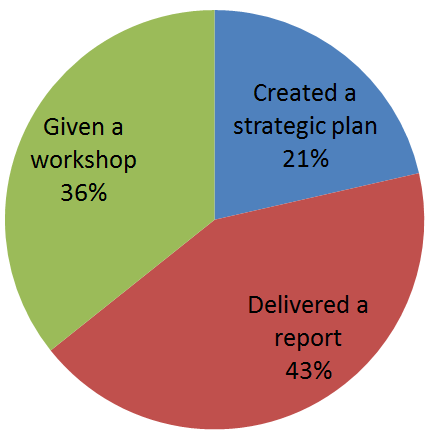 Nobody knows that you’re doing a great job unless you tell them. It’s not that they don’t care about you; it’s just that they’re running 75mph and barely have time to pay attention to anything but their own work. What effort have you made to get noticed by delivering a report or giving a workshop? Unfortunately, only 21% of respondents said that they created a strategic plan. As Mary Kay once stated, “most people spend more time planning their vacations better than their career.” Or, as I might add, their HR department.
- How excited are you about the HR opportunity on a scale from 1-5 (5 being very excited)?
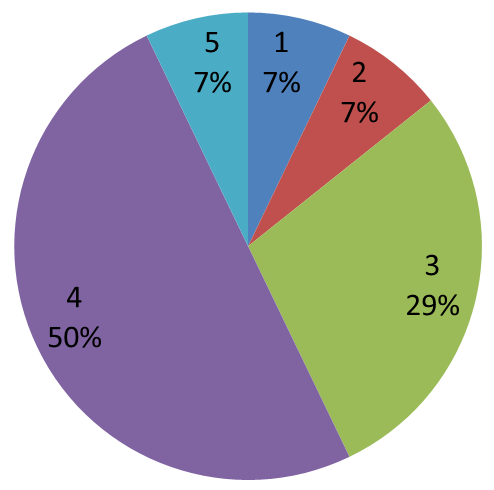 Half of the respondents described themselves as fairly “excited.” Unfortunately, some 43% were just “ok or worse” with HR. Most organizations find the whole idea of HR boring. My guess is that is not the case at the 7% of companies where people said they were very excited about HR! I believe that if 7% can be excited, so can the 93%. It’s simply a choice. What have you done in HR lately that goes beyond administrative or compliance requirements? What have you done to help improve the quality of the workplace (getting rid of poor employees and replacing them with great ones is a start), increasing performance management (having a performance management system that actually works), boosting retention, and giving greater love to that 20% of your workforce that produces 80% of results? What are you helping your company do to become more creative, innovative, and interesting?
- What’s stopping you?
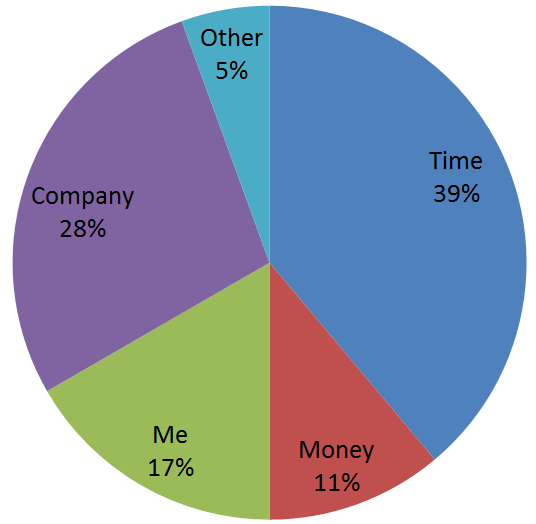 I often ask this question in workshops and in webinars. Time is always the most common response (one of those buts again), followed by the company or management. A survey of HR That Works members found that 84% of respondents said they would make better use of the service if they had more time.
Time management is a major issue!
Go to the time management training on HR That Works. Watch the two videos and then start putting them into practice. I would recommend that you start by tracking where your time is going and then eliminate five hours of the uncool, un-valuable work you do every week.
Read more

A pipe bursts and water ruins a corner of your Brazilian cherry wood floor. A windstorm tears off half of the vinyl shingles on one side of the house. A fire burns a couple of kitchen cupboards. Although your Homeowners policy will cover such partial losses, the extent to which the insurance company must go to make everything look just the way you’d like can be tricky.
Let’s say that the new siding contrasts with the older, weathered shingles or that you can’t find replacement kitchen cupboards that precisely match the originally.
Your claim should put you back to pre-loss condition so the new part shouldn’t stick out like a sore thumb. For example, this might mean replacing the entire floor of a room even if only a portion needs repair, or repainting all four walls after damage to only one.
In some states, if replaced items don’t match in quality, color or size, the insurance company must make “reasonable repairs or replacement of items in adjoining areas.” Although other states don’t have laws on matching, some Homeowners insurers have added similar “non-matching language” to their policies.
Besides varying by state, insurer, and policy, the issue of patching versus full replacement can depends on insurance company adjusters.
If you can’t get make any headway with the adjuster on the repairs you want, consider going over his or her head to a supervisor, or file a complaint with the state insurance department. Another option is to hire a public insurance adjuster to work on your behalf through the claims process. These professionals usually charge about 10% of the final settlement.
Read more
 Following these principles of leadership will help you and your employees focus on job safety:
- Don’t walk by. It is everyone’s responsibility to prevent any potentially unsafe acts and conditions they witness from turning into accidents.
- STOP! Encourage employees to stop working whenever they feel unsafe, no matter what reason they give.
- Focus on a safe working environment. If you expect your workers to work safely, make their workplace as safe as possible.
- Don’t blame the worker first. Unsafe ways of working, accidents, incidents, and ill health aren’t necessarily the worker’s fault. The problem often comes from less obvious causes, such as decisions by management.
- Use your workforce for ideas. Employees often have a more accurate idea than you or your managers about which safety and health practices will work, because they deal with these issues every day.
- Be patient. Don’t expect quick wins. Improvements will emerge over time, but only if you stick with them.
- Explain your decisions. Just telling workers that something is wrong or a safety risk isn’t enough. If they’re to act on the information you provide, they need to know why and how to avoid harm.
- Lead by example. Your behavior sends powerful signals. If you carry out your job in a safe way, your workers are more likely to do the same. If you don’t, they won’t imitate you.
- Focus on co-operation. Treat your subcontractors in the same way as employees by encouraging them to communicate with each other.
- Don’t neglect occupational health. If you look after the health, as well as the safety, of your workers today, you’re less likely to create problems for them or your business tomorrow.
Sound advice!
Read more
 No matter how prepared you are – or believe you are – you can still suffer a cyber-security breach. What you do next can have a profound impact on the reputation of the business, customer loyalty, employee morale, and, ultimately, your bottom line.
An effective communication strategy should follow these guidelines:
- Notify key regulatory and legal authorities as soon as possible, unless this might impede a criminal investigation. Even if notification isn’t required by law, it’s an important courtesy.
- Make sure that staff roles and responsibilities for communicating the breach are outlined and understood clearly.
- Tailor the notification process to the audience – high-value customers, senior employees, or individuals who might particularly vulnerable (such as the elderly, the disabled, and minors) and to the nature of the breach; handle the theft of confidential client information differently than stealing employees’ Social Security numbers.
- Have legal counsel review the method and content of all communications.
- Prepare for media inquiries to deliver a clear message for parties affected directly or indirectly. Be sure that your spokesperson is qualified and trained to deal with the media.
- Provide ways for victims of the breach to ask additional questions and/or learn how to minimize potential harm.
- Test the plan: If you had to execute it, how well did it work, and how did you update it? Many businesses have discovered holes in their response plans after failing to consider the impact of a cyber security breach on daily operations, or underestimating the attention the event drew.
To learn more about spreading the word after a data breach, please get in touch with us.
Read more
 A recent study by the Consumer Federation of America (CFA) spotlights the value of employer sponsored disability coverage in helping meet the health and financial well-being of workers.
According the Social Security Administration, one in every four employees will use their disability coverage at some point.
Despite this need, the nationwide survey found that fewer than two in five workers (39%) in the private sector have short-term disability (STD) coverage through their employers and only one in three (33%) have employer sponsored long term disability coverage (LTD).
Studies by the U.S. Bureau of Labor Statistics and Mathew Greenwald & Associates have found similar rates of participation in these programs.
CFA Executive Director Stephen Broback says, “Surveys have shown that disability insurance is a critically important part of the social safety net”. . . “that plays an essential role in protecting the emotional and financial lives of workers.” Based on the study’s findings, he urged “all employers to offer the option of obtaining disability coverage.”
The survey also found that when businesses don’t offer LTD, many workers would buy it for themselves if they could receive the lower group rates available through employer sponsored coverage. Most disability plans cost workers between $10 and $30 per month, and the average monthly premium for STD coverage comes to $18.
More and more employees are benefiting from these plans, an estimated 650,000 disabled workers received employer sponsored LTD payments last year.
If you’d like to offer your employees this valuable “peace of mind” benefit, or for a complimentary review of your disability plan,– feel free to get in touch with us at any time. It’s our pleasure to serve you.
Read more
