 Engineers, firefighters, lawyers, teachers, and police officers all have one thing in common: they qualify for Auto insurance discounts with some insurers who have found that people in certain fields tend to be less risky drivers than those in other occupations.
A number of insurance companies offer discounts to those in a variety of professions – everything from architects, CPAs, and college professors through librarians, military personnel, and pilots, to physicians, registered nurses, and scientists.
Here’s why: although practicing architecture or flying a plane doesn’t necessarily make a driver more responsible, insurance underwriters don’t have to prove cause and effect when setting rates. They need only show a relationship between these rating factors and risk.
A variety of factors can come into play in determining discounts. One Auto insurance company offers up to a 5 % discount to first responders, such as firefighters, police officers, emergency medical technicians and paramedics. Because these people tend to work in the communities where they live, they probably don’t commute long distances. First responders might speed down the road in emergencies, but not in their own vehicles, and they tend not to work from 9 to 5 – which means that they’re at lower risk for accidents.
Discounts vary by occupation, insurance company, and state. Some companies offer discounts for a long list of occupations and professions, while others provide them to only a few, or none at all. Some jobs receive larger discounts than others.
Rules for discounts also vary by field. To qualify for one company’s discount, health care providers must have a license to practice, as well as a degree. However, policyholders who have earned at least a bachelor in engineering, math, or science qualify for an 18% discount, even if they work in other fields.
Your occupation or profession might well entitle you to a substantial discount on your Auto insurance – even if you’re retired. For more information, please get in touch with us.
Read more
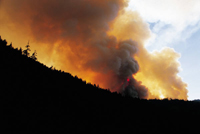
Hurricane Sandy, tornadoes, flood — all of these disasters affected construction firms during the past year. Some companies took direct hits, while others suffered from massive service demands, and shortages of help and supplies.
Although your business might never face such massive “destruction and distress,” other events –everything from IT failure to vandalism — could trigger a crisis.
Whether it’s a catastrophe or a stressful disruption, the best way to prepare for any potential disaster is to develop a catastrophe plan in advance. This plan should allow your staff to mobilize the right resources quickly in the right order so you can get up and running with as many contingencies as possible accounted for in advance.
How do you go about developing a plan? What’s the process? Who should you include? How often should you review and update it? An effective plan should involve a “business resumption team” with managers from these areas:
- Information technology
- Communications, both internal and external
- Moves and relocations
- Services and logistics
- Salvage and security
- Customer service
Before a crisis erupts, the team will determine what activities to follow, assign responsibilities for these tasks, and provide the resources and information needed. When compiled and organized, these activities, responsibilities, resources, and information make up the disaster plan.
Don’t wait for a crisis to uncover the gaps in your preparations. Get started now on creating and/or updating your plan.
Feel free to give us a call so we can offer our advice and recommendations. Insurance might not solve all your crisis planning problems, but it can provide a solid foundation.
Read more
 Whenever you’re asked to bid on a job, you’re usually required to certify that the price is firm and that there won’t be any unexpected expenses and cost overruns once the project is underway. Because this is standard practice in the industry, it’s understandable that some contractors are surprised that their insurance costs don’t operate the same way — especially when the contractor has asked agents for “bids” on the insurance package.
Neither Workers Compensation nor General Liability, two of the key coverages in Construction insurance, usually set fixed premiums. Because payrolls and/or revenues the contractor pays or earns during the policy period determine the premiums, and there’s no way to know these costs in advance, the premiums will also be estimates. Once actual payrolls and revenues are known (usually after an insurance company audit after the end of the policy period), the company will set the final premium based on these figures. The contractor — you — will then receive either a refund (if your insured losses were lower than expected) or a bill for the additional premium due (when these losses are higher than expected).
Although it’s never pleasant to owe more money after a policy has expired, keep two things in mind: First, if the insurer were able to predict the final results accurately, it would have charged this amount in advance. Second, an additional premium due after an audit shows that you had a better year than expected — and that’s always good news!
If you have any questions about how your insurance works or how premiums are calculated, just give us a call. We’re here to help.
Read more
 When an emergency (anything from an explosion to workplace violence) strikes your business, taking the wrong action can result in confusion, damage, injury — or even death. That’s why it’s vital to have a comprehensive plan for dealing with different types of mishaps.
For example, in the event of a tornado, you’d want to have your workers sheltered in a safe place inside your facility. On the other hand, in a fire, you want them to be able to flee the building quickly and safely. The type of building might be a factor in your decision. Most modern factories and office buildings have steel frames, which means they might be more sound structurally than small business premises. However, a major earthquake or explosion will affect nearly every type of structure; some buildings will collapse, while others will be left with weakened roofs, walls, or floors.
Consider both emergency situations that would require evacuation and those that would indicate the need to stay put, and plan accordingly. For example, what would happen if a part of your facility caught fire? Suppose there were severe flooding in your immediate area? How would you respond to a chemical spill? What would you do if an ex-employee with a gun was threatening your workers?
Certain natural disasters, such as windstorms or large-scale chemical or biological releases outside your facility call for “sheltering-in-place” (selecting an interior room or rooms, normally with no or few windows, and taking refuge there). In many cases, local authorities will issue advice to shelter-in-place via TV or radio. Designate a safe haven, or havens, inside your building for employees until the danger has passed. Hold shelter-in-place drills, as well as evacuation drills.
If any employees need to stay behind in an emergency so that they can shut down certain equipment or perform other duties, your action plan should set out detailed procedures for them. Make sure that these workers are able to recognize when to abandon the operation or task and evacuate before their exit path is blocked.
To learn more about designing and implementing an emergency action plan for your business, please feel free to get in touch with us at any time. We’re here to help you protect your business from risk.
Read more
 Employees who don’t learn the safe way to work are accidents waiting to happen — and that means that workplace safety training should play an integral role in your company’s risk management program.
Repetition is essential to this process. Make sure that your trainers repeat essential work safety concepts, information, and terms several times. Look at it this way: At any moment during a training session, some trainees probably aren’t going to be paying full attention — and if they don’t hear something, they’re not going to do it when they get back on the job. What’s more, many people might need to hear, see, or experience things at least twice before they understand.
Repetition is also important when it comes to practical applications of safety information. Employees need the opportunity to practice what they’ve learned until it’s locked into their heads and their performance is flawless. So when a safety procedure involves a practical act, be sure that the trainers give a demonstration, repeat it a few times until everybody catches on, and provide feedback while trainees practice.
You’ll also need repetition to make sure that workers don’t forget what they’re supposed to have learned. Training industry leader Bob Pike says that people can remember 90% of what they’ve learned one hour after training, 50% after a day, 25% after two days, and only 10% 30 days later. According to Pike, full retention of subject matter requires no fewer than six repetitions! That means plenty of follow-up and refresher training — especially for more complex material. Other experts recommend spacing safety reinforcement training so that employees can practice new procedures and skills or use new information on the job supported by coaching before they go back to the classroom for review and additional training.
Read more
 There’s nothing like a celebration to bring co-workers together and make them feel as though they’re one unified work family. Although a celebratory meal or party can bring cohesiveness, employers should be careful not to let celebratory events become a liability. Of course, the entire point is to allow attendees to relax, have fun, and interact on a more personal level. But, the double-edge comes from attendees mistaking a relaxed atmosphere as leeway to behave in an inappropriate manner or attendees becoming so relaxed that they behave in a way that they normally wouldn’t. Out-of-bounds behavior should be of particular concern if there’s alcohol involved in the workplace celebration.
In order to avoid lawsuits, there are several elements that employers should consider prior to any celebratory workplace event. Before the event, employers should make sure that they have informed the attendees of what will be considered improper behavior. It’s a good idea to remind and caution employees that even though the event is a party, it’s still a business event and that inappropriate touching, gifting, and off-color or offensive remarks are still considered inappropriate behaviors. Employers should be mindful that under Title VII, it only takes one inappropriate incident to bring about a timely and costly lawsuit. It might be helpful to have supervisors or managers go over the company policy with employees, especially the sexual harassment section. While going over the company policy, the supervisor or manager can also inform employees if there will be any exceptions to normal company policy made specifically for the party, such as attire varying from the normal dress code.
In the event that clients will be attending a workplace party, employers might have additional concerns that should be addressed beforehand. For example, what should an employee do if a client is making inappropriate advances or conversation? It’s usually pretty clear to employees how to handle such a situation during normal workplace hours, but sometimes employees are specifically told to make sure clients have fun at a party. This can create a recipe for legal disaster if not addressed properly. Make sure to set up a way for any employee that’s been given such an assignment to exit the situation if it becomes uncomfortable for them. This can be accomplished by setting up a room as a coffee bar or lounge and ushering clients that become unruly to the room to calm down or sober up. It’s also a good idea to have a buddy system in place for all employees handling clients. If a client becomes unruly or inappropriate he/she can be passed off to their designated buddy.
If alcohol is served, employers might consider having only a specific time frame for it. This can help to prevent party-goers from becoming intoxicated, belligerent, or driving home intoxicated. It’s also a good idea to have a transportation system, such as cabs or designated drivers, in place for party-goers that overdo it on alcohol.
Although inappropriate behavior directed toward an employee’s guest or family member might not be considered workplace harassment, it can cause a great deal of unnecessary workplace conflict. It should be made clear that inappropriate behavior toward any guest will have disciplinary actions.
One last concern is the first workday following the party. Everything that happened or didn’t happen will be discussed and scrutinized. Conversation and actions that might have been laughed at during the party or intended innocently might not always be so funny or acceptable by the next day. It’s important to encourage an open and honest dialogue about any gossip topics so that misconceptions and hard feelings can be prevented.
Read more
