 Homes take a beating on the outside, from wind, rain, sun, insects and snow. Summer gives you a chance to repair damage, protect your home and keep its face to the world looking bright.
Home maintenance is like housework, flossing and exercise: You might as well work it into your routine, because the penalties are worse than the jobs themselves.
Here’s just one example: Cleaning the gutters costs nothing if you do it yourself, and roughly $100 to $200 if you hire a service. Ignore the job, though, and a ruined roof or damaged foundation could cost you thousands or tens of thousands of dollars to repair. Here’s why:
Leaky or overflowing gutters can rot fascia boards (the roof edge under the gutters), soffits and rafters.
Water may drip onto window trim, rotting it.
Leaky gutters let water pool at the foundation, causing basement leaks, mold and even foundation damage.
1. Paint
Fresh paint doesn’t just make your home look great. It’s a protective skin against UV light and moisture.
Earth911 tells where to get free paint:
Many household hazardous waste (HHW) facilities around the country have product exchange rooms, sometimes called swap rooms or swap shops. These rooms offer safe, unopened HHW items for public consumption, keeping them out of the landfill and letting you save some money.
Call your city to ask about your local HHW facility. Other sources for cheap paint:
- Habitat for Humanity’s ReStores (find one near you) sell “gently used” tools and supplies for home projects at low cost.
- See EcoBusinessLinks’ national directory of recycled and surplus building materials and suppliers.
- Search online for a city’s name and “salvaged building supplies” or “recycled building materials.”
2. Mulch
Laying a 1- to 3-inch layer of mulch on garden beds spares a lot of weeding. Mulch smothers weeds by depriving them of oxygen and light and it holds moisture in the soil, saving water and giving plants a consistent source of moisture.
Mulch includes many materials placed on the ground to prevent weeds from growing, including rocks, gravel and plastic. Leaves, grass clippings and tree bark are organic materials most often used on garden beds. Hay and straw also are used in vegetable gardens. Organic mulch breaks down into nutrients that feed plants.
Be careful in vegetable gardens to avoid mulch with pesticides, herbicides or other garden chemicals. Also, used incorrectly, mulch can damage or kill trees and ornamental plants by depriving them of oxygen, so leave a 3- to 5-inch space around stems of younger plants and give mature tree trunks eight to 12 inches. North Carolina State University’s Cooperative Extension Service explains how to safely use mulch.
Free or cheap sources of mulch:
- Grass clippings. Let them cool down before mulching.
- Raked leaves. Shred first with a shredder or lawn mower so air and moisture can reach the soil beneath.
- Shredded wood or bark. Electric utility companies and tree services may have cheap or free wood chips or shredded bark. Also, some cities collect leaves and branches, chipping them for use by local residents.
- Cardboard. Ask recycling centers and appliance stores for free cardboard. Wet it down, cut it to fit and place it around plants, covering with soil or bark mulch. This is best in wet climates where cardboard breaks down into the soil. WikiHow gives instructions on using cardboard and has more ideas for cheap mulch.
3. Seal wood decks
The cheap way to approach this job is to do it yourself. It’s not difficult, although it’s nice to have help. You’ll spend a couple hundred dollars on supplies and rented tools. Do it annually or every two to three years, depending where you live. Ignore the job long enough and you’ll need to replace the deck, at a cost of thousands of dollars.
Read the entire article here.
Read more at http://www.moneytalksnews.com/2014/06/02/12-cheap-and-easy-summer-home-projects/#4f2LmYs5xjDE2Rbw.99
Read more
 There are several steps you can take to ensure you are getting the best Homeowners insurance rates possible for the coverage you need:
- Before purchasing a home, it is wise to learn about its insurance loss history. If there have been past losses, be sure to inspect the home closely to determine if proper repairs were made. The CLUE and A-PLUS databases enable insurers to check the claim history of the property as well as that of the homeowner.
- Raising your deductible is a great way to reduce your premiums. Higher deductibles on your Homeowners insurance could produce savings of 25% or more.
- Consider upgrades to your home. Do you need to modernize your heating, plumbing, and electrical systems to reduce the risk of fire and water damage? Are there upgrades you could make that would reduce the risk of damage in windstorms and other natural disasters? You might be able to save on your premiums by adding storm shutters, reinforcing your roof, or buying stronger roofing materials. Older homes can be retrofitted to make them more capable of withstanding earthquakes. If you do make home improvements, be sure to make your insurer aware of the changes.
- Improve your home security. You typically can get premium discounts of at least 5% for installing a smoke detector, burglar alarm or dead-bolt locks. Some companies will cut your premium by as much as 15% or 20% if you install a sophisticated sprinkler system and a fire and burglar alarm that signals the police, fire department, and other monitoring stations. These systems are not inexpensive and not every system qualifies for a discount. Before you buy such a system, find out what kind your insurer recommends, how much the device would cost, and how much you would save on premiums.
- Buy your Home and Auto policies from the same insurer. Some companies that sell Homeowners, Auto and Liability coverage will take 5% to 15% off your premium if combine policies with them.
- Maintain a good credit rating. Most insurers use credit-based insurance scores to determine Homeowners and Auto coverage premiums. All else being equal, a person with a good credit score will pay much less for insurance than someone with a lower score.
Contact our office today for more information.
Content provided by Transformer Marketing.
Read more
 Approximately 15 million people worldwide have a stroke every year. Of these, almost 6 million die, while a further 5 million are left permanently disabled. But although stroke is the one of the leading causes of death globally, many people remain unaware of the signs and symptoms to look out for, therefore putting their health at risk.
The American Heart Association/American Stroke Association(AHA/ASA) state that around 1 in 3 Americans are unable to recall the warning signs of stroke.
Furthermore, a recent AHA/ASA study revealed that many women in the US are unaware of stroke warning signs, even though they are at much greater risk of stroke than men.
“This lack of recognition of stroke signs and symptoms could be a significant barrier to reducing death and disability related to stroke in the US,” says Dr. Lori Mosca, who led the study. “This is critically important because delays in getting care costs lives and hinders functional recovery.”
May is National Stroke Awareness Month – an annual campaign introduced in 1989 that aims to increase public awareness of stroke in an attempt to tackle the condition once and for all.
In line with this campaign, this week’s spotlight feature looks at the signs and symptoms of stroke, the risks associated with the condition and what can be done to increase stroke awareness.
What is stroke?
A stroke occurs when an artery or blood vessel becomes blocked, restricting blood flow to the brain. This leads to brain cell death, and, subsequently, brain damage.
How a person is affected by stroke depends on where in the brain the stroke occurs and how much of the brain is disturbed. Many stroke patients experience impaired speech, movement and memory. In severe cases, patients may suffer paralysis or even death.
There are two main types of stroke – ischemic stroke and hemorrhagic stroke. Ischemic stroke is the most common, accounting for around 87% of all strokes. This occurs when the arteries are blocked by blood clots or a gradual build-up of plaque and other fatty deposits.
Hemorrhagic stroke occurs when a blood vessel in the brain splits, leaking blood into the brain. Although only 13% of all strokes are caused by this, it is responsible for more than 30% of all stroke deaths.
The risk factors
There are many risk factors for stroke, many of which are out of our control. For example, individuals over the age of 55 are at greater risk of stroke, as are African-Americans, Hispanics and Asian/Pacific Islanders. Individuals who have a family history of stroke or TIA (Transient Ischemic Attack) are also more likely to have stroke themselves.
And women are more likely to have stroke than men. In the US, around 55,000 more women than men have a stroke every year.
Individuals with high blood pressure are one and a half times more likely to have a stroke than those with normal blood pressure.
But there are also risk factors for stroke that are within our control – one of the most important being high blood pressure, or hypertension. According to the National Stroke Association, people who have high blood pressure are one and a half times more likely to have stroke than those who have normal blood pressure.
“The No. 1 stroke risk factor is high blood pressure. It’s important to check your blood pressure regularly and talk to your doctor about healthy levels for you,” says Dr. Jeffrey L. Saver, professor of Neurology at the University of California Los Angeles and a spokesperson for the ASA.
High cholesterol also increases the risk of stroke, as cholesterol can block blood flow in the arteries. Furthermore, high cholesterol can raise the risk of heart disease and atherosclerosis – risk factors for stroke in themselves.
Smoking is another risk factor. Compared with non-smokers, those who smoke are at double the risk of stroke. It reduces the amount of oxygen in the blood, meaning the heart has to work harder to pump blood around the body. This means blood clots find it easier to form in the arteries, which can cause a blockage.
Those who are overweight or obese are also at increased risk of stroke. Excessive weight can increase the risk of high blood pressure, high cholesterol and diabetes.
Read the entire article here.
Content provided by http://www.medicalnewstoday.com/articles/276240.php
Read more
 Keeping in mind that there are many types of coverage and each individual consumer will have different specific insurance needs, there may be several reasons to consider consolidating your various policies with a single carrier. For most people, the pros of consolidation usually outweigh the cons, but here are some points from both sides:
Cost. Consumers often find there’s a cost benefit in consolidating their coverage with a single carrier. While the exact number will vary from company to company, it’s very possible to save 15% or more. Specialist companies still exist, but many generalist insurers have diversified their product lines to include an array of business and personal insurance and financial products. Since an insurance carrier is gaining customer loyalty and reducing their marketing costs when an existing customer purchases additional products, they’re usually willing to pass a portion of their savings on to their consumers.
Gaps. Depending on the types of coverage you’ve purchased and your unique situation, certain coverage gaps could be reduced when you consolidate your insurance portfolio. Take purchasing General and Professional Liability through the same carrier as an example. An accountant, for example, would have little risk of their professional services leading to property damage or bodily injury, but a travel agent, for example, routinely makes professional recommendations that could have physical consequences for their clients. The travel agent might be unaware that a lodging they recommend to a client is undergoing renovations. The client slips and falls due to unsafe conditions and sues the travel agent for not knowing the condition of the lodging before recommending it. If the travel agent has General and Professional Liability through two different carriers, then he/she may find the two carriers pointing the finger in opposite directions and disclaiming coverage. Whereas, if the travel agent has both coverages under the same carrier, then the disclaiming concern is moot since there isn’t another company to point the finger at.
Tailoring. Many carriers have learned to anticipate the common problems associated with coverage gaps, such as in the example discussed above. These carriers have created tailored packaged policies or programs with multiple different coverage options. These options interlock, but don’t unnecessarily duplicate coverage or dangerously leave gaps between coverages. Umbrella policies perform best when written by the carrier of your primary coverage(s).
Cons. As with most everything in life, there are cons to consolidation. It’s important that you look at the financial strength of the insurance carrier. If an insurance carrier is poorly rated by any of the rating services that monitor insurers, then the increased risk of going with an insurer that has questionable financial strength might outweigh any of the cost, gap, and tailoring pros. Another con is that the insurer might quickly change their hunger for a certain product and leave you having to find replacements for multiple policies. Research the company’s track record – have they typically stuck it out during bad and good times or have they timed the market to make a quick dollar and exit? Although most generalist insurers have diversified their offerings, it’s possible to miss out on some coverage benefits still only being offered by specialists.
In closing, consider the above points and how each could or wouldn’t meet your needs. In most cases, you’ll find that coverage consolidation and the right carrier creates a winning scenario for all parties involved.
Content provided by Transformer Marketing.
Read more
 The arrival of summer means days at the pool, family barbeques, picnics, sports and other outdoor activities. Follow these tips this summer to keep your whole family happy and healthy:
Staying active in the summer months
The arrival of spring and summer means days at the pool, family picnics, baseball and other outdoor activities. Here are some tips to keep your family physically active in the warmer months:
- Hydrate! Drink plenty of water before, during and after physical activity to avoid dehydration. For low-calorie flavor, add slices of your favorite fruits such as melon, oranges, berries or even cucumber or mint to a pitcher of water and refrigerate for two hours.
- Protect your family from the sun: wear wide-brimmed hats, always apply water-resistant sunscreen with at least SPF 15 and reapply sunscreen every 2 hours.
- Heat safety: avoid intense activities between noon and 3 p.m. when the sun is at its strongest.
- Dress for the heat: wear lightweight, light colored clothing, choose light, breathable fabrics such as cotton, and wear sunglasses to protect your eyes.
- Head indoors: when the heat gets unbearable, try indoor activities at your local YMCA or rec center like basketball, swimming, yoga or racquetball.
Heart-Healthy Cookout Ideas
Warmer weather may mean it’s time to break out the grill, here are some tips and ideas for a healthier grilling cookout:
- Go fish! Fish, especially oily fish like tuna and salmon have great nutritional benefits including omega-3 fatty acids. Rub a fillet with lemon juice and parsley or rosemary for enhanced flavor.
- Make a better burger: if you’re grilling burgers, be sure to buy lean or extra lean beef, drain off the excess fat after cooking and avoid making huge patties – remember that a serving of meat is about the size of a deck of cards (3 oz). Add finely chopped green pepper to your beef to get in some veggies.
- Baked fries: Slice white or sweet potatoes into sticks, lightly spray with olive oil cooking spray, pepper and paprika and bake on a cookie sheet for 40 minutes at 375 degrees.
- Veggie kabobs: load up skewers with mushrooms, peppers, cherry tomatoes, zucchini, yellow squash or other veggies. Spray lightly with olive oil cooking spray and grill until slightly blackened.
- Try grilled corn on the cob: leave the husks on, and grill for about 30 minutes over medium flame, rotating occasionally. Remove from grill, let cool for about 5 minutes, remove husks and enjoy!
Healthy Road Trip
Road trips can take a toll on everyone – here are some ideas to keep things healthier while on the open road:
- Make “rest breaks” active: pick a road stop or park and get the family out of the car to take a brisk 10-minute walk and move around. Not only will it burn off some energy, but it can also help the driver feel rejuvenated and more alert.
- Pack healthy snacks: finding healthier snacks at road stops can be difficult. Pack apples, grapes, raisins, whole grain fiber-rich crackers or another favorite low fat, low sodium healthy snack to take with you.
- Pack to play: plan to incorporate regular physical activity into your daily routine while you’re away from home. Pack a football, soccer ball, Frisbee, or paddle balls so that you can be physically active throughout your downtime.
- Reach for water: sitting in the car for long periods of time can make it tempting to drink soda, which has extra calories and added sugar. Pack water (flavored or regular), fat free or lowfat (1%) milk and small portions of 100% juice to quench your thirst.
Summer Snack Ideas
Try some fun and refreshing summer snacks that the entire family can enjoy:
- Fruit pops: Homemade freezer pops are an easy, fun treat for kids to make. Mash up fruit like peaches, grapes, berries or watermelon and put them in paper cups, insert a popsicle stick, freeze overnight and enjoy!
- Cool and crisp: keep a variety of colorful veggies on hand that stay cool and crunchy for a refreshing treat – baby carrots, cucumber slices, and celery sticks are just a few ideas.
- Fruit smoothies: blend your favorite fresh fruits with fat-free or low-fat yogurt and ice for a refreshing drink or freeze and eat with a spoon like a frozen ice chill.
- Mix it up: make your own trail mix using your favorite unsalted, oil free nuts, seeds and dried fruits (just be sure to keep your servings to 1.5 ounces or 1/3 cup).
- Just slice and serve: summer months are peek season for most fruits, just slice and serve – the whole family will enjoy the refreshing natural sweetness and juices just the way nature made ‘em!
Enjoy your summer, the healthy way!
Content provided by https://www.heart.org/HEARTORG/GettingHealthy/NutritionCenter/HealthyEating/Summer-Tips-for-a-Healthy-Heart_UCM_303868_Article.jsp
Read more
 From drinking or texting while driving to using a designated driver, there is a disconnect between what teenagers acknowledge as risky behavior and what they actually admit to doing behind the wheel, according to a survey from Liberty Mutual Insurance and SADD (Students Against Destructive Decisions).
While teens know certain behaviors and situations are risky, many don’t apply that knowledge when it comes to getting behind the wheel. For example, a good number say that it is acceptable for a designated driver to have alcohol or that a designated driver is simply the most sober person in a group. Also, a majority of teens admits to using a cell phone while driving despite knowing the danger.
Drink and Drive
According to the survey results, teens claim to understand the dangers surrounding drinking and driving:
- The majority (86 percent) of teen drivers consider driving under the influence of alcohol to be extremely or very distracting
- Only 1 percent of teens define driving under the influence of alcohol as acceptable
- Only 5 percent of teens admit to at least sometimes driving under the influence of alcohol
However, when asked about actual driving behavior involving alcohol, driving “under the influence” takes on a different definition:
- One in 10 teens who say they never drive under the influence acknowledge that they occasionally drive after having an alcoholic beverage
- More than two-thirds of teens (68 percent) who admit to driving under the influence of alcohol say they have done so after having more than three alcoholic beverages
According to the National Highway Traffic Safety Administration, a quarter of fatal crashes involving young drivers resulting from drinking and driving.
“While many teens seem to have gotten the message about these driving dangers, the real challenge is to make sure they understand that even a sip of alcohol or a quick text at a red light can be deadly,” said David Melton, driving safety expert with Liberty Mutual Insurance and managing director of global safety. “Teens need to realize it’s not acceptable to put an allowable limit to their engagement in these behaviors – they need to be eliminated entirely when they are behind the wheel.”
Defining ‘Designated’
While underage drinking is never acceptable and always illegal, many teens and parents consider a designated driver to be a safe alternative to impaired driving. In fact, more than half of parents (58 percent) encourage teens to use designated drivers to avoid driving under the influence, and almost half of teens (47 percent) admit to using one.
However, teens’ definitions of “designated” are concerning:
- Designated Means “Basically Sober”: 21 percent of teens define their designated driver as allowed to have “a little” alcohol or other drugs, as long as they aren’t too impaired to drive
- Designated Means “Least Impaired”: 4 percent of teens describe their designated driver as the “most” sober person in the group
“With teens reporting these lax definitions of what it means to be ‘under the influence,’ a zero tolerance approach is the only answer to prevent potential tragedy,” said Stephen Gray Wallace, senior advisor for policy, research and education at SADD. “The parents and community have a responsibility to initiate and maintain an open dialogue with teens about exactly what driving under the influence means.”
SADD is peer-to-peer youth education, prevention, and activism organization.
Talking and Texting
According to the U.S. Department of Transportation, more than 3,300 deaths were reported in 2012 alone as the result of distracted driving, many attributed to talking or texting on a cell phone. Teens seem to understand the dangers of these behaviors:
- Nearly all (96 percent) teen drivers understand that using a cell phone while driving – either talking or texting – is at least slightly distracting
- 62 percent of teen drivers think texting and driving is extremely or very distracting
However, according to the new data, teen drivers often do not grasp the dangers of what it actually means to use a phone while driving:
- The majority of teen drivers (86 percent) still admit to using a cell phone behind the wheel
- Nearly half (47 percent) of the teen drivers who say they never text while driving still admit to texting at a red light or stop sign
- 68 percent of teen drivers admit to reading or replying to text messages while driving
“It’s critical not only for teens, but all drivers to understand that any time you pull out your phone when you are driving, whether you’re moving or at a stoplight, your attention is diverted and you put yourself, passengers and others on the road at risk,” said Melton. “If you need to use your phone while driving, find a safe place to pull off the road to make a call or send a text. It’s not worth the risk to respond at a stop sign or before the light turns green.”
About the Study
Liberty Mutual Insurance and SADD commissioned ORC International to conduct a qualitative and quantitative methodology to measure teen driving attitudes and behaviors. The study was initiated with a series of focus groups held in Philadelphia, Pa., and Dallas, Texas from May 29 – May 30, 2013, followed by a survey of 2,537 eleventh and twelfth graders from across the country. Overall the findings from the study can be interpreted at a 95 percent confidence interval with an error margin of +/- 1.68 percent. Error margins for subsets such as licensed drivers will be wider. Additionally, the study surveyed 1,000 parents of high school aged teenage drivers, providing an overall error margin of +/- 2.94 percent.
Content provided by http://www.insurancejournal.com/news/national/2014/03/18/323582.htm
Read more

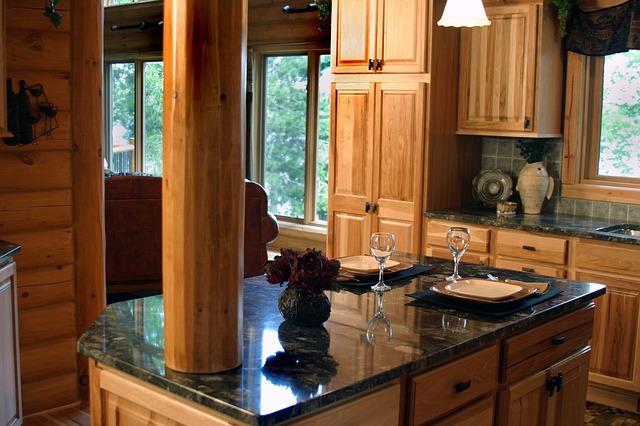 Homes take a beating on the outside, from wind, rain, sun, insects and snow. Summer gives you a chance to repair damage, protect your home and keep its face to the world looking bright.