If an employee is away, restricted or transferred for an extended period of time, follow these guidelines for completing the OSHA 300 form:
- Enter an estimate of the days the employee will be away.
- Begin counting days on the day after the injury occurred or the illness began, and update this number when you know the actual number of days.
- The count of days away from work ends on the date the physician or other licensed health care professional recommends that the employee return to work, whether or not the employee returns earlier or later than that date.
- When there is no physician recommendation, enter the actual number of days the employee is off work.
- Include weekend days, holidays, vacation days or other days off in the number of days recorded if the employee would not have been able to work on those days due to a work-related injury or illness.
- When the number of calendar days away from work or days of job transfer or restriction is greater than 180, enter 180 in the “Total Days Away” column.
- If an employee leaves the company for a reason unrelated to the injury or illness, stop counting days away from work or restriction/job transfer.
- If an employee leaves the company because of the injury or illness, estimate the total number of days away or days of restriction/job transfer and enter that estimate.
- Log the number of days away only on the 300 Log for the year in which the incident occurred.
- If the employee is still away from work because of the injury or illness when you prepare the annual summary, estimate the total number of calendar days you expect the employee to be away from work, use this number to calculate the total for the annual summary and then update the initial log entry later when the day count is known or reaches the 180-day cap.
- Never split the number of days between years and enter two amounts for two different years. Only record each injury or illness once.
Read more
 A home might seem like one of the safest places for a child to play, but household furniture carries many unforeseen dangers, especially for young children.
Deadly Consequences
A child is killed every two weeks due to falling furniture in the United States—70 percent are caused by TVs alone. Injuries are even higher, with over 25,000 per year. Preventive measures should be taken to ensure children are safe at home.
Preemptive Protection
Parents will often “baby-proof” their house when expecting a child. This typically includes rounding off sharp table corners and installing baby locks. Surprisingly, properly anchoring heavy furniture is often overlooked.
Preventing Tip-overs
- Use sturdy furniture to hold your TV and other appliances.
- Mount flat-screen TVs whenever possible.
- Closely follow assembly instructions for TVs and furniture.
- Secure top-heavy furniture with anti-tip brackets.
- Remove enticing objects from the top of heavy furniture to discourage children from climbing.
Furniture Tip-over Myths
- Heavy furniture will not fall over. This is a common misconception. Even base-heavy furniture can be hazardous when children open the drawers and climb on them.
- Rooms where children aren’t allowed don’t need precautions. Even a brief opportunity to wander in a bedroom or office can end in tragedy if the child plays on heavy furniture. Tip-overs happen quickly, and it is dangerous to leave a room unprotected.
- Latched dresser drawers are sufficient. Latches made for cabinets are not a substitute for an anchor. Young children can figure out the latches or even open drawers wide enough to begin climbing.
- Older children know they shouldn’t climb. Children aren’t masters of reason and can be compelled to climb if they see a toy sitting on top of a dresser. Additionally, children do not commonly think of shelves or dressers as dangerous, so climbing seems low-risk.
- Sturdy furniture is safe. No matter the weight, no matter how sturdy, all furniture can pose a risk if not properly anchored. The quality of furniture does not lower the danger.
Remember, taking a few extra precautions now can save a child’s life in the future. Play it safe and anchor heavy furniture.
Read more
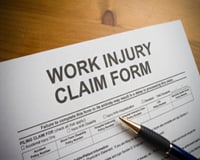 Workers Compensation fraud is a widespread and serious problem that’s not only illegal, but leads to higher insurance premiums for all businesses – including yours.
According to industry experts, Comp-related scams often involve one or more of these “red flags.” Although no one sign should necessarily be cause for alarm by itself, two or more should raise suspicions and could trigger an investigation of the claim:
- Monday morning report of injury. The alleged injury occurs first thing on Monday, or late Friday afternoon, but is not reported until Monday.
- Change in employment status. The reported accident occurs immediately before or after a strike, job termination, layoff, end of a major project, or the conclusion of seasonal work.
- Suspicious providers. The claimant’s medical provider or legal consultant has a history of handling dubious claims.
- Lack of witnesses. No one else saw the accident and the employee’s description does not support the cause of the injury.
- Conflicting descriptions. The employee’s account of the accident doesn’t match with the medical history or injury report.
- History of claims. The employee has filed a number of questionable or litigated claims.
- Refusal of treatment. The claimant declines a diagnostic procedure to confirm the nature or extent of the injury.
- Late reporting. The employee delays reporting the incident without a reasonable explanation.
- Elusiveness. The allegedly disabled employee is hard to reach.
- Instability. The claimant changes physicians, addresses, or jobs frequently
If one of your workers files a claim that has some of these warning signs, be sure to let us know. We’ll work with you and your Workers Comp carrier to check it out.
Read more
 Smaller companies tend to be more vulnerable than Fortune 500 corporations to theft by employees.
According to John Warren, general counsel for the U.S. Association of Certified Fraud Examiners (USACFA), losses from internal theft are disproportionately high among small businesses. A nationwide USACFA review of more than 1,100 fraud cases found that the median loss in organizations with fewer than 100 employees came to $190,000 – more than half again as much as the $120,000 loss among companies with 1,000 to 9,999 employees.
Check tampering was the most common scam uncovered by the survey, followed by skimming (the theft of unrecorded sales), faked billing, and phony expense reimbursements.
One reason why small companies take a bigger hit is because employee theft is often hard to detect and can last over several years. Most perpetrators aren’t hardened criminals, but rather longtime, trusted workers who have risen through the ranks. “It’s startling how many times people will say, ‘I’ve known this person for 10 years, they babysat my kids,’ ” says the USACFA’s Warren, ” ‘Out of all of my employees, I would have never guessed this.’ ”
Embezzlement usually starts small and then escalates, often triggered by money problems facing the worker. Says one expert, “Any time you have an employee who has financial difficulties, you have the makings of a problem.”
their vulnerability, many small businesses don’t take basic steps to deter employee theft. “There’s a reluctance to think about this, compared to larger companies,” notes Rich Simitian, Southern California managing partner for accounting firm Grant Thornton. “The attitude is, ‘I’ve got too many other things to think about as a business owner.’ ”
We’d be happy to recommend precautions that can help you deter fraud internal fraud.
Read more
 Following these principles of leadership will help you and your employees focus on job safety:
- Don’t walk by. It is everyone’s responsibility to prevent any potentially unsafe acts and conditions they witness from turning into accidents.
- STOP! Encourage employees to stop working whenever they feel unsafe, no matter what reason they give.
- Focus on a safe working environment. If you expect your workers to work safely, make their workplace as safe as possible.
- Don’t blame the worker first. Unsafe ways of working, accidents, incidents, and ill health aren’t necessarily the worker’s fault. The problem often comes from less obvious causes, such as decisions by management.
- Use your workforce for ideas. Employees often have a more accurate idea than you or your managers about which safety and health practices will work, because they deal with these issues every day.
- Be patient. Don’t expect quick wins. Improvements will emerge over time, but only if you stick with them.
- Explain your decisions. Just telling workers that something is wrong or a safety risk isn’t enough. If they’re to act on the information you provide, they need to know why and how to avoid harm.
- Lead by example. Your behavior sends powerful signals. If you carry out your job in a safe way, your workers are more likely to do the same. If you don’t, they won’t imitate you.
- Focus on co-operation. Treat your subcontractors in the same way as employees by encouraging them to communicate with each other.
- Don’t neglect occupational health. If you look after the health, as well as the safety, of your workers today, you’re less likely to create problems for them or your business tomorrow.
Sound advice!
Read more
 As your business grows, the risks you face become more complex, potential losses grow, along with your insurance premiums. At some point, you’ll need to decide whether it makes sense to turn over the responsibility for risk management to a full-time professional.
Before making this decision, experts recommend that you weigh two key factors:
1) the cost of paying a full-time risk manager, and
2) the potential savings that this manager can generate.
The first element is relatively easy to determine, it’s the salary and overhead of the manager, plus whatever clerical support that he or she needs.
The second item requires you to analyze the extent which a full-time risk manager can:
- Centralize and compartmentalize responsibility for risk management in a single department. This improvement in efficiency should more than offset the increase in administrative costs.
- reduce losses by providing analysis of loss control needs, careful scrutiny of reports, and knowledge of whom to contact for specialized help. Careful attention to loss reserves and adjusting practices can help cut costs dramatically. For example, adjusting liability and workers compensation claims requires special expertise. Insurance companies generally provide adjusters, it’s always helpful to have someone on your team who can evaluate their conclusions.
- help lower your premiums by paying closer attention to coverage criteria, negotiating with agents, brokers, and insurance companies, and using familiarity with industry terminology.
If you’d like our input on making this key decision, feel free to get in touch with the risk management professionals at our agency at any time. We’re here to serve you.
Read more