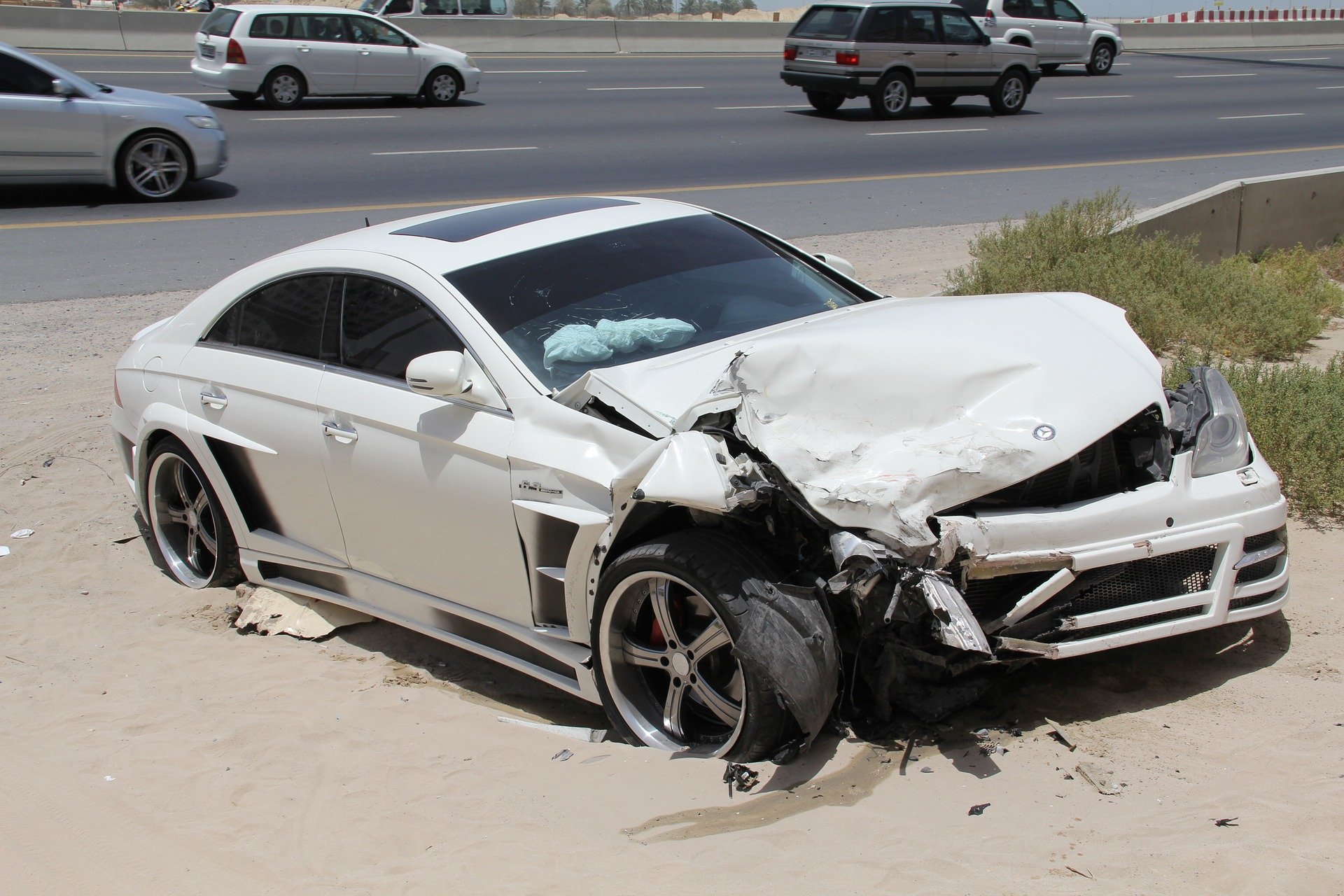
 You know the drill after an auto crash, heart stopping panic, and then, especially if there’s major damage or a serious injury, exchanging names, addresses and insurance information with the other driver. Easy, right?
However, if the other driver refuses to provide these particulars (or you’re so shaken that you forget to ask for them), you could end up in serious financial, or even legal, trouble.
Dan Young, Senior Vice President of Insurance Relations for CARSTAR warns, “[After an accident] sometimes drivers just don’t do what they’re supposed to do.”
To make sure you’re prepared for such a mishap, follow these guidelines:
- Remain at the scene. Although state laws differ, failure to exchange information or notify police can lead to a hit-and-run charge or loss of your license.
- Keep a “cheat sheet” in your glove compartment about what to ask after an accident.
- Use your cellphone to take a photo of the other vehicle, (preferably showing its license plate) as visual proof of the incident.
- Write down details. As soon as you and your vehicle are out of traffic and harm’s way, record the date and time, location, make and model of the cars and actions or statements by the other driver.
- Ask any bystanders or eyewitnesses for their names and contact information.
In the meantime, review your auto policy to make sure that you carry: 1) collision coverage, which will pay for repairing your car and providing a replacement vehicle, if needed and 2) uninsured/underinsured motorists insurance (UM/UIM), which will cover damages for injuries caused by an uninsured or underinsured driver.
For more information, feel free to get in touch with our agency
Read more
.JPG) Because construction projects are complex operations involving a number of subcontractors under your supervision, onsite accidents or injuries resulting from their work can easily lead to litigation against you. To protect yourself against claims, losses, and expenses if disputes arise during the project, make sure that all subcontractors sign a “Hold Harmless Agreement” clause.
Because construction projects are complex operations involving a number of subcontractors under your supervision, onsite accidents or injuries resulting from their work can easily lead to litigation against you. To protect yourself against claims, losses, and expenses if disputes arise during the project, make sure that all subcontractors sign a “Hold Harmless Agreement” clause.
The terms of these clauses will vary from state to state. In some cases, this clause will protect the contractor from claims by corporations or companies that did not sign the agreement.
There are three types of hold harmlessagreements:
Under the Broad Form, the subcontractor assumes all liability for accidents due to negligence of the general contractor, and combined negligence between the two parties. Because of its sweeping terms, this form is relatively rare – and some states prohibit it.
With the Intermediate Form the subcontractor takes on all liability for accidents and negligence, but will not be held accountable for the general contractor’s actions. It doesn’t matter whether the incident was the subcontractor’s fault. If both parties were negligent, the subcontractor assumes liability all for its acts or omissions. Intermediate form agreements are relatively common.
A Limited Form agreement makes the subcontractor liable only for the proportional part of its responsibility for a mishap. Other parties – such as subcontractors – will be held liable under their hold harmlessagreement(s) for their corresponding part of the accident or negligence.
The type of agreement that’s best suited for your needs will vary depending on the nature of the project and state laws. As always, we stand ready to offer you our professional advice.
Read more
.JPG) Falls are the leading cause of construction deaths. In 2014, fatalities from falls accounted for 359 out of 899 deaths in the construction industry.
Falls are the leading cause of construction deaths. In 2014, fatalities from falls accounted for 359 out of 899 deaths in the construction industry.
To curb such deaths and injuries, OSHA has joined forces with the National Institute for Occupational Safety and Health and National Occupational Research Agenda (NORA).The Construction Nationwide Safety Awareness Campaign is comprehensive and based on three key steps for employers: Plan for safety, provide proper equipment, and train workers.
To ensure safety on job sites that involve working from heights, plan how the project will be done and the tools needed. When estimating job costs, include these resources and have them available on site. For example, on a roofing job, think about such potential fall hazards – holes, sky-light, leading edges, etc. – and then select appropriate fall protection equipment, such as personal fall arrest systems (PFAS).
Provide workers who are six feet or more above lower levels with fall protection and the necessary equipment including ladders, scaffolds, and safety gear. If roof work is involved, have a PFAS with a harness for each worker who needs to tie off to the anchor. Make sure the device fits and inspect all equipment regularly.
Finally, give workers “toolbox talk” training on potential fall hazards and the set-up and use of the safety equipment they’ll be using. The OSHA campaign has a number of training tools, job site posters, and other educational resources – (many of which target workers with limited English proficiency).
To learn more about how to keep your workers from falling down (literally)on the job, feel free to get in touch with our construction insurance specialists.
Read more
 Accidents involving vehicles or mobile equipment (excavators, dumpers, etc.) on building sites kill more than a dozen workers a year and injure hundreds more. To help make sure that your workers and outsiders can move around your job sites safely,and keep your insurance premiums down, experts recommend using this checklist:
Keep pedestrians and vehicles apart:
- have separate entry and exit gateways for pedestrians and vehicles
- provide safe pedestrian walkways that take a direct route where possible
- make sure drivers with access to public roads can see both ways
- don’t block walkways or vehicle routes
- install barrier between roads and walks
Minimize vehicle movements:
- provide offsite parking
- control entry to the site
- have storage areas so that delivery vehicles don’t have to cross the site
Control people on site:
- recruit drivers and equipment operators carefully
- make sure that drivers, operators, and those who direct traffic are trained
- manage the activities of visiting drivers
Maximize visibility:
- provide mirrors, CCTV cameras or reversing alarms
- designate signalers to control maneuvers by drivers or equipment operators
- install lighting for use after sunset or in bad weather
- make sure that all pedestrians on the site wear high-visibility clothing
Provide safety signage and instructions:
- ensure that all drivers and workers know and understand the routes and traffic rules on the site
- use standard traffic signs where appropriate
- provide safety instructions to all visitors in advance
For a comprehensive – and free– review of vehicle and mobile vehicle safety practices on your job sites, just give us a call. We’re here to help at any time.
Read more
 Workplace safety signs and tags play a key role in helping prevent accidents to workers and visitors alike.
To make the most effective use of signs and tags in your facility that comply with OSHA regulation (29 CFR 1910.145), we’d recommend that you follow these guidelines:
- Identify all hazards throughout the workplace. In addition to obvious dangers, include those that are out of the ordinary, unexpected, or not readily apparent.
- Select or design signs and tags. Make sure they conform to OSHA requirements and are consistent in format.
- Use proper wording. According to OSHA, “the wording of any sign should be easily read, concise, and contain sufficient information to be easily understood.”
- Position signs carefully. Signs should be placed so that they’re easy to see and read from a distance and draw maximum attention to hazards.
- Identify safety and fire protection equipment clearly. This includes such items as eyewash stations and safety showers, as well as fire extinguishers and hoses.
- Employ tags properly. OSHA requires that “tags shall be used as a means to prevent accidental injury or illness to employees who are exposed to hazardous or potentially hazardous conditions, equipment, or operations.”
- Review your program whenever new hazards are introduced. If you just put up signs and tags and forget about them, your facility probably won’t be in compliance with the OSHA regulations. Check the program frequently to make sure that it’s still doing the job.
The workplace safety professionals at our agency would be happy to help you review your signage and tag policy. Give us a call at any time.
Read more
.JPG) Social media rules! In recent studies, Twitter, Facebook, and Tumblr users sent tens of millions of messages every day– and new players keep entering the marketplace. Although these platforms provide significant benefits for businesses of all sizes, they also pose a variety of risks. Everything from employment, privacy and security, through intellectual property to media-related liability.
Social media rules! In recent studies, Twitter, Facebook, and Tumblr users sent tens of millions of messages every day– and new players keep entering the marketplace. Although these platforms provide significant benefits for businesses of all sizes, they also pose a variety of risks. Everything from employment, privacy and security, through intellectual property to media-related liability.
Chances are your employees are using social media, either at home or work, in ways that could put your business at risk. To limit this exposure, experts recommend creating social media guidelines based on a five-point checklist:
- Assess both your company’s general social media activities and individual social media campaigns, weighing potential risks against benefits as accurately as possible.
- Designate specific individuals and departments to develop, execute, and monitor a comprehensive and proactive social media strategy – and make a senior executive responsible for implementing it in a timely fashion.
- Have the policy reviewed by the relevant departments (human resources, IT, communications, and legal) and by an outside law firm.
- Because employees pose the biggest risk to a company, although often unwittingly,,provide educational programs about the danger of damage to the company by using social media on the job or at home.
- Create a social media agreement for employees to review and sign as a condition of employment and part of their employment contract. Update the agreement annually, or as often as needed, to address changes in social media that might impact your risk in new ways.
Following this checklist will help position your business to reap the enormous benefits that participationin social media offers.
As always, we’re here to help you– just give us a call!
Read more
