 What’s your company’s “brand?” Whether you’ve had one developed professionally or simply let it happen, experts all agree that you definitely have a brand.
Call it “image” or “reputation,” but it’s there — and it goes far beyond advertising and marketing. At its core lies the emotional connection your products or services make in the minds of your customers or prospects: Either terrific or toxic. The question is whether your brand is enhancing or detracting from your success.
A crucial attribute for any business is trust, based on an ethical approach to every relationship and transaction. Is your brand trusted? Ask your customers and prospects what your brand says to them.
We’d also like to ask what our brand means to you. We want nothing less than to be your trusted advisor. Let our professionals take your concerns about protection and insurance issues off your plate, so that you can focus on building your brand into a valued enhancement to the future of your business.
Read more
 Unfortunately, there are all too many bullies in the workplace — and, all too often, their abusive behavior has led to violent, even fatal, employee rampages that have made the headlines. It makes sense for business owners and managers to deal with on-the-job bullying before it escalates into a potentially deadly situation.
Recognizing a bully in the workplace can be difficult. These people often have “Jekyll and Hyde” personalities: They can be extremely charming, polite, and respectful in public. However, as a rule, bullies: 1) don’t believe in following the rules of society; 2) crave negative attention; 3) try to put others down by manipulating and degrading them in front of their peers; 4) seek power; and 5) spread untrue rumors in the workplace, disrespect their victims, and refuse to listen to them.
Because there are no federal or state laws against workplace bullying, it might be hard to fire a bully right away. However, there are ways to deal with this problem.
Institute a zero-tolerance policy toward bullying. Your employee handbook and codes of conduct should set a clear definition of the consequences and punishment for bullying, with a specific list of actions for dealing with it.
Enforce the policy. When it’s time to discipline a bully, sit down with the accused person, their supervisor, and someone from your human resources department. If the bully offers to apologize and promises never to repeat the behavior, you might settle the matter by writing a letter of reprimand to be kept in their personnel file. You might also put the employee on probation, with close supervision by their supervisor, and let them know that any further bullying will result in termination.
If you’d like advice on creating and implementing an anti-bullying policy for your workplace, just give us a call.
Read more
 A lot of companies say “Safety is our Number One priority.” However, when the chips are down and production needs to increase, safety might suddenly become Number Two.
In an effective workplace health and safety program, the employer places a high priority on a safe workplace, employees participate willingly in keeping themselves safe on the job — and the company’s Workers Comp premiums stay low!
To develop and maintain safety as a “core value” among your employees, we’d recommend following these guidelines:
- Encourage employees to think about safety 24/7.
- Talk about safety all the time.
- Make sure employees work safely. This job falls largely to your supervisors, who need to have good safety attitudes. You and your staff should keep checking up, monitoring performance, and being visible.
- Encourage employee participation, suggestions, questions, and even complaints about unsafe conditions.
- Set an example. If workers see you and your safety staff wearing PPE, following rules, eliminating hazards, and investigating incidents, they’ll follow your lead in taking safety seriously.
- Provide positive feedback for safe performance and attitudes. People love recognition and praise for doing the right thing.
- Correct reported safety hazards immediately. Nothing shows that you have a good safety attitude more than demonstrating that you care and are looking out for your workers.
Read more

Industry experts expect a 13% average hike in Workers Compensation premiums in 2013, driven by a variety of reasons, from widespread fraud to the growth of lawsuits for work-related injuries.
One factor in these increases: Higher medical expenses for treatment of obese workers for the “co-morbid” ailments (such as diabetes and heart attacks) that stem from their expanding waistlines. A 2007 Duke University Medical School study found that overweight workers file more Comp claims, have higher medical costs, and miss more workdays due to job-related injuries than do their non-obese counterparts.
A recent nationwide study of insurers doing business in 40 states confirms this conclusion. The survey by NCCI Holdings, Inc. found that the length of Workers Comp indemnity benefits paid to the most severely obese workers is more than five times greaterthan that of non-obese workers who file comparable claims. When the study included the duration of permanent partial disability, the multiple climbed to more than six to one.
This relationship between worker obesity and Workers Comp costs reinforces the need for employers to offer their workers weight management programs. In addition to keeping these costs under control, these plans will help to reduce absenteeism and increase workplace productivity — not to mention help employees get, and remain, healthy. What’s not to like?
Our agency’s Workers Comp professionals stand ready to help you develop and implement a weight reduction program for your employees. Feel free to get in touch with us at any time.
Read more
 When it comes to workplace safety, have you considered the company parking lot or garage? Your workers use it at least twice a day to stow and shelter their vehicles, but beyond that it’s fairly invisible. A closer look reveals that predators might easily be lurking there. To minimize this threat, experts recommend ensuring that workers (as well as visitors) take these precautions:
- Stay alert for cruising vehicles, whose drivers can stop suddenly and jump out to rob or assault you.
- If you’re using a parking lot, park near the building in a visible, lighted area.
- In a parking garage, park near the parking attendant (if there is one) or near a well-lit exit. Women should avoid using stairs and elevators, if possible.
- Use the main exit/entrance rather than a side or secluded one.
- Lock any valuables (including GPS, shopping, other bags, etc.) out of sight. If you’re walking to your vehicle after hours, ask a co-worker or security officer to accompany you.
- If you have to walk alone, ask someone to watch from inside, if possible. Turn around frequently to make sure you’re not being followed and pretend that you’re waving to someone ahead to give the impression you’re not alone.
- Don’t talk on your cellphone or listen to music with ear pods — predators are looking for victims who seem distracted or unaware.
- Have your car keys and personal alarm or whistle ready as you approach your vehicle.
- If someone nearby looks suspicious, keep walking and get to a safe place where you can call for help.
- Before you unlock the door, take a good look around, inside, and behind the vehicle.
- Once you enter the vehicle, lock all doors promptly and keep your windows up until you’ve exited the lot or garage.
Words to the wise.
Read more
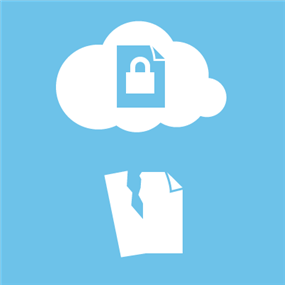 Pop quiz time. What’s more secure; financial records locked in a filing cabinet or financial records stored in the cloud?
If you don’t understand how cloud security works, you probably said the filing cabinet. It’s time for a little mythbusting about how secure your paperless office could be.
Last week, Cindy Bates posted on the Microsoft SMB Blog about the benefits of a completely paperless office. Like Delta Airlines, who recently switched to the paperless cockpit, it’s possible for any office or organization to ditch the dead trees and move entirely into the digital space.
One of the first questions decision makers ask when considering the paperless office is “how
secure is this?” It’s a fair question, so let’s consider Delta’s paperless cockpit example and overall data security.
The problem with paper is that, well, it’s paper. Paper gets lost, it burns, it can be misfiled and disappear. It’s only as secure as its physical location. If that location is a locked filing cabinet (or a vault under Fort Knox), if someone really wanted to get to it, they could.
A file in the cloud cannot burn, be stolen, accidentally left behind in a restroom, or any other number of things that could affect a hard copy of important information. For a recent example, take a look at the Internet Archive, whose scanning facility in San Francisco recently caught fire. Although no data was stored in their San Francisco office, if it had been, cloud redundancies would have prevented any loss.
But what about a data center, such as what powers Windows Azure or Office 365? Let’s start with physical security: data centers are monitored 24 hours a day, 365 days a year. A team of ninjas could, in theory, break in, but they’d still have to know which of the thousand machines contained your exact data—so unless you’ve upset the cast of Ocean’s 11, it’s significantly less likely than an office fire that could destroy physical data.
In addition, with Office 365, data transmitted across networks is encrypted—so if some agency (or other villain) happens to tap the wires, they still won’t be able to read your files.
While a move to a paperless office does not entirely guarantee data security—there are still those ninjas to think about—it is significantly more secure than leaving your information in paper form, where it could be destroyed or stolen with greater ease.
It’s just one more reason to go paperless.
Read more
