 Following these principles of leadership will help you and your employees focus on job safety:
- Don’t walk by. It is everyone’s responsibility to prevent any potentially unsafe acts and conditions they witness from turning into accidents.
- STOP! Encourage employees to stop working whenever they feel unsafe, no matter what reason they give.
- Focus on a safe working environment. If you expect your workers to work safely, make their workplace as safe as possible.
- Don’t blame the worker first. Unsafe ways of working, accidents, incidents, and ill health aren’t necessarily the worker’s fault. The problem often comes from less obvious causes, such as decisions by management.
- Use your workforce for ideas. Employees often have a more accurate idea than you or your managers about which safety and health practices will work, because they deal with these issues every day.
- Be patient. Don’t expect quick wins. Improvements will emerge over time, but only if you stick with them.
- Explain your decisions. Just telling workers that something is wrong or a safety risk isn’t enough. If they’re to act on the information you provide, they need to know why and how to avoid harm.
- Lead by example. Your behavior sends powerful signals. If you carry out your job in a safe way, your workers are more likely to do the same. If you don’t, they won’t imitate you.
- Focus on co-operation. Treat your subcontractors in the same way as employees by encouraging them to communicate with each other.
- Don’t neglect occupational health. If you look after the health, as well as the safety, of your workers today, you’re less likely to create problems for them or your business tomorrow.
Sound advice!
Read more
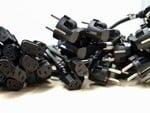 Viagra is the most frequently counterfeited product on the market. Running a close second – and of far more concern to workplace safety experts – come electrical components. The Electrical Safety Foundation International has identified more than 1 million fake parts that can easily fail, putting workers at risk of serious injury or death from electrical accidents.
To protect your employees against this danger (and make sure that you’re getting the parts you’re paying for), manufacturers offer these guidelines:
- Buy from an authorized dealer whenever possible. However, bear in mind that counterfeit parts are often mixed in with the genuine article, making them difficult for reputable dealers to detect. Also, a broker might be your only source for discontinued items.
- Examine the packaging. Check for such obvious discrepancies as logos that are missing or don’t look right, misspelled or badly edited text, etc.; and make sure that shipping documents and parts numbers on the packaging match.
- Check the product. To make sure that a part looks and feels right, lay it next to a genuine component and see if they match. If they don’t, have an expert examine the product using a microscope, X-ray, or ion chromatography technology that can detect tampering.
- Test the part. Because many counterfeits can pass basic functionality tests, it makes sense to send any suspicious products to an independent lab for testing under a variety of conditions. This is the best way to detect actual manufacturer components that were discarded because of damage or quality control failures. Don’t choose a lab based strictly on price; ask for a detailed listing of its procedures and inspect the facility in person.
Read more
 If your workers need to reach, lift and carry, twist their bodies, or perform other activities that place them under strain, their shoulders might be at risk.
As the most mobile and one of the most versatile joints in the body, the shoulder is highly vulnerable to musculo-skeletal disorders (MSDs). Recovering from these injuries takes an average of 21 days – one of the longest recovery periods for on-the-job accidents.
To help keep your workers’ shoulders healthy, and your Workers Comp premiums under control, we’d recommend these guidelines.
- Minimize lifting. Provide mechanical assists (carts, slings, dollies, jacks, etc.) to raise and hold objects. Put materials as close as practical to where they will be used
- Lighten the load. When lifting can’t be eliminated, or when objects (such as tools) must be held at arm’s length, make sure these items are as light as possible, In construction, for example, use lighter-weight building materials. Have a team lift all heavy objects.
- Control motion. One of the most dangerous situations is a “save” – when a load shifts or slips and a worker attempts to prevent a fall. To reduce this danger, hold work pieces in place using a jack or brace.
- Improve the grip. Lifting requires more force, and is more difficult (and more likely to cause injury) when there’s no easy way to grasp the object – for example, drywall panels. One solution: apply removable suction handles and temporary handles to flat surfaces.
- Encourage rest and stretching. Workers can minimize damage from jobs that put stress on their shoulder joints by taking frequent short breaks (15-20 seconds) and stretching gently to relieve tension in over-worked muscles and ligaments.
For more information, please get in touch with our workplace safety experts.
Read more
 You’re traveling at 70 miles per hour on a busy highway when you blow a tire. Your car hits an unexpected slick spot and starts to fishtail. Your brakes or steering suddenly lock up.
In these situations, preparedness can literally make the difference between life and death. That means making sure your employees are trained to deal with common driving emergencies by following these guidelines:
A blown tire:
- Hang on to the steering wheel.
- Don’t brake suddenly.
- Ease off the gas and coast until you have control of the car.
- Turn on your hazard lights to warn the drivers around you.
- Steer smoothly.
Skidding or hydroplaning:
- Don’t make any sudden moves, such as braking hard or jerking the wheel.
- Ease off the gas.
- Steer the car’s nose gently in the direction you’d like to go. Make adjustments gradually, as needed, until the vehicle is moving in a straight line.
Failed steering:
- Don’t brake – a sudden change in speed could send the car spinning.
- Ease off the gas.
- Turn on your hazard lights.
- Coast to a stop, using your brakes gently once the car slows on its own.
Your brakes fail:
- Downshift.
- Move to the right, remembering to signal as needed.
- Because the failure might be temporary, keep your foot on the brakes. If you have ABS, apply steady pressure; If you don’t have ABS, pump the brakes.
- Shift into neutral and apply your emergency brake.
- If possible, use friction to slow or stop the vehicle by running it along a curb or something alongside the road.
For more information, feel free to get in touch with us.
Read more
 With slips, trips and, falls remaining one of the top causes of workers compensation claims, safety experts stress the need for preventive measures and ergonomic workplace design.
Such accidents need particular attention in nonindustrial environments where employers often install terrazzo or marble floors that can be dangerous to walk on.
According to the U.S. Bureau of Labor Statistics, same- level slips, trips and falls (in which workers slip and fall on the surface where they’re standing) accounted for 134,580 lost workdays and 111 deaths in 2011. The number of same-level falls increased 42.3% from 1998 to 2010, the highest growth of any accident type during this period. These mishaps are costly, in 2010, Liberty Mutual a a leading workers comp insurance company, paid $8.61 billion in same-level fall comp claims.
Implementing safety measures such as, cleaning spilled liquids promptly and placing floor mats on smooth flooring will help prevent workplace injury. Reviewing injury records to find trends will help determine additional safety measures to implement in the workplace. Many businesses are replacing surfaces that contribute to these mishaps which is a highly cost effective investment that can curb expensive litigation and workers comp liabilities.
Although these precautions have prevented thousands of slip-and-fall accidents, the risk will remain a problem until employers work with design professionals to create ergonomically friendly safe buildings. The National Institute of Occupational Safety and Health (NIOSH) is sponsoring a “Prevention Through Design” initiative to address ways that architects and engineers can get involved in designing safer workplaces (for example, by training college engineering and architecture students about safety and ergonomic considerations).
Our workers comp specialists would be happy to check your business for slip and fall hazards and recommend steps to help keep your staff and visitors from slipping.
Read more
.JPG) Falls are the leading cause of construction deaths. In 2014, fatalities from falls accounted for 359 out of 899 deaths in the construction industry.
Falls are the leading cause of construction deaths. In 2014, fatalities from falls accounted for 359 out of 899 deaths in the construction industry.
To curb such deaths and injuries, OSHA has joined forces with the National Institute for Occupational Safety and Health and National Occupational Research Agenda (NORA).The Construction Nationwide Safety Awareness Campaign is comprehensive and based on three key steps for employers: Plan for safety, provide proper equipment, and train workers.
To ensure safety on job sites that involve working from heights, plan how the project will be done and the tools needed. When estimating job costs, include these resources and have them available on site. For example, on a roofing job, think about such potential fall hazards – holes, sky-light, leading edges, etc. – and then select appropriate fall protection equipment, such as personal fall arrest systems (PFAS).
Provide workers who are six feet or more above lower levels with fall protection and the necessary equipment including ladders, scaffolds, and safety gear. If roof work is involved, have a PFAS with a harness for each worker who needs to tie off to the anchor. Make sure the device fits and inspect all equipment regularly.
Finally, give workers “toolbox talk” training on potential fall hazards and the set-up and use of the safety equipment they’ll be using. The OSHA campaign has a number of training tools, job site posters, and other educational resources – (many of which target workers with limited English proficiency).
To learn more about how to keep your workers from falling down (literally)on the job, feel free to get in touch with our construction insurance specialists.
Read more

 Following these principles of leadership will help you and your employees focus on job safety: