Allied Insurance – Corporate Health Insurance
We can help you with your Business Insurance needs. Contact us TODAY!
320 East Lake Avenue, PO Box 1170
Watsonville, CA 95077-1170
Office: 1-831-722-3541
Toll Free: 1-800-320-3666
Read more
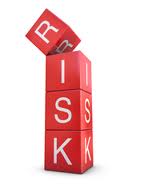 It is important to have a plan for when things go wrong. Operational risks can lead to catastrophic financial losses. Examples are employee errors, system failure or natural disasters. It also covers protecting yourself and your business from fraud. Having adequate insurance is not always enough; you may be covered for the loss of items in a flood, but are you covered for the days your business is not operating? Contingency plans assess what happens if you business is down for an hour, a day, a week or month.
Knowing how you will fulfill orders whether you subcontract things and make lesser profit but retain customers is an essential part of mitigating operational risk. Talk to your insurance agent about adding a rider that covers you for down time as well as liability insurance should an employee defraud your company or your customers. If you are at risk for a computer system going down, look into a backup server and have IT personnel familiar with your system prepared to get to work if needed. These may be subcontractors who are familiar with the system but not on payroll unless needed.
For Risk Management Consulting, please contact us Toll Free: 1-800-320-3666
Read more

Ask your accountants to look for red flags that could indicate fraud. Among the methods accountants often recommend are accounting controls, built-in detection mechanisms, and reconciliation of records. Businesses increase the probability of discovery with frequent audits that include steps to uncover fraud. Make sure that accountants understand that you view the discovery of insider theft as an aspect of their duties and services as well as Risk Management. Utilize your accountants to survey either all employees or randomly chosen employees from time to time, asking whether they are aware of any misappropriation of company money, property, or resources.
Visit our website today for more information!
Read more

A former employee with a grudge against his supervisor enters the workplace armed with a gun and kills the supervisor and three other employees before turning the gun on himself.
After the incident, co-workers said that when the employee was fired, he threatened to “get” the supervisor.
Unfortunately, nobody took him seriously.
You’ve heard stories like this on the evening news, and maybe there’s even been an incident in your area.
No one should fear violence on the job. According to the Society for Human Resource Management, workers rank feeling safe in the workplace as their third-highest job satisfaction priority.
To help prevent violence and make your workers feel safe, take these steps:
• Communicate and enforce a zero-tolerance violence prevention policy that prohibits workers from bringing into the workplace any weapon or other objects that could be used in a threatening way, assaulting or threatening to assault someone, or engaging in such hostile behavior as destroying property, stalking fellow workers, or obsessing on a grudge.
• Investigate any violation of this policy, and take appropriate disciplinary action (up to, and including, dismissal in severe cases). For less serious violations, counseling in addition to discipline, might be more effective. Employees who need help dealing with personal or work problems that generate anger or hostility should be able to take advantage of an Employee Assistance Program.
• Make it easy for employees to report threats or incidents of violence, whether they involve co-workers, customers, suppliers, visitors, or even people unrelated to the workplace – for example, a violent spouse or partner who comes into the workplace to act out domestic violence. Make sure your workers understand that anyone who comes forward or who participates in any investigation of workplace violence will not face retaliation and will receive protection from predators.
• Provide options for employees who are victims of violence, feel threatened, or witness a violent or potentially violent situation. If there are immediate safety concerns, the employee or a co-worker should call 911. Otherwise, first encourage the employee to approach their supervisor or manager. If this person is unavailable, employees can go to Human Resources or the head of company security.
Workplace violence is a real problem in today’s society. Ever evolving Risk Management resources are making employers jobs a lot more manageable in the workplace.
For more information on other Risk Management factors in your Business, visit our website today!
Read more
 We have all heard the expression “24/7”and we’re likely to be hearing it more often as more countries move toward 24-hour societies. But shift work (shifts outside of the traditional 7 a.m. to 6 p.m. workday) brings with it a variety of problems for businesses: a higher rate of injuries, accidents and health-related problems; increased employee absenteeism and substance abuse; more production errors, etc. – all of which boost your insurance costs and slash your bottom line.
The good news: You can reduce or eliminate many of these problems by providing effective shift work training. “Worker lifestyle training provides measurable benefits for the company, its employees, and their families,” notes a 2007 report from Circadian Workforce Solutions. “In addition to improved alertness levels, health, and quality of life, such training can also reduce accidents, decrease legal liability, and reduce overall operating costs.” These programs can also help curb turnover; a Circadian survey found that shift training cut turnover rates by more than 4% — and replacing a single employee cost survey respondents from $12,000 to $60,000.
An effective worker lifestyle program should show your employees how to get enough rest off the job by following these Risk Management guidelines:
- Always go to bed at the same time, preferably as soon as possible after work.
- Sleep in a dark, quiet room. Use room-darkening shades or drapes and turn off the phone. If people or traffic noises disturb them, try using earplugs or turning on a fan that covers the noise.
- Eat balanced, nutritious meals. Eat only light snacks before bed. Avoid food that’s heavy, rich, or spicy. Also try to stop drinking alcohol or caffeine or smoking a few hours before going to bed.
- Exercise regularly, although not in the two hours before trying to sleep. Avoid sleeping pills. In case of insomnia, consult a physician.
To maximize safety during working hours, have your employees:
- Turn on all lights in their work area and in hallways, stairways, bathrooms, etc.
- Replace or report any burned-out bulbs promptly.
- Make sure that they have adequate task lighting. If they can’t see their equipment controls, read container labels, or have similar problems, have them alert their supervisor.
- Be sure that all work areas are ventilated, and report any ventilation systems that aren’t working properly.
For more information on Risk Management visit our website today!
Read more

This simple but powerful technique identifies hazards before they occur, focusing on the relationships among the worker, task, tools and equipment, and the work environment. Once you’ve identified job hazards, you can eliminate or reduce them to an acceptable risk level.
This is a relatively easy task, although it takes time to analyze Risk Management hazards for each job category and each step in the job. You also have to do some digging into past performance.
Priority should go to jobs with the highest injury or illness rates; the potential to cause severe or disabling injuries or illness through simple human error, complex enough to require written instructions; or that have undergone changes in processes and procedures.
Risk Management hazard analysis involves these steps:
- Involve employees. Their unique understanding of the job can be invaluable for finding hazards. Involving employees will help minimize oversights, ensure quality analysis, and get workers to buy in to the solutions because they’ll share ownership in their safety and health program.
- Review accident history. This includes the workplace record of accidents and occupational illnesses, accident damage that required repair or replacement, and any near misses. These are indicators that existing hazard controls might be inadequate and need more scrutiny.
- Conduct a preliminary job review. Discuss with employees the hazards they know exist in their work and surroundings. Brainstorm with them for ideas to eliminate or control these perils.
- List, rank, and set priorities. List jobs with hazards that present unacceptable risks, based on those most likely to occur and with the most severe consequences. Make these jobs your first priority for analysis.
- Outline steps or tasks. Nearly every job can be broken down into job tasks or steps. When beginning a job hazard analysis, watch the employee perform the job and list each step (it might help to photograph or video the worker performing the job – these visual records can provide handy references when doing a more detailed analysis of the work). Record enough information to describe each job action without getting bogged down in details. Avoid making the breakdown so detailed that it becomes unnecessarily long or so broad that it fails to include basic steps. Review the job steps with the employee to make sure you haven’t omitted anything. Stress that you’re evaluating the job itself, not the employee’s job performance.
- Identify hazards. List the hazards you identified in Step 3 (as well as any additional hazards you discovered when observing the employee) with each step or task involved in the job.
Read more
