 Imagine that you ignored or forgot to pay a few minor traffic tickets – and that the police arrested you as a scofflaw.
It can happen. For the past seven years, the “Great Texas Warrant Roundup” has mailed thousands of notices a year giving citizens with outstanding warrants for offenses such as minor traffic violations two weeks to pay up –or face arrest.
Although this is an extreme example, if you have accumulated numerous tickets for minor violations, you’ll need to choose between hiring an attorney to go to court (assuming that you have a strong case) or paying the fine.
Even though using a lawyer will set you back several hundred dollars, it might make financial sense. If you’re acquitted, the tickets won’t show up on your driving record, which will play a major role when the insurance company sets your renewal rate; if you pay the tickets, your premiums could rise as much as 40% to 50% — a hike that will probably be far more than the attorney’s fee.
If you lawyer up, ask the attorney:
- Do you charge by the hour or a flat fee?
- What is your rate?
- What does the rate cover – and not cover?
- How and when do you expect payment?
However, paying up for minor traffic offenses is often the way to go. For one thing, unless you have a strong case, you did break the law. If you have several tickets, taking a driving course, might help erase points from your record. If a driver picks up a few minor violations a year, most insurance companies won’t factor them into the renewal rate.
As always, we stand ready to offer our professional advice.
Read more

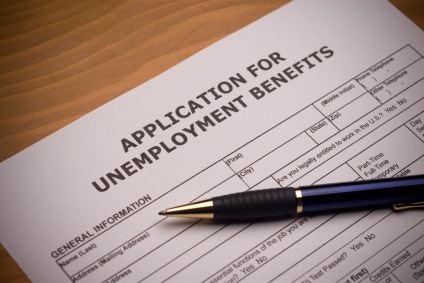 Most employers have to carry unemployment insurance on their employees. Do you really understand, though, when you can use your unemployment insurance benefits? Knowing the answer to this question can help you make important decisions about using this coverage.
What is Unemployment Insurance?
Unemployment Insurance is designed to help you cover expenses when you’re between jobs. It usually gives you a percentage of your working wages rather than a full paycheck.
Unemployment laws also vary by state. Although they follow guidelines from the federal government, each state’s Department of Labor determines how much coverage workers get when they file for unemployment.
Who’s Eligible to Collect Unemployment Benefits?
If you’ve been laid off or fired and are not at fault, you may qualify for unemployment. You will generally be disqualified from receiving unemployment, though, if you:
*Quit without having a good cause,
*Are fired for misconduct,
*Resign because of illness,
*Become involved in a labor dispute or
*Leave to get married or attend school.
What are Unemployment Insurance Limits?
Most states allow you to receive unemployment benefits for up to 26 weeks. In cases, you may be eligible for extensions based on federal guidelines or your state’s unemployment rates.
When Should You File?
As soon as you’re laid off or let go from your job, file for unemployment. It often takes two to three weeks for benefits to start, so a delay in filing means a delay in receiving benefits.
Also, realize that unemployment is not a free ride. While you can use the money to pay any expenses, you typically have to prove that you’re looking for employment to receive ongoing benefits. You’ll also have to report any hours you worked.
Unemployment insurance gives you some financial assistance if you lose your job.
Don’t quit and expect to be compensated, though. Discuss this coverage with your employer, insurance company or Department of Labor if you need further clarification.
Read more
 No matter how old you are, retirement will be here sooner than you think. Your employer can help you prepare for this season of life. As you decide if you should transfer existing 401(k) funds into a Roth 401(k), consider your tax preferences.
When You Pay Taxes Matters
Most investment strategists typically recommend that consumers like you invest pre-tax money in their retirement accounts. That means you deposit funds into your retirement account before you pay taxes on the cash. Traditional 401(k)s work this way and allow you to pay taxes on the money you withdraw during retirement.
Open a Roth 401(k), and you’ll be depositing cash that’s already been taxed. When you’re ready to retire, the only taxes you pay are on the profits your investment earned.
You Choose the Option You Prefer
Ultimately, the choice of whether to stick with a traditional 401(k) or transfer to a Roth 401(k) is up to you. After all, it’s your money and your future. Your current and future tax brackets are invaluable tools that can help you decide what to do.
*If your current tax bracket is fairly high and you expect it to decrease once you enter retirement age, stick with your traditional 401(k).
*If you expect to be in a higher tax bracket during retirement or are you a young worker who’s just starting out in your career, the Roth 401(k) is a wise choice. It lets you pay taxes on your investment now when you have more disposable income.
Are you ready to make a decision about whether or not choosing a Roth 401(k) is right for you? Then, talk to your company’s human resources department. Find out if the new Roth 401(k) is available and clarify any questions you might have about retirement investing. With this information, you ensure your retirement account wishes are put into practice as you prepare for the future.
Read more
 This question was recently asked of the ThinkHR Hotline team: What benefits must be continued while an employee is on Family and Medical Leave Act (FMLA) leave? What should we do with an employee who is not making his share of the copayments while out on leave?
Their expert answer: Family and Medical Leave Act (FMLA) regulations require that employers continue to provide group health benefits under the same terms and conditions as if the employee was actively at work. There is no requirement under the FMLA to continue other types of benefits offered by the employer. Whether or not an employee’s other benefits continue depend on an employer’s established policy. Any benefits that would be maintained if the employee was on another form of leave should be maintained while the employee is on FMLA leave.
Part of the requirement to continue health insurance benefits “under the same terms” means that both the employer and employee must continue to pay their portions of the group health insurance premium, unless the employer has a different policy for managing premium payments during leaves. The employer is required to notify the employee of the payment requirements while on leave, including the amount of the payment, date due, and where the payment should sent. If the employee fails to pay his or her portion of the premium, the employer may be able to suspend group health benefits for the remainder of the FMLA leave.
In order to suspend benefits for someone on FMLA leave, the employer must allow the employee a 30-day grace period to make payment after the original payment due date. The employee must receive written notice at least 15 days prior to the actual suspension, and the best employer practice is to send a pending suspension notice once the employee is 15 days past the payment date. One important item to note is that even if an employer suspends an employee’s health coverage under these terms, the employer is required to restore coverage without penalty or delay once the employee returns from FMLA leave to a level of coverage that is equal to what the employee had prior to the leave and had not missed premium payments. If the employee does not return from FMLA, the employee whose coverage was suspended for failure to pay premiums during the leave would be eligible for COBRA continuation coverage.
Don Phin, Esq. is VP of Strategic Business Solutions at ThinkHR, which helps companies resolve urgent workforce issues, mitigate risk and ensure HR compliance. Phin has more than three decades of experience as an HR expert, published author and speaker, and spent 17 years in employment practices litigation. For more information, visit www.ThinkHR.com.
Read more
 During the past decade, diversity training has become a huge industry, with many companies implementing programs aimed at helping all employees feel valued while reducing bias and unfairness. That’s the stated purpose, and it sounds great; but when you get right down to it, the reason most companies implement diversity training programs is to, hopefully, reduce liability issues including potentially costly lawsuits. And what’s more, recent studies have been indicating that most diversity training programs simply don’t work.
In fact, one study from Harvard University looked at 829 companies over three decades and found that the training resulted in “no positive effects in the average workplace.” Even worse, the researchers also found that in workplaces where diversity training is mandatory, the training “actually has negative effects on management diversity.”
The researchers noted that the very nature of diversity training forces people to think in terms of categories. In the end, employees are more likely to dehumanize people than to see them as individuals.
Mentor programs appear to be very effective, the study says. Such programs can provide everyone with connections to “higher ups,” and they are generally better accepted than training programs, possibly because they are available to everyone, not just specific groups.
“Mentor programs put aspiring managers in contact with people who can help them move up, both by offering advice and by finding them jobs,” the study authors found. “This strategy appears to work.”
The study found another good approach to ensuring diversity in the current workplace and in hiring practices is to put one person or a group of people in charge, acting as a diversity manager or task force. Managers and task forces can be effective because they focus on identifying both specific problems and remedies.
“Managers and task forces feel accountable for change, and they monitor quarterly employment data to see if their efforts are paying off. If not, it’s back to the drawing board to sketch new diversity strategies.”
The take-home message: Don’t give up on diversity programs in your company, but do spend time exploring other options that may be more effective.
Read more
 Does your business have a website, a presence on social media (Facebook, Twitter, Instagram etc.) or anywhere else on the Internet where consumers can express their point of view you post responses? If you do, you need a Special Insurance Policy to cover you, your employees, and your company from claims of defamation (slander and libel).
Slander and libel lawsuits have grown familiar, thanks to the Internet and responsible insurance agents advise clients at risk to get the coverage.
What is Defamation?
Defamation is a tort (wrongdoing) that harms the reputation of an individual. Many states have rulings that the defamation is often unintentional and not designed to injure anyone’s reputation. Nevertheless, states also recognize the claims made for negligent or reckless defamation.
Libel means written defamation, and slander is oral or spoken defamation. In a business setting, if a clerk falsely accuses a shopper of shoplifting and is heard by others making the accusation may have committed libel (unless the goods are found on their person). Libel is a written statement that is untrue.
The only absolute defense against defamation is the truth. The exception is if the defamatory statement is about a public figure. Then there is a higher bar for winning a lawsuit. The plaintiff must prove that the statement is a known falsehood to the writer and made with actual malice. This protection was for the benefit of journalists who wrote unflattering but truthful pieces about public figures.
If your business, an employee, or you are defendants in a slander or libel action, it is almost a certainty that there will be costs associated with defending you.
Why do you need Defamation Insurance?
As in the example above, statements made publicly and are untrue can bring a slander lawsuit against your employee, you as the owner, and the business as an employer.
However, the advent of social media makes the risk greater, yet not risky enough to ignore the marketing value of an online presence. There are many of what ifs.
What if a customer makes a libelous comment on your website blog about a competitor? Are you responsible?
What if an employee makes a libelous comment in response to a customer? Is your business responsible?
What if a customer libels another customer on your blog? Are you responsible?
The possibilities are endless but not using Internet marketing techniques is not an option — even if you follow best practices.
At least, you may go to court and need to defend your employee and your business. If the plaintiff wins the case, the damage award can be costly, and some states allow for punitive damages.
Defamation insurance covers the cost of defense and the damages and punitive awards up to your policy limit.
You do need defamation insurance in today’s litigious world.
Read more
