
Congress and President Donald Trump recently approved the Disaster Recovery Reform Act (DRRA), an overhaul of the federal government’s approach to disaster preparation and risk reduction. The new law gives businesses, federal agencies and state governments more flexibility when requesting and using federal grants.
Before now, the Federal Emergency Management Agency (FEMA) had strict regulations about how it distributed funds during a recovery process. Grants were usually used to help replace lost property, but didn’t account for improvements to help prevent future disasters. In fact, one of the biggest reasons that the National Flood Insurance Plan (NFIP) is over budget and in need of reform is that it’s common for a single property to flood frequently and make multiple insurance claims.
The DRRA has new provisions in place to emphasize planning and help streamline how funds are given out:
- 6 percent of the federal disaster budget will be put into a pre-disaster mitigation account every year. State governments, businesses and communities can apply for grants to fund risk mitigation activities.
- Rebuilding that uses federal funds will use strengthened building code requirements to protect against future incidents. Improving public utilities will also be a priority in order to ensure access to clean water and electricity.
- The president will be able to reimburse up to 75 percent of a state or local government’s disaster mitigation efforts to ease the strain on federal agencies.
According to FEMA, every $1 put into planning for disasters can help save $6 during the recovery process. Contact us today at 831-661-5697 for toolkits, articles and other resources your company can use to prepare for various disasters and ensure the continuity of your business.
Read more
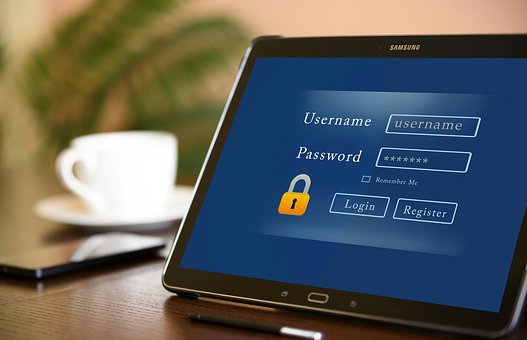
Because identity theft and data breaches are becoming an ever-growing problem, it’s important to not only have a different password for each account, but to make those passwords easy to remember and hard to guess. The following are tips you can use to make your password harder to crack:
- Change your passwords every 90 days. This might seem like a hassle at first, but hackers have a better chance at cracking your passwords if they never change. It’s also a good idea to avoid reusing passwords.
- Make your passwords at least eight characters long. Generally, the longer a password is, the harder it is to guess.
- Don’t use the same password for each account. Hackers target lower security websites and then test cracked passwords on higher security sites. Make sure each account has a different password.
- Include uppercase letters and special characters in your password. Special characters include symbols like “#,” “*,” “+” and “>.” These symbols can make your password more complex and harder to guess.
- Avoid using the names of spouses, kids or pets in your password. All it takes for a hacker to crack passwords that include these things is a little research on social media sites like Facebook and Twitter.
Read more

Representatives from the United States, Mexico and Canada recently reached an agreement to update the North American Free Trade Agreement (NAFTA). The new trade deal, referred to as the United States-Mexico-Canada Agreement (USMCA), includes a number of changes to support North American businesses, increase labor regulations and overhaul intellectual property (IP) protections.
Although the USMCA has many similarities to NAFTA, some important changes will likely affect businesses:
- North American auto industry—Starting in 2020, vehicles will only avoid tariffs if at least 75 percent of their parts are made in North America (up from the current 62.5 percent requirement). Also, at least 30 percent of the work done during the manufacturing process must be done by employees with hourly wages of $16 or more. Although these changes should help to discourage overseas imports, some believe that they could significantly increase the price of vehicles.
- Better IP protections—The new deal has stricter regulations to protect trademarks, copyrights and other strategic plans. The USMCA also extends copyright protections to 70 years beyond the life of the author.
- Disputes and reviews—One of the USMCA’s provisions allows for a special dispute process that’s handled by a panel of representatives instead of one of the three country’s court systems. An automatic review process will take place six years after the three countries ratify the deal, and it will automatically dissolve after 16 years.
NAFTA will remain in effect until all three countries approve the USMCA, which is likely to occur sometime in early 2019.
Read more

Workplace stress is a common aspect of employment, particularly if you often find yourself with a heavy workload. While it may not be possible to completely eliminate stress, it’s critical to manage it effectively.
One way to reduce workplace stress is through time management. Proper time management methods allow you to complete pressing tasks efficiently and allocate enough resources to finish future projects as well.
The following time management tips can help you reduce workplace stress caused by heavy workloads:
- Complete the most important tasks first.
- Learn how to say no to projects that aren’t time sensitive or fall outside of your responsibilities.
- Get plenty of rest so you are productive during the workday.
- Eliminate distractions and focus on the task at hand.
- Get an early start on upcoming projects whenever possible.
- Stay organized.
- Budget time between tasks to address any issues and to prepare for upcoming projects.
If workplace stress persists, it may be a good idea to speak with your supervisor. They will be able to provide ways to help limit your workload and improve your situation.
Read more
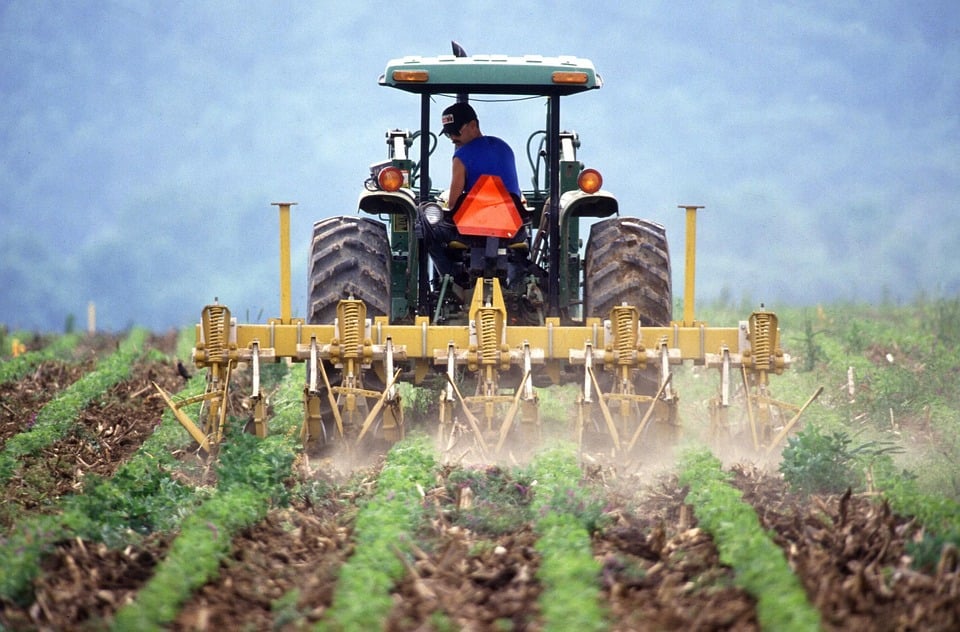
Flooded barns and lost crops are just a couple of the emergencies farmers have to deal with after a natural disaster. Thankfully, there are federal programs and resources available to help with some of the costs, but seeking them out can be confusing and time consuming. The agency you contact will depend on the type of damage you have, so a farmer may have to go to three separate agencies for help.
Disaster Relief – Helpful Links
3 STEPS TO POST DISASTER RELIEF
It can be overwhelming trying to navigate the different programs available. Here, we break it down into three steps:
Step 1: Take pictures. Disaster programs need documented damage, so take pictures before you clean up, and take note of specific losses. Save receipts for any purchases you need to make during recovery.
Step 2: Know what programs for coverage are available. There are several different programs that address different needs of hurricane relief. For example, the Farm Service Agency (FSA) handles assistance specific to farms and farmland. The Small Business Administration handles disaster assistance for businesses. The Federal Emergency Management Agency handles household damages and reconstruction.
Step 3: Be aware of important deadlines. Each program has different application processes and different deadlines. Make sure you get your applications in on time.
- If seeking the help of an FSA program, be aware that most have an application deadline of 30 days after the damage or loss occurs.
- If damage prevents you from planting, complete a Notice of Loss form and submit it to your local FSA office within 15 days of the planned planting date to determine eligibility.
- If you participate in Risk Management Agency (RMA) federal crop insurance, report the damage within 72 hours of discovery, and follow up in writing within 15 days.
Read more

Recently, Facebook announced that nearly 50 million user accounts were compromised in a data breach. The breach, which can be traced back to July 2017, is one of the largest in the company’s 14-year history.
While investigations are ongoing, the company said hackers exploited a software vulnerability in Facebook’s "View As" feature to steal access tokens and gain control of user accounts. Access tokens are effectively digital keys to specific accounts, and stealing them allows attackers to view private posts or compose status updates without the knowledge of the affected user.
In addition, the attack allowed the hackers to see anything that users can see on their own profile, including the names and birthdates of friends and family members. Such information could be used in future phishing attacks.
In response to the attack, Facebook reset 90 million logins automatically, fixed the software vulnerability and informed law enforcement officials. While the company says that users do not need to change their passwords, individuals experiencing login issues should navigate to Facebook’s Help Center.
As a safety precaution, users are encouraged to log in and out of all of their accounts on every device. Users can see all of the devices they’re currently signed into here.
To learn more about the breach, read Facebook’s official blog post.
Read more
