
On April 30, 2018, the Occupational Safety and Health Administration (OSHA) announced it will require all establishments affected by the electronic reporting rule to submit their 2017 data to OSHA by July 1, 2018.
This announcement clarifies the requirement for establishments in states with an OSHA-approved plan. These establishments must submit electronic reports, regardless of whether the state has ratified or incorporated the electronic reporting rule into its OSHA state plan.
Establishments in all states, including those with an OSHA-approved state plan, should prepare to submit electronic reports by July 1, 2018. Affected establishments can accomplish this by:
- Becoming familiar with the requirements in the electronic reporting rule; and
- Transitioning their OSHA records to an electronic format approved by the Injury Tracking Application (ITA).
OSHA Electronic Reporting
OSHA’s electronic reporting rule was issued in 2016. The rule requires establishments to report data from their injury and illness records to OSHA electronically if they:
- Are already required to create and maintain OSHA injury and illness records and have 250 or more employees;
- Have between 20 and 249 employees and belong to a high-risk industry; or
- Receive a specific request from OSHA to create, maintain and submit electronic records, even if they would otherwise be exempt from OSHA recordkeeping requirements.
The electronic reporting rule applies to establishments, not employers. An employer may have several worksites or establishments. In these situations, some establishments may be affected while others are not.
To determine whether an establishment is affected, employers must determine each establishment’s peak employment during the calendar year. During this determination, employers must count every individual that worked at that establishment, regardless of whether he or she worked full-time, part-time, or was a temporary or seasonal worker.
OSHA-approved State Plans
The final rule required OSHA-approved state plans to adopt the electronic rule or “substantially identical” requirements within six months of the final rule’s publication date.
|
All Employers |
| California
Maryland
Minnesota
South Carolina
Utah
Washington
Wyoming |
|
Public Employers |
| Illinois
Maine
New Jersey
New York |
This means that OSHA-approved state plans have the authority to adopt reporting requirements that go above and beyond what is required by the federal rule. For this reason, establishments located in OSHA-approved state plan jurisdictions should consult with their local OSHA offices to make sure they are satisfying all electronic reporting requirements.
The OSHA-approved state plans shown on this map have not yet adopted the requirement to submit injury and illness reports electronically.
As a result, establishments in these states were not required to submit their 2016 data through the reporting website in 2017. However, OSHA has now clarified that they must submit their 2017 data in 2018.
Read more

You’ve probably heard a lot about opioids lately, and for good reason—the CDC estimates that more than 115 people die from opioid overdoses every day.
One of the biggest reasons for widespread misuse of these drugs is that they’re both effective at short-term pain management and highly addictive.
Luckily, to combat what some now call the “opioid epidemic,” researchers from the American College of Physicians (ACP) have published guidelines that promote alternative noninvasive and therapy-based pain treatments.
Although these guidelines recommend the use of opioids and other medications as a last resort, therapeutic treatments may help strengthen your body and help you heal naturally. However, you should always consult your physician for the best way to treat your pain.
Here are some common pain treatments based on the ACP’s guidelines:
- Use heat or ice packs to reduce pain and swelling. Regulating how much blood flows into affected areas can be a simple and effective way to reduce pain.
- Avoid overexertion. Rest will allow any injured tissue and nerve roots to begin to heal. However, too much rest can cause your muscles to weaken.
- Exercise when possible. Although exercising to relieve pain may sound strange, even low-intensity activity like stretching or walking can help strengthen your muscles and relieve pain. Consult with a health care or fitness professional to customize a safe and effective exercise routine for any severe or chronic pain.
- Engage in relaxing activities such as yoga and meditation. Research has shown that the mental aspect of physical pain can cause it to be much more intense than it would be otherwise.
- Explore your options. Talk with your doctor about alternative pain relievers and anti-inflammatory medications. You could also discuss when to use or how to wean off strong narcotics. Opioids should only be considered as a last resort.
Read more

ad diets have been around for decades. New ones surface regularly while some older weight-loss solutions fall in and out of popularity.
Popularized by the promise of quick and dramatic weight-loss results, fad diets need to be fully researched before trying. Generally, diets or diet products can be considered a fad if they fit any of the following criteria:
Claiming to help you lose weight very quickly, more than 1-2 pounds per week.
Promising you will lose weight and keep it off without giving up fatty foods or starting an exercise program.
Basing their claims only on “before and after” photos.
Offering testimonies from clients or “experts” in weight loss, science or nutrition who are usually being paid to promote the diet plan.
Drawing simple solutions from complex medical research.
Limiting food choices and not encouraging you to get balanced nutrition by eating a variety of foods.
Requiring you to spend a lot of money on things such as seminars, pills or prepackaged meals in order for the plan to work.
Instead of turning to a fad diet to achieve weight-loss results, try implementing lasting lifestyle changes. Contact a health care professional to get started
Read more

Facebook recently announced that political consulting firm Cambridge Analytica obtained information from up to 87 million accounts without their users’ consent. Experts believe that collected data could include locations, interests, photos, status updates and more.
Facebook applications and third-party services can normally request access to an account’s information in order to add functionality or advertise products. However, experts allege that Cambridge Analytica violated Facebook’s terms of service by using the data to direct political campaigns and influence voters.
These allegations have highlighted concerns about data security, social media privacy and Facebook’s data protection practices. In order to keep your personal information safe, it’s important for you to be aware of how it can be exposed and what steps you can take to ensure you control access to your data.
Timeline of Events
In 2014, University of Cambridge researcher Aleksandr Kogan created a Facebook personality quiz that gave him data on approximately 270,000 Facebook users. At the time, Facebook’s terms of service also allowed Kogan to access data on these users’ friends—a total of 87 million accounts.
Although Kogan told users that their information would only be used for research, he later worked with Cambridge Analytica to market the data to political groups. While many experts speculate that Cambridge Analytica’s clients used this data to direct political messages and influence voters, investigators have yet to confirm if or how the data was used.
Facebook learned that Cambridge Analytica possessed the data in 2015 and requested that all copies be deleted. However, in March 2018, a number of news sources reported that the consulting firm kept and continued to use at least a portion of the data for its business practices. As a result, Facebook’s data protection practices are now under investigation by regulators.
Protecting Your Data
Many social media users assume that their personal information is safe, but this scandal has shown the importance of re-evaluating online security. Hackers can use data posted on social media to engage in identity fraud, social engineering schemes and more. Here are some tips you can use to secure your data on social media platforms:
- Check Facebook’s webpage about the exposed data to see if Cambridge Analytica obtained any of your personal information.
- Go through all of the privacy settings on each of your social media accounts to see if the security features or terms of service have changed.
- Always assume that any information you post online can be shared with the public.
- Enable two-factor authentication on all devices and services that offer it.
- Create strong passwords and update them regularly.
Call us at 831-661-5697 for more help staying safe online.
Read more

On April 30, 2018, the Occupational Safety and Health Administration (OSHA) announced it will require all establishments affected by the electronic reporting rule to submit their 2017 data to OSHA by July 1, 2018.
This announcement clarifies the requirement for establishments in states with an OSHA-approved plan. These establishments must submit electronic reports, regardless of whether the state has ratified or incorporated the electronic reporting rule into its OSHA state plan.
Establishments in all states, including those with an OSHA-approved state plan, should prepare to submit electronic reports by July 1, 2018. Affected establishments can accomplish this by:
- Becoming familiar with the requirements in the electronic reporting rule; and
- Transitioning their OSHA records to an electronic format approved by the Injury Tracking Application (ITA).
OSHA Electronic Reporting
OSHA’s electronic reporting rule was issued in 2016. The rule requires establishments to report data from their injury and illness records to OSHA electronically if they:
- Are already required to create and maintain OSHA injury and illness records and have 250 or more employees;
- Have between 20 and 249 employees and belong to a high-risk industry; or
- Receive a specific request from OSHA to create, maintain and submit electronic records, even if they would otherwise be exempt from OSHA recordkeeping requirements.
The electronic reporting rule applies to establishments, not employers. An employer may have several worksites or establishments. In these situations, some establishments may be affected while others are not.
To determine whether an establishment is affected, employers must determine each establishment’s peak employment during the calendar year. During this determination, employers must count every individual that worked at that establishment, regardless of whether he or she worked full-time, part-time, or was a temporary or seasonal worker.
OSHA-approved State Plans
The final rule required OSHA-approved state plans to adopt the electronic rule or “substantially identical” requirements within six months of the final rule’s publication date.
This means that OSHA-approved state plans have the authority to adopt reporting requirements that go above and beyond what is required by the federal rule.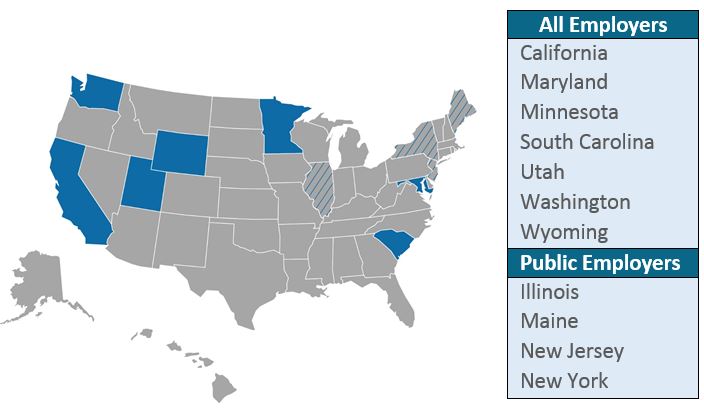 For this reason, establishments located in OSHA-approved state plan jurisdictions should consult with their local OSHA offices to make sure they are satisfying all electronic reporting requirements.
The OSHA-approved state plans shown on this map have not yet adopted the requirement to submit injury and illness reports electronically.
As a result, establishments in these states were not required to submit their 2016 data through the reporting website in 2017. However, OSHA has now clarified that they must submit their 2017 data in 2018.
Read more

States across the country—particularly Kentucky, Michigan, Indiana, Utah and California—are dealing with an outbreak of the hepatitis A virus (HAV). Public health officials are urging residents and travelers to take action to avoid contracting this serious illness.
What is hepatitis?
Hepatitis is a medical term that refers to inflammation of the liver. While heavy alcohol use, toxins and some medications can cause hepatitis, the condition is most often caused by the hepatitis A, B and C viruses.
Is there a difference between the three viruses?
Each virus causes a different type of liver infection and can be transmitted in various ways.
Hepatitis A
Hepatitis A is a highly contagious liver infection. It most often spreads when a person unknowingly ingests the HAV from contaminated objects, drinks or food. It can also spread from close contact with an infected person.
Hepatitis A can range from being a mild illness lasting only a few weeks to a severe illness lasting months. In some cases, it can result in death.
The best way to prevent hepatitis A is to get the HAV vaccine. Practicing good hygiene—like washing your hands after using the bathroom, and before preparing and eating food—can help also prevent the illness.
Hepatitis B
Similar to hepatitis A, hepatitis B is a contagious liver condition caused by the hepatitis B virus (HBV). Unlike hepatitis A, hepatitis B can range from a mild illness to a serious lifelong or chronic condition. HBV is primarily spread through contact with the blood and body fluids of an infected person.
There is a vaccine to protect against hepatitis B. In addition to getting vaccinated, avoid having unprotected sex or sharing personal items like toothbrushes and razors to prevent transmitting the HBV.
Hepatitis C
Hepatitis C is the most common bloodborne infection in the United States. About 80 percent of those infected by the hepatitis C virus (HCV) will develop a chronic infection, which varies from mild to severe liver damage.
Hepatitis C is the most common cause of needing a liver transplant in U.S. adults.
There is not a vaccine for hepatitis C. To prevent transmitting the HCV, don’t share personal care items that could have blood on them, like needles, and don’t have unprotected sex.
What are the symptoms of hepatitis?
Unfortunately, many people who have hepatitis don’t exhibit symptoms. This is especially true for children. If symptoms occur with an acute infection, they can appear as soon as two weeks and as late as six months after exposure.
If symptoms do occur, they typically include:
- Fever
- Fatigue
- Loss of appetite
- Nausea
- Vomiting
- Abdominal pain
- Dark urine
- Clay- or gray-colored stool
- Joint pain
- Jaundice
What should I do if I live in or am going to be traveling to a state experiencing a hepatitis A outbreak?
If you’ve already been vaccinated against the HAV, you should already be protected. If you haven’t yet been vaccinated, public officials strongly recommend doing so as soon as possible. Although the full vaccination course for hepatitis A involves getting two shots about six months apart, the first shot can provide protection. Additionally, if you get the vaccination soon enough, it can also provide protection if you’ve already been infected.
What should I do if I suspect I’ve been exposed to hepatitis A?
Contact your doctor and your local or state health department if you have questions or concerns about potential exposure to hepatitis A.
Where should I go for more information about the hepatitis A outbreak or hepatitis in general?
The resources below offer more information on hepatitis A, B and C, as well as the recent hepatitis A outbreak.
Read more
