
5 Sunscreen Tips to Protect Your Skin
The bright summer months are a great time to be outdoors, but extended exposure to sunlight can cause serious damage to your skin. The sun emits ultraviolet (UV) rays that can lead to sunburn, premature skin aging and cancer.
The best way to protect your skin while still enjoying the outdoors is to regularly apply sunscreen to any area of your body that’s exposed to the sun. It’s also important to use a sunscreen that offers the best protection for the situation you’re in. Here are five important tips you can use to protect your skin this summer:
- Choose a sunscreen that includes broad spectrum protection on the label. These sunscreens will protect you from both types of UV rays.
- Make sure that any sunscreen you use has a sun protection factor (SPF) of 30 or higher. A higher SPF means that more UV light is filtered out before it can reach your skin.
- Use water-resistant sunscreens if you’ll be swimming or sweating in the sun. Also, be sure to inspect the sunscreen’s label to see how long it lasts in the presence of water or sweat.
- Follow the instructions on the sunscreen’s label when applying it to your skin. You should apply the sunscreen evenly to any exposed area of your body. It generally takes 1 fluid ounce of sunscreen to cover an adult.
- Reapply sunscreen every two hours. You may need to reapply it more frequently if you’ve been swimming or sweating, or if it’s been rubbed off by a towel or clothing.
Do Your Sunglasses Offer Enough Protection?
The American Optometric Association estimates that 47 percent of consumers don’t check their sunglasses to see if they offer adequate protection from UV rays.
The eyes are one of the most sensitive areas of the body, and exposure to even a small amount of UV rays can result in cataracts and cancer of the eyelids later in life. Keep these tips in mind when purchasing a pair of sunglasses:
- The sunglasses should block 99 to 100 percent of UV radiation.
- A uniform tint should be present. A gray tint is best for color identification while driving.
- The frame of the sunglasses should stay close to your eyes and curve around your face to offer protection from multiple angles.
Read more

New Study Demonstrates the Dangers of Talking While Driving
It’s commonly known that smartphones, entertainment systems and other electronics can be a dangerous distraction to drivers. However, a new study from the University of Iowa found that simple conversations can also cause unsafe driving conditions.
The study used eye tracking equipment to analyze where subjects were looking and how long it took them to focus on a new object. Some subjects were also asked true or false questions at the same time in order to simulate a simple conversation. Data collected from the study found that subjects who answered questions took twice as long to focus on a new object than those who were asked no questions.
Although engaging in conversation seems simple, it involves a number of complex tasks that the brain must handle simultaneously. Even if the topic of conversation is straightforward, the brain has to absorb information, overlay what a person already knows and prepare to a construct a reply. And, although this process is done extremely quickly, it can also slow down reaction times and lead to a dangerous accident on the road.
The best way to keep your employees safe while driving is to encourage them to eliminate or turn off all potential distractions, including their cellphones and any hands-free accessories they may use to make a call. You can also consider including language about safe driving practices in your workplace safety policies.
Preventing Workplace Violence
As reports of shootings and other violent incidents become more common, workplace violence is a topic than no business can ignore. According to the U.S. Bureau of Labor Statistics, workplace homicides rose 2 percent in 2015, the latest year for which data is available. Additionally, the number of workplace shootings increased by 15 percent.
The best way to address potential acts of violence at your business is to be prepared to act before, during and after an act of violence occurs. Here are some programs you can use to ensure the safety of your employees and customers:
- Pre-employment screenings-Background checks can help identify candidates who have violent histories.
- Security-Security systems can ensure that only employees have access to certain areas.
- Alternative dispute resolutions-Techniques like facilitation and mediation can help solve a conflict before it escalates.
- Threat assessment teams-A designated team can work with management to assess the potential for violence and develop an action plan.
Congress Considers Flood Insurance Reforms
The National Flood Insurance Program (NFIP) is one of the few ways to get insurance coverage for flood risks, and the program is set to expire later this year. However, Congress is currently examining a number of possible changes to the NFIP before it’s reauthorized.
One of the most important topics regarding the NFIP is its financial stability. The program is currently $24 billion in debt as a result of rising claims costs and severe weather events, and some lawmakers believe that the program needs substantial reforms in order to remain viable.
The following are some of the changes that are being considered to the NFIP:
- Making private flood insurance more available to consumers
- Limiting payments to properties that flood repeatedly
- Reducing taxpayer subsidies for flood insurance
- Creating financial incentives for flood mitigation
DOL Withdraws Joint Employment and Worker Classification Guidance
The U.S. Department of Labor (DOL) recently withdrew administrative interpretations regarding joint employment and the classification of workers as employees or independent contractors. These withdrawals can have significant consequences on legal protections for employees and eligibility for benefits.
- Worker classification-Employers will need to satisfy tests established by the courts-such as the economic realities test-when classifying workers.
- Joint employment-Joint employment can only be established when an employer has direct control over another employer’s workplace.
To learn more about what these withdrawals could mean for you, contact Scurich Insurance and ask to see our comprehensive compliance bulletins, “DOL Withdraws Joint Employer Guidance” and “DOL Withdraws Worker Classification Guidance.”
Read more
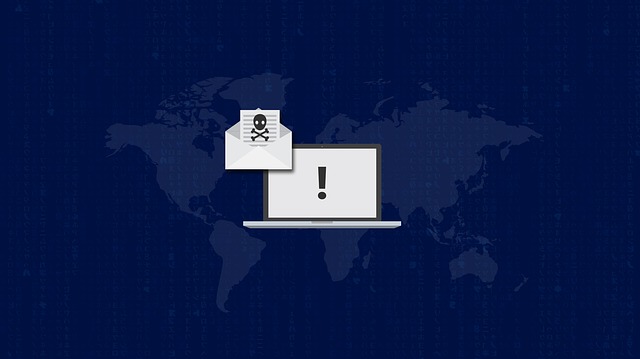
Another global cyber attack was activated on Tuesday, leaving companies across Europe, Australia and even the United States struggling to respond.
This outbreak may be the most sophisticated of a series of attacks initiated after hacking tools were stolen from the National Security Agency and leaked online in April. Similar to the WannaCry attacks in May, the most recent hack involves taking control of computer systems and asking users for digital ransom in order to regain access.
According to a spokesperson from Microsoft, the latest software update used to patch EternalBlue—the Windows software vulnerability that caused previous attacks—should protect against this attack. However, the companies affected may have failed to properly install it. As of Wednesday morning, the following companies had been affected:
- Ukrainian institutions that include the Infrastructure Ministry, postal service, central bank and the country’s largest telephone company
- Russian oil company Rosneft
- The world’s largest container-shipping company A.P. Moller-Maersk
- U.S. pharmaceutical giant Merck
- U.S. food company Mondelez International
- French bank BNP Paribas
- French construction materials company Saint-Gobain
- British marketing company WPP
- German railway company Deutsche Bahn
Although the perpetrators of this outbreak are still unknown, computer specialists have noticed similarities between the ransomware used in this attack and last year’s Petya attack. Like WannaCry, Petya is a quickly spreading worm that affects vulnerable systems. Unlike WannaCry, Petya has multiple ways to spread. This could explain why even victims who applied the EternalBlue patch were affected.
If the most recent attack is related to Petya, it could be far more damaging than WannaCry. Unlike WannaCry, Petya lacks a kill switch to prevent it from spreading. Also, Petya locks and encrypts entire hard drives, while WannaCry only locked individual files.
At the time of this news brief, 30 victims had paid the bitcoin ransom of $300, according to online records, but it isn’t yet clear whether they’ve regained access to their systems. Complicating matters, German email provider Poseo shut down the email account of the hackers in a move that could make it impossible for hackers to restore their victims’ computer access once ransom is paid.
Scurich Insurance will continue to monitor the situation. Contact us if you have any further questions regarding how you can avoid disruptive business interruptions from cyber attacks.
Read more
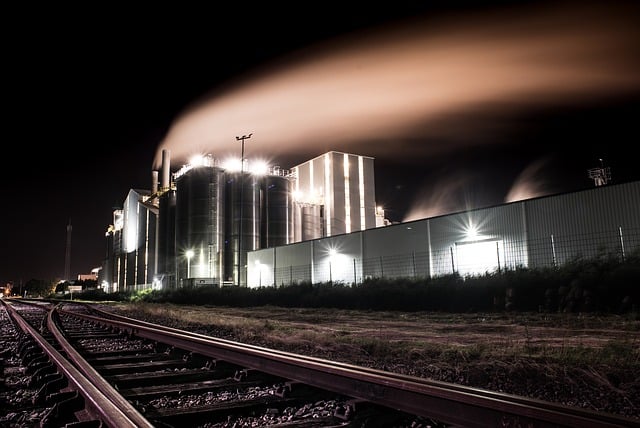
Executive Order on Apprenticeships Expected to Help Manufacturers
President Donald Trump recently signed an executive order that will expand apprenticeship programs across the country. As a result of the order, the number of available apprenticeships is expected to increase and the federal government will increase spending for apprenticeship programs to $200 million per year.
Many manufacturers use apprenticeships to meet employment requirements and help students get hands-on experience that can’t be achieved in a classroom. A larger emphasis on apprenticeships may also help fill an anticipated employee shortage in the manufacturing industry. According to the Manufacturing Institute, there will be 3.4 million manufacturing jobs to fill over the next 10 years.
Although the executive order didn’t set specific goals for the number of apprenticeships to be added, experts believe that up to 5 million apprenticeships could exist in the next 10 years. A clause included in the executive order may also allow existing internships to be categorized as apprenticeships.
Machining Safety Tips
Using machines is common for every manufacturer, but ignoring machining safety can expose you to incredibly high costs. OSHA issued $6.8 million in penalties for machining safety violations in 2015, and the associated costs of medical bills, damaged equipment and replacement personnel is much higher.
Before your employees use any machine, you should conduct a review to ensure that they’re properly trained and that all equipment is in working condition. Also, make sure that machine guards are in place to prevent injuries and that employees wear any required personal protective equipment. For more resources on machining safety, contact us at 831-661-5697 today.
Air Bag Manufacturer Files for Bankruptcy
Japanese auto part supplier Takata recently filed for bankruptcy after many years of managing the largest product recall in U.S. history. At least 16 deaths have been attributed to the company’s faulty air bag inflators, and over 69 million vehicles have been recalled as a result.
Although Takata recently pleaded guilty to a felony charge as part of an agreement with the Justice Department, mounting costs from the recall and associated lawsuits overwhelmed the manufacturer. However, Takata executives stated that filing for bankruptcy will allow them to reorganize their finances and continue shipping replacement parts for affected vehicles.
Read more

As a farmer or rancher, you may produce a variety of products. Maybe you grow grain, flowers or fruit, raise cattle, horses or alpacas, or manage fish ponds, chicken barns or a custom farming fleet. A farms/ranches business owners policy is essential for protecting your livelihood.
What is a Farms/Ranches Business Owners Policy?
A regular homeowners’ policy covers your home if it’s damaged, and it may give you some liability coverage. This policy won’t give you the protection you need for your farm or ranch business, outbuildings or livestock, though. You need a specialized farms/ranches business owners policy with several layers of protection.
What Does a Farms/Ranches Business Owners Policy Cover?
Farm and ranch owners may customize their business owners insurance policy. In general, your farms/ranches business owners policy covers:
House – Repair or replace your farm or ranch house and any possessions
Liability – Cover medical and legal expenses you may incur if someone is injured while visiting your farm or ranch.
Livestock – Receive financial reimbursement if your livestock are stolen, attacked by dogs or wild animals, accidentally drown or are shot, suffer electrocution or die during a natural disaster or collision.
Machinery and equipment – Replace damaged, lost or stolen tractors, wagons and other machinery and equipment you own, borrow, rent or lease for farm or ranching activities.
Structures – Cover farm/ranch structures, including barns, pens, fences, silos, machine sheds and other buildings, that may be damaged, stolen or vandalized during a weather incident or other incident.
Additionally, you may customize your farms/ranches business owners policy with a schedule that’s based on your specific farm or ranch operation. If something on your farm or ranch is not listed on the schedule, it may not be covered if it’s damaged, lost, stolen or vandalized.
Ask your insurance agent about these optional coverages, too.
- Accidental Direct Physical Loss
- Amendatory Deductible on Cab Glass
- Chemical Drift
- Custom Farming
- Crop Dusting
- Equipment Breakdown
- Extra Expense
- Fire on Growing Grain
- Hired Auto
- Incidental Business
- Limited Pollution Liability
- Loss of Earnings
- Seasonal Coverage
Where do you Buy a Farms/Ranches Business Owners Policy?
A farms/ranches business owners policy is a valuable investment. To purchase a policy, talk to your insurance agent. Discuss your unique needs, business and budget and create a policy that’s right for you. For example, you may choose a policy with high liability limits if you conduct school tours on your farm or ranch, and the size of your farm or ranch affects the amount of coverage you will buy.
A farms/ranches business owners policy gives you peace of mind and valuable protection for your home and your business. Understand what it is as you operate your farm or ranch.
Read more
DHS Warns of Utilities Malware
Two cyber security firms have uncovered malicious software that they believe caused a Ukraine power outage last December. The software was recently uncovered by two cyber security firms—ESET, a Slovakian anti-virus software maker, and Dragos Inc., a U.S. critical-infrastructure security firm.
The two firms released details of the malware, which goes by two different names, Industroyer and Crash Override. They also issued alerts to governments and infrastructure operators to help them defend against the malware, warning that it could be easily modified to harm critical infrastructure operations around the globe.
The U.S. Department of Homeland Security (DHS) hasn’t seen any evidence to suggest that its critical infrastructure has been affected, but it will continue to investigate, as there is the possibility of more attacks using the same approach. In an alert posted on its website, the agency stated that “the tactics, techniques and procedures described as part of the Crash Override malware could be modified to target U.S. critical information networks and systems.”
In the same alert, the DHS posted a list of technical indicators that a system had been compromised by Crash Override and asked firms to contact the agency if malware was suspected.
Power firms are concerned that there could be more attacks, especially considering the malware could attack other types of infrastructure, such as transportation, water and gas providers.
The two companies do not yet know who masterminded the attack, although Ukraine blames Russia. Officials in Moscow have denied the claims.
Microsoft Warns of Cyber Attacks
Citing an elevated risk of cyber attacks, Microsoft has released several security updates during its June “Patch Tuesday” in an effort to protect against widespread hacking. A recent blog post by Adrienne Hall, General Manager of Microsoft’s Cyber Defense Operations Center, stated, “In reviewing the updates for this month, some vulnerabilities were identified that pose elevated risk of cyber attacks by government organizations, sometimes referred to as nation-state actors or other copycat organizations.”
WannaCry
In May 2017—after the WannaCry ransomware locked hundreds of thousands of machines around the world and demanded that victims paid a ransom in bitcoin—Microsoft was prompted to release updates for software that it no longer supports. This was an unexpected move that preceded more updates for old, outdated systems.
Microsoft’s motives for June’s most recent security updates are speculative, and it is unclear whether the company has been warned of another cyber attack using exploits similar to those of WannaCry. A Microsoft spokesperson stated that the decision to release the most recent updates is “an exception based on the current threat landscape and the potential impact to customers and their businesses.”
WannaCry Came from North Korea
According to British security officials, the May 2017 global ransomware attack that affected over 200,000 computer systems came from North Korea. The hackers are believed to be a hacking group known as Lazarus—the same group that targeted Sony Pictures in 2014.
In the wake of increasing tensions resulting from North Korea’s missile tests, the DHS and the FBI have issued an alert to businesses about another possible cyber attack led by North Korea, warning people to update old software
Recent Findings
British security officials have recently linked the North Korean government to the creation of WannaCry, based on tactics, techniques and targets. The ransomware was originally built around a hacking tool belonging to the National Security Agency and spread through a flaw in Windows.
The Importance of Performing Updates
WannaCry is believed to be a flawed attempt to raise revenue for the North Korean regime, considering the hackers have not yet cashed in the $140,000 in bitcoin they stole. That is likely because the transactions are easy to track. Despite the failed attempt, one of the reasons why WannaCry was so powerful was because many of the facilities attacked hadn’t updated their software to patch holes in security.
The most recent security update includes patches to its Windows XP, Windows Vista and Server 2003 products, which are all unsupported but still widely used. Microsoft suggests customers enable Windows Update if they haven’t already.
Target to Pay Settlement from 2013 Data Breach
Target has agreed to pay $18.5 million to settle claims made by 47 states and the District of Columbia as well as to resolve an investigation into the retailer’s massive data breach in 2013.
The investigation found that Target’s gateway server was accessed by cyber hackers through credentials stolen from a third-party vendor. As a result, data from up to 40 million credit and debit cards were stolen during the 2013 holiday season.
The total cost of the data breach was $202 million, according to Target. The state receiving the largest share of the settlement is California, which will receive more than $1.4 million.
Michigan Utility Company Loses Employees After Cyber Attack
A Lansing utility company is still recovering from a 2016 cyber attack that temporarily disabled its internal network and asked for a $25,000 ransom. According to officials, an employee unsuspectingly clicked on an infected email attachment, which shut down the company’s accounting and email systems.
Since the cyber attack, 14 employees have voluntarily left the company—13 of which were IT employees. The company is devoting its resources to minimize the odds of an attack and to quickly recover in the event it is hit again.
Read more
