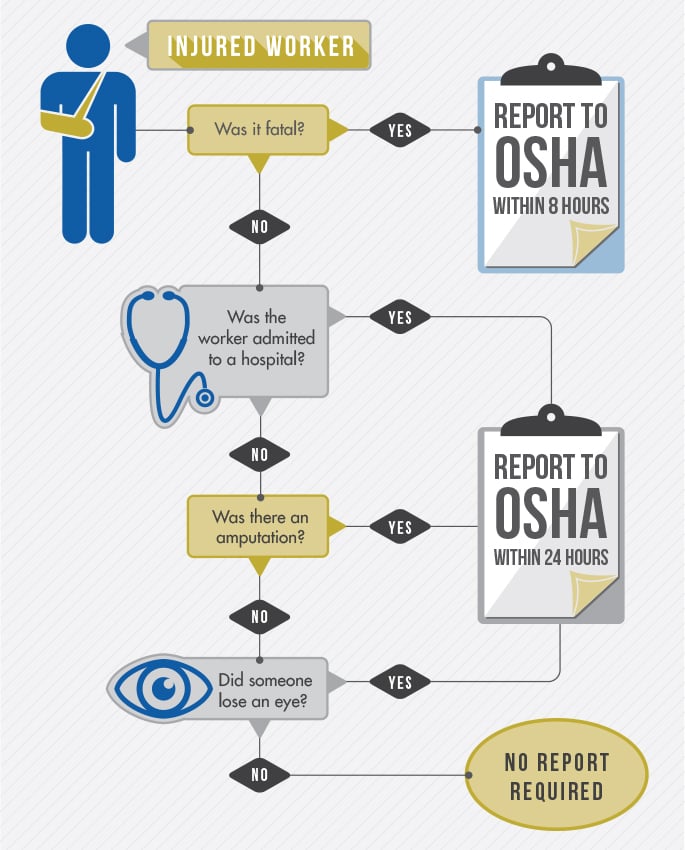
| Starting on Jan. 1, 2015, all employers under OSHA’s federal jurisdiction will be required to report all work-related fatalities within eight hours as well as any inpatient hospitalizations, amputations and losses of an eye within 24 hours. Previously, an employer was only expected to report to OSHA after a fatality or when three or more workers were hospitalized in the same incident. |
| OSHA Injury Reporting Flowchart |
 |
Read more
 A resurgent construction industry needs to do a better job of keeping workers safe. That’s the bottom line of a recent report by Marsh Risk Consulting.
Based on data from the U.S. Bureau of Labor Statistics, the study, “Building Safety and Leadership in the Construction Industry,” notes that the industry’s 2012 fatality rate increased to 9.5 per 100,000 workers from 9.1 per 100,000 in 2011. The 775 construction-sector deaths in 2012 marks the first annual increase in work-related fatalities since 2006.
According to Marsh, fatalities will probably continue to rise without concerted industry-wide safety improvements, as an ongoing shortage of experienced construction workers leads to widespread promotion of unskilled workers into supervisory roles. “The increase in new construction activity is bringing an influx of new, inexperienced workers,” states the report. “In this environment, some contractors are stretching their hiring standards to meet project demands.”
Marsh recommends that construction firms focus on training management to ensure effective leadership and help build a culture of safety throughout their organizations.
“As the economy grows and the number of new construction projects picks up, now is not the time to be lax on safety,” warns John Moore, a construction safety specialist in Marsh’s workforce strategies practice. “Inadequate safety performance can lead to employee turnover and legal, financial and reputational risks. Investing in high-quality leadership will go a long way toward retaining valued workers and maintaining a safe work environment.”
The more you do to keep your workers, safe, the better for all concerned– and the lower your insurance costs. We stand ready to offer our advice on developing, implementing, and enforcing workplace safety standards. Just give us a call.
Read more
 As people retire later, the workforce keeps aging. This trend has been a concern for businesses because the conventional wisdom holds that older workers are more vulnerable to costly injuries, driving up Workers Comp rates.
However, new research from the National Council on Compensation Insurance (NCCI) casts doubt on this conclusion, changing the definition of “older workers.”
After studying injury rates for different age groups, NCCI found that, while workers under 35 had substantially more cuts on their fingers and those over 35 suffered more cases of carpal tunnel and cervical injuries, the numbers are startlingly similar.
What about expense? NCCI concluded that although workers between 20 and 34 create much lower costs (and fewer days lost), once they reach 35 these costs are similar. This redefines an “older worker” as someone who grew up listening to Nirvana instead of Elvis.
Injury prevention for employees – regardless of age –should begin during the hiring process. Once you have a written job description, offer the candidate the job based on his or her ability to do the work with reasonable accommodation. Then have the candidate complete a medical questionnaire to determine if he or she “fits” position. If so, it’s time to get started. If not, to find someone else.
If you haven’t already done so, set up and monitor a comprehensive safety-training program for new hires, Make sure that they remain mindful of how they’re doing their job. Far more injuries result from unsafe acts by employees than unsafe workplace conditions Employees who feel rushed are more likely to ignore safety aside so they can meet deadlines – leading to preventable accidents.
To learn more about keeping your workers safe on the job, feel free to get in touch with us.
Read more
 Following these principles of leadership will help you and your employees focus on job safety:
- Don’t walk by. It is everyone’s responsibility to prevent any potentially unsafe acts and conditions they witness from turning into accidents.
- STOP! Encourage employees to stop working whenever they feel unsafe, no matter what reason they give.
- Focus on a safe working environment. If you expect your workers to work safely, make their workplace as safe as possible.
- Don’t blame the worker first. Unsafe ways of working, accidents, incidents, and ill health aren’t necessarily the worker’s fault. The problem often comes from less obvious causes, such as decisions by management.
- Use your workforce for ideas. Employees often have a more accurate idea than you or your managers about which safety and health practices will work, because they deal with these issues every day.
- Be patient. Don’t expect quick wins. Improvements will emerge over time, but only if you stick with them.
- Explain your decisions. Just telling workers that something is wrong or a safety risk isn’t enough. If they’re to act on the information you provide, they need to know why and how to avoid harm.
- Lead by example. Your behavior sends powerful signals. If you carry out your job in a safe way, your workers are more likely to do the same. If you don’t, they won’t imitate you.
- Focus on co-operation. Treat your subcontractors in the same way as employees by encouraging them to communicate with each other.
- Don’t neglect occupational health. If you look after the health, as well as the safety, of your workers today, you’re less likely to create problems for them or your business tomorrow.
Sound advice!
Read more
 Viagra is the most frequently counterfeited product on the market. Running a close second – and of far more concern to workplace safety experts – come electrical components. The Electrical Safety Foundation International has identified more than 1 million fake parts that can easily fail, putting workers at risk of serious injury or death from electrical accidents.
To protect your employees against this danger (and make sure that you’re getting the parts you’re paying for), manufacturers offer these guidelines:
- Buy from an authorized dealer whenever possible. However, bear in mind that counterfeit parts are often mixed in with the genuine article, making them difficult for reputable dealers to detect. Also, a broker might be your only source for discontinued items.
- Examine the packaging. Check for such obvious discrepancies as logos that are missing or don’t look right, misspelled or badly edited text, etc.; and make sure that shipping documents and parts numbers on the packaging match.
- Check the product. To make sure that a part looks and feels right, lay it next to a genuine component and see if they match. If they don’t, have an expert examine the product using a microscope, X-ray, or ion chromatography technology that can detect tampering.
- Test the part. Because many counterfeits can pass basic functionality tests, it makes sense to send any suspicious products to an independent lab for testing under a variety of conditions. This is the best way to detect actual manufacturer components that were discarded because of damage or quality control failures. Don’t choose a lab based strictly on price; ask for a detailed listing of its procedures and inspect the facility in person.
Read more
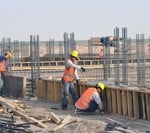 No matter how much care you take to keep job sites safe and finish projects according to specifications, accidents happen. Consider these scenarios:
- an improperly installed kitchen cabinet shelf in a home you built collapses, injuring the owner
- one of your employees posts a blog accusing a competitor of shoddy workmanship
- a visitor to your worksite trips over an air hose, falls, and fractures her leg
To protect your business against the financial threat of costly litigation from such all-too-common mishaps, you need construction liability insurance.
This coverage will pay costs and legal expenses, up to the amount of the policy, for something your business did, or failed to do, that damages a third party, related to 1) your products or services (products and completes operations); 2) allegations of slander (personal and advertising injury); or 2) injury on your premises or job site (medical expenses).
As a common business practice, both residential and commercial clients will require you,and your subcontractors, to show evidence of construction liability insurance before starting a job.
In general, residential contractors should buy coverage two to three times the amount of the construction budget. Commercial contractors usually carry policies in the multi-million dollar range. Firms that face higher risk of damages, for example, roofing contractors or those in specialized trades, tend to have more coverage. Some contractors prefer to pay their premiums up front, while others make a down payment and finance the premium over the policy period (six months to a year).
No matter how large or small your business, having comprehensive construction liability insurance is always the best policy.
We’d be happy to review your situation and recommend the coverage that’s best suited for you.
Read more