
In the November 2016 elections, the use of medical marijuana was approved through four state ballot measures, bringing the total to 28 states and the District of Columbia that have legalized medical marijuana in some form. Additionally, the District of Columbia and eight states—Alaska, California, Colorado, Maine, Massachusetts, Nevada, Oregon and Washington—have legalized recreational use of marijuana in some form.
However, under the Controlled Substance Act of 1970, marijuana is classified as a Schedule I substance with no accepted medical use and a high potential for abuse, making it illegal at the federal level. Amid state and federal law contradictions, many workers’ compensation payers are choosing to deny coverage for medical marijuana. Since medical marijuana isn’t currently included in workers’ compensation treatment guidelines, they have every right to do so.
As such, the future of medical marijuana in workers’ compensation remains unclear, and state and federal lawmakers have their own opinions.
States’ Stances
While states have different views on the use of medical marijuana, there are various state rulings that may be setting a new precedent in the workers’ compensation and medical marijuana debate.
New Mexico
New Mexico became the first state to propose a reimbursement rule for medical marijuana in November 2015. The state’s 2016 fee schedule set the maximum reimbursement rate for medical marijuana at $12.02 per gram for injured workers. Under the state’s Lynn and Erin Compassionate Use Act, authorization was considered equivalent to a prescription—requiring employers to reimburse injured workers for medical marijuana. Furthermore, this process allowed insurance carriers to avoid directly paying for a Schedule I substance.
Minnesota
In 2015, Minnesota’s health commissioner decided to include “intractable” pain as a condition that could be treated with medical marijuana. According to the Minnesota Department of Health, intractable pain is defined as, “pain whose cause cannot be removed and, according to generally accepted medical practice, the full range of pain management modalities appropriate for this patient has been used without adequate result or with intolerable side effects.” This decision has opened the door for claimants to request that their workers’ compensation insurers cover the cost for medical marijuana.
Maine
The outcome in a workers’ compensation case involving medical marijuana was different than those in New Mexico and Minnesota, when an employee who sustained a back injury while making deliveries requested reimbursement for medical marijuana. According to Maine’s Workers’ Compensation Act of 1992 (MWCA), “an injured worker is entitled to reasonable and proper medical, surgical, and hospital services, nursing, medicines, and mechanical and surgical aids, as needed, paid for by the employer.”
However, the employer argued that medical marijuana-related services should not be covered under the MWCA, and that by covering such services, the employer would be in violation of federal law and subject to the risks of prosecution. In support of its argument, the employer also cited Maine’s medical marijuana statute, which states that it may not be construed to require a government medical assistance program or private health insurer to reimburse an individual for costs associated with the medical use of marijuana. The employer won the case.
Other states, including Arizona and Montana, are in agreement with Maine and have taken the position that a workers’ compensation insurance carrier cannot be compelled to pay for medical marijuana because the possession and use of marijuana is still illegal under federal law.
Federal Opinion
Workers’ compensation payers rely on evidence-based guidelines when making treatment decisions. Since medical marijuana is considered a Schedule I substance and is not included any workers’ compensation treatment guidelines, many payers are opting to deny coverage.
Benefits of Covering Medical Marijuana
There is significant interest in using medical marijuana as an alternative to opiates for the management of chronic pain. Furthermore, alternative treatments may pave the way for medical marijuana, as meditation, exercise, mindfulness, yoga and cognitive behavioral therapy have proven successful in eliminating opioid use. However, insurers have historically been more likely to pay for opioids than alternative treatments.
Drawbacks of Covering Medical Marijuana
In states that have legalized medical or recreational marijuana, workplace safety is a concern. It is the employer’s responsibility to foster an environment devoid of harmful hazards. If a company employs a medical marijuana user, this person might experience side effects that could lead to a workplace injury.
Furthermore, drug-free workplace policies could be affected since marijuana continues to be categorized as a Schedule I substance. For example, although an employee may be authorized to use medical marijuana, he or she could still be terminated if found positive for marijuana in a random drug test.
Federal Outlook
It’s too early to anticipate President Donald Trump’s official policies with regards to medical marijuana. However, on the campaign trail, he said he was in favor of rescheduling marijuana as a Schedule II substance, which is in contrast to the Obama administration’s stance. In 2016, former President Barack Obama claimed that more research was needed into the drug’s possible medical benefits.
New legislation and court decisions are continuing to develop, which will affect workers’ compensation treatment decisions. For example, on Aug. 29, 2013, the Department of Justice published a memorandum authored by former Deputy Attorney General James Cole, outlining a new set of priorities for federal prosecutors operating in states which had legalized the use of marijuana. The “Cole memo” encouraged law enforcement agencies to focus on the most critical federal priorities, such as preventing the distribution of marijuana to minors. By doing so, the federal government is taking a more hands-off approach in jurisdictions that have enacted laws legalizing marijuana.
Also protecting the marijuana industry is the Rohrabacher-Farr amendment, which prohibits the federal government from spending money to target medical marijuana businesses. However, the federal government could still go after small businesses that don’t have the resources to fight. And if this amendment isn’t renewed by Congress annually, the protection will disappear, and the industry could be set back for years.
Until the discrepancy between state and federal law is resolved—particularly in regard to drug-free workplace policies—Scurich Insurance will continue to monitor the landscape for new developments that could have ongoing ramifications for the industry and could forecast marijuana reclassification.
Read more

OVERVIEW
The U.S. Court of Appeals for the 7th Circuit has ruled that Title VII of the Civil Rights Act (Title VII) prohibits employment discrimination based on sexual orientation. The decision in Hively v. Ivy Tech, issued on April 4, 2017, makes it illegal to use an individual’s sexual orientation as a basis for employment decisions.
The ruling applies to employers with 15 or more employees in Wisconsin, Illinois and Indiana.
The decision is groundbreaking because it overturned prior cases and also conflicts with law from other federal courts. However, it aligns with the Equal Employment Opportunity Commission’s (EEOC) position. This makes review of the issue by the U.S. Supreme Court likely in the future.
ACTION STEPS
Affected employers should review their existing policies to ensure they do not allow discrimination based on sexual orientation or gender identity. Employers should also review any applicable state laws and the EEOC’s enforcement guidance to ensure their policies are compliant.
Background
Title VII is a federal law that prohibits employers with 15 or more employees from discriminating against employees and job applicants on the basis of their race, color, religion, sex or national origin. Since Title VII was enacted in 1964, several federal courts, including the 7th Circuit, have held that the law’s inclusion of the word “sex” means that its protections only extend to traditional notions of gender.
For example, the 7th Circuit’s 1984 decision in Ulane v. Eastern Airlines had held that Title VII only makes it unlawful to discriminate “against women because they are women and against men because they are men.” The U.S. Court of Appeals for the 11th Circuit (which includes Alabama, Florida and Georgia) recently issued a similar holding in its March 2017 decision in Evans v. Georgia Regional Hospital.
Although the U.S. Supreme Court has never specifically addressed whether Title VII prohibits discrimination based on sexual orientation, its decisions in other cases have established that:
- The practice of “gender stereotyping” falls within Title VII’s prohibition against sex discrimination; and
- Discrimination based on the race of a person with whom another individual associates is a form of racial discrimination under Title VII.
Relying on these and other Supreme Court decisions in its ruling in Hively v. Ivy Tech, the 7th Circuit expressly overturned all of its prior case law that had excluded sexual orientation from Title VII. Instead, the 7th Circuit held, “a person who alleges that she experienced employment discrimination on the basis of her sexual orientation has put forth a case of sex discrimination for Title VII purposes.” The court further specified that “it is impossible to discriminate on the basis of sexual orientation without discriminating on the basis of sex.”
Hively v. Ivy Tech
In 2013, Kimberly Hively, an openly gay woman who had worked as a part-time adjunct professor, filed a Title VII discrimination charge against her former employer, Ivy Tech Community College. Hively alleged that because she was gay, Ivy Tech had rejected her for six full-time positions and refused to renew her part-time employment contract. She argued that these actions constituted unlawful discrimination based on sex under Title VII.
A district court dismissed her case based on prior federal court interpretations of Title VII’s prohibition against sex discrimination. Hively then appealed to the 7th Circuit, which ruled in her favor on April 4, 2017. Under its comparative analysis, the court concluded that Hively’s claim involved discrimination based on her failure to conform to a heterosexual female stereotype. According to the court, this made Hively’s claim “no different from the claims brought by women who were rejected for jobs in traditionally male workplaces, such as fire departments, construction and policing.”
The 7th Circuit also compared Hively’s claims to cases in which the Supreme Court held that employers may not discriminate against an individual based on the race of his or her associates. Noting that the Supreme Court has held that this type of discrimination affects both partners in an interracial marriage, the 7th Circuit applied the same reasoning to Hively’s situation.
Considerations for Employers
While the 7th Circuit’s decision overturned the court’s prior cases to clarify how the federal law applies in the three states under its jurisdiction, two of those states (Wisconsin and Illinois), along with 20 other states in the United States, have already passed laws outlawing sexual orientation discrimination in employment. In addition, the EEOC, which is responsible for the enforcing Title VII, has taken a position that aligns with the 7th Circuit’s decision since 2015. Specifically, the EEOC already interprets and enforces Title VII’s prohibition against sex discrimination as forbidding any employment discrimination based on sexual orientation or gender identity.
Therefore, employers should be aware that the 7th Circuit’s decision does not necessarily represent a radical shift in the law. Instead, the decision merely reinforces the fact that employers may be penalized for discriminating against individuals based on sexual orientation or gender identity. More information about the EEOC’s enforcement policy is available on the EEOC’s website.
The 7th Circuit’s decision provides additional guidance for employers as well. For example, the court stated that “any discomfort, disapproval or job decision based on the fact that a complainant—woman or man— dresses differently, speaks differently, or dates or marries a same-sex partner, is a reaction purely and simply based on sex.”
Finally, employers should be aware that the 7th Circuit’s decision does not address the meaning of sex discrimination in the context of social or public services, nor in the context of employment related to a religious mission. In addition, the issue addressed in the case may undergo review by the U.S. Supreme Court in the near future. Therefore, employers should continue to watch for legal developments affecting Title VII.
Read more
Safety in your everyday small business operations is essential for your employees, customers and success. Understanding and maintaining safety guidelines can be challenging, though. OSHA offers numerous resources that benefit your company. Take advantage of these resources as you ensure your small business maintains safety guidelines and stays compliant with current laws at all times.
OSHA’s Cooperative Programs
Your small business must cooperate with OSHA to maintain safety and remain compliant with laws, but you may not know where to start. OSHA offers five cooperative programs that help your small business prevent workplace injuries, illnesses and fatalities. Available programs include:
- Alliance Program
- OSHA Strategic Partnership Program (OSPP)
- Voluntary Protection Programs (VPP)
- OSHA Challenge Program
- On-site Consultation Program’s Safety and Health Achievement Recognition Program (SHARP)
All states with OSHA-approved programs offer this cooperative program option, and you can search the website to learn more about each program.
On-Site Consultation Program
Get personalized advice with a free and confidential on-site consultation. The consultant will not give penalties or citations because the purpose of the consultant’s visit is solely to:
- Identify workplace hazards
- Share advice on how to become compliant with OSHA guidelines
- Implement injury and illness prevention programs
While the program prioritizes high-hazard worksites, it’s available to all small and medium-sized businesses and is completely free.
Diverse Workforce/Limited English Proficiency Coordinators
When your workforce employs Spanish speakers or a diverse workforce, you may need education, outreach and training assistance. Schedule a seminar or workshop with an OSHA Diverse Workforce/Limited English Proficiency coordinator. Every 10 OSHA regions has one coordinator who can help you train and prepare your employees effectively.
Compliance Assistance Specialists (CAS)
When you’re ready to host a seminar or workshop on safety challenges or compliance issues, contact a CAS. In states under federal jurisdiction, the OSHA area offices have a CAS on staff who will provide training resources and promote OSHA cooperative programs.
Training Institute (OTI) and Training Education Centers
Access a variety of OSHA trainings, including technical advice, seminar and workshop speakers, or audiovisual aids, through the Training Institute and Training Education Centers. This resource provides basic and advanced safety and health courses as well as small business seminars.
Penalty Reductions
Non-compliance with OSHA guidelines can result in large penalties. However, your small business’s size and number of employees may reduce the penalties. Learn more as you assess your eligibility for penalty reductions.
OSHA safety guidelines protect your employees and small business since they reduce injuries, illnesses and fatalities. OSHA guidelines can be confusing, though. Maintain compliance when you take advantage of these OSHA resources. They help your small business remain safe and successful.
Read more
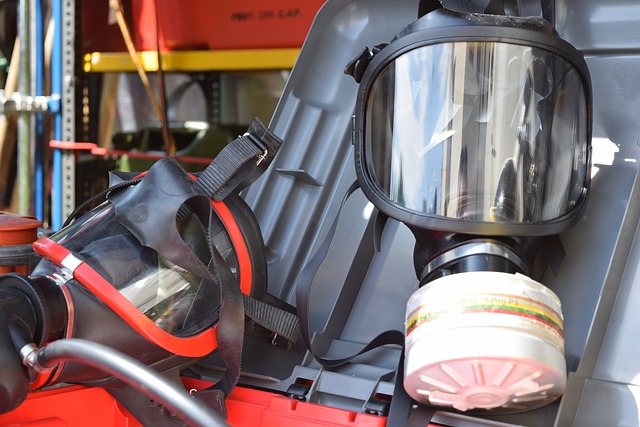
Choosing the right respirator relevant to the nature of the employment is critical to a worker’s safety. Exposure to different hazards means that not just any respirator will suffice.
Two main classes of respirators are available:
Air-Purifying Respirators (APR)
These respirators are designed to filter air borne contaminants such as fumes or noxious dust. Other forms of APR models use a canister or cartridge containing a material that absorbs the contaminants.
APRs are tight fitting to the face and have different designs. These designs include particulate respirators, powered air-purifying respirator (PAPR), gas masks and chemical cartridge respirators. They come in four different designs, including:
Full Face Piece
Fully covers the face from underneath the chin to an area above the eyes. This feature provides added protection to the eyes, especially from chemical irritants.
Half-Face Mmask
Gives protection from beneath the chin to and including the nostrils.
Quarter-Mask – Protects the Mouth and Nose.
Mouth bit respirator – Normally used for escaping a hazardous situation only. Contains a bit which is inserted into the mouth and nose clip to seal the nostrils closed.
Supplied-air respirator (SAR)
These respirators provide breathable air via an air line or a compressed work tank. SARs come in two different types. The first has a loose fitting respiratory inlet, such as a helmet or a hood which envelopes both the neck and head, that is supplied purified air through airlines. This type may have face pieces which fit loosely.
The other form of SAR has either a half or full face piece and has very snug respiratory inlets.
Choosing the Most Suitable Respirator
Selecting the most suitable respirator must be performed by an expert, such as a safety professional. The expert will consider the appropriate apparatus only after they have identified and evaluated the potential respiratory hazard and considered the relative limitations of the respiratory apparatus for the situation.
Key Questions to Ask
Here are some factors an employer should consider when determining whether a respirator may be required:
Establish the existence of a hazard by considering warnings about the material, like its chemical components or the nature of the particulates that might be released through the work performed.
Determine whether there is limited oxygen present.
Is the hazard airborne such as a particulate, fume, or vapor?
Ask whether the respirator will be used for an emergency or in combating fires.
Evaluate whether the work is strenuous and will be performed in hazardous atmospheric circumstances.
Is there any agent present which might be possibly fatal, carcinogenic, skin absorbable or acts as an irritant?
Will the work be conducted in a confined space or will the worker be exposed to abnormal temperatures?
The key is that respirators should be used to suit the work. The proper choice of respirator is vital to the health and safety of workers in many types of employment.
Read more

According to a report by the U.S. House of Representatives’ Committee on Education and Labor, a staggering 69 percent of all workplace injuries and illnesses may not be represented in the Bureau of Labor and Statistics Survey of Occupational Injuries and Illnesses, which many trust as a gauge of the safety of American workplaces. On a corporate level, not reporting or underreporting workplace injuries can have serious ramifications for the organization and the employer, which can include fines, exorbitant and unnecessary, health costs and more.
Research has found that the employer’s behavior, policies and attitude are key determinants in a worker’s decision to report an injury. Not only is it essential that employees are educated on the importance of reporting injuries, it is also important to examine your company policies so you are not inadvertently discouraging reporting. The consequences of underreporting can be severe.
Consequences of Underreporting
The unfortunate trend of injury underreporting can have serious ramifications at both the industry and company level. Widespread underreporting can be quite damaging to workers’ compensation rates on a large scale. Employers may not realize it, but such an underreporting problem may lead to more audits by insurance companies of their clients and higher rates for everyone. Many employers erroneously believe that reporting injuries leads to audits and higher rates.
Underreporting may lead to more audits by insurance companies and higher rates for everyone industry-wide. Many employers believe that reporting injuries leads to audits and higher rates.
At the company level, underreporting injuries can be quite costly for the employer. If it is an OSHA-reportable incident, the employer may face significant fines if it is not properly recorded or reported.
In addition, often when an injury isn’t reported or properly cared for immediately, it worsens and leads to higher health care costs and more lost time. Even if it is never reported as a workplace injury, the employer still loses out on health care costs and productivity.
If it is eventually reported, it becomes much more difficult to prove that it was workplace-related. Additionally, a study reported by the Hartford Financial Services Group found that injuries reported four or five weeks after the incident are 45 percent more expensive than injuries reported within the first week due to increased health costs and possible legal fees, or even a lawsuit, associated with late reporting.
One of the best ways to control workers’ compensation costs is through early reporting and intervention. Not only will it save money in health bills and legal fees, but it will also help to constantly improve your safety program. When there is an injury, consider it an opportunity to examine current safety procedures and decide if there is a suitable change that could be made to prevent similar injuries in the future.
Thus, prompt reporting can be a productive element to your safety program in your quest to always strive for the safest work environment. Rather than accepting a vicious circle where injuries are not reported and thus nothing is done to fix the problem, leading to more injuries, take advantage of injury reporting as a proactive solution to safety.
Reasons for Underreporting
There are several reasons why employees may not report injuries immediately or at all.
Incentive Programs
Many employers have reward or incentive programs to promote their safety initiatives, such as rewards for going a certain number of days without an injury. This can create a negative attitude toward reporting an injury, since doing so could cost that employee, a co-worker or a superior a reward or bonus.
Having incentive programs are a good idea, but a more effective strategy is to reward positive, safe behaviors. This can include reporting a safety hazard, attending a safety meeting or training class or equipment maintenance. Rather than rewarding for days without an injury, reward behaviors that strive to avoid injury, or even reward employees for prompt reporting when an injury occurs.
Fear of Negative Ramifications
Some employees fear that reporting an injury will create an image of them as weak to their co-workers and managers. He or she also may fear that such an image will be a detriment to his or her career.
Dispel this fear by assuring all employees that reporting an injury will have no negative impact on their job, and ensure follow through on all levels of the company. Work to promote a safety culture where prompt injury reporting is encouraged and praised. Injury reporting should never be frowned upon, even subtly or behind closed doors. If employees find out you are angry about a reported injury, he or she is less likely to report an injury in the future.
Some companies have a policy mandating drug testing after any incident whether or not there is evidence of drug use. This deters some employees from reporting injuries as well. Consider making the drug testing conditional depending on the circumstances of the injury and whether there is evidence that drug use was a factor.
For more information about injury reporting or your company’s workers’ compensation and safety programs, please contact Scurich Insurance at 831-661-5697 today.
Read more

Why is job safety and health important?
In 2013, 4,585 employees died from occupational incidents, and there were a staggering 3.0 million total recordable cases of workplace injury and illness.
On average, each of these 3.0 million cases required eight days away from work, which means U.S. employers as a whole paid for millions of days of lost work time. Experts estimate that workplace injuries and illnesses cost U.S. businesses more than $125 billion annually. Effective job safety and health programs not only help reduce worker injuries and illnesses, they save employers money in the long run.
How does OSHA contribute to job safety and health?
The primary goal of the Occupational Safety and Health Administration (OSHA) is to carry out the Occupational Safety and Health Act (OSH Act), which Congress originally passed in 1970. The OSH Act has undergone several amendments and revisions since its inception, but it is still in place “to assure so far as possible every working man and woman in the Nation safe and healthful working conditions and to preserve our human resources.” OSHA contributes to job safety and health by enacting regulations that forward this ideal.
Title 29 of the Code of Federal Regulations (CFR), Parts 1902-1990, houses all the OSHA standards, though OSHA also allows states to enact occupational safety and health laws of their own under federally-approved plans. State-run programs are at least as strict, and sometimes more so, than federal standards. This ensures a minimum standard of job safety and health that all employers must follow to protect employees.
Are all employees covered by the OSH Act?
The OSH Act covers all employees except public employees in state and local governments and those who are self-employed. Public employees in state and local governments are covered by their state’s OSHA-approved plan, if applicable.
Federal employees are covered under the OSH Act’s federal employee occupational safety and health programs, which are outlined in 29 CFR Part 1960. United States Postal Service employees, however, are subject to the same OSH Act coverage provisions as those in the private sector.
Other federal agencies that have issued requirements affecting job safety or health include the Mine Safety and Health Administration (MSHA) and some agencies of the Department of Transportation (DOT), including the Federal Motor Carrier Safety Administration (FMCSA). Employees in these industries are subject to their respective regulations.
Additionally, businesses in the retail, service, finance, insurance and real estate sectors that are classified as low-hazard are exempt from most OSHA requirements, as are small businesses with 10 or fewer employees. Exceptions are discussed in 29 CFR Part 1904, which also explains which OSHA regulations exempt employers are still required to follow.
What are your responsibilities as an employer?
If you are an employer covered by the OSH Act, you must provide your employees with jobs and a place of employment free from recognized hazards that are causing, or are likely to cause, death or serious physical harm. You must also comply with the OSHA statutory requirements, standards and regulations that require you to:
- Provide well-maintained tools and equipment, including appropriate personal protective equipment (PPE)
- Provide medical assistance and guidance for employees sustaining workplace injuries/illnesses
- Provide required OSHA training
- Report accidents that result in fatalities to OSHA within eight hours
- Report accidents that result in the hospitalization of three or more employees to OSHA within eight hours
- Keep records of work-related accidents, injuries, illnesses and their causes
- Post annual injury/illness summaries for the required period of time
What are your rights as an employer?
When working with OSHA, you may do the following:
- Request identification from OSHA compliance officers
- Request an inspection warrant
- Receive a reason for inspection from compliance officers
- Have an opening and closing conference with compliance officers
- Accompany compliance officers on inspections
- Request an informal conference after an inspection
- File a notice of contest to citations or proposed penalties
- Apply for a variance from a standard’s requirements under certain circumstances
- Be assured of the confidentiality of trade secrets
- Submit a written request to the National Institute for Occupational Safety and Health (NIOSH) for information on potentially toxic substances in your workplace
What are employees’ responsibilities?
All employees are obligated to help prevent exposure to workplace safety and health hazards by becoming familiar with and adhering to all applicable OSHA requirements.
What are employees’ rights?
With regards to OSHA regulations, employees have the right, among other actions, to:
- Review employer-provided OSHA standards, regulations and requirements
- Request information from the employer on emergency procedures
- Receive adequate, OSHA-required safety and health training on toxic substances and emergency action plan(s)
- Ask the OSHA area director to investigate hazardous conditions or violations of standards in the workplace
- Have his or her name withheld from the employer when filing a complaint with OSHA
- Know what actions OSHA took as a result of the employee’s complaint and have an informal review of any decision not to inspect or issue a citation
- Have an employee representative accompany the OSHA compliance officer on inspections
- Observe monitoring and measuring of toxic substances or harmful physical agents and review related records (including medical records)
- Review the Log of Work-Related Injuries and Illnesses (OSHA 300 Form), if applicable, at a reasonable time
- Request a closing discussion following an inspection
- Object a citation’s set abatement period
- Seek safe and healthful working conditions without your employer retaliation
Why is OSHA important to your business?
OSHA plays a key role in making your facility a safe, healthy place to work. Beyond providing the tools and guidance to work toward an injury- and illness-free workplace, OSHA is important in identifying businesses that are not committed to safety. Employers that do not carefully follow OSHA regulations often face hundreds of thousands, if not millions, of dollars in fines.
How can you get more information on safety and health?
OSHA provides free publications, standards, technical assistance and compliance tools to help you understand the nuances of the regulations. OSHA’s website also offers extensive assistance by way of workplace consultation, voluntary protection programs, grants, strategic partnerships, state plans, training and education to guide you in your quest for workplace safety. To learn more about OSHA and the critical elements of a successful safety and health management system in your workplace, visit www.osha.gov.
This document is an introductory guideline. It does not address all potential compliance issues with OSHA standards. It is not meant to be exhaustive or construed as legal advice. Contact your licensed commercial property and casualty representative at Scurich Insurance or legal counsel to address applicable compliance requirements. © 2009-2012, 2015 Zywave, Inc. All rights reserved.
Read more
