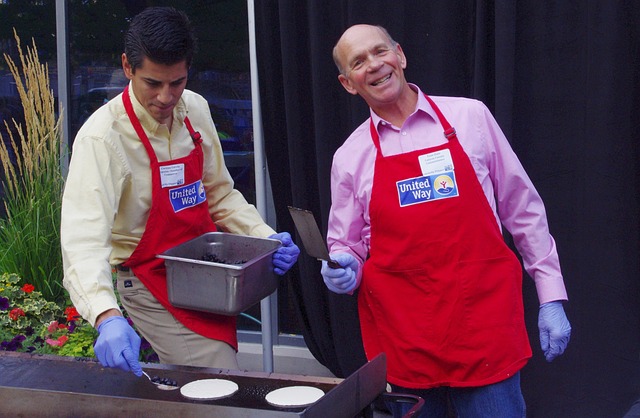
The challenge in running a non-profit is that it still takes money and resources. Just because you’re not interested in getting rich off of this idea doesn’t mean that money is not an issue. If a worker suffers an injury on the job, their compensation has to come from somewhere.
Something that may come as a surprise to many: Volunteers are not typically covered by worker’s compensation policies. In more states than not, worker’s compensation only covers, well, workers. If you are paying actual employees at food banks workers’ compensation insurance will cover their injuries. Likewise Meals on Wheels insurance policy will cover the organization’s workers. If you’re working with unpaid volunteers this is not the case.
Your volunteers may wind up covered by a general liability claim, but this is not always the case. If you want to make sure that your people are covered no matter what, then you’re probably going to have to bring them in as paid employees, or at the very least, under an internship program that includes medical and worker’s compensation benefits and so on.
A problem with relying exclusively on volunteers for your workforce is that you don’t really get to pick your staff from the best and brightest. Many who volunteer will bring their A-game, they will take the task just as seriously as they would take their day job. This isn’t always the case, unfortunately, and without any payment or compensation or even the safety net of worker’s compensation to draw talent, you wind up taking what you can get.
Non-profit doesn’t mean nobody gets paid. Non-profits are usually devoted to a humanitarian cause and their primary concern is not making anybody rich, but making a difference, but that doesn’t mean that everyone involved is simply donating time and resources without compensation. Typically you’re going to have benefactors and other income streams that will allow you to hire qualified people for your food bank, and provide them with the appropriate coverage they need in order to provide them, and you, with peace of mind.
To put it bluntly: a volunteer force is a great idea in concept. In reality, you’re asking some of the kindest, most generous people in the world to foot the bill themselves if they get hurt on the job. That’s a recipe for, if not a lawsuit, at least a guilty conscience. The most effective way to make a difference in the long term is to get some money behind your cause and treat your workers like you would paid employees at any other business.
Read more

Directors and officers are responsible for making the tough choices that can make—or break—a company’s fortunes. In doing so, they must consider the best interests of employees, customers and shareholders, while also keeping in mind corporate best practices. Limited or imperfect information and tight deadlines add to the overall complexity of the decision-making process and can lead to poor outcomes or even outright mistakes.
D&O insurance protects executives against the consequences of any alleged or actual “wrongful acts” they commit while performing regular supervisory duties.
To hire and retain talented directors and officers, companies need to give them the freedom to make corporate decisions without the fear of being personally liable for losses stemming from those decisions. Directors & officers (D&O) insurance protects executives against the consequences of any alleged or actual “wrongful acts” they commit while performing regular supervisory duties. Without D&O coverage, executives’ personal assets are at risk in the event of a lawsuit.
A class action lawsuit was brought against a mining company and its board of directors, accusing them of allegedly misrepresenting the cost of construction on one of their mines. When the costs exceeded the initial prediction and were projected to keep increasing, share prices plunged. The suit was filed on behalf of shareholders that had bought shares at the prices calculated after the construction costs were misrepresented. Defense costs reached about $7 million, which D&O insurance helped cover when the lawsuit was successfully defended.
Keep in mind that there are some limitations to D&O coverage. It does not cover cases in which fraudulent, criminal or intentional wrongful acts are committed, or when acts are committed for personal gain.
No matter the size of your company, costly mistakes made by directors and officers can happen, which is why it’s important to take steps to insure your executives against losses stemming from an incident. Contact Scurich Insurance today to learn about the D&O coverage solution that’s right for you.
Read more

Insight for business owners and risk managers.
After assessing your company’s risks, you’ve made the decision to purchase directors and officers (D&O) insurance. Now what?
It’s essential to know the ins and outs of your D&O policy, including policy limits, what’s covered, and, most importantly, what’s not. Why? Because you may assume you’re covered for a claim when policy exclusions could apply. As time-consuming as it may be, it’s critical to read the fine print in your policy, as the language in the exclusions may affect the coverage of potential claims.
Types of Exclusions in D&O Policies
Some exclusions that insurers and insureds dispute about concern incidents that happened or allegedly happened before the D&O policy went into effect. In some cases, the insurer simply won’t cover the claim; in other cases, the insurer may render the policy void:
The known circumstances exclusion: With this exclusion, the insurer will not pay for claims that arise from a negligent act, error, omission or personal injury that occurred prior to the start date of the D&O policy. The insurance carrier attests that the insured knew or could have foreseen that any of the above happened and could have been the basis for a claim.
This exclusion is found more frequently in private and nonprofit policies than in public company policies. What is especially important to note is that the premium is usually not returned to the insured if it is determined that they withheld their knowledge of circumstances that occurred prior to the start of the policy.
Rescission: The premium is returned to the insured. Rescission means that the policy is rendered void after the insurer discovers that the insured answered untruthfully to any of the warranty questions on the insurance application.
Warranty questions ask the applicant if they know of any fact, circumstance or situation that might reasonably be expected to give rise to a claim. Rescission also can occur if the applicant provided false or misleading information in the company’s financial data. These scenarios usually happen only in public company D&O policies.
Prior acts exclusion: Similar to the known circumstance exclusion, this exclusion is also concerned with pre-policy circumstances. The insurer is not responsible for wrongful acts committed or attempted before the coverage was enacted. A wrongful act is that which damages the rights of another. These acts are not only limited to criminal offenses, but can also include acts that result in civil lawsuits.
Other exclusions found in D&O policies revolve around the duty to defend and defense expenses in the event of a claim. If the insurer has the right to the duty to defend, then they are able to select the insured’s defense and have greater control over the rates and billing practices of the defense counsel:
Reasonableness of defense fees: This is more prevalent in private company and nonprofit D&O policies, as most of those policies give the insurer the right and duty to defend the insured’s claims; whereas, public companies retain the right to choose their own defense counsel. If this is written into your D&O policy, it means that the insurer will only pay for “reasonable and necessary” defense fees. Some insurers also provide detailed information on litigation guidelines.
Consent to settle and the hammer clause: If the insurance carrier has no duty to defend, such as in cases against public companies, then they have no right to settle the case when they want to settle it. As a result, the insured may elect to continue with litigation, even if that would exhaust the policy limit, because the defendants don’t want settling the case to be perceived as an admission of their wrongdoing or incompetence.
This creates a lot of tension between insurers and the insured, especially if the insured does not include the insurer in the settlement discussion. Therefore, some insurance policies have a consent to settle exclusion in the policy, prohibiting the insured from settling the claim without the insurer’s prior written consent.
The hammer clause is similar to the consent to settle exclusion, although less common. Basically, the hammer clause informs the insured that if they go against the insurer’s recommendation to settle, the insured will be responsible for any judgment won by the plaintiff plus legal fees that go beyond the settlement offer.
Most D&O insurers expect that D&O insurance is only a part of a company’s wider insurance portfolio. In some cases, however, this assumption doesn’t always prove to be true. Certain firms may go without umbrella insurance or even general liability insurance policies, making D&O one of their only forms of insurance.
Because of this, many D&O insurers write exclusions in their policies stating what claims they won’t cover because other types of insurance would potentially cover the claim:
“Other insurance” exclusions: D&O insurance is just one form of insurance in a comprehensive risk management plan for most companies. Because of this, most D&O policies have exclusions for claims that involve bodily injury, property damage and Employee Retirement Income Security Act (ERISA) claims, which could be covered by other types of insurance such as a commercial general liability policy or a fiduciary liability policy.
To protect their best interests in the event of a claim, the insured should notify all insurers from their various policies, thus allowing the insurers to determine who is liable for the claim.
Contractual liability exclusion: This exclusion is especially pertinent to private companies and nonprofits that have broad entity coverage under a D&O policy. Since contractual obligations are not liabilities imposed by law but rather an obligation that is voluntarily undertaken, many D&O policies have an exclusion that prevents insurers from having to cover contract-related claims, especially breaches of contract that arise when the company enters into a contract with another party.
When examining this exclusion in your D&O policy, make special note of the wording of this clause. This exclusion can substantially affect the extent of your coverage under the policy—the narrower the scope of the exclusion, the better for you.
D&O insurance protects directors and officers from poor business decisions, but most policies do not protect them from wrongful acts and gross misconduct. These exclusions include the following:
Conduct exclusions: Most D&O policies have exclusions that deny coverage for certain types of misconduct. There are two categories of misconduct exclusions:
- For loss relating to fraudulent or criminal conduct
- For loss relating to illegal profits or remuneration to which the insured was not legally entitled
It’s especially important to look at the wording on these exclusions in the policy; subtle wording differences can significantly affect the accessibility of the coverage.
Insured versus insured exclusion: In some D&O cases, one insured director may bring a claim against another insured director, and some insurers do not want to cover this because they don’t want to get involved in the infighting between a company’s directors and officers.
However, with recent changes to the whistleblower provision of the Dodd-Frank Act, most insurers are now agreeing to cover insured vs. insured claims if the whistleblower is also one of the insured directors.
Obtaining D&O insurance is important to protect the directors and officers of your company; but simply purchasing the policy won’t benefit you unless you know the extent of your coverage.
Do you understand your D&O insurance policy? Contact Scurich Insurance today for more information about your coverage and exclusions.
Read more

Even though farm machinery manufacturers try to ensure that their products are safe by equipping them with safety guards, agricultural work presents many hazards. Many times, workers suffer injuries because of human error from taking a shortcut, ignoring warning signs, not paying attention or not following safety rules.
Here are some of the most common farm machinery hazards, as well as several safety recommendations to reduce your risk of injury:
Shear Points and Cutting Points
- Shear points occur when the edges of two objects move close together and can cut soft material (example: auger).
- Cutting points occur when an object moves forcefully and is able to cut (example: sickle blade).
To avoid injuries, remain alert while operating machines with shear and cutting points. Also, advise others to watch out because some cutting machinery can throw objects while in use.
Pinch Points
- Pinch points are created when two rotating objects move closely together, one moving in a circle.
- Hands and feet can get caught in pinch points, or other body parts can get pulled into pinch points when loose clothing becomes entangled in the machine.
To avoid injuries, wear tight-fitting clothing and never reach over or work near rotating parts. Also, identify places where pinch points can occur and avoid these areas.
Wrap Points
- When exposed machine parts rotate, they create wrap points. Loose clothing can get caught in the moving parts, and consequently pull workers into the machine.
To avoid injuries, shield potential wrap points before beginning your work. If wrap points cannot be shielded, paint them a bright color to remind yourself that they are there.
Crush Points
- Crush points occur when objects move toward one another, or one object moves toward a stationary object. Workers can be crushed in between.
Block equipment securely to avoid fatal crushing injuries.
Free-wheeling Parts
- Some equipment with moving parts continues to spin after being shut off.
To avoid injuries, wait until the machinery has completely stopped before touching it. This can take several minutes.
Hydraulic Systems
- When servicing, adjusting or replacing parts on machines with hydraulic systems, workers can face high-pressure blasts of hydraulic oil. This can cause injury and/or burns to the skin.
To avoid injuries, do not inspect hydraulic hoses with your hands because the hydraulic fluids can puncture the skin.
Take time to become familiar with the potential hazards of the machinery you work with and remember to always put safety first!
Read more
On Jan. 9, 2017, the Occupational Safety and Health Administration (OSHA) issued a final rule that amends its beryllium standards for the general, construction and shipyard industries.
The final rule sets a new permissible exposure level (PEL) and requires new provisions to protect workers, including exposure control measures, exposure assessments, respiratory protection, personal protective clothing and equipment, and new conventions for housekeeping, medical surveillance, hazard communication and record keeping.
The final rule becomes effective on March 10, 2017, though compliance is not required on most provisions until March 12, 2018.
ACTION STEPS
Employers should become familiar with the new standards and evaluate their current workplace practices and training programs to ensure compliance with the final rule by the applicable deadlines.
Beryllium
Beryllium is a metal that is lighter than aluminum and stronger than steel. Beryllium is also durable, stable, conductive and nonmagnetic. Because of its properties, beryllium is often used as an alloying agent to produce beryllium copper, and it can be found in nuclear reactors, machine parts and springs, complex electronic equipment and aircraft.
However, beryllium is also very toxic. Exposure to unsafe beryllium levels can cause respiratory problems and skin disease. Beryllium exposure can also affect an individual’s eyes, liver, kidneys, heart, nervous system and lymphatic system. Also, beryllium is a known cancer-causing substance.
Affected Employers
OSHA estimates that approximately 35,000 workers are exposed to beryllium in approximately 4,088 establishments in the United States. However, even though the highest risk of exposure for workers is at the workplace, exposure can also happen through contaminated clothing and vehicles and can affect a worker’s family members and the general public.
Employers in manufacturing and alloy production, machining and fabrication, and recycling have traditionally shown the highest average exposures to beryllium.
New PELs
The final rule establishes two new PELs that apply to beryllium in all of its forms, compounds and mixtures. These standards are:
| TWA PEL 0.2 μg/m3
An eight-hour time-weighted average (TWA) PEL of 0.2 micrograms per cubic meter of air |
& |
STEL PEL 2.0 μg/m3
A 15-minute short-term exposure limit (STEL) of 2.0 micrograms per cubic meter of air |
TWA PEL
The TWA PEL dictates that employers cannot allow the average worker exposure during an eight-hour work shift to exceed 0.2 μg/m3. The new TWA PEL represents one-tenth of the previous PEL. The new TWA PEL is ten times smaller than the previous PEL because OSHA found that the previous standard posed a “significant risk of material impairment of health to exposed workers.”
Even though OSHA concluded that a TWA PEL of 0.1 μg/m3 was preferable, it chose to adopt the 0.2 PEL out of concerns over the feasibility of implementing a 0.1 TWA PEL.
STEL PEL
The STEL PEL, or ceiling limit, was adopted because even the 0.2 μg/m3 TWA PEL continues to pose a significant health hazard to workers. The STEL PEL is intended to protect workers from the harm that may result from beryllium exposures that, though brief, exceed the TWA PEL.
The final rule sets the beryllium STEL PEL at than 2.0 μg/m3 of beryllium in any 15-minute sample during the work shift. Employers will be required to make sure that no worker is exposed to a higher concentration. Employers will need to measure their STEL PEL during the highest-exposure operations performed by workers.
Action Level
The final rule also implements an action level for beryllium. Under the final rule, the action level for beryllium is a concentration of airborne beryllium of 0.1 μg/m3 calculated as an eight-hour TWA. When beryllium concentrations are equal to or higher than the action level trigger, an employer may have to:
- Conduct periodic exposure monitoring (if the employer is following the scheduled monitoring option);
- List the operations and job titles that are reasonably expected to expose workers at or above the action level as part of their written exposure control plan;
- Ensure that at least one of the controls listed by the final rule is set in place (unless the employer can demonstrate, for each operation or process, that such controls are either not feasible or that worker exposures are below the action level based on at least two representative personal breathing zone samples taken at least seven days apart);
- Provide employee medical surveillance for employees that are exposed at or above the action level for more than 30 days per year (an employer’s medical surveillance obligations allow affected employees to receive exams at least every two years at no cost to the employee);
- Follow medical removal protocols. Employees eligible for removal can choose to remain in environments with exposures at or above the action level, provided they wear respirators. These employees may also choose to be transferred to comparable work in environments with exposures below the action level. However, if comparable work is not available, the employer must maintain the employee’s earnings and benefits for six months or until comparable work becomes available.
Additional Requirements
The table below provides a summary of additional requirements and changes imposed by the final rule.
| Exposure Assessment |
· Employers must provide exposure assessment when workers are reasonably expected to be exposed to airborne beryllium.
· Employers may choose between the performance or schedule monitoring options. |
| Beryllium Work Areas |
· Employers in the general and shipyard industries must establish, maintain, demarcate and limit access to certain areas to limit worker exposure.
· Employers in the construction industry must designate a “competent person” to demarcate certain areas of beryllium exposure. |
| Written Exposure Plan |
· Employers must establish, implement, and maintain a written exposure control plan and specify the information that must be included in the plan.
· Written exposure plans must be reviewed annually and updated as required.
· Employers must also make a copy of the written plan to any employee who is, or can reasonably be expected to be, exposed to airborne beryllium. |
| Respiratory Protection |
· Employers must provide adequate respiratory protection at no cost to their employees. Powered air-purifying respirators (PAPRs) instead of negative pressure respirators must be provided if requested by employees.
· Employers must ensure that employees use respiratory protection in certain situations. |
| Personal Protective Equipment (PPE) |
· Employers must provide adequate PPE to their employees when:
o Exposure exceeds, or can reasonably be expected to exceed, the TWA PEL or STEL; and
o There is reasonable expectation of dermal contact with beryllium.
· Employers must follow the final rule’s updated standards for appropriate removal, storage, cleaning and replacement of required PPE. |
| Hazard Communication |
· Employers have to take additional steps to warn and train employees about beryllium hazards. |
| Housekeeping |
· Employers in the general industry must:
o Maintain all surfaces in beryllium work areas as free as practicable of beryllium;
o Clean spills and emergency releases of beryllium promptly;
o Use appropriate cleaning methods; and
o Dispose of materials containing or contaminated with beryllium properly.
· Employers in the shipyard and construction industries must:
o Follow the required written exposure control plan when cleaning beryllium-contaminated areas;
o Use appropriate cleaning methods, and
o Provide beryllium-containing material recipients for use or disposal with a copy of the hazard communication or warning described in the final rule. |
| Hygiene Areas and Practices |
· Under specified circumstances, employers must provide employees with readily accessible washing facilities and change rooms (access to showers for employee use may also be required by the general industry standard).
· Employers must take certain steps to minimize exposure in eating and drinking areas. |
Appendix A
The final rule also includes Appendix A to the final standard for the general industry. This appendix provides information to employers on recommended control options that employers could use to comply with their requirement to reduce exposure to airborne beryllium in beryllium work areas.
However, compliance with the information in Appendix A is recommend, not required. OSHA stated in the final rule “Appendix A is for informational and guidance purposes only and none of the statements in Appendix A should be construed as imposing a mandatory requirement on employers that is not otherwise imposed by the standard. In addition, this appendix is not intended to detract from any obligation that the rule imposes.”
More Information
Please contact [B_Officialname] or visit the OSHA Beryllium webpage for more information on this topic.
Read more
 It’s frustrating when you suspect that a Workers Compensation claimant is milking the system. However, you can reduce potential malingering significantly if you attend to it from the get-go.
Start by designating a manger as the “firm’s rep,” to ensure that any employee who makes a Comp claim gets a doctor promptly and to inform your insurance company immediately. The rep should transport the employee to the physician, stay at the office during the examination and treatment, and then take him or her home or back to work.
While at the doctor’s office, the firm’s rep should ask the physician about the medical condition, recommended treatment, and a reasonable return-to-work date. If the claimant or physician objects, the rep should assure them that he or she will work with the insurance company to make sure all reasonable and necessary benefits and medical bills are paid.
Resist any employee excuses for not seeing a doctor. If the employee has an attorney, suggest getting a second opinion (which you will provide at no cost). If the claimant already has a doctor, have the firm rep offer to take him or her for a consultation– and ask about diagnosis, treatment, and return-to-work status.
The rep should then: 1) follow up with the employee at least every two weeks – and more often if possible – face to face or by phone; and 2) stay in touch with the claims adjuster to share information about visits with the doctor and claimant that might help him or her return to work as early as possible.
Although these techniques won’t always work, anecdotal evidence suggests that they can reduce malingering claims by up to 70%.
What’s not to like?
Read more