 Workers Compensation fraud is a widespread and serious problem that’s not only illegal, but leads to higher insurance premiums for all businesses – including yours.
According to industry experts, Comp-related scams often involve one or more of these “red flags.” Although no one sign should necessarily be cause for alarm by itself, two or more should raise suspicions and could trigger an investigation of the claim:
- Monday morning report of injury. The alleged injury occurs first thing on Monday, or late Friday afternoon, but is not reported until Monday.
- Change in employment status. The reported accident occurs immediately before or after a strike, job termination, layoff, end of a major project, or the conclusion of seasonal work.
- Suspicious providers. The claimant’s medical provider or legal consultant has a history of handling dubious claims.
- Lack of witnesses. No one else saw the accident and the employee’s description does not support the cause of the injury.
- Conflicting descriptions. The employee’s account of the accident doesn’t match with the medical history or injury report.
- History of claims. The employee has filed a number of questionable or litigated claims.
- Refusal of treatment. The claimant declines a diagnostic procedure to confirm the nature or extent of the injury.
- Late reporting. The employee delays reporting the incident without a reasonable explanation.
- Elusiveness. The allegedly disabled employee is hard to reach.
- Instability. The claimant changes physicians, addresses, or jobs frequently
If one of your workers files a claim that has some of these warning signs, be sure to let us know. We’ll work with you and your Workers Comp carrier to check it out.
Read more
 New federal regulations under the Affordable Health Care Act (ACA) require insurance companies and health care providers to treat mental illness and addiction in the same way as physical ailments. That’s good news for everyone with health insurance.
The ACA prohibits denying coverage or charging higher premiums to due pre-existing conditions, which include mental illness, while expanding coverage for screening and behavioral assessments and eliminating co-payments or out-of-pocket fees.
The rules beef up the Mental Health Parity and Addiction Equity Act (MHPAEA) of 2008 by closing loopholes and setting implementation guidelines– an advance that Secretary of Health and Human Services (HHS) Kathleen Sebelius calls “the largest expansion of behavioral health coverage in a generation.” Under the regulations, mental health benefits must match those for medical and surgical treatment, including copayments, deductibles, number of visits to providers, residential treatment, and outpatient services.
The regulations could affect 62 million people, including 23 million substance abuse addicts. Administration officials called the new rules a response to the need to help the mentally ill get help before they commit such violent acts as the massacres in Aurora, DO and Newtown, CT.
Cynthia Moreno Tuohy, Executive Director of the National Association of Alcoholism and Drug Abuse Counselors, and American Psychiatric Association President Jeffrey Lieberman praise the rules for providing expanded care.
“Health plans have supported MHPAEA and worked to implement these requirements in a manner that’s affordable, safe and effective,” adds Karen Ignagni, President of America’s Health Insurance Plans, a trade group of health insurance companies. “The new regulations enable patients with mental and behavioral health conditions to keep benefitting from the innovative programs and services that health plans have pioneered.”
To learn more about how these rules will apply to your health insurance, feel free to get in touch with us.
Read more
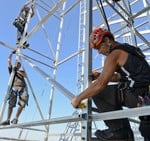 A resurgent construction industry needs to do a better job of keeping workers safe. That’s the bottom line of a recent report by Marsh Risk Consulting.
Based on data from the U.S. Bureau of Labor Statistics, the study, “Building Safety and Leadership in the Construction Industry,” notes that the industry’s 2012 fatality rate increased to 9.5 per 100,000 workers from 9.1 per 100,000 in 2011. The 775 construction-sector deaths in 2012 marks the first annual increase in work-related fatalities since 2006.
According to Marsh, fatalities will probably continue to rise without concerted industry-wide safety improvements, as an ongoing shortage of experienced construction workers leads to widespread promotion of unskilled workers into supervisory roles. “The increase in new construction activity is bringing an influx of new, inexperienced workers,” states the report. “In this environment, some contractors are stretching their hiring standards to meet project demands.”
Marsh recommends that construction firms focus on training management to ensure effective leadership and help build a culture of safety throughout their organizations.
“As the economy grows and the number of new construction projects picks up, now is not the time to be lax on safety,” warns John Moore, a construction safety specialist in Marsh’s workforce strategies practice. “Inadequate safety performance can lead to employee turnover and legal, financial and reputational risks. Investing in high-quality leadership will go a long way toward retaining valued workers and maintaining a safe work environment.”
The more you do to keep your workers, safe, the better for all concerned– and the lower your insurance costs. We stand ready to offer our advice on developing, implementing, and enforcing workplace safety standards. Just give us a call.
Read more
 It’s frustrating when you suspect that a Workers Compensation claimant is milking the system. However, you can reduce potential malingering significantly if you attend to it from the get-go.
Start by designating a manger as the “firm’s rep,” to ensure that any employee who makes a Comp claim gets a doctor promptly and to inform your insurance company immediately. The rep should transport the employee to the physician, stay at the office during the examination and treatment, and then take him or her home or back to work.
While at the doctor’s office, the firm’s rep should ask the physician about the medical condition, recommended treatment, and a reasonable return-to-work date. If the claimant or physician objects, the rep should assure them that he or she will work with the insurance company to make sure all reasonable and necessary benefits and medical bills are paid.
Resist any employee excuses for not seeing a doctor. If the employee has an attorney, suggest getting a second opinion (which you will provide at no cost). If the claimant already has a doctor, have the firm rep offer to take him or her for a consultation– and ask about diagnosis, treatment, and return-to-work status.
The rep should then: 1) follow up with the employee at least every two weeks – and more often if possible – face to face or by phone; and 2) stay in touch with the claims adjuster to share information about visits with the doctor and claimant that might help him or her return to work as early as possible.
Although these techniques won’t always work, anecdotal evidence suggests that they can reduce malingering claims by up to 70%.
What’s not to like?
Read more
 As people retire later, the workforce keeps aging. This trend has been a concern for businesses because the conventional wisdom holds that older workers are more vulnerable to costly injuries, driving up Workers Comp rates.
However, new research from the National Council on Compensation Insurance (NCCI) casts doubt on this conclusion, changing the definition of “older workers.”
After studying injury rates for different age groups, NCCI found that, while workers under 35 had substantially more cuts on their fingers and those over 35 suffered more cases of carpal tunnel and cervical injuries, the numbers are startlingly similar.
What about expense? NCCI concluded that although workers between 20 and 34 create much lower costs (and fewer days lost), once they reach 35 these costs are similar. This redefines an “older worker” as someone who grew up listening to Nirvana instead of Elvis.
Injury prevention for employees – regardless of age –should begin during the hiring process. Once you have a written job description, offer the candidate the job based on his or her ability to do the work with reasonable accommodation. Then have the candidate complete a medical questionnaire to determine if he or she “fits” position. If so, it’s time to get started. If not, to find someone else.
If you haven’t already done so, set up and monitor a comprehensive safety-training program for new hires, Make sure that they remain mindful of how they’re doing their job. Far more injuries result from unsafe acts by employees than unsafe workplace conditions Employees who feel rushed are more likely to ignore safety aside so they can meet deadlines – leading to preventable accidents.
To learn more about keeping your workers safe on the job, feel free to get in touch with us.
Read more
 Smaller companies tend to be more vulnerable than Fortune 500 corporations to theft by employees.
According to John Warren, general counsel for the U.S. Association of Certified Fraud Examiners (USACFA), losses from internal theft are disproportionately high among small businesses. A nationwide USACFA review of more than 1,100 fraud cases found that the median loss in organizations with fewer than 100 employees came to $190,000 – more than half again as much as the $120,000 loss among companies with 1,000 to 9,999 employees.
Check tampering was the most common scam uncovered by the survey, followed by skimming (the theft of unrecorded sales), faked billing, and phony expense reimbursements.
One reason why small companies take a bigger hit is because employee theft is often hard to detect and can last over several years. Most perpetrators aren’t hardened criminals, but rather longtime, trusted workers who have risen through the ranks. “It’s startling how many times people will say, ‘I’ve known this person for 10 years, they babysat my kids,’ ” says the USACFA’s Warren, ” ‘Out of all of my employees, I would have never guessed this.’ ”
Embezzlement usually starts small and then escalates, often triggered by money problems facing the worker. Says one expert, “Any time you have an employee who has financial difficulties, you have the makings of a problem.”
their vulnerability, many small businesses don’t take basic steps to deter employee theft. “There’s a reluctance to think about this, compared to larger companies,” notes Rich Simitian, Southern California managing partner for accounting firm Grant Thornton. “The attitude is, ‘I’ve got too many other things to think about as a business owner.’ ”
We’d be happy to recommend precautions that can help you deter fraud internal fraud.
Read more