
Using renewable energy sources is a wonderful way to preserve Mother Nature and do wonders for your pocket book. There are two types of alternate energy sources that are particularly popular ways to conserve: wind generators and solar power.
Solar Power
Solar power does not release any pollutants, so it’s a great way to be eco-friendly and save a bundle on your utility bills. Some additional benefits include:
- The federal government passed the Energy Law in August of 2005, which provides homeowners up to a 30 percent tax credit for the cost of a solar energy system, up to $2,000.
- Solar panels can convert energy straight into heat can heat water and/or swimming pools easily.
- Solar panels provide electricity long after the sun goes down because of the storage batteries in the panels.
Wind Generators
Wind generators produce energy as the naturally occurring wind spins the turbine. Some things to keep in mind include:
- The amount of energy produced each day will vary; however, wind power is free and tends to significantly reduce electricity bills.
- Your local utility company may have rules against using wind energy.
- Wind generators are costly to purchase (though electricity savings far outweigh initial costs in the long run).
- Many municipalities provide tax breaks for using alternative energy.
Safety First
Conservation is key in preserving resources for future generations. By using alternative energy sources, you are not only helping the planet now, you are doing your part to conserve for your children’s future.
Read more
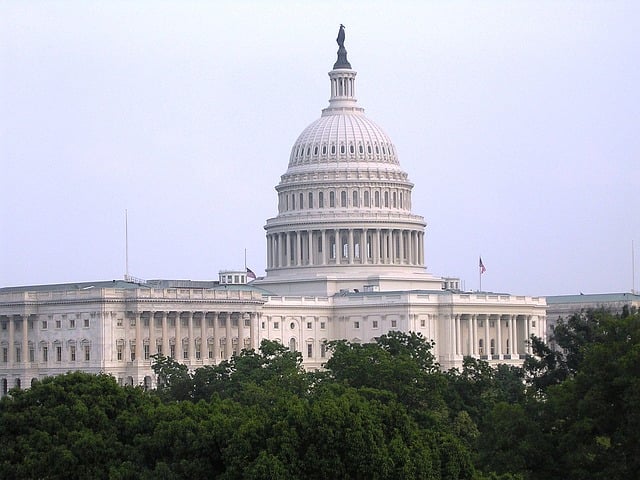
If you rely on government contracts for your work, then you probably have some questions about the federal hiring freeze. Namely: Is it good or bad for contractors?
The answer: it remains to be seen, but probably not. It may well turn out to be a boon for contractors. Bridges still need to be built, and by freezing the hiring of salaried government employees, the government will be forced to find somebody to put the work in, and more often than not, that’s going to be contractors.
Furthermore, a lot of the work that we do in government contracting is not federal work, rather, we’re being hired by cities, by the state department and so on. We’re being paid on state funds to do state work, rather than being hired for federal work by the federal government. The federal government does pay for construction work as needed, of course, but most contractors are not waiting for these jobs. Most contractors are working locally, and being paid by local government.
Additionally, the executive order putting a freeze on federal hiring comes with a lot of exceptions. Just to name a few examples, the freeze does not apply to the post office, industry exchange programs, intelligence agencies, or seasonal employment. The list of exceptions is only getting longer every day, as these exceptions have been clarified over time.
Finally, while President Trump has issued a statement saying that government organizations shall not be permitted to use contractors to work around federal hiring freezes, this statement was issued in a memo, not in binding law.
At some point in the future, the federal hiring freeze may extend to contractors, but for the time being, it may actually be giving contractors greater bargaining power. A year ago, a government contractor was usually being pursued for one of two reasons: Either they possess specialized knowledge, training or abilities that the government is in need of, such as underwater welding, or they’re cheaper than paying a salaried, year-round government employee. Now, government contractors will be the first choice, over federal employees, for many jobs, creating more opportunities for contractors, and, in many instances, allowing contractors to command a higher rate of pay.
Whether or not you agree with President Trump’s attempt to curb government spending via the federal hiring freeze, the bottom line is that, at least for the time being, it’s nothing for government-contracted workers to worry about.
Read more
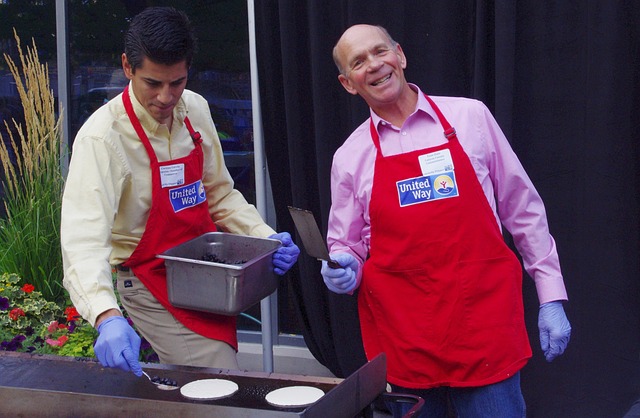
The challenge in running a non-profit is that it still takes money and resources. Just because you’re not interested in getting rich off of this idea doesn’t mean that money is not an issue. If a worker suffers an injury on the job, their compensation has to come from somewhere.
Something that may come as a surprise to many: Volunteers are not typically covered by worker’s compensation policies. In more states than not, worker’s compensation only covers, well, workers. If you are paying actual employees at food banks workers’ compensation insurance will cover their injuries. Likewise Meals on Wheels insurance policy will cover the organization’s workers. If you’re working with unpaid volunteers this is not the case.
Your volunteers may wind up covered by a general liability claim, but this is not always the case. If you want to make sure that your people are covered no matter what, then you’re probably going to have to bring them in as paid employees, or at the very least, under an internship program that includes medical and worker’s compensation benefits and so on.
A problem with relying exclusively on volunteers for your workforce is that you don’t really get to pick your staff from the best and brightest. Many who volunteer will bring their A-game, they will take the task just as seriously as they would take their day job. This isn’t always the case, unfortunately, and without any payment or compensation or even the safety net of worker’s compensation to draw talent, you wind up taking what you can get.
Non-profit doesn’t mean nobody gets paid. Non-profits are usually devoted to a humanitarian cause and their primary concern is not making anybody rich, but making a difference, but that doesn’t mean that everyone involved is simply donating time and resources without compensation. Typically you’re going to have benefactors and other income streams that will allow you to hire qualified people for your food bank, and provide them with the appropriate coverage they need in order to provide them, and you, with peace of mind.
To put it bluntly: a volunteer force is a great idea in concept. In reality, you’re asking some of the kindest, most generous people in the world to foot the bill themselves if they get hurt on the job. That’s a recipe for, if not a lawsuit, at least a guilty conscience. The most effective way to make a difference in the long term is to get some money behind your cause and treat your workers like you would paid employees at any other business.
Read more
In the event that someone is injured on your property and you are found legally responsible, you could be faced with a costly financial burden. In fact, without a personal umbrella liability insurance policy, any expenses beyond the limits of your standard policy are your responsibility. This applies to your homeowners, renters, automobile and watercraft insurance policies.
Personal umbrella liability insurance provides an extra layer of protection over your personal assets for when your standard liability coverage is exhausted.
Personal umbrella liability insurance provides an extra layer of protection over your personal assets for when your standard liability coverage is exhausted.
Engaging in everyday activities can put you at risk for a lawsuit. Simple things like having a swimming pool or entertaining guests in your home can increase the chance that someone will get injured and sue you. To minimize your risk, consider a personal umbrella liability policy.
Why is a personal umbrella liability policy important?
It works to fill the gaps in your coverage and provides the following benefits:
- When litigation ensues, it’s typically for a large amount. If you get into a car accident and injure several people, you could be sued for millions of dollars; well beyond the limits of your automobile policy. You can also be held responsible if your dog bites someone, if your child injures another kid in a fight at school or if a handyman hurts himself at your home.
- Umbrella policies cover legal fees because the insurance company assumes the risk, not you.
- Coverage is inexpensive and easy to obtain. Just give us a call to add it on to your current policy.
- You’ll have peace of mind knowing that you are covered in case of a fluke occurrence.
How much coverage do you need?
Take into consideration your total personal assets and your potential for personal risks when determining how much coverage you need.
A wide range of factors, such as whether you have hired help, if you have teen drivers at home or if you operate your business out of your home, will determine how much coverage is appropriate for your circumstances.
What are the policy limits?
A $1 million limit is typical and higher limits are available.
Contact us today to determine how much coverage is right for you.
Read more

Taking the time to understand the language and symbols on your commercial automobile insurance policy may seem like trying to learn a new language, but it is important to fully understand your policy so you know how you’re protected.
Here are a few general guidelines that are helpful when deciphering your policy:
- Each symbol represents the type of vehicle protected by the applicable liability or physical damage limit.
- The symbol may apply to the type of vehicle covered or the vehicle’s ownership status.
- The various terms within your policy have specific definitions that you should become familiar with.
- The symbols are different on coverage for liability as compared to physical damage coverage.
Liability Coverage Auto Symbols
1 = Broadest symbol; covers any “auto.” (ANY AUTO)
2 = Covers any “auto” owned by the insured, including those attained after the policy begins. It also applies to trailers used with owned vehicles. (OWNED AUTOS ONLY)
3 = Covers only private passenger “autos” owned by the insured. (OWNED PRIVATE PASSENGER AUTOS ONLY)
4 = Covers all “autos,” other than private passenger vehicles owned by the insured. This includes vehicles that are attained after the policy begins and also applies to trailers used by an owned vehicle. (OWNED AUTOS OTHER THAN PRIVATE PASSENGER AUTOS ONLY)
5 = Applies to “autos” owned by the insured that are garaged or licensed in no-fault benefit law states. (OWNED AUTOS SUBJECT TO NO-FAULT)
6 = Applies to “autos” that are garaged or licensed in states where uninsured motorist coverage is required. (OWNED AUTOS SUBJECT TO A COMPULSORY UNINSURED MOTORIST LAW)
7 = Covers only the “autos” and trailers listed on the policy. (SPECIFICALLY DESCRIBED AUTOS)
8 = Covers “autos” that the insured leases, hires, rents or borrows for their own use. It does not cover “autos” that are leased, hired, rented or borrowed for employee or family member usage. (HIRED AUTOS ONLY)
9 = Covers “autos” that the insured does not own, lease, hire, rent or borrow, but are used for business purposes. These “autos” may be owned by employees or family members, but must be used for the insured’s business or personal matters. (NON-OWNED AUTOS ONLY)
Physical Damage Coverage Automobile Symbols
1 = Covers “autos” owned by the insured, including those attained after the policy begins. (OWNED AUTOS ONLY)
2 = Covers only private passenger “autos” that are owned by the insured. (OWNED PRIVATE PASSENGER AUTOS ONLY)
3 = Covers all “autos” other than private passenger vehicles owned by the insured. (OWNED AUTOS OTHER THAN PRIVATE PASSENGER AUTOS ONLY)
4 = Applies to “autos” that are listed on the policy. This also covers trailers used with a listed vehicle. (SPECIFICALLY DESCRIBED AUTOS)
5 = Covers “autos” that the insured leases, hires, rents or borrows for his/her own use. This does not cover “autos” leased, hired, rented or borrowed for use by an employee or family member. (HIRED AUTOS ONLY).
At times, there may not be an applicable symbol for the type of coverage provided. In those instances, a special symbol is used and added to the policy by way of an endorsement. The endorsement will contain a complete description and explanation of the symbol’s meaning, and the symbol will also appear with the applicable coverages on the policy.
It is imperative that you understand these symbols to ensure that you are properly covered. Consult Scurich Insurance today to learn more automobile insurance policy symbols, their meanings and how this applies to your coverage.
Read more

Directors and officers are responsible for making the tough choices that can make—or break—a company’s fortunes. In doing so, they must consider the best interests of employees, customers and shareholders, while also keeping in mind corporate best practices. Limited or imperfect information and tight deadlines add to the overall complexity of the decision-making process and can lead to poor outcomes or even outright mistakes.
D&O insurance protects executives against the consequences of any alleged or actual “wrongful acts” they commit while performing regular supervisory duties.
To hire and retain talented directors and officers, companies need to give them the freedom to make corporate decisions without the fear of being personally liable for losses stemming from those decisions. Directors & officers (D&O) insurance protects executives against the consequences of any alleged or actual “wrongful acts” they commit while performing regular supervisory duties. Without D&O coverage, executives’ personal assets are at risk in the event of a lawsuit.
A class action lawsuit was brought against a mining company and its board of directors, accusing them of allegedly misrepresenting the cost of construction on one of their mines. When the costs exceeded the initial prediction and were projected to keep increasing, share prices plunged. The suit was filed on behalf of shareholders that had bought shares at the prices calculated after the construction costs were misrepresented. Defense costs reached about $7 million, which D&O insurance helped cover when the lawsuit was successfully defended.
Keep in mind that there are some limitations to D&O coverage. It does not cover cases in which fraudulent, criminal or intentional wrongful acts are committed, or when acts are committed for personal gain.
No matter the size of your company, costly mistakes made by directors and officers can happen, which is why it’s important to take steps to insure your executives against losses stemming from an incident. Contact Scurich Insurance today to learn about the D&O coverage solution that’s right for you.
Read more
