For the unprepared, workers’ compensation (WC) issues can be both confusing and costly. Fortunately for employers, there are ways to actively engage WC issues to influence their outcomes.
Through management controls and active involvement in the WC process, your organization can effectively influence related costs. To do so you will have to establish a number of your own processes that guide decision making throughout your organization.
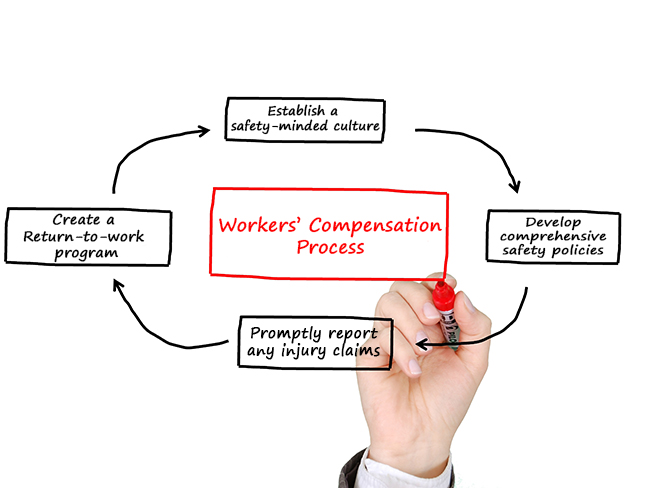
By developing a cohesive workers’ compensation process, you can play an active role in reducing related costs.
Areas requiring WC management can be divided into three main categories. These categories include facets that may range from the simple to the complex, but as a whole, address vital issues that can negatively influence WC costs in your company.
Workplace Safety Means Fewer Claims
Simply put, reducing claims reduces costs. Establishing a safety-minded culture throughout every level of your company is essential to keeping workers injury free. However, establishing such a culture isn’t an overnight solution. To be successful, an ongoing commitment to safety must be made. Such a commitment must be supported by management and given the necessary resources to succeed.
Developing comprehensive safety policies for employees builds a firm foundation for your safety culture to grow. Such policies also encourage OSHA compliance, further improving your safety efforts while helping you avoid costly fines.
Mitigate Loss After an Injury
Unfortunately, even with all the right programs in place, it is still possible for accidents to happen. When a workplace incident occurs how you respond can greatly influence the outcome of the claim. Prompt claim reporting is essential to keeping costs down.
It is also important to have a designated injury management coordinator, someone who can supervise open claims and work with both employees and medical personnel to facilitate the timely recovery.
The longer an employee is out of work the more expensive their claim will be. Return-to-work programs that allow injured employees to come back to work at a limited capacity during the recovery process, are one of the most effective tools business owners have to reduce the severity of a claim.
Managing Your Mod
Insurers use what is known as an experience modification factor, or mod, to calculate the premiums you pay for workers’ compensation coverage. By managing your exposures and promoting safety it is possible to manage your mod and decrease your premium rates.
Like a good safety program, controlling your mod is an ongoing process. To reap the benefits of lower premiums you will have to keep in regular contact with your insurance provider to ensure they have the most accurate data to use in their calculations.
Read more

In the event that someone is injured on your property and you are found legally responsible, you could be faced with a costly financial burden. In fact, without a personal umbrella liability insurance policy, any expenses beyond the limits of your standard policy are your responsibility. This applies to your homeowners, renters, automobile and watercraft insurance policies.
Personal umbrella liability insurance provides an extra layer of protection over your personal assets for when your standard liability coverage is exhausted.
Engaging in everyday activities can put you at risk for a lawsuit. Simple things like having a swimming pool or entertaining guests in your home can increase the chance that someone will get injured and sue you. To minimize your risk, consider a personal umbrella liability policy.
Why is a personal umbrella liability policy important? It works to fill the gaps in your coverage and provides the following benefits:
- When litigation ensues, it’s typically for a large amount. If you get into a car accident and injure several people, you could be sued for millions of dollars; well beyond the limits of your automobile policy. You can also be held responsible if your dog bites someone, if your child injures another kid in a fight at school or if a handyman hurts himself at your home.
- Umbrella policies cover legal fees because the insurance company assumes the risk, not you.
- Coverage is inexpensive and easy to obtain. Just give us a call to add it on to your current policy.
- You’ll have peace of mind knowing that you are covered in case of a fluke occurrence.
How much coverage do you need? Take into consideration your total personal assets and your potential for personal risks when determining how much coverage you need.
A wide range of factors, such as whether you have hired help, if you have teen drivers at home or if you operate your business out of your home, will determine how much coverage is appropriate for your circumstances.
What are the policy limits? A $1 million limit is typical and higher limits are available.
Contact us today to determine how much coverage is right for you.
Read more

The Virginia Graeme Baker Pool and Spa Safety Act addresses dangers related to pool and spa drains, which can cause severe injury or death by trapping swimmers under the water when blocked. The Act is designed to improve pool and spa safety through new federal requirements for drain covers and anti-entrapment systems as well as by establishing educational programs.
Federal Requirements
The Act contains the following federal standards for swimming pool and spa drain covers:
Your business should follow all pool and spa safety requirements to lower risk.
- All covers manufactured, distributed or sold in the United States must conform to the specified entrapment protection standards.
- All must be equipped with anti-entrapment devices or systems that comply with the same federal standards.
- Each public pool and spa in the country with a single main drain (other than an unblockable drain) must be equipped with at least one device or system designed to prevent entrapment, such as a safety vacuum release system, suction limiting vent system or gravity drainage system, that meets appropriate performance standards.
The requirements contained in the act are intended to be minimum standards; many states have more rigorous safety rules. Violations of the act’s requirements will be treated as violations of the Consumer Product Safety Act.
State Swimming Pool Safety Grant Program
A grant program exists that provides financial assistance to states that have minimum safety requirements for pools and spas that meet the standards contained in the Act. The state statute must require pool and spa owners to:
- Enclose all outdoor, residential pools and spas with barriers to prevent small children from gaining unsupervised access to the area
- Equip all pools and spas with anti-entrapment devices
- Equip all pools and spas built after Dec. 19, 2008 with more than one drain, one or more unblockable drains, or no main drain with anti-entrapment devices
- Equip every swimming pool and spa that has a main drain with a drain cover that meets standards
In addition to imposing these safety requirements, the state law must require periodic notification to owners about compliance with the entrapment protection standards. States can use the grants for the following purposes:
- Hiring and training enforcement personnel for implementation and enforcement of the state laws
- Educating pool construction, installation and service companies about the safety standards
- Educating pool owners, pool operators and other members of the public about the safety standards
Education Program
The act also established an education program to inform the public of methods to prevent drowning and entrapment in swimming pools and spas. The educational materials are designed for pool owners and operators to promote safety.
Please contact Scurich Insurance at (831) 661-5697 with any questions regarding risks and liabilities associated with your business’ pool or spa.
Read more
 A home might seem like one of the safest places for a child to play, but household furniture carries many unforeseen dangers, especially for young children.
Deadly Consequences
A child is killed every two weeks due to falling furniture in the United States—70 percent are caused by TVs alone. Injuries are even higher, with over 25,000 per year. Preventive measures should be taken to ensure children are safe at home.
Preemptive Protection
Parents will often “baby-proof” their house when expecting a child. This typically includes rounding off sharp table corners and installing baby locks. Surprisingly, properly anchoring heavy furniture is often overlooked.
Preventing Tip-overs
- Use sturdy furniture to hold your TV and other appliances.
- Mount flat-screen TVs whenever possible.
- Closely follow assembly instructions for TVs and furniture.
- Secure top-heavy furniture with anti-tip brackets.
- Remove enticing objects from the top of heavy furniture to discourage children from climbing.
Furniture Tip-over Myths
- Heavy furniture will not fall over. This is a common misconception. Even base-heavy furniture can be hazardous when children open the drawers and climb on them.
- Rooms where children aren’t allowed don’t need precautions. Even a brief opportunity to wander in a bedroom or office can end in tragedy if the child plays on heavy furniture. Tip-overs happen quickly, and it is dangerous to leave a room unprotected.
- Latched dresser drawers are sufficient. Latches made for cabinets are not a substitute for an anchor. Young children can figure out the latches or even open drawers wide enough to begin climbing.
- Older children know they shouldn’t climb. Children aren’t masters of reason and can be compelled to climb if they see a toy sitting on top of a dresser. Additionally, children do not commonly think of shelves or dressers as dangerous, so climbing seems low-risk.
- Sturdy furniture is safe. No matter the weight, no matter how sturdy, all furniture can pose a risk if not properly anchored. The quality of furniture does not lower the danger.
Remember, taking a few extra precautions now can save a child’s life in the future. Play it safe and anchor heavy furniture.
Read more
The Contracting Classification Premium Adjustment Program (CCPAP) is a discount program that can reduce the amount that an employer pays in workers’ compensation premiums.
How does the CCPAP work?
The CCPAP was developed to provide a premium credit for employers in the contracting and construction industry who pay their employees higher than average wages. The CCPAP discount is calculated using the hourly rate of employees who are classified within the construction industry’s contracting class codes.
The system that is used to calculate workers’ compensation premiums groups employees according to risk. For each classification, the employer must pay a certain amount of workers’ compensation premiums based on every $100 of payroll. Since high wages amount to higher workers’ compensation premiums, employers use the CCPAP to lower their premiums to an amount more level with what they would be paying if they paid their employees less. With the CCPAP, employers aren’t penalized for paying their employees higher than average wages.
How does an employer apply for the CCPAP?
An employer must complete the CCPAP application and return it to the National Council on Compensation Insurance (NCCI) within 180 days from either the effective date or the anniversary rating date of the workers’ compensation policy. The CCPAP must be applied for every year.
When completing the application, the employer must determine which calendar quarter data to use. The employer will also be asked to provide a description of operations or its classification, the appropriate classification code, the total wages paid and the total hours worked.
Once the application is received by the NCCI, the average hourly wage will be computed and the CCPAP credit will be generated according to the rules for the state in which the application is being made. The insurance company will then be notified, and the credit will be applied to the policy.
In which states is the CCPAP available?
The CCPAP is not a national program. Each participating state has its own rules, which include qualification and calculation of credits. Some states may also have an hourly pay rate threshold for entry into this program.
To see if the CCPAP is available for your business, consult with Scurich Insurance Services for more information about the program and the potential to lower your workers’ compensation premiums.
Read more
On Jan. 9, 2017, the Occupational Safety and Health Administration (OSHA) issued a final rule that amends its beryllium standards for the general, construction and shipyard industries.
The final rule sets a new permissible exposure level (PEL) and requires new provisions to protect workers, including exposure control measures, exposure assessments, respiratory protection, personal protective clothing and equipment, and new conventions for housekeeping, medical surveillance, hazard communication and record keeping.
The final rule becomes effective on March 10, 2017, though compliance is not required on most provisions until March 12, 2018.
ACTION STEPS
Employers should become familiar with the new standards and evaluate their current workplace practices and training programs to ensure compliance with the final rule by the applicable deadlines.
Beryllium
Beryllium is a metal that is lighter than aluminum and stronger than steel. Beryllium is also durable, stable, conductive and nonmagnetic. Because of its properties, beryllium is often used as an alloying agent to produce beryllium copper, and it can be found in nuclear reactors, machine parts and springs, complex electronic equipment and aircraft.
However, beryllium is also very toxic. Exposure to unsafe beryllium levels can cause respiratory problems and skin disease. Beryllium exposure can also affect an individual’s eyes, liver, kidneys, heart, nervous system and lymphatic system. Also, beryllium is a known cancer-causing substance.
Affected Employers
OSHA estimates that approximately 35,000 workers are exposed to beryllium in approximately 4,088 establishments in the United States. However, even though the highest risk of exposure for workers is at the workplace, exposure can also happen through contaminated clothing and vehicles and can affect a worker’s family members and the general public.
Employers in manufacturing and alloy production, machining and fabrication, and recycling have traditionally shown the highest average exposures to beryllium.
New PELs
The final rule establishes two new PELs that apply to beryllium in all of its forms, compounds and mixtures. These standards are:
| TWA PEL 0.2 μg/m3
An eight-hour time-weighted average (TWA) PEL of 0.2 micrograms per cubic meter of air |
& |
STEL PEL 2.0 μg/m3
A 15-minute short-term exposure limit (STEL) of 2.0 micrograms per cubic meter of air |
TWA PEL
The TWA PEL dictates that employers cannot allow the average worker exposure during an eight-hour work shift to exceed 0.2 μg/m3. The new TWA PEL represents one-tenth of the previous PEL. The new TWA PEL is ten times smaller than the previous PEL because OSHA found that the previous standard posed a “significant risk of material impairment of health to exposed workers.”
Even though OSHA concluded that a TWA PEL of 0.1 μg/m3 was preferable, it chose to adopt the 0.2 PEL out of concerns over the feasibility of implementing a 0.1 TWA PEL.
STEL PEL
The STEL PEL, or ceiling limit, was adopted because even the 0.2 μg/m3 TWA PEL continues to pose a significant health hazard to workers. The STEL PEL is intended to protect workers from the harm that may result from beryllium exposures that, though brief, exceed the TWA PEL.
The final rule sets the beryllium STEL PEL at than 2.0 μg/m3 of beryllium in any 15-minute sample during the work shift. Employers will be required to make sure that no worker is exposed to a higher concentration. Employers will need to measure their STEL PEL during the highest-exposure operations performed by workers.
Action Level
The final rule also implements an action level for beryllium. Under the final rule, the action level for beryllium is a concentration of airborne beryllium of 0.1 μg/m3 calculated as an eight-hour TWA. When beryllium concentrations are equal to or higher than the action level trigger, an employer may have to:
- Conduct periodic exposure monitoring (if the employer is following the scheduled monitoring option);
- List the operations and job titles that are reasonably expected to expose workers at or above the action level as part of their written exposure control plan;
- Ensure that at least one of the controls listed by the final rule is set in place (unless the employer can demonstrate, for each operation or process, that such controls are either not feasible or that worker exposures are below the action level based on at least two representative personal breathing zone samples taken at least seven days apart);
- Provide employee medical surveillance for employees that are exposed at or above the action level for more than 30 days per year (an employer’s medical surveillance obligations allow affected employees to receive exams at least every two years at no cost to the employee);
- Follow medical removal protocols. Employees eligible for removal can choose to remain in environments with exposures at or above the action level, provided they wear respirators. These employees may also choose to be transferred to comparable work in environments with exposures below the action level. However, if comparable work is not available, the employer must maintain the employee’s earnings and benefits for six months or until comparable work becomes available.
Additional Requirements
The table below provides a summary of additional requirements and changes imposed by the final rule.
| Exposure Assessment |
· Employers must provide exposure assessment when workers are reasonably expected to be exposed to airborne beryllium.
· Employers may choose between the performance or schedule monitoring options. |
| Beryllium Work Areas |
· Employers in the general and shipyard industries must establish, maintain, demarcate and limit access to certain areas to limit worker exposure.
· Employers in the construction industry must designate a “competent person” to demarcate certain areas of beryllium exposure. |
| Written Exposure Plan |
· Employers must establish, implement, and maintain a written exposure control plan and specify the information that must be included in the plan.
· Written exposure plans must be reviewed annually and updated as required.
· Employers must also make a copy of the written plan to any employee who is, or can reasonably be expected to be, exposed to airborne beryllium. |
| Respiratory Protection |
· Employers must provide adequate respiratory protection at no cost to their employees. Powered air-purifying respirators (PAPRs) instead of negative pressure respirators must be provided if requested by employees.
· Employers must ensure that employees use respiratory protection in certain situations. |
| Personal Protective Equipment (PPE) |
· Employers must provide adequate PPE to their employees when:
o Exposure exceeds, or can reasonably be expected to exceed, the TWA PEL or STEL; and
o There is reasonable expectation of dermal contact with beryllium.
· Employers must follow the final rule’s updated standards for appropriate removal, storage, cleaning and replacement of required PPE. |
| Hazard Communication |
· Employers have to take additional steps to warn and train employees about beryllium hazards. |
| Housekeeping |
· Employers in the general industry must:
o Maintain all surfaces in beryllium work areas as free as practicable of beryllium;
o Clean spills and emergency releases of beryllium promptly;
o Use appropriate cleaning methods; and
o Dispose of materials containing or contaminated with beryllium properly.
· Employers in the shipyard and construction industries must:
o Follow the required written exposure control plan when cleaning beryllium-contaminated areas;
o Use appropriate cleaning methods, and
o Provide beryllium-containing material recipients for use or disposal with a copy of the hazard communication or warning described in the final rule. |
| Hygiene Areas and Practices |
· Under specified circumstances, employers must provide employees with readily accessible washing facilities and change rooms (access to showers for employee use may also be required by the general industry standard).
· Employers must take certain steps to minimize exposure in eating and drinking areas. |
Appendix A
The final rule also includes Appendix A to the final standard for the general industry. This appendix provides information to employers on recommended control options that employers could use to comply with their requirement to reduce exposure to airborne beryllium in beryllium work areas.
However, compliance with the information in Appendix A is recommend, not required. OSHA stated in the final rule “Appendix A is for informational and guidance purposes only and none of the statements in Appendix A should be construed as imposing a mandatory requirement on employers that is not otherwise imposed by the standard. In addition, this appendix is not intended to detract from any obligation that the rule imposes.”
More Information
Please contact [B_Officialname] or visit the OSHA Beryllium webpage for more information on this topic.
Read more