 Workplace safety signs and tags play a key role in helping prevent accidents to workers and visitors alike.
To make the most effective use of signs and tags in your facility that comply with OSHA regulation (29 CFR 1910.145), we’d recommend that you follow these guidelines:
- Identify all hazards throughout the workplace. In addition to obvious dangers, include those that are out of the ordinary, unexpected, or not readily apparent.
- Select or design signs and tags. Make sure they conform to OSHA requirements and are consistent in format.
- Use proper wording. According to OSHA, “the wording of any sign should be easily read, concise, and contain sufficient information to be easily understood.”
- Position signs carefully. Signs should be placed so that they’re easy to see and read from a distance and draw maximum attention to hazards.
- Identify safety and fire protection equipment clearly. This includes such items as eyewash stations and safety showers, as well as fire extinguishers and hoses.
- Employ tags properly. OSHA requires that “tags shall be used as a means to prevent accidental injury or illness to employees who are exposed to hazardous or potentially hazardous conditions, equipment, or operations.”
- Review your program whenever new hazards are introduced. If you just put up signs and tags and forget about them, your facility probably won’t be in compliance with the OSHA regulations. Check the program frequently to make sure that it’s still doing the job.
The workplace safety professionals at our agency would be happy to help you review your signage and tag policy. Give us a call at any time.
Read more
In managing today’s disability laws attorneys advise you to not fight whether something is in fact a disability, but simply to worry about whether you can reasonably accommodate limitations to meet productivity standards. A variety of accommodations might be available, depending on the circumstances. Here’s a list of possibilities. To learn more we encourage you to visit the Job Accommodation Network www.askjan.org
- 1.
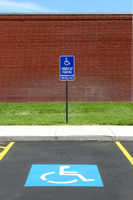 Make existing facilities accessible. This might include access to break rooms, restrooms, training rooms, parking, furniture, equipment, etc.
- Allow applicants or employees to bring assistive animals to work (of course under limited circumstances.)
- Transfer employees to a more accessible worksite.
- Transfer employees to a different job that they can, in fact, do. Note that you are not required to create a new job as an accommodation.
- Provide assistive aids and services such as qualified readers or interpreters to an applicant or employee.
- Restructure the job by the reallocating or redistributing nonessential job functions in a job with multiple responsibilities.
- Provide a part-time or modified work schedule (not as a permanent solution, but only as an accommodation.)
- Permit an alteration of when or how an essential function is performed (i.e. instead of being required to come to work at 9 they can come to work at 10).
- Provide an adjustment to modifications of exams training materials or policies.
- Allow an employee to work for from home (yes disabled employees may have a greater right to do so than your nondisabled ones).
- Provide a paid or unpaid leave (no law requires you to offer an indefinite leave.)
Of course, by now you’ve been drilled to understand that what’s a reasonable accommodation versus an undue burden varies on a case-by-case basis. You’ll need to consider the cost and nature of the accommodation, and the overall financial resources of the company, the type of operations, geographic location and other factors. Take a look at the ADA forms and the checklists in HR That Works.
Read more

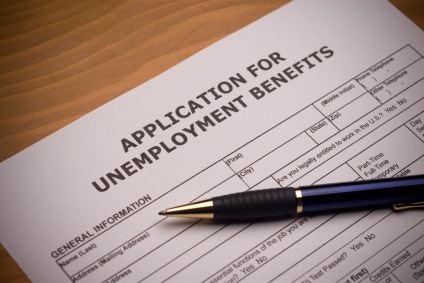 Most employers have to carry unemployment insurance on their employees. Do you really understand, though, when you can use your unemployment insurance benefits? Knowing the answer to this question can help you make important decisions about using this coverage.
What is Unemployment Insurance?
Unemployment Insurance is designed to help you cover expenses when you’re between jobs. It usually gives you a percentage of your working wages rather than a full paycheck.
Unemployment laws also vary by state. Although they follow guidelines from the federal government, each state’s Department of Labor determines how much coverage workers get when they file for unemployment.
Who’s Eligible to Collect Unemployment Benefits?
If you’ve been laid off or fired and are not at fault, you may qualify for unemployment. You will generally be disqualified from receiving unemployment, though, if you:
*Quit without having a good cause,
*Are fired for misconduct,
*Resign because of illness,
*Become involved in a labor dispute or
*Leave to get married or attend school.
What are Unemployment Insurance Limits?
Most states allow you to receive unemployment benefits for up to 26 weeks. In cases, you may be eligible for extensions based on federal guidelines or your state’s unemployment rates.
When Should You File?
As soon as you’re laid off or let go from your job, file for unemployment. It often takes two to three weeks for benefits to start, so a delay in filing means a delay in receiving benefits.
Also, realize that unemployment is not a free ride. While you can use the money to pay any expenses, you typically have to prove that you’re looking for employment to receive ongoing benefits. You’ll also have to report any hours you worked.
Unemployment insurance gives you some financial assistance if you lose your job.
Don’t quit and expect to be compensated, though. Discuss this coverage with your employer, insurance company or Department of Labor if you need further clarification.
Read more
 No matter how old you are, retirement will be here sooner than you think. Your employer can help you prepare for this season of life. As you decide if you should transfer existing 401(k) funds into a Roth 401(k), consider your tax preferences.
When You Pay Taxes Matters
Most investment strategists typically recommend that consumers like you invest pre-tax money in their retirement accounts. That means you deposit funds into your retirement account before you pay taxes on the cash. Traditional 401(k)s work this way and allow you to pay taxes on the money you withdraw during retirement.
Open a Roth 401(k), and you’ll be depositing cash that’s already been taxed. When you’re ready to retire, the only taxes you pay are on the profits your investment earned.
You Choose the Option You Prefer
Ultimately, the choice of whether to stick with a traditional 401(k) or transfer to a Roth 401(k) is up to you. After all, it’s your money and your future. Your current and future tax brackets are invaluable tools that can help you decide what to do.
*If your current tax bracket is fairly high and you expect it to decrease once you enter retirement age, stick with your traditional 401(k).
*If you expect to be in a higher tax bracket during retirement or are you a young worker who’s just starting out in your career, the Roth 401(k) is a wise choice. It lets you pay taxes on your investment now when you have more disposable income.
Are you ready to make a decision about whether or not choosing a Roth 401(k) is right for you? Then, talk to your company’s human resources department. Find out if the new Roth 401(k) is available and clarify any questions you might have about retirement investing. With this information, you ensure your retirement account wishes are put into practice as you prepare for the future.
Read more
 During the past decade, diversity training has become a huge industry, with many companies implementing programs aimed at helping all employees feel valued while reducing bias and unfairness. That’s the stated purpose, and it sounds great; but when you get right down to it, the reason most companies implement diversity training programs is to, hopefully, reduce liability issues including potentially costly lawsuits. And what’s more, recent studies have been indicating that most diversity training programs simply don’t work.
In fact, one study from Harvard University looked at 829 companies over three decades and found that the training resulted in “no positive effects in the average workplace.” Even worse, the researchers also found that in workplaces where diversity training is mandatory, the training “actually has negative effects on management diversity.”
The researchers noted that the very nature of diversity training forces people to think in terms of categories. In the end, employees are more likely to dehumanize people than to see them as individuals.
Mentor programs appear to be very effective, the study says. Such programs can provide everyone with connections to “higher ups,” and they are generally better accepted than training programs, possibly because they are available to everyone, not just specific groups.
“Mentor programs put aspiring managers in contact with people who can help them move up, both by offering advice and by finding them jobs,” the study authors found. “This strategy appears to work.”
The study found another good approach to ensuring diversity in the current workplace and in hiring practices is to put one person or a group of people in charge, acting as a diversity manager or task force. Managers and task forces can be effective because they focus on identifying both specific problems and remedies.
“Managers and task forces feel accountable for change, and they monitor quarterly employment data to see if their efforts are paying off. If not, it’s back to the drawing board to sketch new diversity strategies.”
The take-home message: Don’t give up on diversity programs in your company, but do spend time exploring other options that may be more effective.
Read more
 October, Adopt a Shelter Dog month, is a great time to add a dog to your family. Be careful which breed you adopt, though. Insurance companies use data from insurance claims and public health studies to create a high risk dog breed list, and your homeowners insurance premiums can increase based on the type of dog you adopt. You can save money when you choose a dog that’s not on the high risk list.
Working Breed Dogs
Agile, powerful and intelligent, Akitas, Alaskan Malamutes, Doberman Pinschers, Rottweilers and Siberian Huskies are also fiercely protective. If they’re not trained properly, these breeds could be potentially dangerous, especially to young children and small pets.
Terrier Breeds
Loyal and protective, American Pitbull Terriers and American Staffordshire Terriers have been bred to hunt. These traits mean they can become aggressive and tenacious if they’re cornered or frightened by one of your family members or guests.
German Shepherds
Police departments, military personnel and ranch hands appreciate this breed because the dogs are intelligent, hard-working and powerful. They’re also suspicious of strangers and won’t back down, which makes them a challenging breed for inexperienced owners to handle.
Chow Chows
Independent and strong Chow Chows are often kept as companions. These fluffy dogs can be aloof and stubborn, though, and should only be adopted by experienced dog owners.
Miscellaneous Breeds
Wolf Hybrid and Presa Canarios dogs exhibit strength and protective characteristics. However, they can also be unpredictable and quick to attack, making them potentially dangerous breeds. Friendly and docile Great Danes are listed on the high risk list, too, because of their size.
A dog adds fun and companionship to your home and family, and adopting a shelter dog is socially responsible. Before you choose a new pet, though, consider whether or not it will increase your homeowners insurance cost. If so, you may choose a different breed or reduce your home insurance premiums by installing a dog fence or raising your deductible.
Read more
