 Your supervisors play a crucial role in managing your workforce to ensure high productivity, quality, and safety outcomes. They need to have performance management (leadership) skills.
Communicating productivity expectations to employees, including coaching and counseling them to meet these goals, learning how to balance the need for production and concern for workers.
There are four possible scenarios in this balance:
- Low concern for both the workforce and productivity (“minimal management”). This will displease both management and workers, meaning the supervisor won’t be around long.
- High concern for people, but little interest in production (“Country Club management”). This will please workers, while making management unhappy.
- High concern for productivity, with little regard for the workforce (“autocratic management”). Although the company might meet its short-term goals, workers will be dissatisfied, leading to turnover and absenteeism issues that will make it tough to meet long-term production.
- A balanced high concern for both productivity and workers (“team management”). This is the best scenario because the project will probably exceed productivity goals, due to an involved and engaged workforce.
Good supervisors need management skills, but great supervisors must also have leadership skills. Managers do things right, while leaders do the right things. Managers get workers to achieve productivity goals, while leaders get them to exceed these goals.
The “situational” leadership approach gets the best results by combining elements of other leadership styles, “autocratic,” “democratic,” and “participatory.” To lead effectively, your supervisors must demonstrate integrity, fairness and a respect towards all workers, based on understanding immediate needs of the employees.
How well do your supervisors meet this test?
Read more
 Cold weather will be with us for a few months which can cause a variety of problems for contractors and their employees who work outdoors in winter weather.
To help your workers stay warm and safe on the job, follow these precautions:
- Make sure that they keep their body temperature at or about normal by wearing layers of clothing, both inside and outdoors.
- Provide proper rain gear, gloves, good waterproof boots, and an extra pair of clean, dry socks.
- Have workers protect their neck and ears; they can lose a lot of heat from these areas.
- Treat frostbite properly. The most important symptom is a numbing effect, which many workers tend to ignore. Other symptoms can include red skin turning to white, poor blood circulation, and blisters. To provide first aid: 1) never rub the frozen part in snow or immerse it in hot water (you can use warm water); 2) cover the affected area with extra clothing or a blanket; 3) get the worker out of the cold; 4) apply loose fitting, sterile dressings and splint and elevate affected extremities if possible; and 5) seek immediate medical attention.
- Make sure that portable heaters are maintained and inspected on a regular basis. Defective ventilation and incomplete burning of fuel can lead to carbon monoxide poisoning. Locate fuel containers, regulators, piping, and hoses and secure them in sites where they won’t be subject to damage. Protect the valves from damage also.
Remember, the more effectively you help your employees stay warm and safe on the job, the higher their productivity,– and the lower your insurance premiums.
For more information, please feel free to get in touch with our agency’s Construction insurance specialists at any time.
Read more
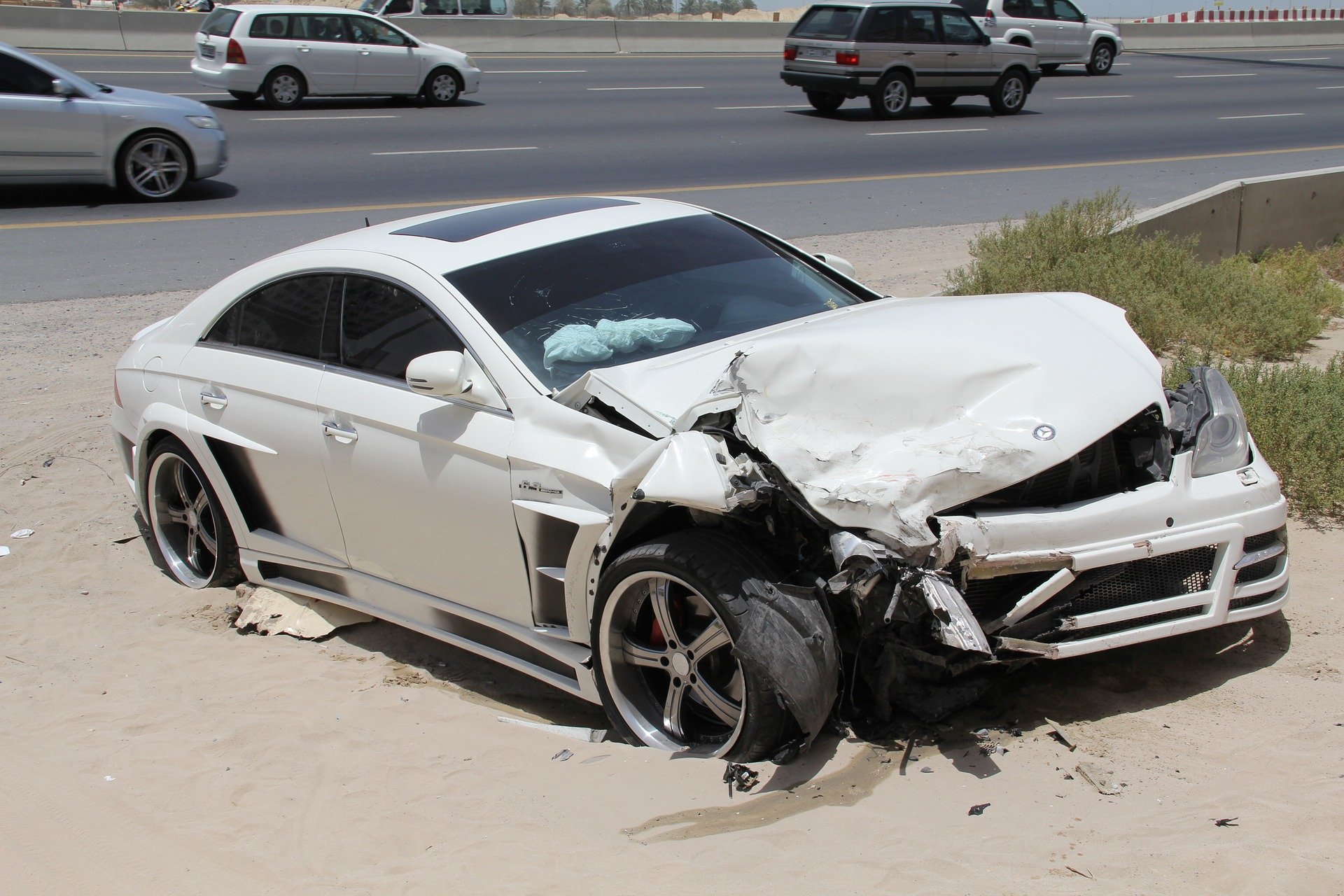 You know the drill after an auto crash, heart stopping panic, and then, especially if there’s major damage or a serious injury, exchanging names, addresses and insurance information with the other driver. Easy, right?
However, if the other driver refuses to provide these particulars (or you’re so shaken that you forget to ask for them), you could end up in serious financial, or even legal, trouble.
Dan Young, Senior Vice President of Insurance Relations for CARSTAR warns, “[After an accident] sometimes drivers just don’t do what they’re supposed to do.”
To make sure you’re prepared for such a mishap, follow these guidelines:
- Remain at the scene. Although state laws differ, failure to exchange information or notify police can lead to a hit-and-run charge or loss of your license.
- Keep a “cheat sheet” in your glove compartment about what to ask after an accident.
- Use your cellphone to take a photo of the other vehicle, (preferably showing its license plate) as visual proof of the incident.
- Write down details. As soon as you and your vehicle are out of traffic and harm’s way, record the date and time, location, make and model of the cars and actions or statements by the other driver.
- Ask any bystanders or eyewitnesses for their names and contact information.
In the meantime, review your auto policy to make sure that you carry: 1) collision coverage, which will pay for repairing your car and providing a replacement vehicle, if needed and 2) uninsured/underinsured motorists insurance (UM/UIM), which will cover damages for injuries caused by an uninsured or underinsured driver.
For more information, feel free to get in touch with our agency
Read more
.JPG) Because construction projects are complex operations involving a number of subcontractors under your supervision, onsite accidents or injuries resulting from their work can easily lead to litigation against you. To protect yourself against claims, losses, and expenses if disputes arise during the project, make sure that all subcontractors sign a “Hold Harmless Agreement” clause.
Because construction projects are complex operations involving a number of subcontractors under your supervision, onsite accidents or injuries resulting from their work can easily lead to litigation against you. To protect yourself against claims, losses, and expenses if disputes arise during the project, make sure that all subcontractors sign a “Hold Harmless Agreement” clause.
The terms of these clauses will vary from state to state. In some cases, this clause will protect the contractor from claims by corporations or companies that did not sign the agreement.
There are three types of hold harmlessagreements:
Under the Broad Form, the subcontractor assumes all liability for accidents due to negligence of the general contractor, and combined negligence between the two parties. Because of its sweeping terms, this form is relatively rare – and some states prohibit it.
With the Intermediate Form the subcontractor takes on all liability for accidents and negligence, but will not be held accountable for the general contractor’s actions. It doesn’t matter whether the incident was the subcontractor’s fault. If both parties were negligent, the subcontractor assumes liability all for its acts or omissions. Intermediate form agreements are relatively common.
A Limited Form agreement makes the subcontractor liable only for the proportional part of its responsibility for a mishap. Other parties – such as subcontractors – will be held liable under their hold harmlessagreement(s) for their corresponding part of the accident or negligence.
The type of agreement that’s best suited for your needs will vary depending on the nature of the project and state laws. As always, we stand ready to offer you our professional advice.
Read more
.JPG) Falls are the leading cause of construction deaths. In 2014, fatalities from falls accounted for 359 out of 899 deaths in the construction industry.
Falls are the leading cause of construction deaths. In 2014, fatalities from falls accounted for 359 out of 899 deaths in the construction industry.
To curb such deaths and injuries, OSHA has joined forces with the National Institute for Occupational Safety and Health and National Occupational Research Agenda (NORA).The Construction Nationwide Safety Awareness Campaign is comprehensive and based on three key steps for employers: Plan for safety, provide proper equipment, and train workers.
To ensure safety on job sites that involve working from heights, plan how the project will be done and the tools needed. When estimating job costs, include these resources and have them available on site. For example, on a roofing job, think about such potential fall hazards – holes, sky-light, leading edges, etc. – and then select appropriate fall protection equipment, such as personal fall arrest systems (PFAS).
Provide workers who are six feet or more above lower levels with fall protection and the necessary equipment including ladders, scaffolds, and safety gear. If roof work is involved, have a PFAS with a harness for each worker who needs to tie off to the anchor. Make sure the device fits and inspect all equipment regularly.
Finally, give workers “toolbox talk” training on potential fall hazards and the set-up and use of the safety equipment they’ll be using. The OSHA campaign has a number of training tools, job site posters, and other educational resources – (many of which target workers with limited English proficiency).
To learn more about how to keep your workers from falling down (literally)on the job, feel free to get in touch with our construction insurance specialists.
Read more
 Accidents involving vehicles or mobile equipment (excavators, dumpers, etc.) on building sites kill more than a dozen workers a year and injure hundreds more. To help make sure that your workers and outsiders can move around your job sites safely,and keep your insurance premiums down, experts recommend using this checklist:
Keep pedestrians and vehicles apart:
- have separate entry and exit gateways for pedestrians and vehicles
- provide safe pedestrian walkways that take a direct route where possible
- make sure drivers with access to public roads can see both ways
- don’t block walkways or vehicle routes
- install barrier between roads and walks
Minimize vehicle movements:
- provide offsite parking
- control entry to the site
- have storage areas so that delivery vehicles don’t have to cross the site
Control people on site:
- recruit drivers and equipment operators carefully
- make sure that drivers, operators, and those who direct traffic are trained
- manage the activities of visiting drivers
Maximize visibility:
- provide mirrors, CCTV cameras or reversing alarms
- designate signalers to control maneuvers by drivers or equipment operators
- install lighting for use after sunset or in bad weather
- make sure that all pedestrians on the site wear high-visibility clothing
Provide safety signage and instructions:
- ensure that all drivers and workers know and understand the routes and traffic rules on the site
- use standard traffic signs where appropriate
- provide safety instructions to all visitors in advance
For a comprehensive – and free– review of vehicle and mobile vehicle safety practices on your job sites, just give us a call. We’re here to help at any time.
Read more