
Professional liability insurance is essentially there to protect your reputation as a professional.
Things happen. There are unforeseeable circumstances that can botch even the easiest job in the most capable hands. When that happens, most contractors, consultants, professionals and business owners are more than happy to help cover the cost to the client, to injured parties and so on. That’s why the insurance policy is there.
Professional liability is there to protect specifically against claims of negligence by covering the court costs. These are the cases that we fight not because we don’t want to foot the bill, but because a reputation is on the line, and at the end of the day, all any professional really has to lean on is a trusted name. That is the foundation of success in any field. You can lose your office space, you can lose your clients, you can lose some of your best employees, and you can always rebuild from there. Once your name has been stripped of value, however, there’s not much left to do. Top talent will avoid the association with a negligent employer and clients and customers will jump ship.
These are the cases that you want to fight even at a financial loss. Even if you know that you’re not at fault for a visitor who suffered an injury on your property, it may make more sense to take responsibility than to fight it in court and spend more money in front of the judge than you would have on the doctor bill. The more comprehensive your professional liability policy, the less likely you are to have to do this when your reputation is on the line.
Of course, you can’t always have the case dismissed, so professional liability will cover the costs awarded to the plaintiff in a civil suit should you lose the case, meaning that you will be covered even where general liability coverage does not kick in. However, the real value in the policy is in allowing you to defend yourself against that civil suit in the first place, and, wherever possible, protecting your reputation within your industry.
Medical professionals rely on malpractice insurance for the same reasons, while insurers and lawyers will rely on errors and omissions, or E&O insurance. In any field where a professional mistake can prove incredibly costly or harmful, you will find some form of professional liability insurance being sold.
Read more
HIGHLIGHTS
- The final rule required employers to create and maintain workplace injury and illness records for at least five years.
- The Trump administration signed into law a bill that invalidates the final rule.
- Employers subject to OSHA recordkeeping requirements must create injury and illness records within six months of an incident and retain these records for at least five years.
IMPORTANT DATES
December 19, 2016
OSHA’s final rule on ongoing employer recordkeeping obligations published.
April 3, 2017
The final rule was nullified.
|
|
On April 3, 2017, President Donald Trump signed into law House Joint Resolution 83 (H.J. Res. 83). This bill nullifies a recordkeeping final rule issued by the Occupational Safety and Health Administration (OSHA). OSHA issued this final rule to amend its recordkeeping regulations and clarify that an employer’s duty to create and maintain work-related injury or illness records is an ongoing obligation. The final rule did not create any additional or new recordkeeping obligations for employers.
The clarification explained that an employer remains under an obligation to record a qualifying injury or illness throughout the five-year record storage period, even if the incident was not originally recorded during the first six months after its occurrence.
This Compliance Bulletin contains information regarding the nullified final rule and clarifies which legal requirements no longer affect employers subject to OSHA recordkeeping rules.
ACTION STEPS
The final rule is no longer valid. Therefore, employers are no longer required to comply with any of its provisions. Employers that were affected by the final rule should review their workplace injury and illness recordkeeping procedures and ensure that they are consistent with the nullification of this rule.
|
OSHA Recordkeeping Requirements
OSHA requires employers to create and maintain records about workplace injuries and illnesses that meet one or more recording criteria. Specifically, employers must:
- Create and update a log of work-related injuries and illnesses (OSHA Form 300);
- Create and maintain injury and illness incident reports (OSHA Form 301); and
- Create and display an annual summary of workplace incidents (OSHA Form 300A) between Feb. 1 and April 30 of each year.
Employers must keep these records for at least five years. The five-year retention period begins on Jan. 1 of the year following the year covered by the records. For example, the five-year retention period for incident reports created on Jan. 23, 2015, June 15, 2015, and Nov. 4, 2015, begins on Jan. 1, 2016.
Penalties for Noncompliance
OSHA has the authority to issue citations and assess fines against employers that violate recordkeeping laws. However, in general, the Occupational Safety and Health Act of 1970 (OSH Act) does not allow for a citation to be issued more than six months after the occurrence of a violation.
OSHA is of the opinion that a violation exists until it is corrected. Therefore, according to OSHA, the six-month period to issue citations and assess penalties begins on the date of the last instance of the violation. For example, if a violation that started on Feb. 1 was corrected on May 15, the six-month period would begin on May 15, and OSHA would have until Nov. 15 to issue a citation.
OSHA also asserts that uncorrected violations are considered ongoing violations, and that each day of noncompliance is subject to a separate penalty.
The Final Rule
According to OSHA, adopting the final rule and amending its recordkeeping regulations was necessary because the previous regulations did not allow OSHA to enforce an employer’s incident recording obligation as an ongoing requirement. In fact, a federal circuit court has held that the former regulations did not authorize OSHA to “cite the employer for a record-making violation more than six months after the recording failure.”
The court also noted that there is a discrepancy between the OSH Act and the regulations, and that while the OSH Act allows for continuing violations of recordkeeping requirements, the specific language in the regulations does not implement this statutory authority and does not create continuing recordkeeping obligations.
The federal court interpretation of the regulations meant that employers were no longer responsible for recording or storing workplace incidents if OSHA failed to detect and penalize employers for omitted recordable incidents within the six-month period. For this reason, OSHA issued its proposed amendments on July 29, 2015.
Impact on Employers
Because the final rule has been effectively repealed, employers are no longer required to comply with any of its provisions. This means that OSHA cannot enforce an employer’s recordkeeping obligation if the employer fails to record an incident within the first six months of when the incident took place. In practical terms, this means that OSHA will have to limit the scope of its recordkeeping investigations to the previous six months, rather than the previous five years.
However, because some OSHA records span entire calendar years, employers that fail to create injury and illness records in a timely fashion risk the possibility of keeping inaccurate records or reporting erroneous information to OSHA. Therefore, employers should not interpret this legislative development as an opportunity to bypass or contravene existing OSHA recordkeeping obligations. |
Read more

OVERVIEW
The U.S. Court of Appeals for the 7th Circuit has ruled that Title VII of the Civil Rights Act (Title VII) prohibits employment discrimination based on sexual orientation. The decision in Hively v. Ivy Tech, issued on April 4, 2017, makes it illegal to use an individual’s sexual orientation as a basis for employment decisions.
The ruling applies to employers with 15 or more employees in Wisconsin, Illinois and Indiana.
The decision is groundbreaking because it overturned prior cases and also conflicts with law from other federal courts. However, it aligns with the Equal Employment Opportunity Commission’s (EEOC) position. This makes review of the issue by the U.S. Supreme Court likely in the future.
ACTION STEPS
Affected employers should review their existing policies to ensure they do not allow discrimination based on sexual orientation or gender identity. Employers should also review any applicable state laws and the EEOC’s enforcement guidance to ensure their policies are compliant.
Background
Title VII is a federal law that prohibits employers with 15 or more employees from discriminating against employees and job applicants on the basis of their race, color, religion, sex or national origin. Since Title VII was enacted in 1964, several federal courts, including the 7th Circuit, have held that the law’s inclusion of the word “sex” means that its protections only extend to traditional notions of gender.
For example, the 7th Circuit’s 1984 decision in Ulane v. Eastern Airlines had held that Title VII only makes it unlawful to discriminate “against women because they are women and against men because they are men.” The U.S. Court of Appeals for the 11th Circuit (which includes Alabama, Florida and Georgia) recently issued a similar holding in its March 2017 decision in Evans v. Georgia Regional Hospital.
Although the U.S. Supreme Court has never specifically addressed whether Title VII prohibits discrimination based on sexual orientation, its decisions in other cases have established that:
- The practice of “gender stereotyping” falls within Title VII’s prohibition against sex discrimination; and
- Discrimination based on the race of a person with whom another individual associates is a form of racial discrimination under Title VII.
Relying on these and other Supreme Court decisions in its ruling in Hively v. Ivy Tech, the 7th Circuit expressly overturned all of its prior case law that had excluded sexual orientation from Title VII. Instead, the 7th Circuit held, “a person who alleges that she experienced employment discrimination on the basis of her sexual orientation has put forth a case of sex discrimination for Title VII purposes.” The court further specified that “it is impossible to discriminate on the basis of sexual orientation without discriminating on the basis of sex.”
Hively v. Ivy Tech
In 2013, Kimberly Hively, an openly gay woman who had worked as a part-time adjunct professor, filed a Title VII discrimination charge against her former employer, Ivy Tech Community College. Hively alleged that because she was gay, Ivy Tech had rejected her for six full-time positions and refused to renew her part-time employment contract. She argued that these actions constituted unlawful discrimination based on sex under Title VII.
A district court dismissed her case based on prior federal court interpretations of Title VII’s prohibition against sex discrimination. Hively then appealed to the 7th Circuit, which ruled in her favor on April 4, 2017. Under its comparative analysis, the court concluded that Hively’s claim involved discrimination based on her failure to conform to a heterosexual female stereotype. According to the court, this made Hively’s claim “no different from the claims brought by women who were rejected for jobs in traditionally male workplaces, such as fire departments, construction and policing.”
The 7th Circuit also compared Hively’s claims to cases in which the Supreme Court held that employers may not discriminate against an individual based on the race of his or her associates. Noting that the Supreme Court has held that this type of discrimination affects both partners in an interracial marriage, the 7th Circuit applied the same reasoning to Hively’s situation.
Considerations for Employers
While the 7th Circuit’s decision overturned the court’s prior cases to clarify how the federal law applies in the three states under its jurisdiction, two of those states (Wisconsin and Illinois), along with 20 other states in the United States, have already passed laws outlawing sexual orientation discrimination in employment. In addition, the EEOC, which is responsible for the enforcing Title VII, has taken a position that aligns with the 7th Circuit’s decision since 2015. Specifically, the EEOC already interprets and enforces Title VII’s prohibition against sex discrimination as forbidding any employment discrimination based on sexual orientation or gender identity.
Therefore, employers should be aware that the 7th Circuit’s decision does not necessarily represent a radical shift in the law. Instead, the decision merely reinforces the fact that employers may be penalized for discriminating against individuals based on sexual orientation or gender identity. More information about the EEOC’s enforcement policy is available on the EEOC’s website.
The 7th Circuit’s decision provides additional guidance for employers as well. For example, the court stated that “any discomfort, disapproval or job decision based on the fact that a complainant—woman or man— dresses differently, speaks differently, or dates or marries a same-sex partner, is a reaction purely and simply based on sex.”
Finally, employers should be aware that the 7th Circuit’s decision does not address the meaning of sex discrimination in the context of social or public services, nor in the context of employment related to a religious mission. In addition, the issue addressed in the case may undergo review by the U.S. Supreme Court in the near future. Therefore, employers should continue to watch for legal developments affecting Title VII.
Read more

During a recent visit to Wisconsin, President Donald Trump vowed to defend American dairy farmers who’ve been affected by Canada’s trade practices. Canada’s dairy sector is protected by high tariffs and controls on domestic production to support prices that farmers receive.
Last year, Canada’s dairy farmers agreed to sell milk ingredients used for cheesemaking to Canadian processors at prices competitive with international rates. Industry groups in New Zealand, Australia, the European Union, Mexico and the United States complained the new, competitive prices undercut exports to Canada.
The U.S. dairy industry groups want Trump to urge Prime Minister Justin Trudeau to end Canada’s pricing policy that has disrupted many U.S. dairy exports. They’re also asking for a prioritization of dairy market access in North American Free Trade Agreement talks. Trump has already threatened to eliminate the trade agreement with Canada if it doesn’t change its trade policies.
Ottawa’s ambassador David MacNaughton blames U.S. producers’ problems on overproduction rather than Canadian policy. The Dairy Farmers of Canada said it was confident that Ottawa would continue to protect and defend the dairy industry.
Pace of Corn Planting is Behind
According to the U.S. Department of Agriculture’s weekly Crop Progress Report, every corn-producing state in America is behind last year’s planting pace, with the exception of Indiana.
The state lagging behind the most is Missouri, with only 17 percent of its corn crop planted as of Easter Sunday. At the same time last year, Missouri farmers had planted 53 percent of the state’s corn crop.
North Dakota, South Dakota, Michigan, Wisconsin and Ohio didn’t have planting data listed in the Crop Progress Report at the time of publication.
Planting Safety Tips
As farmers prepare for planting season, it is worth remembering the following safety tips:
- Be mindful while transporting goods on public roadways.
- Watch for children, as they’re often attracted to large, noisy equipment.
- Follow instruction labels when applying products such as pesticide, herbicide or fungicide. Consider keeping photos of the instructions on your smartphone for convenience.
- Service all farm equipment regularly.
- Store fuel away from machine sheds and other buildings.
- Get adequate amounts of sleep, and follow a healthy diet.
Read more
Safety in your everyday small business operations is essential for your employees, customers and success. Understanding and maintaining safety guidelines can be challenging, though. OSHA offers numerous resources that benefit your company. Take advantage of these resources as you ensure your small business maintains safety guidelines and stays compliant with current laws at all times.
OSHA’s Cooperative Programs
Your small business must cooperate with OSHA to maintain safety and remain compliant with laws, but you may not know where to start. OSHA offers five cooperative programs that help your small business prevent workplace injuries, illnesses and fatalities. Available programs include:
- Alliance Program
- OSHA Strategic Partnership Program (OSPP)
- Voluntary Protection Programs (VPP)
- OSHA Challenge Program
- On-site Consultation Program’s Safety and Health Achievement Recognition Program (SHARP)
All states with OSHA-approved programs offer this cooperative program option, and you can search the website to learn more about each program.
On-Site Consultation Program
Get personalized advice with a free and confidential on-site consultation. The consultant will not give penalties or citations because the purpose of the consultant’s visit is solely to:
- Identify workplace hazards
- Share advice on how to become compliant with OSHA guidelines
- Implement injury and illness prevention programs
While the program prioritizes high-hazard worksites, it’s available to all small and medium-sized businesses and is completely free.
Diverse Workforce/Limited English Proficiency Coordinators
When your workforce employs Spanish speakers or a diverse workforce, you may need education, outreach and training assistance. Schedule a seminar or workshop with an OSHA Diverse Workforce/Limited English Proficiency coordinator. Every 10 OSHA regions has one coordinator who can help you train and prepare your employees effectively.
Compliance Assistance Specialists (CAS)
When you’re ready to host a seminar or workshop on safety challenges or compliance issues, contact a CAS. In states under federal jurisdiction, the OSHA area offices have a CAS on staff who will provide training resources and promote OSHA cooperative programs.
Training Institute (OTI) and Training Education Centers
Access a variety of OSHA trainings, including technical advice, seminar and workshop speakers, or audiovisual aids, through the Training Institute and Training Education Centers. This resource provides basic and advanced safety and health courses as well as small business seminars.
Penalty Reductions
Non-compliance with OSHA guidelines can result in large penalties. However, your small business’s size and number of employees may reduce the penalties. Learn more as you assess your eligibility for penalty reductions.
OSHA safety guidelines protect your employees and small business since they reduce injuries, illnesses and fatalities. OSHA guidelines can be confusing, though. Maintain compliance when you take advantage of these OSHA resources. They help your small business remain safe and successful.
Read more
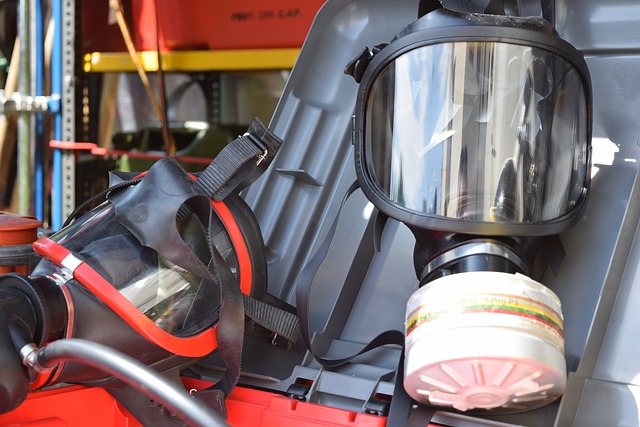
Choosing the right respirator relevant to the nature of the employment is critical to a worker’s safety. Exposure to different hazards means that not just any respirator will suffice.
Two main classes of respirators are available:
Air-Purifying Respirators (APR)
These respirators are designed to filter air borne contaminants such as fumes or noxious dust. Other forms of APR models use a canister or cartridge containing a material that absorbs the contaminants.
APRs are tight fitting to the face and have different designs. These designs include particulate respirators, powered air-purifying respirator (PAPR), gas masks and chemical cartridge respirators. They come in four different designs, including:
Full Face Piece
Fully covers the face from underneath the chin to an area above the eyes. This feature provides added protection to the eyes, especially from chemical irritants.
Half-Face Mmask
Gives protection from beneath the chin to and including the nostrils.
Quarter-Mask – Protects the Mouth and Nose.
Mouth bit respirator – Normally used for escaping a hazardous situation only. Contains a bit which is inserted into the mouth and nose clip to seal the nostrils closed.
Supplied-air respirator (SAR)
These respirators provide breathable air via an air line or a compressed work tank. SARs come in two different types. The first has a loose fitting respiratory inlet, such as a helmet or a hood which envelopes both the neck and head, that is supplied purified air through airlines. This type may have face pieces which fit loosely.
The other form of SAR has either a half or full face piece and has very snug respiratory inlets.
Choosing the Most Suitable Respirator
Selecting the most suitable respirator must be performed by an expert, such as a safety professional. The expert will consider the appropriate apparatus only after they have identified and evaluated the potential respiratory hazard and considered the relative limitations of the respiratory apparatus for the situation.
Key Questions to Ask
Here are some factors an employer should consider when determining whether a respirator may be required:
Establish the existence of a hazard by considering warnings about the material, like its chemical components or the nature of the particulates that might be released through the work performed.
Determine whether there is limited oxygen present.
Is the hazard airborne such as a particulate, fume, or vapor?
Ask whether the respirator will be used for an emergency or in combating fires.
Evaluate whether the work is strenuous and will be performed in hazardous atmospheric circumstances.
Is there any agent present which might be possibly fatal, carcinogenic, skin absorbable or acts as an irritant?
Will the work be conducted in a confined space or will the worker be exposed to abnormal temperatures?
The key is that respirators should be used to suit the work. The proper choice of respirator is vital to the health and safety of workers in many types of employment.
Read more
