
Congress and President Donald Trump recently approved the Disaster Recovery Reform Act (DRRA), an overhaul of the federal government’s approach to disaster preparation and risk reduction. The new law gives businesses, federal agencies and state governments more flexibility when requesting and using federal grants.
Before now, the Federal Emergency Management Agency (FEMA) had strict regulations about how it distributed funds during a recovery process. Grants were usually used to help replace lost property, but didn’t account for improvements to help prevent future disasters. In fact, one of the biggest reasons that the National Flood Insurance Plan (NFIP) is over budget and in need of reform is that it’s common for a single property to flood frequently and make multiple insurance claims.
The DRRA has new provisions in place to emphasize planning and help streamline how funds are given out:
- 6 percent of the federal disaster budget will be put into a pre-disaster mitigation account every year. State governments, businesses and communities can apply for grants to fund risk mitigation activities.
- Rebuilding that uses federal funds will use strengthened building code requirements to protect against future incidents. Improving public utilities will also be a priority in order to ensure access to clean water and electricity.
- The president will be able to reimburse up to 75 percent of a state or local government’s disaster mitigation efforts to ease the strain on federal agencies.
According to FEMA, every $1 put into planning for disasters can help save $6 during the recovery process. Contact us today at 831-661-5697 for toolkits, articles and other resources your company can use to prepare for various disasters and ensure the continuity of your business.
Read more
Because identity theft and data breaches are becoming an ever-growing problem, it’s important to not only have a different password for each account, but to make those passwords easy to remember and hard to guess. The following are tips you can use to make your password harder to crack:
- Change your passwords every 90 days. This might seem like a hassle at first, but hackers have a better chance at cracking your passwords if they never change. It’s also a good idea to avoid reusing passwords.
- Make your passwords at least eight characters long. Generally, the longer a password is, the harder it is to guess.
- Don’t use the same password for each account. Hackers target lower security websites and then test cracked passwords on higher security sites. Make sure each account has a different password.
- Include uppercase letters and special characters in your password. Special characters include symbols like “#,” “*,” “+” and “>.” These symbols can make your password more complex and harder to guess.
- Avoid using the names of spouses, kids or pets in your password. All it takes for a hacker to crack passwords that include these things is a little research on social media sites like Facebook and Twitter.
Read more

Representatives from the United States, Mexico and Canada recently reached an agreement to update the North American Free Trade Agreement (NAFTA). The new trade deal, referred to as the United States-Mexico-Canada Agreement (USMCA), includes a number of changes to support North American businesses, increase labor regulations and overhaul intellectual property (IP) protections.
Although the USMCA has many similarities to NAFTA, some important changes will likely affect businesses:
- North American auto industry—Starting in 2020, vehicles will only avoid tariffs if at least 75 percent of their parts are made in North America (up from the current 62.5 percent requirement). Also, at least 30 percent of the work done during the manufacturing process must be done by employees with hourly wages of $16 or more. Although these changes should help to discourage overseas imports, some believe that they could significantly increase the price of vehicles.
- Better IP protections—The new deal has stricter regulations to protect trademarks, copyrights and other strategic plans. The USMCA also extends copyright protections to 70 years beyond the life of the author.
- Disputes and reviews—One of the USMCA’s provisions allows for a special dispute process that’s handled by a panel of representatives instead of one of the three country’s court systems. An automatic review process will take place six years after the three countries ratify the deal, and it will automatically dissolve after 16 years.
NAFTA will remain in effect until all three countries approve the USMCA, which is likely to occur sometime in early 2019.
Read more
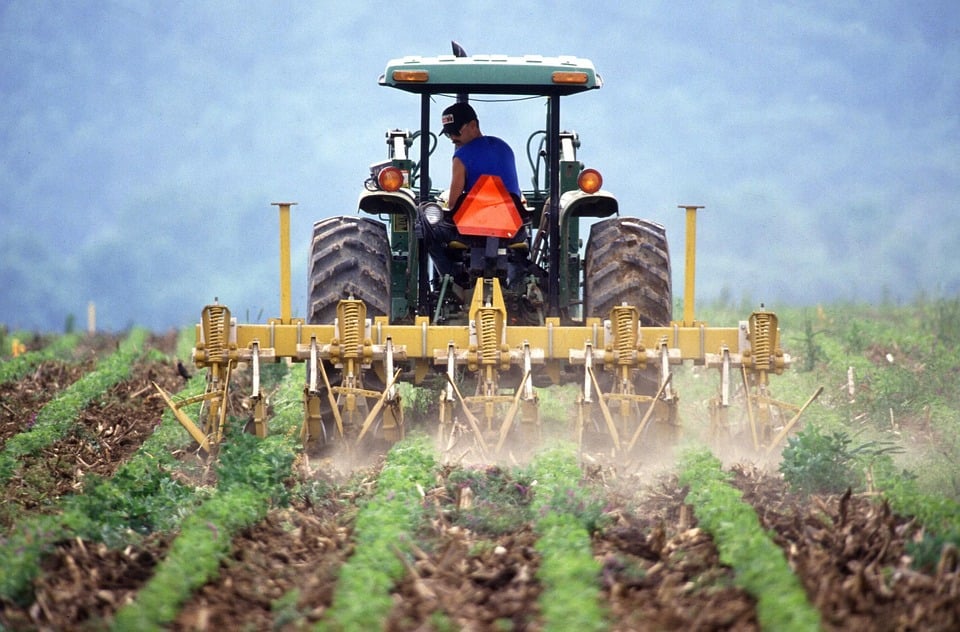
Flooded barns and lost crops are just a couple of the emergencies farmers have to deal with after a natural disaster. Thankfully, there are federal programs and resources available to help with some of the costs, but seeking them out can be confusing and time consuming. The agency you contact will depend on the type of damage you have, so a farmer may have to go to three separate agencies for help.
Disaster Relief – Helpful Links
3 STEPS TO POST DISASTER RELIEF
It can be overwhelming trying to navigate the different programs available. Here, we break it down into three steps:
Step 1: Take pictures. Disaster programs need documented damage, so take pictures before you clean up, and take note of specific losses. Save receipts for any purchases you need to make during recovery.
Step 2: Know what programs for coverage are available. There are several different programs that address different needs of hurricane relief. For example, the Farm Service Agency (FSA) handles assistance specific to farms and farmland. The Small Business Administration handles disaster assistance for businesses. The Federal Emergency Management Agency handles household damages and reconstruction.
Step 3: Be aware of important deadlines. Each program has different application processes and different deadlines. Make sure you get your applications in on time.
- If seeking the help of an FSA program, be aware that most have an application deadline of 30 days after the damage or loss occurs.
- If damage prevents you from planting, complete a Notice of Loss form and submit it to your local FSA office within 15 days of the planned planting date to determine eligibility.
- If you participate in Risk Management Agency (RMA) federal crop insurance, report the damage within 72 hours of discovery, and follow up in writing within 15 days.
Read more

As with any cooking tool, it’s important to take caution when using a turkey fryer as it can be extremely dangerous. Here are some tips to consider when frying a turkey:
- Stay in the area where you are cooking. Leaving the turkey unattended may cause the fryer to overheat, resulting in a fire.
- Use your turkey fryer on a level surface. Anything that might cause the fryer to tip over may result in a hot oil spill.
- Thaw your turkey before cooking. Water from a still-frozen turkey can cause the oil to bubble or splash over the pot.
- Keep small children and animals away from the fryer while it is in use. There is a great risk that a child or pet could run into the fryer, knocking it down and causing serious injury. A safe distance of three to 10 feet away is recommended.
- Have safety equipment ready. Use oven mitts, goggles and an apron while cooking. Have a fire extinguisher nearby in case of emergency, and keep flammable items away from the fryer.
Your Safety Matters!
For your safety, only use a turkey fryer outside and away from your home. Never use a turkey fryer in a garage or on a porch. Also, be sure to keep some distance between yourself and the fryer as you monitor it—you wouldn’t want to accidentally get splashed with hot oil.
Did You Know?
The U.S. Fire Administration states that Thanksgiving is the peak day for home cooking fires. While preparing your Thanksgiving turkey can be a timeless tradition, it’s important to keep cooking safety measures in mind to protect yourself, your guests and your home.
Read more
On Sept. 30, 2018, California enacted a series of laws that strengthen the state’s protections against workplace harassment. Effective Jan. 1, 2019, these new laws:
- Require employers with five or more employees in the state to provide sexual harassment prevention training to all employees;
- Expand and clarify employer liability for workplace harassment; and
- Prohibit employers from entering certain agreements related to sexual harassment and other unlawful acts in the workplace.
ACTION STEPS
All California employers should become familiar with the new laws. Those with five or more employees should review the new training requirements and monitor the California Department of Fair Employment and Housing’s (DFEH) website for training courses and additional guidance.
Background
The California Fair Employment and Housing Act (FEHA) broadly prohibits workplace harassment. All employers in the state are prohibited from harassing individuals or allowing harassment based on any of the protected traits listed below. Employees, applicants, unpaid interns, unpaid volunteers and anyone providing services under a contract in the workplace are all protected under the law.
| FEHA Protected Traits |
| Race |
Disability/medical condition |
Sex |
| Color |
Genetic information |
Gender |
| Religion |
Marital status |
Gender identity |
| National origin |
Age (40 and older) |
Gender expression |
| Ancestry |
Military/veteran status |
Sexual orientation |
Under the FEHA, any employer, regardless of size, may be held liable for sexual harassment committed in its workplace, even if the harasser is not an employee. The FEHA also requires employers with 50 or more employees in the state to provide sexual harassment prevention training to all supervisory employees every two years.
Overview of Changes Effective Jan. 1, 2019
Effective Jan. 1, 2019, the FEHA is expanded as follows:
- The current requirements for supervisor training on sexual harassment are expanded to employers with five or more employees. These employers must also provide one hour of sexual harassment training to all nonsupervisory employees.
- Employers may be held liable for workplace harassment that is based on any protected trait (not just sexual harassment) committed by nonemployees in the workplace. The rules on what an employee must prove in a harassment claim have also been clarified.
- Employers may not require an employee to sign any agreement that waives a claim or right for workplace discrimination or harassment, or that prevents disclosure of any information about unlawful acts in the workplace.
California law has also been changed to prohibit confidentiality requirements in sexual harassment claim settlements and sex discrimination claim settlements.
New Training Requirements
Effective Jan. 1, 2019, every California employer with five or more employees must provide:
- Each supervisory employee with at least two hours of sexual harassment training; and
- Each nonsupervisory employee with at least one hour of sexual harassment training.
The appropriate training must be completed by each employee within six months of assuming his or her job. Each employee must receive the appropriate training once every two years. The deadline for initial compliance with these requirements is Jan. 1, 2020. Employers must provide the initial training after Jan. 1, 2019, in order to meet this deadline.
As of Jan. 1, 2020, special requirements will apply for seasonal employees, temporary employees and any employees who are hired to work for less than six months. For these employees, employers must provide the required training within 30 calendar days after the employees’ hire dates or before the employees have worked 100 hours, whichever comes first.
The DFEH plans to develop two online training courses that employers may use to satisfy the training requirements. Employers should monitor the DFEH website for these courses and additional guidance.
Expanded Employer Liability for Workplace Harassment
The FEHA allows an employer to be held liable for acts of workplace sexual harassment committed by nonemployees under certain circumstances. Effective Jan. 1, 2019, employers may also be held liable for nonemployees’ acts of any type of unlawful workplace harassment. An employer may be held liable if:
- A nonemployee commits harassment against any of the employers’ employees, applicants, unpaid interns, unpaid volunteers or people providing services pursuant to a contract in the workplace;
- The harassment is based on any FEHA-protected trait;
- The employer (or its agents or supervisors) knows or should have known of the conduct; and
- The employer fails to take immediate and appropriate corrective action.
Prohibited Waivers and Confidentiality Agreements
An employer may not require an employee to sign either of the following in exchange for a raise or bonus, or as a condition of employment or continued employment:
- A release of a claim or right against the employer for employment practices that violate the FEHA; or
- A non-disparagement agreement or other document that prevents the employee from disclosing information about unlawful or potentially unlawful acts in the workplace.
These rules apply to agreements executed on or after Jan. 1, 2019.
These rules do not apply to agreements to settle claims involving unlawful acts in the workplace that have been filed by an employee either in court, with an administrative agency, in an alternative dispute resolution forum or through an employer’s internal complaint process. However, there are new restrictions on settlement agreements involving claims of:
- Workplace sexual harassment;
- Employment discrimination based on sex; or
- Retaliation related to claims of sex discrimination or sexual harassment in the workplace.
Effective Jan. 1, 2019, these settlement agreements may not include any provision that prevents the disclosure of factual information related to the underlying claim. Settlement agreements executed on or after Jan. 1, 2019, that violate this prohibition are void and unenforceable. The bill also prohibits courts from issuing any order or stipulation that restricts this type of disclosure in sex discrimination or sexual harassment cases.
However, settlements for sex discrimination or sexual harassment may shield the claimant’s identity and all facts that could lead to the discovery of his or her identity (including pleadings filed in court), as long as the claimant is the one who requests it (and as long as no government agencies or public officials are parties to the settlement agreement). In addition, settlement provisions may prevent parties from disclosing the amount paid for a claim settlement.
- The harassment is based on any FEHA-protected trait;
- The employer (or its agents or supervisors) knows or should have known of the conduct; and
- The employer fails to take immediate and appropriate corrective action.
Prohibited Waivers and Confidentiality Agreements
An employer may not require an employee to sign either of the following in exchange for a raise or bonus, or as a condition of employment or continued employment:
- A release of a claim or right against the employer for employment practices that violate the FEHA; or
- A non-disparagement agreement or other document that prevents the employee from disclosing information about unlawful or potentially unlawful acts in the workplace.
These rules apply to agreements executed on or after Jan. 1, 2019.
These rules do not apply to agreements to settle claims involving unlawful acts in the workplace that have been filed by an employee either in court, with an administrative agency, in an alternative dispute resolution forum or through an employer’s internal complaint process. However, there are new restrictions on settlement agreements involving claims of:
- Workplace sexual harassment;
- Employment discrimination based on sex; or
- Retaliation related to claims of sex discrimination or sexual harassment in the workplace.
Effective Jan. 1, 2019, these settlement agreements may not include any provision that prevents the disclosure of factual information related to the underlying claim. Settlement agreements executed on or after Jan. 1, 2019, that violate this prohibition are void and unenforceable. The bill also prohibits courts from issuing any order or stipulation that restricts this type of disclosure in sex discrimination or sexual harassment cases.
However, settlements for sex discrimination or sexual harassment may shield the claimant’s identity and all facts that could lead to the discovery of his or her identity (including pleadings filed in court), as long as the claimant is the one who requests it (and as long as no government agencies or public officials are parties to the settlement agreement). In addition, settlement provisions may prevent parties from disclosing the amount paid for a claim settlement.
Read more
