
Technology can be a risk, especially when it involves your password. You hear about all of the hack attempts on the large corporations, but you don’t hear about the every day person that get’s targeted by a cyber attack. Simply visiting a website could enable your attacker access to your computer. This should push you to protect your most valuable asset, your password! Don’t give the hackers an easy target by not following the simple tips on improving your password.
Improve Your Password
- Change your password every 30-45 days.
- Choose a password between 8-16 characters.
- Use at least two special characters (!@#$%^&*) randomly within your password
- Avoid using family or pet names, dates or common phrases within your password.
- Never reuse or repeat a password across accounts.
Stay Away from COMMON Passwords
Protect yourself (and your company) by making sure you’re not using one of the top 25 most commonly stolen passwords of 2017, as determined by IT security firm SplashData.
- 123456
- password
- 12345678
- qwerty
- 12345
- 123456789
- letmein
- 1234567
- football
- iloveyou
- admin
- welcome
- monkey
- login
- abc123
- starwars
- 123123
- dragon
- passw0rd
- master
- hello
- freedom
- whatever
- qazwsk
- trustno1
Read more

Although it is important for companies to trust their workers and the general public, the unfortunate reality is that theft can happen at any time. This is particularly true in the construction industry, where expensive tools and machinery are often left in plain sight or are easily accessible to criminals.
Construction site theft is especially damaging, as the theft of materials and tools can quickly delay a project, sometimes bringing production to a halt. Accordingly, it is essential for construction companies to understand how they can prevent job site theft before it happens.
General Tips
While every job site presents its own set of unique challenges, there are a number of general tips firms can use to better secure a construction site. The following are some basic strategies you can use to protect your materials and tools from thieves:
- Create a written security policy and job site security plan. These written plans should assign supervisory responsibilities, encourage awareness, and establish basic best practices for securing tools and materials.
- Contact nearby property owners and local law enforcement officials whenever you start a new project. These parties can help monitor your job site, particularly during off-hours.
- Establish a way for your employees to report theft or suspicious activity. Be sure to maintain complete records of any security incidents, as they can be beneficial to law enforcement in the event of theft, vandalism or similar occurrences.
- Conduct thorough background checks on your employees before hiring them on full time. You should also keep a list of people authorized to be on the job site on hand at all times.
Worksite Protections
Equipping your worksite with theft prevention features is mandatory if you expect to ward off potential criminals. Whenever possible, consider doing the following:
- Enclose your worksite with a security fence and provide limited access at all times. Use lockable gates whenever possible. Avoid using low-quality locks or leaving keys in the locks themselves.
- Ensure that your worksite is well-lit at night to deter criminals.
- Utilize signage to keep unauthorized personnel off your worksite.
- Walk around the worksite at the beginning and end of each day to ensure that no items are missing.
- Consider hiring security guards to patrol the construction site, particularly at night.
If possible, install security cameras to safeguard your job site. Overall, training employees on how to best keep materials and equipment out of the hands of thieves is your first line of defense against losses.
Controls for Equipment, Tools and Materials
The number of tools and machinery found on a construction site can vary heavily from day to day, making it difficult to keep track of valuables. That’s why the first step in any good protection program is to inventory the equipment you have.
An inventory should be made available for each job site and should accomplish the following:
- Inventories should track all newly purchased items. Copies of the inventory should be kept in a secure location.
- Inventories should be up to date and include photos of the larger, more important equipment.
- To aid in the settlement and recovery of any stolen equipment, inventories should include the following:
- The original date of purchase
- The original cost of the equipment
- The equipment’s age and serial number
- Relevant manufacturer information
Firms should assign one employee to be in charge of managing the inventory. This person would be responsible for keeping track of all materials, tools and deliveries.
Other major steps to securing equipment, tools and materials include the following:
- Utilize a secured area to store your equipment.
- Mark and label all tools in a distinctive manner for easy identification.
- Implement a checkout system of all tools and equipment so you can track their whereabouts.
- Establish a key control system for heavy duty machinery.
- Install anti-theft devices on mobile equipment.
- Lock all oil and gas tank caps.
- Park all equipment in a centralized, well-lit and secure area.
- Avoid using your worksite for storage. Remove any tools, materials or equipment that are not in use.
In general, it’s important to keep inventory levels low on-site to discourage thieves. In addition, creating and maintaining an equipment program can make all the difference when it comes to safeguarding your tools.
Equipment programs should make employees, managers, supervisors and foremen responsible for equipment losses. Under such programs, all losses are must be reported, regardless of how small. You should review equipment programs at least annually.
Responding to Job Site Theft
Even if an unimportant or inexpensive piece of equipment goes missing, it’s critical to report the theft to the police. While the authorities may not always be able to recover stolen items, reporting every instance of theft helps police establish a pattern that may assist in future cases.
When a theft occurs, respond by doing the following:
- Notify the proper authorities. Provide as much detail as possible, including when the theft took place and what was stolen.
- Contact your insurance broker and review the specifics of your policies, including coverages, limitations and deductibles related to personal property.
- File an insurance claim.
Following a theft, it’s important to take any additional steps necessary to secure your job site to prevent future losses.
Protect Your Projects
Theft is unpredictable, but there are many workplace controls that firms can implement in order to protect themselves. In addition, it’s important to speak to a broker to seek the appropriate insurance coverages. Contact Scurich Insurance today for more information.
Read more

Serving alcohol is a common practice for restaurants, bars, catering companies, entertainment venues and similar establishments. While providing a wide array of beverage options is important, serving alcohol in particular can create a variety of risks for business owners.
For instance, if a patron of your business becomes intoxicated and injures a third party or causes property damage, you could be held liable for the damages. In order to protect your business from serious financial and reputational losses, it’s important to consider purchasing liquor liability insurance.
What is Liquor Liability?
The term liquor liability refers to an organization’s legal and financial responsibility for the actions of individuals who consume alcohol at their establishment. Under liquor liability laws, a business can be found liable for both the bodily injury and property damage caused by a person they improperly served alcohol to.
What is Liquor Liability Insurance?
Liquor liability insurance is designed to protect any business that sells or serves alcoholic beverages. Specifically, this type of insurance covers damages that result from things like fights, careless behavior or automobile accidents caused by individuals who have consumed alcohol.
Liquor liability is important, as it protects you should your clients or patrons sue your business for damages related to their intoxication—something a general liability policy won’t cover.
Most businesses carry a general liability policy, which covers claims against your business for bodily injury, property damage or personal injury. While these policies often include host liquor liability coverage, they only provide protection related to the incidental service of alcohol. While host liquor liability may protect you if you are simply serving alcohol at a company party, it does not offer the coverage you need if you sell alcohol as part of your business.
What’s more, the majority of states require establishments that serve, sell or assist in the purchase of alcohol to carry liquor liability insurance. As such, it’s important to know what to look for in a policy.
What Should My Policy Account For?
When it comes to protecting your business from any kind of liability, it’s critical that you account for common risks. In order to secure the right level of coverage, keep in mind the following policy enhancements when shopping for liquor liability insurance:
Assault and battery coverage.
When alcohol is involved, fights are a common risk. However, many liquor liability policies exclude coverage for assault and battery. Therefore, it’s important to ensure you account for this protection when building your policy. It should be noted that assault and battery coverage can also be extended to include specific incidents such as sexual assault, stabbings and shootings.
Defense costs.
Legal fees from liquor-related claims can easily exceed tens of thousands of dollars. Be sure that your policy accounts for defense costs outside of the policy limit. Otherwise, legal expenses could quickly exhaust your policy limit, leaving little to no insurance to pay for any damages.
Employees included.
Even if you forbid your employees to drink on the job, there’s a chance that they may disregard your instruction. Look for a policy that will cover your employees as patrons to better protect your business from liquor-related incidents.
Mental damages.
In the event of a lawsuit, claimants may allege they were injured in nonphysical ways. In these instances, patrons could sue you for stress, mental anguish or psychological injury. Ensure that your policy accounts for these types of injuries.
It should be noted that liquor liability insurance won’t cover claims that arise from the sale of alcohol to minors or similar illegal transactions. Be sure your employees are instructed to verify patrons are of legal drinking age.
What Determines Pricing?
The underwriting process for liquor liability insurance can differ depending on the type of business you conduct. In general, the following four factors determine the rating and pricing of coverage:
Type of venue. When examining a business’s risk, underwriters look to identify the primary purpose of a venue. If you own a restaurant, the primary purpose of your venue is to serve food, so you are generally considered to have less risk than a nightclub or tavern.
Location of the venue.
Liquor laws can vary drastically depending on the jurisdiction. Each state has its own scoring system based on the nature of local dram shop laws. Dram shop laws impose certain liability standards on area venues that serve alcohol. Because the strictness of these laws may change from location to location, where you operate your business can have a major impact on how your liquor liability insurance is priced.
Percentage of liquor sales.
As a general rule, the more alcohol sales you make, the higher your premiums will be. This factor tends to have more of an impact on pricing than venue type, as a restaurant that has a high percentage of alcohol sales may be priced similar to a bar.
Individual traits of the risk. There are a number of miscellaneous variables underwriters will take into consideration when pricing out policies, including the following:
- Types of entertainment offered
- Experience level of management
- Formal loss control measures
- Security measures and procedures for dealing with intoxicated patrons
Serve Your Patrons Responsibly
When serving liquor, the best way to protect your business from potential claims is through proper risk management and liquor liability insurance. These policies can be complex, and it’s important to discuss the nature of your operations with a qualified insurance broker. Contact Scurich Insurance today to learn more.
Read more

The Occupational Safety and Health Administration’s (OSHA) electronic reporting rule requires certain establishments to report information electronically from their OSHA Forms 300, 300A and 301. Under the rule, the first electronic reports were due on July 1, 2017.
However, on Nov. 24, 2017, OSHA issued a new final rule officially delaying the first electronic reporting deadline to Dec. 15, 2017. Affected establishments will need to submit their reports through the Injury Tracking Application (ITA) website by that time or face possible OSHA penalties.
ACTION STEPS
- Affected establishments must create an account on the ITA website and submit information from their 2016 OSHA 300A form by Dec. 15, 2017.
- Other deadlines under the electronic reporting rule remain unaltered. Therefore, affected establishments should begin their preparations to submit information from all 2017 OSHA forms by July 1, 2018.
Affected Establishments
OSHA’s electronic reporting rule affects establishments that:
- Are already required to create and maintain OSHA injury and illness records and have 250 or more employees;
- Have between 20 and 249 employees and belong to a high-risk industry; and
- Receive a specific request from OSHA to create, maintain and submit electronic records, even if they would otherwise be exempt from OSHA recordkeeping requirements.
The electronic reporting rule applies to establishments, not employers. An employer may have several worksites or establishments. In these situations, some establishments may be affected while others are not.
To determine whether an establishment is affected, employers must determine each establishment’s peak employment during the calendar year. During this determination, employers must count every individual that worked at that establishment, regardless of whether he or she worked full-time, part-time, or was a temporary or seasonal worker.
Finally, a firm with more than one establishment may submit establishment-specific data for multiple establishments.
Reporting Requirements
| Submission Deadline |
Number of Employees
(per establishment) |
| 250+ |
20 -249 |
| Dec. 15, 2017 |
Form 300A |
Form 300A |
| July 1, 2018 |
Forms 300A, 300 and 301 |
Form 300A |
| March 2 (2019 and beyond) |
Forms 300A, 300 and 301 |
Form 300A |
The data an employer must submit and the timeline for submitting this information to OSHA depends on the establishment size.
Establishments with 250 or more employees will be required to submit information from their OSHA Forms 300A, 300 and 301. However, in 2017, these establishments will only be required to submit data from their 300A Form. Establishments in high-risk industries with between 20 and 249 employees will be required to submit information only from their OSHA Form 300A.
For the first reporting year, the deadline has been delayed to Dec. 15, 2017. However, the final rule that delayed the first deadline did not alter subsequent deadlines, so reporting deadlines for 2018, 2019 and beyond remain as shown in the table above.
Submitting the Report
The ITA is a secure website that OSHA created specifically for the data required by the electronic reporting rule. The ITA allows employers three options to submit their reports:
- Manual entry;
- Comma-separated value (CSV) file upload; and
- Application programming interface (API) transmission.
The ITA offers affected establishment instructions and sample files and templates to help them complete the submission process.
OSHA-approved State Plans
The final rule required OSHA-approved State Plans to adopt the electronic rule or “substantially identical” requirements within six months of the final rule’s publication date. The final rule was published on May 12, 2016.
This means that OSHA-approved State Plans have the authority to adopt reporting requirements that go above and beyond what is required by the federal rule. For this reason, establishments located in OSHA-approved State Plan jurisdictions should consult with their local OSHA offices to make sure they are satisfying all electronic reporting requirements.
However, the following OSHA-approved State Plans have not yet adopted the requirement to submit injury and illness reports electronically:
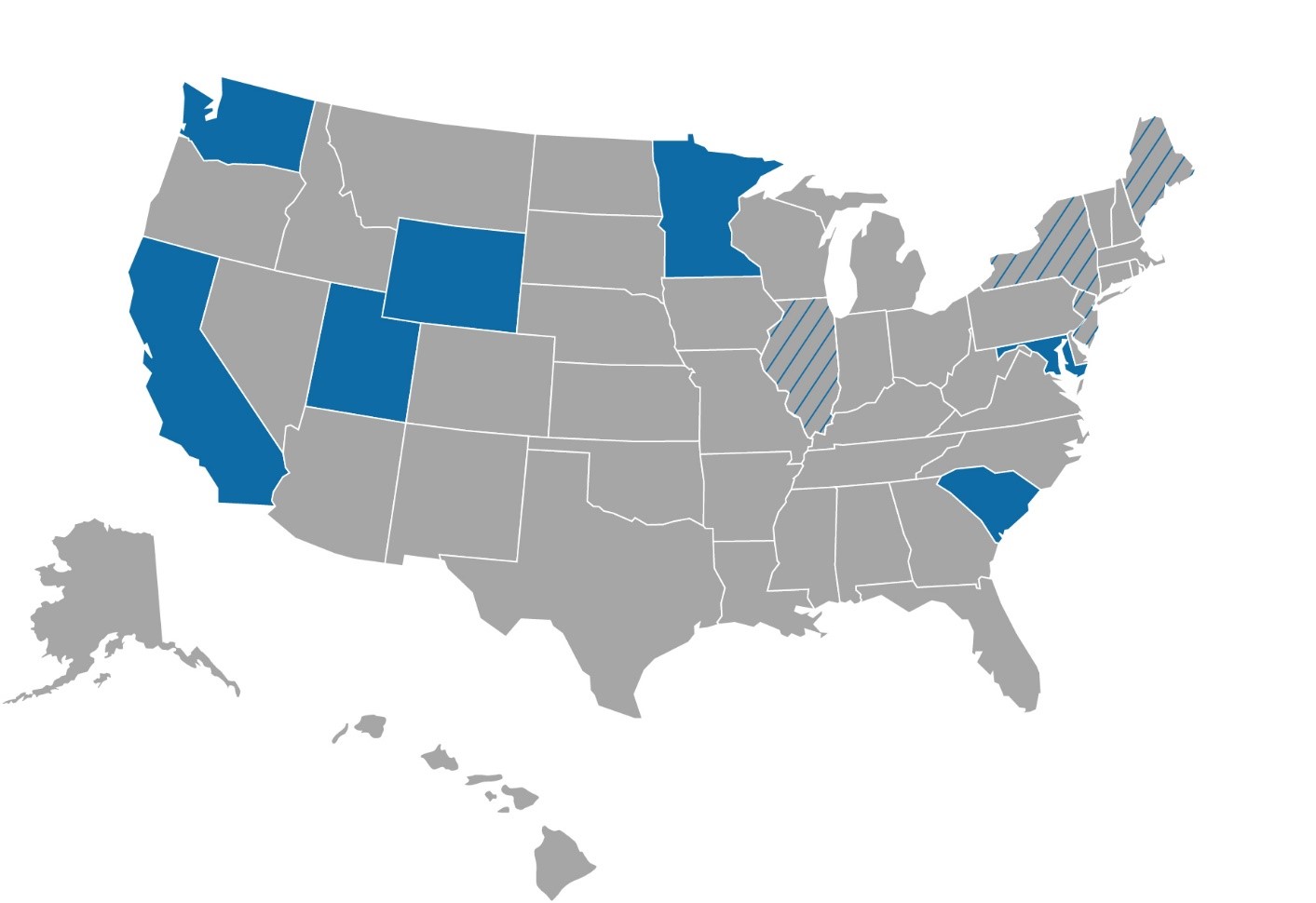 |
| All Employers |
Public Employers |
- California
- Maryland
- Minnesota
- South Carolina
- Utah
- Washington
- Wyoming
|
- Illinois
- Maine
- New Jersey
- New York
|
Similarly, state and local government establishments in IL, ME, NJ and NY are not currently required to submit their data through the reporting website.
More Information
Contact Scurich Insurance or visit the OSHA tracking of workplace injuries and illnesses webpage for more information regarding electronic reporting.
Read more

OSHA’s final rule on electronic reporting requires certain employers to submit data from their injury and illness records electronically so it can be posted on the agency’s website. Because the rule is an extra requirement on top of existing OSHA recordkeeping standards, affected employers need to be ready to comply with the rule before the proposed Dec. 1, 2017, deadline.
Other News and Tips
Preparing for OSHA Inspections
If an unannounced OSHA inspection finds violations at your business, you may have to pay thousands in fines and watch as your reputation plummets. Fortunately, OSHA inspections generally follow an established procedure that you and your staff can prepare for.
When an OSHA compliance officer arrives at your business, it’s important to check his or her credentials and then determine if you’ll give consent to the inspection. Although you can refuse an inspection or give only partial consent, the compliance officer will take note of this and OSHA may take further action.
Once an inspection begins, the goal should be to determine its purpose and set any ground rules. You should also be prepared to provide proof that your business is in compliance with OSHA standards. During the walkaround process, be sure to take notes of what the inspector documents so you can review them later.
OSHA inspections can be stressful, even when your business is in full compliance. Scurich Insurance can provide you with our inspection guide, “Be Prepared for an OSHA Inspection,” and help your business impress OSHA compliance officers.
OSHA Removes Employee Fatalities from Home Page
Although OSHA used to include a URL link on its home page that would direct viewers to a list of employee fatalities, the agency recently moved the link to a separate page on its website.
According to a spokesperson from the Department of Labor, the link was moved in order to increase the accuracy of workplace data, as previous listings included fatalities that were outside OSHA’s jurisdiction. However, OSHA will keep the list of employee fatalities on its website and continue to review data from employers.
Although the electronic reporting rule initially required certain employers to start submitting their required information by July 1, 2017, OSHA’s Injury Tracking Application website wasn’t ready to receive electronic reports in time, and OSHA proposed Dec. 1, 2017, as the new deadline. The rule doesn’t change an employer’s requirements to complete and retain regular injury and illness records, but some employers will now have additional obligations. Here are the requirements for the rule:
- Establishments with 250 or more employees that are required to keep injury and illness records must electronically submit the following forms:
- OSHA Form 300: Log of Work-Related Injuries and Illnesses
- OSHA Form 300A: Summary of Work-Related Injuries and Illnesses
- OSHA Form 301: Injury and Illnesses Incident Report
- Establishments with 20 to 249 employees that work in industries with historically high rates of occupational injuries and illnesses must electronically submit information from OSHA Form 300A.
The final reporting requirements will be phased in over two years. After the initial Dec. 1, 2017, deadline, establishments with 250 or more employees must submit information from OSHA Forms 300, 300A and 301 by July 1, 2018. Beginning in 2019 and every year thereafter, the information must be submitted by March 2.
For more help preparing for this new rule, call us at 831-661-5697 and ask to see our comprehensive Compliance Overview on OSHA’s electronic reporting rule.
New Silica Rule Enforcement Begins
A new OSHA rule on respirable crystalline silica will require employers to limit their employees’ exposure to silica hazards and provide medical exams to monitor highly exposed employees. The rule is scheduled to come into effect on June 23, 2018; however, OSHA began enforcement of the new rule in the construction industry on Sept. 23, 2017.
Under the new rule, employers must reduce the permissible exposure limit (PEL) for respirable silica to 50 micrograms per cubic meter of air (50 µg/m3). The rule also requires employers to take the following steps:
- Establish engineering controls to limit employees’ exposure to the new PEL.
- Provide employees with respirators when engineering controls alone do not provide enough protection.
- Establish a written silica exposure control plan.
- Provide medical exams to employees who are exposed to levels of respirable silica at or above the new PEL for 30 or more days a year.
To see more information on the respirable silica rule, and to see specifics about the rule’s application in the construction industry, visit OSHA’s website.
Read more

Hurricanes, fires and other disasters can cause widespread devastation that threatens the safety of your family and home. But once a disaster passes, you aren’t necessarily out of danger. If your home is damaged, it may not offer sufficient protection for your family. Plus, assessing damage and the rebuilding process itself can be costly, even if your insurance policy helps to pay the bills.
Returning Home
Before you can rebuild or repair your home, you’ll have to complete detailed inspections to see the extent of the damage. However, you should also keep your immediate safety in mind at all times. Even if you’re eager to return home, there could be a number of hazards present after a disaster that aren’t easily visible.
Here are some tips for when you re-enter your home:
- Don’t return to your neighborhood until it’s declared safe by local officials.
- Inspect the outside of your home for cracks in the foundation and sagging in the roof.
- Don’t enter your home if there’s a hazard present, such as damaged power lines, floodwater that’s above the basement or the smell of natural gas.
- Walk through every room of your home with a friend or family member, and take note of any noticeable damage or lost property.
- Don’t drink tap water until it’s been declared safe by local authorities.
- Be aware that wildlife may have taken refuge in your home, especially after a flood. Use a shovel or other long tool to rummage through anything you can’t see, and never approach a wild animal directly.
- Never force open a door that appears to be jammed. It’s possible that damage to your home has forced a door to support some of the building’s structure.
- Refrain from using wired electronics until you know the electrical systems are working properly.
Cleaning and Repairs
Once you’ve determined that your home is safe, you many want to start cleaning or performing small repairs yourself. However, the precautions you take during the recovery process can change depending on the type of disaster that affected your area. Use the following best practices to identify potential hazards in your home and prepare yourself for the cleaning and rebuilding processes.
General Best Practices
- Be aware of hazards that may be unique to your home. For example, older homes may contain lead paint, asbestos or other dangerous substances that can become exposed after a disaster.
- Wear appropriate protective equipment. You should always wear gloves and goggles when cleaning chemical spills or working with household cleaners.
- Read the manufacturers’ instructions on all cleaning products and devices before using them.
- Never mix chemicals together, either when disposing of them or using them to clean.
- Be aware of carbon monoxide hazards. Because the gas is difficult to detect and your home’s carbon monoxide detectors may not be working properly, it can be hard to detect a dangerous buildup of carbon monoxide. Never use fuel-burning devices inside your home, including portable generators that run on gasoline.
- Remove any standing water from your home as quickly as possible. Standing water can serve as a breeding ground for microorganisms and disease-carrying insects.
- Check the outside of your home to see if wind or debris has damaged the roof, windows or siding. If the damage appears to be severe, consult a professional about making repairs.
- Properly dispose of all waste materials and garbage, and never burn them.
- Take pictures of your home before and after it’s repaired. These pictures may help when making insurance claims.
- Make a record of any important documents that were damaged or destroyed, such as passports, birth certificates, Social Security numbers and insurance policies.
- Keep the receipts for any purchases you make while cleaning or rebuilding.
- Contact us at 831-661-5697 for help getting in touch with certified professionals and reviewing your homeowners policy.
Floods
- Wear an N-95 respirator if mold is present. If standing water has been in your home for at least two days, it’s likely that mold has begun to grow.
- Call a professional to help you clean if there’s a large amount of mold present.
- Remove any standing water as quickly as possible. However, if your basement is flooded, you should only pump out about one-third of the water a day. If any more is pumped out, it could cause the walls to collapse or the floor to buckle.
- Dispose of any food and containers that came into contact with floodwater, even if they appear to be airtight.
- Clean and dry all hard surfaces in your home. If anything can’t be cleaned and dried, it should be thrown away.
Fires
- Enter your home only after the fire department has said that it’s safe. Fires can cause severe damage to a building’s walls and floors, and they may not be structurally sound.
- To protect against serious health risks, avoid contact with soot and dirty water left over after a fire.
- Wear a mask while cleaning to prevent the inhalation of ash, soot and other residue.
- Check to see if your utilities are in working order. The fire department usually turns off utilities when fighting a fire and will know if they’re safe to use. Never try to turn your utilities back on by yourself.
- Use cleaning products that contain tri-sodium phosphate to help reduce the odor of smoke. Be sure to read the manufacturer’s instructions before you use one of these products.
- Use a mild soap and warm water to remove stains from soot and smoke from hard surfaces. Make sure to rinse and completely dry all surfaces shortly afterward.
- Talk to a professional about replacing drywall or insulation that’s been soaked by water from fire hoses.
Working with Contractors
Hiring a contractor to repair your home is a good way to make sure the job is done professionally. Unfortunately, disasters also attract scam artists who prey upon those affected by a disaster, and you need to remain skeptical when using contractors. Here are some best practices for working with a contractor:
- Only use contractors who have a good referral from Scurich Insurance, family members or friends.
- Check to see if complaints have been lodged against a contractor you’re considering by visiting www.usa.gov/state-consumer.
- Be wary of contractors who encourage you to spend too much, offer “special deals” or ask for your credit card number before you’ve signed a contract.
- Ask to see copies of contractors’ general liability and workers’ compensation insurance policies before you work with them.
- Get a written price estimate that includes any spoken promises made by a contractor.
- Take your time to review a contract before you sign it, and be sure to ask for explanations about any price variations you notice. It’s also a good idea to get an attorney to review a contract before it’s signed.
- Never agree to pay a contractor upfront. A deposit of one-third the total price is standard.
- Only pay contractors with a check or credit card, and pay the final amount only after the work is finished and has passed your review. Also, keep in mind that paying with a credit card may offer protection from your bank and the credit card company if the contractor makes an unauthorized purchase.
Recovery Resources
Recovering from a disaster of any type is an extremely stressful experience, and one where your family’s safety and financial future may be in doubt. Here are some resources you may be able to use to help provide for your family and rebuild your home:
Read more
