
OVERVIEW
The U.S. Court of Appeals for the 7th Circuit has ruled that Title VII of the Civil Rights Act (Title VII) prohibits employment discrimination based on sexual orientation. The decision in Hively v. Ivy Tech, issued on April 4, 2017, makes it illegal to use an individual’s sexual orientation as a basis for employment decisions.
The ruling applies to employers with 15 or more employees in Wisconsin, Illinois and Indiana.
The decision is groundbreaking because it overturned prior cases and also conflicts with law from other federal courts. However, it aligns with the Equal Employment Opportunity Commission’s (EEOC) position. This makes review of the issue by the U.S. Supreme Court likely in the future.
ACTION STEPS
Affected employers should review their existing policies to ensure they do not allow discrimination based on sexual orientation or gender identity. Employers should also review any applicable state laws and the EEOC’s enforcement guidance to ensure their policies are compliant.
Background
Title VII is a federal law that prohibits employers with 15 or more employees from discriminating against employees and job applicants on the basis of their race, color, religion, sex or national origin. Since Title VII was enacted in 1964, several federal courts, including the 7th Circuit, have held that the law’s inclusion of the word “sex” means that its protections only extend to traditional notions of gender.
For example, the 7th Circuit’s 1984 decision in Ulane v. Eastern Airlines had held that Title VII only makes it unlawful to discriminate “against women because they are women and against men because they are men.” The U.S. Court of Appeals for the 11th Circuit (which includes Alabama, Florida and Georgia) recently issued a similar holding in its March 2017 decision in Evans v. Georgia Regional Hospital.
Although the U.S. Supreme Court has never specifically addressed whether Title VII prohibits discrimination based on sexual orientation, its decisions in other cases have established that:
- The practice of “gender stereotyping” falls within Title VII’s prohibition against sex discrimination; and
- Discrimination based on the race of a person with whom another individual associates is a form of racial discrimination under Title VII.
Relying on these and other Supreme Court decisions in its ruling in Hively v. Ivy Tech, the 7th Circuit expressly overturned all of its prior case law that had excluded sexual orientation from Title VII. Instead, the 7th Circuit held, “a person who alleges that she experienced employment discrimination on the basis of her sexual orientation has put forth a case of sex discrimination for Title VII purposes.” The court further specified that “it is impossible to discriminate on the basis of sexual orientation without discriminating on the basis of sex.”
Hively v. Ivy Tech
In 2013, Kimberly Hively, an openly gay woman who had worked as a part-time adjunct professor, filed a Title VII discrimination charge against her former employer, Ivy Tech Community College. Hively alleged that because she was gay, Ivy Tech had rejected her for six full-time positions and refused to renew her part-time employment contract. She argued that these actions constituted unlawful discrimination based on sex under Title VII.
A district court dismissed her case based on prior federal court interpretations of Title VII’s prohibition against sex discrimination. Hively then appealed to the 7th Circuit, which ruled in her favor on April 4, 2017. Under its comparative analysis, the court concluded that Hively’s claim involved discrimination based on her failure to conform to a heterosexual female stereotype. According to the court, this made Hively’s claim “no different from the claims brought by women who were rejected for jobs in traditionally male workplaces, such as fire departments, construction and policing.”
The 7th Circuit also compared Hively’s claims to cases in which the Supreme Court held that employers may not discriminate against an individual based on the race of his or her associates. Noting that the Supreme Court has held that this type of discrimination affects both partners in an interracial marriage, the 7th Circuit applied the same reasoning to Hively’s situation.
Considerations for Employers
While the 7th Circuit’s decision overturned the court’s prior cases to clarify how the federal law applies in the three states under its jurisdiction, two of those states (Wisconsin and Illinois), along with 20 other states in the United States, have already passed laws outlawing sexual orientation discrimination in employment. In addition, the EEOC, which is responsible for the enforcing Title VII, has taken a position that aligns with the 7th Circuit’s decision since 2015. Specifically, the EEOC already interprets and enforces Title VII’s prohibition against sex discrimination as forbidding any employment discrimination based on sexual orientation or gender identity.
Therefore, employers should be aware that the 7th Circuit’s decision does not necessarily represent a radical shift in the law. Instead, the decision merely reinforces the fact that employers may be penalized for discriminating against individuals based on sexual orientation or gender identity. More information about the EEOC’s enforcement policy is available on the EEOC’s website.
The 7th Circuit’s decision provides additional guidance for employers as well. For example, the court stated that “any discomfort, disapproval or job decision based on the fact that a complainant—woman or man— dresses differently, speaks differently, or dates or marries a same-sex partner, is a reaction purely and simply based on sex.”
Finally, employers should be aware that the 7th Circuit’s decision does not address the meaning of sex discrimination in the context of social or public services, nor in the context of employment related to a religious mission. In addition, the issue addressed in the case may undergo review by the U.S. Supreme Court in the near future. Therefore, employers should continue to watch for legal developments affecting Title VII.
Read more
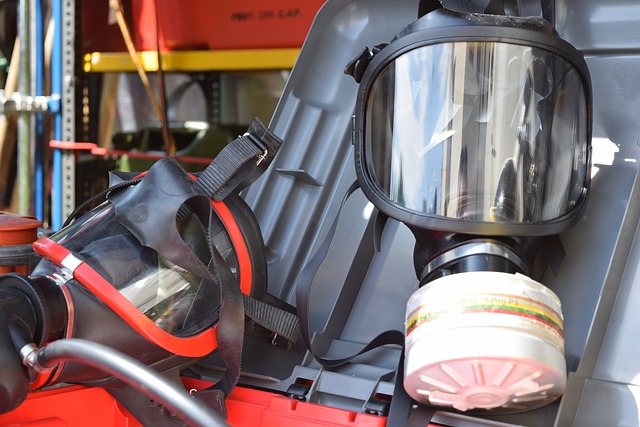
Choosing the right respirator relevant to the nature of the employment is critical to a worker’s safety. Exposure to different hazards means that not just any respirator will suffice.
Two main classes of respirators are available:
Air-Purifying Respirators (APR)
These respirators are designed to filter air borne contaminants such as fumes or noxious dust. Other forms of APR models use a canister or cartridge containing a material that absorbs the contaminants.
APRs are tight fitting to the face and have different designs. These designs include particulate respirators, powered air-purifying respirator (PAPR), gas masks and chemical cartridge respirators. They come in four different designs, including:
Full Face Piece
Fully covers the face from underneath the chin to an area above the eyes. This feature provides added protection to the eyes, especially from chemical irritants.
Half-Face Mmask
Gives protection from beneath the chin to and including the nostrils.
Quarter-Mask – Protects the Mouth and Nose.
Mouth bit respirator – Normally used for escaping a hazardous situation only. Contains a bit which is inserted into the mouth and nose clip to seal the nostrils closed.
Supplied-air respirator (SAR)
These respirators provide breathable air via an air line or a compressed work tank. SARs come in two different types. The first has a loose fitting respiratory inlet, such as a helmet or a hood which envelopes both the neck and head, that is supplied purified air through airlines. This type may have face pieces which fit loosely.
The other form of SAR has either a half or full face piece and has very snug respiratory inlets.
Choosing the Most Suitable Respirator
Selecting the most suitable respirator must be performed by an expert, such as a safety professional. The expert will consider the appropriate apparatus only after they have identified and evaluated the potential respiratory hazard and considered the relative limitations of the respiratory apparatus for the situation.
Key Questions to Ask
Here are some factors an employer should consider when determining whether a respirator may be required:
Establish the existence of a hazard by considering warnings about the material, like its chemical components or the nature of the particulates that might be released through the work performed.
Determine whether there is limited oxygen present.
Is the hazard airborne such as a particulate, fume, or vapor?
Ask whether the respirator will be used for an emergency or in combating fires.
Evaluate whether the work is strenuous and will be performed in hazardous atmospheric circumstances.
Is there any agent present which might be possibly fatal, carcinogenic, skin absorbable or acts as an irritant?
Will the work be conducted in a confined space or will the worker be exposed to abnormal temperatures?
The key is that respirators should be used to suit the work. The proper choice of respirator is vital to the health and safety of workers in many types of employment.
Read more

According to a report by the U.S. House of Representatives’ Committee on Education and Labor, a staggering 69 percent of all workplace injuries and illnesses may not be represented in the Bureau of Labor and Statistics Survey of Occupational Injuries and Illnesses, which many trust as a gauge of the safety of American workplaces. On a corporate level, not reporting or underreporting workplace injuries can have serious ramifications for the organization and the employer, which can include fines, exorbitant and unnecessary, health costs and more.
Research has found that the employer’s behavior, policies and attitude are key determinants in a worker’s decision to report an injury. Not only is it essential that employees are educated on the importance of reporting injuries, it is also important to examine your company policies so you are not inadvertently discouraging reporting. The consequences of underreporting can be severe.
Consequences of Underreporting
The unfortunate trend of injury underreporting can have serious ramifications at both the industry and company level. Widespread underreporting can be quite damaging to workers’ compensation rates on a large scale. Employers may not realize it, but such an underreporting problem may lead to more audits by insurance companies of their clients and higher rates for everyone. Many employers erroneously believe that reporting injuries leads to audits and higher rates.
Underreporting may lead to more audits by insurance companies and higher rates for everyone industry-wide. Many employers believe that reporting injuries leads to audits and higher rates.
At the company level, underreporting injuries can be quite costly for the employer. If it is an OSHA-reportable incident, the employer may face significant fines if it is not properly recorded or reported.
In addition, often when an injury isn’t reported or properly cared for immediately, it worsens and leads to higher health care costs and more lost time. Even if it is never reported as a workplace injury, the employer still loses out on health care costs and productivity.
If it is eventually reported, it becomes much more difficult to prove that it was workplace-related. Additionally, a study reported by the Hartford Financial Services Group found that injuries reported four or five weeks after the incident are 45 percent more expensive than injuries reported within the first week due to increased health costs and possible legal fees, or even a lawsuit, associated with late reporting.
One of the best ways to control workers’ compensation costs is through early reporting and intervention. Not only will it save money in health bills and legal fees, but it will also help to constantly improve your safety program. When there is an injury, consider it an opportunity to examine current safety procedures and decide if there is a suitable change that could be made to prevent similar injuries in the future.
Thus, prompt reporting can be a productive element to your safety program in your quest to always strive for the safest work environment. Rather than accepting a vicious circle where injuries are not reported and thus nothing is done to fix the problem, leading to more injuries, take advantage of injury reporting as a proactive solution to safety.
Reasons for Underreporting
There are several reasons why employees may not report injuries immediately or at all.
Incentive Programs
Many employers have reward or incentive programs to promote their safety initiatives, such as rewards for going a certain number of days without an injury. This can create a negative attitude toward reporting an injury, since doing so could cost that employee, a co-worker or a superior a reward or bonus.
Having incentive programs are a good idea, but a more effective strategy is to reward positive, safe behaviors. This can include reporting a safety hazard, attending a safety meeting or training class or equipment maintenance. Rather than rewarding for days without an injury, reward behaviors that strive to avoid injury, or even reward employees for prompt reporting when an injury occurs.
Fear of Negative Ramifications
Some employees fear that reporting an injury will create an image of them as weak to their co-workers and managers. He or she also may fear that such an image will be a detriment to his or her career.
Dispel this fear by assuring all employees that reporting an injury will have no negative impact on their job, and ensure follow through on all levels of the company. Work to promote a safety culture where prompt injury reporting is encouraged and praised. Injury reporting should never be frowned upon, even subtly or behind closed doors. If employees find out you are angry about a reported injury, he or she is less likely to report an injury in the future.
Some companies have a policy mandating drug testing after any incident whether or not there is evidence of drug use. This deters some employees from reporting injuries as well. Consider making the drug testing conditional depending on the circumstances of the injury and whether there is evidence that drug use was a factor.
For more information about injury reporting or your company’s workers’ compensation and safety programs, please contact Scurich Insurance at 831-661-5697 today.
Read more
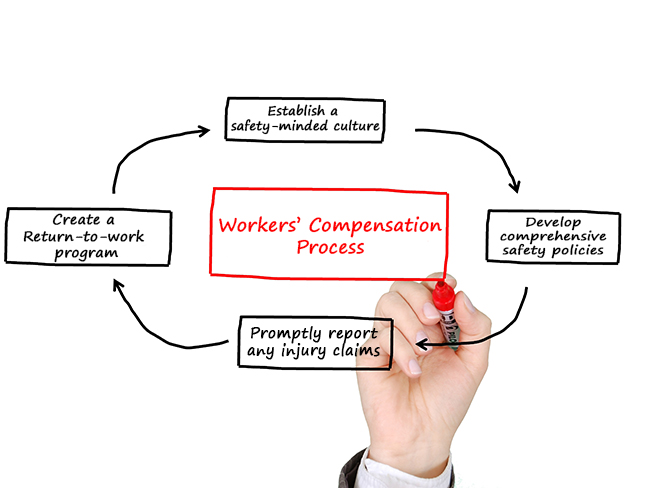
For the unprepared, workers’ compensation (WC) issues can be both confusing and costly. Fortunately for employers, there are ways to actively engage WC issues to influence their outcomes.
Through management controls and active involvement in the WC process, your organization can effectively influence related costs. To do so you will have to establish a number of your own processes that guide decision making throughout your organization.
By developing a cohesive workers’ compensation process, you can play an active role in reducing related costs.
Areas requiring WC management can be divided into three main categories. These categories include facets that may range from the simple to the complex, but as a whole, address vital issues that can negatively influence WC costs in your company.
Workplace Safety Means Fewer Claims
Simply put, reducing claims reduces costs. Establishing a safety-minded culture throughout every level of your company is essential to keeping workers injury free. However, establishing such a culture isn’t an overnight solution. To be successful, an ongoing commitment to safety must be made. Such a commitment must be supported by management and given the necessary resources to succeed.
Developing comprehensive safety policies for employees builds a firm foundation for your safety culture to grow. Such policies also encourage OSHA compliance, further improving your safety efforts while helping you avoid costly fines.
Mitigate Loss After an Injury
Unfortunately, even with all the right programs in place, it is still possible for accidents to happen. When a workplace incident occurs how you respond can greatly influence the outcome of the claim. Prompt claim reporting is essential to keeping costs down.
It is also important to have a designated injury management coordinator, someone who can supervise open claims and work with both employees and medical personnel to facilitate the timely recovery.
The longer an employee is out of work the more expensive their claim will be. Return-to-work programs that allow injured employees to come back to work at a limited capacity during the recovery process, are one of the most effective tools business owners have to reduce the severity of a claim.
Managing Your Mod
Insurers use what is known as an experience modification factor, or mod, to calculate the premiums you pay for workers’ compensation coverage. By managing your exposures and promoting safety it is possible to manage your mod and decrease your premium rates.
Like a good safety program, controlling your mod is an ongoing process. To reap the benefits of lower premiums you will have to keep in regular contact with your insurance provider to ensure they have the most accurate data to use in their calculations.
Read more

Knowing what to expect from an OSHA inspection can make the experience less stressful. Here is a brief overview:
Arrival
An inspector arrives at your facility during normal business hours, unless you are contacted prior to the visit. The inspector shows you his or her credentials issued by the U.S. Department of Labor, which authorize the inspection.
Preliminary Conference
The inspector tells you why OSHA selected your company, explains why the inspection is taking place, and reviews with you the standards which apply to your industry. You must then select an employee to accompany the officer during the inspection. Having an assigned guide selected prior to an inspection will help make the inspection process more efficient and will also help avoid unnecessary delays.
Tour
The officer will then inspect your workplace. The agenda for the inspection and its length is at the discretion of the officer, although most compliance officers cause as little interruption to your workday as possible.
During the inspection: The officer will investigate working conditions and ask questions of employees. He or she may take photographs or record instrument readings relating to safety and health hazards, take environmental samples, request files recording deaths, injuries, and illnesses, or instances of possible exposure to toxic solutions or harmful agents.
If the officer points out an easily correctable hazard—like a puddle of oil on a walkway—correct it right away to demonstrate your concern and your cooperation. Your action may or may not avoid an official notation.
Closing Conference
The officer will discuss findings, identifying any possible violations. Penalties cannot be discussed at this conference since only the OSHA area director sets penalties. Later, the officer will file a report with the area director. Any citations or penalties will be delivered to you via certified mail.
Inspections are stressful situations. But if you have done your homework, inspected your company regularly and taken steps to eliminate hazards, you have greatly increased the possibility of a good review.
Even if you never are officially inspected, self-evaluations may prevent accidents that will save you frustrating downtime, costly overtime, workers’ compensation claim costs, or even a potential lawsuit.
Are you prepared for an OSHA visit? If not, call Tony Scurich at 831-661-5697 to learn more about self-inspections and OSHA inspection criteria.
Read more

A hot topic today in the manufacturing industry is nanotechnology, which is the control of matter on a molecular scale between one and 100 nanometers. This intricate methodology involves processing tiny materials to produce nanoparticles or nanomaterials.
To give a measure as to how small the building blocks are in these materials, a nanometer is about 50,000 times smaller than the width of a human hair and 10 times smaller than the size of a typical, single germ.
Today, the National Institute for Occupational Safety and Health (NIOSH) reports that new consumer products manufactured using nanotechnology are coming on the market at the rate of about three or four per week.
While nanotechnology is an exciting new field, it also may pose potentially serious for workers who handle nanoparticles. Keep safety and prevention in mind to protect your workers and your company.
Nanoparticles are already used in paints, car parts, eyeglasses, cosmetics, tennis racquets and clothing, and their use is expected to increase in the near future.
However, researchers and employers are not without doubts about this revolutionary technology. Concerns about the impact of nanomaterials and nanoparticles on the environment and on workers’ and consumers’ health have surfaced in the past five years.
Nanotechnology Hazards in the Workplace
The biggest risk in using nanotechnology in the production of materials is that nanoparticles are so small that they can assume different physical, electrical or magnetic properties than they normally would as larger particles. According to the American Society of Safety Engineers, nanoparticles also have a greater ratio of surface area to mass, and thus they have a higher level of reactivity, combustibility and absorption capacity.
The concern in all these areas is that when ingested, inhaled or even exposed to skin, scientists are not sure how the tiny particles will react with the body systems. What is known is that if they get into the body in any way, the particles are small enough to permeate through tissue.
Some evidence suggests that nanoparticles in the body create free oxygen radicals, which are atoms, molecules or ions with unpaired electrons and an open shell configuration. These particles are more likely to bond in unwanted side reactions, leading to cell damage and possibly cancer.
Situations that present significant (and potentially very harmful) exposures to your employees include:
- Working with nanomaterials without proper protection
- Pouring or mixing nanomaterials
- Working with nanomaterials when there is a high degree of agitation, like in extreme heat
- Generating nanoparticles in the gas phase
- Handling nanoparticles that are powders
- Maintenance of equipment used to produce or fabricate nanomaterials
- Cleaning of any dust collection systems.
Protect Your Employees
Researchers are also unsure if the current standards of ventilation and filtration systems will be 100 percent effective when working with nanoparticles because of their extremely small size. Because of the tremendous usefulness and prevalence of nanotechnology, combined with scientists’ uncertainty of its effects, many compare this development to asbestos and the government control of its use in the 1980s. The European Union’s Occupational Health and Safety agency issued a report citing nanoparticles as the number one emerging risk to workers. So what can your business do to protect workers from harm?
- Require special protective clothing for your employees. Research indicates that nanoparticles can probably penetrate traditional knit clothing. Ironically, clothing weaved using nanotechnology to prevent the entrance of minute particles could prove to be the most effective.
- Require all employees to wear eye protection even when not working directly with nanoparticles or nanomaterials. The particles tend to behave like gasses, settling more slowly than other particles and dispersing widely while also re-suspending easily.
- Restrict consumption of food and drinks to non-work areas. Nanoparticles could be just as harmful if ingested as if they are inhaled due to their ability to permeate through organs and into the bloodstream.
- Provide shower and locker room facilities for all employees, and require workers to shower and change clothing when leaving their work area. Be active in preventing the spread of nanoparticles outside the workplace.
- Educate your employees. Give them the latest information on nanotechnology news and trends so they are aware of the dangers and are sure to use extra precautions.
- Reduce unnecessary exposure. Limit the number of employees working with or around nanoparticles by using safe handling procedures or a closed system when working with high volumes of nanoparticles.
Looking Ahead
Nanotechnology could be a huge opportunity for growth in your industry. The American Society of Safety Engineers predicts that by 2019, 50 percent of all products produced will be influenced by nanotechnology, which will provide jobs for more than 1 million workers. In the future, nanotechnology will likely give rise to items that help prevent risk or danger in the workplace, such as noise absorption materials, fire retardants, advanced ventilation control and quick, efficient cleanup of pollutants and hazards.
However, the future could also hold health problems for workers exposed to nanotechnology, and lawsuits for companies who did not do enough to protect employees. Because the health hazards are so uncertain, you should create your safety and protective policies on the side of extra caution to protect both your employees and your company.
Read more
