 After risk analysis, the next step is to create a risk management plan. This plan contains the risks and details of how to deal with them. The methods to deal with different risks are based on the evaluation of the risks. This step is also called Risk Assessment. The assessment of risk is done using a numerical scale and measuring the impact of different risks. This results in a chart where each risk carries a numerical strength against the constant number. Based on the numerical strength of a risk, managers decide how to treat the risk.
A risk treatment plan explains the action plan for each identified risk. Note that it is not possible to identify all the risks associated with any project. Some risks are unexpected and need to be managed based on the immediate assessment of the risk. For identified risks, there are four methods of treatment:
•Avoidance – Avoid the risk partially or in whole
•Reduction – Employing methods to reduce the negative impacts of risks
•Sharing – Sharing/outsourcing the risk component to a third party, which is better equipped to handle such risks
•Retention – Acceptance of the risk, normally in cases where the gains from the risk component are far higher than the negative impacts of the risk
Scurich Insurance can help you with Risk Management.
Read more
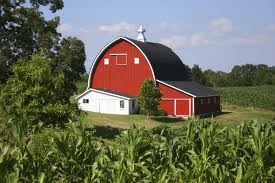 It’s always a good time to check around the farm or ranch for fire fuels and potential spark ignition sources.
- Never permit smoking in barns or near any flammable materials.
- Never refuel engines inside a building or while the engine is hot or running.
- Fuel should never be stored inside a building.
- Equip farm buildings with a smoke detector and a fire extinguisher.
- Make sure that all hay is properly dried before putting it in the barn.
- All electrical installations, wiring, etc. should be inspected and approved.
- Crop dryers should be equipped with controls that will automatically shut off blowers.
- Pesticides should be stored in a separate building and clearly identified.
- Maintain heating systems.
- Have your local fire department check your operation regularly.
Scurich Insurance can help you with Safety Services and Commercial Insurance.
320 East Lake Avenue, PO Box 1170
Watsonville, CA 95077-1170
Office: 1-831-722-3541
Toll Free: 1-800-320-3666
Read more
Allied Insurance – Corporate Health Insurance
We can help you with your Business Insurance needs. Contact us TODAY!
320 East Lake Avenue, PO Box 1170
Watsonville, CA 95077-1170
Office: 1-831-722-3541
Toll Free: 1-800-320-3666
Read more
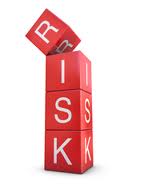 It is important to have a plan for when things go wrong. Operational risks can lead to catastrophic financial losses. Examples are employee errors, system failure or natural disasters. It also covers protecting yourself and your business from fraud. Having adequate insurance is not always enough; you may be covered for the loss of items in a flood, but are you covered for the days your business is not operating? Contingency plans assess what happens if you business is down for an hour, a day, a week or month.
Knowing how you will fulfill orders whether you subcontract things and make lesser profit but retain customers is an essential part of mitigating operational risk. Talk to your insurance agent about adding a rider that covers you for down time as well as liability insurance should an employee defraud your company or your customers. If you are at risk for a computer system going down, look into a backup server and have IT personnel familiar with your system prepared to get to work if needed. These may be subcontractors who are familiar with the system but not on payroll unless needed.
For Risk Management Consulting, please contact us Toll Free: 1-800-320-3666
Read more
 Ideally, your earthquake insurance policy should cover the cost to replace or repair your damaged property. Consider this:
•Does the policy cover only your dwelling? Are accessory structures, such as garages, also included?
•Will your policy pay for the contents of your home and for additional living expenses if your home is destroyed or too badly damaged for you to live there before repairs are made?
•Are there any exclusions or limitations to coverage?
•What deductible must you pay before the insurance kicks in?
Earthquake insurance rates are determined differently by each insurance company and can vary widely depending on several factors. Generally, older homes cost more to insure. Wood homes get better rates than brick buildings because wood tends to withstand quake stresses better. The premiums are also based on the nature of the soil and your house’s proximity to recognized fault lines.
Areas are graded on a scale of 1 to 5 for likelihood of quakes, and this is reflected in earthquake insurance rates. Because earthquake insurance is a type of catastrophic coverage, most policies carry a high deductible — anywhere from 2 to 20 percent of the replacement cost of the structure. For instance, if the cost to rebuild your house after a quake is $100,000 and your policy has a 2 percent deductible, you would be responsible for the first $2,000.
For more info on earthquake coverage and Home Insurance, please contact us at 1-800-320-3666.
Read more

Objects falling from above and striking people below have caused serious industrial injuries and account for a number of fatalities every year. Although the exact number of “falling object” injuries is difficult to determine, documents produced in several recent court cases suggest that the practice of “high stacking” materials and supplies poses a serious safety threat to those below.
Provide Adequate Warning – Workers or customers below depend on those working above for their safety. If you’re going to be doing work overhead, warn those in the area either verbally or with signs, ropes or barricades. For those below, it’s their responsibility to be aware of the work being done overhead and observe the warnings and barricades.
Whenever there’s a risk of falling objects at a worksite, an employer is required to provide protection for workers and visitors to the site. Hard hats and safety shoes are examples of personal protection against falling objects.
If you need to be covered for Workers Compensation, contact us today.
Read more
