
Knowing what to expect from an OSHA inspection can make the experience less stressful. Here is a brief overview:
Arrival
An inspector arrives at your facility during normal business hours, unless you are contacted prior to the visit. The inspector shows you his or her credentials issued by the U.S. Department of Labor, which authorize the inspection.
Preliminary Conference
The inspector tells you why OSHA selected your company, explains why the inspection is taking place, and reviews with you the standards which apply to your industry. You must then select an employee to accompany the officer during the inspection. Having an assigned guide selected prior to an inspection will help make the inspection process more efficient and will also help avoid unnecessary delays.
Tour
The officer will then inspect your workplace. The agenda for the inspection and its length is at the discretion of the officer, although most compliance officers cause as little interruption to your workday as possible.
During the inspection: The officer will investigate working conditions and ask questions of employees. He or she may take photographs or record instrument readings relating to safety and health hazards, take environmental samples, request files recording deaths, injuries, and illnesses, or instances of possible exposure to toxic solutions or harmful agents.
If the officer points out an easily correctable hazard—like a puddle of oil on a walkway—correct it right away to demonstrate your concern and your cooperation. Your action may or may not avoid an official notation.
Closing Conference
The officer will discuss findings, identifying any possible violations. Penalties cannot be discussed at this conference since only the OSHA area director sets penalties. Later, the officer will file a report with the area director. Any citations or penalties will be delivered to you via certified mail.
Inspections are stressful situations. But if you have done your homework, inspected your company regularly and taken steps to eliminate hazards, you have greatly increased the possibility of a good review.
Even if you never are officially inspected, self-evaluations may prevent accidents that will save you frustrating downtime, costly overtime, workers’ compensation claim costs, or even a potential lawsuit.
Are you prepared for an OSHA visit? If not, call Tony Scurich at 831-661-5697 to learn more about self-inspections and OSHA inspection criteria.
Read more
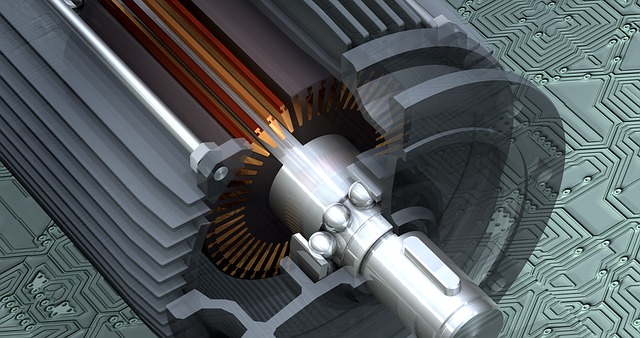
A hot topic today in the manufacturing industry is nanotechnology, which is the control of matter on a molecular scale between one and 100 nanometers. This intricate methodology involves processing tiny materials to produce nanoparticles or nanomaterials.
To give a measure as to how small the building blocks are in these materials, a nanometer is about 50,000 times smaller than the width of a human hair and 10 times smaller than the size of a typical, single germ.
Today, the National Institute for Occupational Safety and Health (NIOSH) reports that new consumer products manufactured using nanotechnology are coming on the market at the rate of about three or four per week.
While nanotechnology is an exciting new field, it also may pose potentially serious for workers who handle nanoparticles. Keep safety and prevention in mind to protect your workers and your company.
Nanoparticles are already used in paints, car parts, eyeglasses, cosmetics, tennis racquets and clothing, and their use is expected to increase in the near future.
However, researchers and employers are not without doubts about this revolutionary technology. Concerns about the impact of nanomaterials and nanoparticles on the environment and on workers’ and consumers’ health have surfaced in the past five years.
Nanotechnology Hazards in the Workplace
The biggest risk in using nanotechnology in the production of materials is that nanoparticles are so small that they can assume different physical, electrical or magnetic properties than they normally would as larger particles. According to the American Society of Safety Engineers, nanoparticles also have a greater ratio of surface area to mass, and thus they have a higher level of reactivity, combustibility and absorption capacity.
The concern in all these areas is that when ingested, inhaled or even exposed to skin, scientists are not sure how the tiny particles will react with the body systems. What is known is that if they get into the body in any way, the particles are small enough to permeate through tissue.
Some evidence suggests that nanoparticles in the body create free oxygen radicals, which are atoms, molecules or ions with unpaired electrons and an open shell configuration. These particles are more likely to bond in unwanted side reactions, leading to cell damage and possibly cancer.
Situations that present significant (and potentially very harmful) exposures to your employees include:
- Working with nanomaterials without proper protection
- Pouring or mixing nanomaterials
- Working with nanomaterials when there is a high degree of agitation, like in extreme heat
- Generating nanoparticles in the gas phase
- Handling nanoparticles that are powders
- Maintenance of equipment used to produce or fabricate nanomaterials
- Cleaning of any dust collection systems.
Protect Your Employees
Researchers are also unsure if the current standards of ventilation and filtration systems will be 100 percent effective when working with nanoparticles because of their extremely small size. Because of the tremendous usefulness and prevalence of nanotechnology, combined with scientists’ uncertainty of its effects, many compare this development to asbestos and the government control of its use in the 1980s. The European Union’s Occupational Health and Safety agency issued a report citing nanoparticles as the number one emerging risk to workers. So what can your business do to protect workers from harm?
- Require special protective clothing for your employees. Research indicates that nanoparticles can probably penetrate traditional knit clothing. Ironically, clothing weaved using nanotechnology to prevent the entrance of minute particles could prove to be the most effective.
- Require all employees to wear eye protection even when not working directly with nanoparticles or nanomaterials. The particles tend to behave like gasses, settling more slowly than other particles and dispersing widely while also re-suspending easily.
- Restrict consumption of food and drinks to non-work areas. Nanoparticles could be just as harmful if ingested as if they are inhaled due to their ability to permeate through organs and into the bloodstream.
- Provide shower and locker room facilities for all employees, and require workers to shower and change clothing when leaving their work area. Be active in preventing the spread of nanoparticles outside the workplace.
- Educate your employees. Give them the latest information on nanotechnology news and trends so they are aware of the dangers and are sure to use extra precautions.
- Reduce unnecessary exposure. Limit the number of employees working with or around nanoparticles by using safe handling procedures or a closed system when working with high volumes of nanoparticles.
Looking Ahead
Nanotechnology could be a huge opportunity for growth in your industry. The American Society of Safety Engineers predicts that by 2019, 50 percent of all products produced will be influenced by nanotechnology, which will provide jobs for more than 1 million workers. In the future, nanotechnology will likely give rise to items that help prevent risk or danger in the workplace, such as noise absorption materials, fire retardants, advanced ventilation control and quick, efficient cleanup of pollutants and hazards.
However, the future could also hold health problems for workers exposed to nanotechnology, and lawsuits for companies who did not do enough to protect employees. Because the health hazards are so uncertain, you should create your safety and protective policies on the side of extra caution to protect both your employees and your company.
Read more

The Virginia Graeme Baker Pool and Spa Safety Act addresses dangers related to pool and spa drains, which can cause severe injury or death by trapping swimmers under the water when blocked. The Act is designed to improve pool and spa safety through new federal requirements for drain covers and anti-entrapment systems as well as by establishing educational programs.
Federal Requirements
The Act contains the following federal standards for swimming pool and spa drain covers:
Your business should follow all pool and spa safety requirements to lower risk.
- All covers manufactured, distributed or sold in the United States must conform to the specified entrapment protection standards.
- All must be equipped with anti-entrapment devices or systems that comply with the same federal standards.
- Each public pool and spa in the country with a single main drain (other than an unblockable drain) must be equipped with at least one device or system designed to prevent entrapment, such as a safety vacuum release system, suction limiting vent system or gravity drainage system, that meets appropriate performance standards.
The requirements contained in the act are intended to be minimum standards; many states have more rigorous safety rules. Violations of the act’s requirements will be treated as violations of the Consumer Product Safety Act.
State Swimming Pool Safety Grant Program
A grant program exists that provides financial assistance to states that have minimum safety requirements for pools and spas that meet the standards contained in the Act. The state statute must require pool and spa owners to:
- Enclose all outdoor, residential pools and spas with barriers to prevent small children from gaining unsupervised access to the area
- Equip all pools and spas with anti-entrapment devices
- Equip all pools and spas built after Dec. 19, 2008 with more than one drain, one or more unblockable drains, or no main drain with anti-entrapment devices
- Equip every swimming pool and spa that has a main drain with a drain cover that meets standards
In addition to imposing these safety requirements, the state law must require periodic notification to owners about compliance with the entrapment protection standards. States can use the grants for the following purposes:
- Hiring and training enforcement personnel for implementation and enforcement of the state laws
- Educating pool construction, installation and service companies about the safety standards
- Educating pool owners, pool operators and other members of the public about the safety standards
Education Program
The act also established an education program to inform the public of methods to prevent drowning and entrapment in swimming pools and spas. The educational materials are designed for pool owners and operators to promote safety.
Please contact Scurich Insurance at (831) 661-5697 with any questions regarding risks and liabilities associated with your business’ pool or spa.
Read more

Even though farm machinery manufacturers try to ensure that their products are safe by equipping them with safety guards, agricultural work presents many hazards. Many times, workers suffer injuries because of human error from taking a shortcut, ignoring warning signs, not paying attention or not following safety rules.
Here are some of the most common farm machinery hazards, as well as several safety recommendations to reduce your risk of injury:
Shear Points and Cutting Points
- Shear points occur when the edges of two objects move close together and can cut soft material (example: auger).
- Cutting points occur when an object moves forcefully and is able to cut (example: sickle blade).
To avoid injuries, remain alert while operating machines with shear and cutting points. Also, advise others to watch out because some cutting machinery can throw objects while in use.
Pinch Points
- Pinch points are created when two rotating objects move closely together, one moving in a circle.
- Hands and feet can get caught in pinch points, or other body parts can get pulled into pinch points when loose clothing becomes entangled in the machine.
To avoid injuries, wear tight-fitting clothing and never reach over or work near rotating parts. Also, identify places where pinch points can occur and avoid these areas.
Wrap Points
- When exposed machine parts rotate, they create wrap points. Loose clothing can get caught in the moving parts, and consequently pull workers into the machine.
To avoid injuries, shield potential wrap points before beginning your work. If wrap points cannot be shielded, paint them a bright color to remind yourself that they are there.
Crush Points
- Crush points occur when objects move toward one another, or one object moves toward a stationary object. Workers can be crushed in between.
Block equipment securely to avoid fatal crushing injuries.
Free-wheeling Parts
- Some equipment with moving parts continues to spin after being shut off.
To avoid injuries, wait until the machinery has completely stopped before touching it. This can take several minutes.
Hydraulic Systems
- When servicing, adjusting or replacing parts on machines with hydraulic systems, workers can face high-pressure blasts of hydraulic oil. This can cause injury and/or burns to the skin.
To avoid injuries, do not inspect hydraulic hoses with your hands because the hydraulic fluids can puncture the skin.
Take time to become familiar with the potential hazards of the machinery you work with and remember to always put safety first!
Read more

In today’s high-tech world, individuals can carry thousands of client files on flash drives in their pockets or purses. People are conducting business on the go and sensitive information is accessible at the click of a button. Managers are using their laptops or tablets through “hot spots” at local coffee shops to access customer databases. Healthcare professionals shopping at supermarkets can get patient files on their smartphones.
If you think of information security breaches primarily in terms of malicious hackers cracking the networks of big corporations from thousands of miles away, think again.
The hacking of such corporate giants as Global Payments, Epsilon, and Sony prove that size and sophistication can’t stop data thieves. However any company that stores customer information in electronic format is vulnerable to cyber privacy liability exposures than can cost megabucks – or even put a firm out of business – which means they need insurance against these risks.
Cyber Liability coverage can protect your business against breaches of privacy from unauthorized access, physical taking, or the mysterious disappearance of confidential information that leads to third-party losses resulting from identity theft.
Depending on your needs, the policy can also provide a variety of coverages, such as:
- Business Interruption
- Cyber Extortion
- Systems and Data Recovery
Other options can cover the cost of contacting those affected by the data breach, computer forensics to analyze the breach, fines and penalties, potential HIPAA (client medical records) exposures, and online activities on your company site.
The development and expansion of Cyber Liability coverage during the past two decades has paralleled the explosive growth of computer technology: Today’s policies are increasingly comprehensive – and inexpensive. Contact us today to discuss your Cyber Liability Insurance needs.
Read more

If an employee is away, restricted or transferred for an extended period of time, follow these guidelines for completing the OSHA 300 form:
- Enter an estimate of the days the employee will be away.
- Begin counting days on the day after the injury occurred or the illness began, and update this number when you know the actual number of days.
- The count of days away from work ends on the date the physician or other licensed health care professional recommends that the employee return to work, whether or not the employee returns earlier or later than that date.
- When there is no physician recommendation, enter the actual number of days the employee is off work.
- Include weekend days, holidays, vacation days or other days off in the number of days recorded if the employee would not have been able to work on those days due to a work-related injury or illness.
- When the number of calendar days away from work or days of job transfer or restriction is greater than 180, enter 180 in the “Total Days Away” column.
- If an employee leaves the company for a reason unrelated to the injury or illness, stop counting days away from work or restriction/job transfer.
- If an employee leaves the company because of the injury or illness, estimate the total number of days away or days of restriction/job transfer and enter that estimate.
- Log the number of days away only on the 300 Log for the year in which the incident occurred.
- If the employee is still away from work because of the injury or illness when you prepare the annual summary, estimate the total number of calendar days you expect the employee to be away from work, use this number to calculate the total for the annual summary and then update the initial log entry later when the day count is known or reaches the 180-day cap.
- Never split the number of days between years and enter two amounts for two different years. Only record each injury or illness once.
Read more
