 No matter how prepared you are – or believe you are – you can still suffer a cyber-security breach. What you do next can have a profound impact on the reputation of the business, customer loyalty, employee morale, and, ultimately, your bottom line.
An effective communication strategy should follow these guidelines:
- Notify key regulatory and legal authorities as soon as possible, unless this might impede a criminal investigation. Even if notification isn’t required by law, it’s an important courtesy.
- Make sure that staff roles and responsibilities for communicating the breach are outlined and understood clearly.
- Tailor the notification process to the audience – high-value customers, senior employees, or individuals who might particularly vulnerable (such as the elderly, the disabled, and minors) and to the nature of the breach; handle the theft of confidential client information differently than stealing employees’ Social Security numbers.
- Have legal counsel review the method and content of all communications.
- Prepare for media inquiries to deliver a clear message for parties affected directly or indirectly. Be sure that your spokesperson is qualified and trained to deal with the media.
- Provide ways for victims of the breach to ask additional questions and/or learn how to minimize potential harm.
- Test the plan: If you had to execute it, how well did it work, and how did you update it? Many businesses have discovered holes in their response plans after failing to consider the impact of a cyber security breach on daily operations, or underestimating the attention the event drew.
To learn more about spreading the word after a data breach, please get in touch with us.
Read more

It’s the Holiday season and we just wanted to say
‘ Thank You ’
and that…
It’s been a pleasure working with you this year…
Hope you and your family have wonderful Holidays and…
A Happy New Year.
Read more
 A recent study by the Consumer Federation of America (CFA) spotlights the value of employer sponsored disability coverage in helping meet the health and financial well-being of workers.
According the Social Security Administration, one in every four employees will use their disability coverage at some point.
Despite this need, the nationwide survey found that fewer than two in five workers (39%) in the private sector have short-term disability (STD) coverage through their employers and only one in three (33%) have employer sponsored long term disability coverage (LTD).
Studies by the U.S. Bureau of Labor Statistics and Mathew Greenwald & Associates have found similar rates of participation in these programs.
CFA Executive Director Stephen Broback says, “Surveys have shown that disability insurance is a critically important part of the social safety net”. . . “that plays an essential role in protecting the emotional and financial lives of workers.” Based on the study’s findings, he urged “all employers to offer the option of obtaining disability coverage.”
The survey also found that when businesses don’t offer LTD, many workers would buy it for themselves if they could receive the lower group rates available through employer sponsored coverage. Most disability plans cost workers between $10 and $30 per month, and the average monthly premium for STD coverage comes to $18.
More and more employees are benefiting from these plans, an estimated 650,000 disabled workers received employer sponsored LTD payments last year.
If you’d like to offer your employees this valuable “peace of mind” benefit, or for a complimentary review of your disability plan,– feel free to get in touch with us at any time. It’s our pleasure to serve you.
Read more
 Employers and employees aren’t seeing the health and productivity boosts of using their vision plans, especially with an aging workforce. According to Transitions Optical, Inc., nearly half of workers fail to take advantage of their vision benefit, either by not enrolling (24%) or not using their benefit to get an eye exam (32%).
That’s unfortunate, because helping employees see well offers a number of benefits:
- Good eyesight boosts productivity. Nearly 35% of people age 40+ have trouble seeing print or numbers on reading materials, or signs, even with glasses, One in four employees age 45 or older take breaks to rest their eyes at work, because of fatigue or eyestrain. Uncorrected vision (so slight that an employee might not notice) can reduce productivity up to 20%.
- Mental health and eye health are connected. Vision problems can worsen mental decline. Older employees with poor vision are five times more likely to develop cognitive decline than their peers with good or excellent vision. Untreated poor vision in the elderly is also linked to dementia; older adults who have poor vision without intervention (such as eye care visits and cataract surgery) are almost 10 times more likely to develop Alzheimer’s.
- Glare bothers most workers. Almost all people say glare affects their vision outdoors, and seven in ten agree that their eyes are sensitive to light. Glare due to reflections from a lens surface can also be present indoors, leading to eye fatigue. The right eyewear can help employees overcome their discomfort.
- Employees think vision plans are important. More than 90% of employees that agree this benefit will be more important to them as they age.
To learn more, just give us a call. We’re here to serve you.
Read more
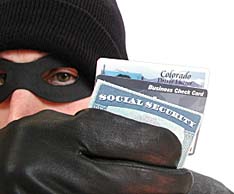 “But he that filches from me my good name/Robs me of that which not enriches him/And makes me poor indeed.” – Shakespeare, Othello, act iii. Sc. 3.
Identity theft is a huge problem in the United States. Did you know that identity thieves stole approximately $21 Billion from victims in 2012? This equates to one incident of fraud every three seconds. That’s scary. In every minute, 20 acts of fraud occur. When you keep adding up the numbers it looks horrific. Most victims don’t know until it’s too late that they have become a victim of identity theft. If you are one of the victims of identity theft, we have listed a few things for you to do:
- Contact the Federal Trade Commission (FTC) whether online or by phone, 877-438-4338.
- If necessary, send mail certified and request a return receipt.
- Contact your bank and let them know of the fraud.
- Contact all of your credit card companies and credit reporting agencies (Equifax, Experian and Trans Union) and inform them of the situation.
- Contact your insurance companies and make them aware of the theft.
- Keep a detailed filing system. Keep all your originals, only send copies of originals to requestors.
- Follow all deadlines. Keep a timeline of when you spoke to a person and set up a follow up date.
Following the above guidelines will help minimize any future thefts. We hope that you never have to use this list.
Read more
 Any travel during winter months is risky. Storms come out of nowhere, roads become icy quickly and inexperienced drivers take unwise risks. Be prepared to stay safe on the road thanks to eight winter driving tips.
1. Check the forecast. In less than a minute, you can find out if you’ll be driving in fog, snow or ice. You can also discover which roads are blocked and if you need to find an alternative route to your destination.
2. Slow down. In snowy conditions, cut your speed in half to ensure you have adequate stopping distance. Don’t go so slow, though, that you lose momentum on grades.
3. Know skid recovery. Braking on slippery roads can cause your vehicle to slide instead of stop. If this happens, you need to know how to recover. Stay off the brake and steer your vehicle the way you want it to go.
4. Stay smooth at the controls. Pounding on the brake, shifting hard and even clenching the steering wheel make winter driving harder than it has to be. Instead, use smooth motions and relax as you drive.
5. Check your tires. Proper tire inflation and tread improve your vehicle’s traction and ability to stay on the wet or icy roads. Check the inflation of your snow tires frequently since cold weather decreases tire pressure, and make sure the tread is at least 1/8-inch. Carry snow chains, too, if necessary.
6. Know your vehicle. Every car and truck handles differently. Before heading out in winter weather, make sure you know how your vehicle handles. Know where the windshield wipers, defrost button and four-ways are, too.
7. Pack survival supplies. If you’re stranded or in an accident, you need a few supplies. Definitely store a snow shovel, sand or litter and lock de-icer in your vehicle. Consider packing a portable power source, flashlight, waterproof matches, tow rope, first aid kit, energy bars and blanket also. If you do get stranded, wait for help to arrive.
8. Stay hydrated. Dehydration can make you drowsy and reduce alertness. Drink water before you head out and carry a bottle or two with you so that you can stay alert.
Winter driving can be dangerous, but follow these eight tips to stay safe. Remember to check in with your auto insurance agent, too. Update your policy as you prepare for whatever winter throws at you on the road.
Read more
