 You already cook meat on the grill. Why not add fruits and veggies? They help you boost your summer nutrition and taste delicious.
Choose Fresh Produce
Whether you decide to grill pineapple, watermelon, corn or asparagus, make sure it’s fresh. Ideally, the produce you grill should be firm and picked within the past three days.
Brush on the Oil
You’ll want to stock quality canola, olive or coconut oil in your pantry before you grill produce. It adds extra flavor to your grilled produce and a light coating works together with foil packets or a non-stick grate to ensure the fruits and veggies don’t stick to the grill.
Mix a Few Marinades
In addition to the oil, prepare a few marinades. Olive oil infused with herbs, raspberries, mint or other flavorings, honey and low-fat or Greek yogurt enhance the taste of your grilled produce.
Leave the Skin On
The skin of many fruits and veggies contains healthy nutrients. So, leave veggie skins on when you grill them and maximize the nutrient content of the grilled veggies you eat. Most fruits, however, grill better without the skin.
Pre-Cook Some Veggies
Certain veggies cook more evenly on the grill when you pre-cook them in the kitchen. To prep asparagus, beets, broccoli, parsnips, potatoes, squash and carrots for grilling, steam or blanch them until they’re al dente. Alternatively, tomatoes, sweet potatoes, peppers, mushrooms, onions and eggplant will cook evenly when you grill them raw.
Use the Right Temperature
When you cook fruits and veggies over moderately hot coals, the outside could cook faster than the inside. You’ll want to rotate the produce between direct and indirect heat so that each piece cooks evenly and completely.
Whether you cook for one or 100, prepare fruits and veggies on the grill and enjoy a summer nutrition boost. They help you stay healthy, and you’ll feel good knowing that you’re helping your family and friends stay healthy, too.
Read more
 Americans are taking to the outdoors in record numbers this summer, mostly because of COVID-19 indoor restrictions and the cancellation of organized sports.
So, this summer you and/or your family and friends may be hauling a trailer. It secures your ATV, boat, a second car, camper, horses or camping gear. Before you hit the road, make sure your trailer is properly insured.
Why do you Need Trailer Insurance?
Many states accept your auto insurance coverage when you haul a trailer behind your insured vehicle. Your homeowners or renters insurance policy may cover the items you haul. However, this coverage is typically only for liability. Plus, you face several risks when you haul your trailer on the road.
- If you’re not used to hauling a trailer, your risk of causing an accident increases.
- You may turn too sharply and damage someone’s property.
- You could hit a slippery stretch of highway that causes your trailer to slide into another vehicle and damage it or push it off the road.
- While unloading or loading your trailer, you could damage it or the item you’re hauling.
These and other accidents are possible. Trailer insurance adds valuable protection that gives you peace of mind as you travel.
What Type of Coverage is Available?
The type and amount of trailer insurance you need depends on your trailer’s type and size and on the value of the items you will haul. Typical trailer insurance provides several valuable coverages.
- Liability – Cover the costs associated with bodily injuries or property damages your trailer causes to other people or their property and belongings.
- Comprehensive – Repair your trailer if it is damaged from theft, vandalism, fire or weather.
- Collision – Repair your trailer if it is damaged during a traffic collision.
- Contents Coverage – Pay to replace damaged items that are stored on or hauled in your trailer.
How do you Purchase Trailer Insurance?
Talk to your auto insurance agent about trailer insurance. He or she will review your auto insurance policy’s current types of coverage and limits to ensure it’s adequate for your trailer. Your agent will also review your homeowners or renters insurance policy and ensure it covers the items you are hauling.
If your current policies are not adequate to cover your trailer and its contents, increase your coverage types or limits or purchase a separate policy. You may need to shop around for trailer insurance if your current agent does not carry it.
With trailer insurance, you can travel this summer with confidence. If your trailer causes property damage or bodily injury or if the items you haul are damaged, you can pay for the liability or repairs. Talk to your agent before your next trip to make sure you’re properly covered.
Read more
 Do you have a pile of papers collecting dust on your desk, in your filing cabinet or in a safe? Instead of stockpiling every electric bill, tax return and retail receipt from the last 20 years, learn which papers to keep and which to toss.
Bank records – Shred your checking and saving account statements monthly or after you reconcile your accounts.
Credit card statements – Shred them after you pay the bill except if you need to prove a charitable donation for your tax return.
Health records for humans and pets – Keep medical records and paperwork that documents your health history, including details about medications, immunizations, x-rays, medical tests, surgeries and major health events.
Instruction manuals – Keep these papers until you sell the item.
Insurance policies – Save copies of your auto, home or renters insurance policies to prove you’re covered and to compare coverage during your annual renewal. Shred the old copies when you get new ones.
Investment statements – Shred monthly and quarterly statements but keep annual ones until you sell the investments.
Loan documents – Shred closing documents for loans after you pay them off.
Pay stubs – File with your tax return information until you file your taxes and then shred them.
Retail receipts – Shred or toss receipts after you reconcile your receipt with your budget. Keep them if you need to return an item, purchase items that are eligible for a tax deduction or wish to retain proof of an item’s original cost.
Savings bonds – Keep them until you cash them in.
Tax returns – Retain them and any supporting documents for seven years in case you are audited.
Utility bills – Review each month’s bill for errors then shred them.
Vehicle records – Retain receipts, registration info, titles and maintenance and repair records until you sell the vehicle.
Warranties – Store these until you sell the item.
The following papers you should store in a safe place indefinitely. Consider making copies of these documents, too, and storing them in a location outside of your home.
- Birth certificates
- Social Security cards
- Marriage licenses
- Divorce decrees
- Military service records
- Pension-plan documents
- Estate-planning documents that pertain to your will, power of attorney, end of life and trusts
- Life insurance policies
- Death certificates
Whether you store your papers in a pile on your desk or in a safe deposit box, reduce clutter when you understated which papers you need to keep. For more details on reducing paper clutter while maintaining the protection you need, talk with your insurance agent.
Read more
 COVID-19 has changed the way we are going to remember this Independence day weekend. Governor Newsom has announced stricter restrictions and closures ahead of the July 4th weekend, including a crackdown on mask wearing violations. Public fireworks have been cancelled in most counties.
However, it is a big holiday weekend and Americans will celebrate, here are some safety tips.
Take Precautions While Grilling
Burgers, hot dogs, fruit and pizza taste delicious when they’re grilled. Grab your favorite side dishes and follow a few precautions that ensure you and your guests grill safely.
- – Always supervise the grill when it’s in use.
- – Never grill indoors or in a fully enclosed area such as a garage or tent.
- – Use lighter fluid sparingly and never after the coals are ignited.
- – Keep children and pets away from the hot grill.
- – Remove flammable objects, including trees, from near the grill.
- – Use long-handled tools to handle food.
Use Fireworks Safely (if allowed)
Public fireworks displays are the safest way to enjoy the beautiful colors and terrific booms of this July 4th tradition, especially when you maintain a distance of at least 500 feet between you and the show. Firework displays at home can be fun though too. If you go that route, take these precautions.
- Follow the instructions on the packaging.
- Never allow children to play with the fireworks.
- Stock a fire extinguisher or water supply nearby.
- Wear eye protection when lighting fireworks.
- Remove flammable materials from the area.
- Never point fireworks toward people, animals, vehicles or structures.
- Properly dispose of duds rather than trying to relight them.
Stay Safe on the Beach (if allowed in your area)
Swimming is a fun summer activity, and it’s good exercise. At the beach, lake, public pool or backyard pool, stay safe with these tips.
- – Swim only in designated areas.
- – Obey the lifeguard and all posted signs.
- – Swim sober.
- – Get out of the water during a storm or if you hear thunder or see lightening.
- – Require children to wear life jackets.
- – Don’t dive into shallow water.
Wear Sun Bathing Protection
Picnics are part of many July 4th celebrations. You should also take these protective measures.
-
- – Wear sunscreen that’s at least 15 SPF.
- – Remember to apply sunscreen to your ears, hair part and the tops of your feet.
- – Avoid direct sunlight between 10 a.m. and 4 p.m. when the UV rays are strongest.
- – Reapply sunscreen every two to three hours or more frequently if you’re sweating.
- – Drink plenty of water even if you’re not thirsty.
- – Wear a hat, sunglasses and long sleeves if you have to be in direct sunlight.
- – Watch for signs of heat stroke, including hot, red skin, shallow breathing and rapid, weak pulse.
Please be safe out there, follow the rules and guidelines and have fun.
Read more
 Hiring young people might be tempting for a business. After all, the labor is affordable since kids don’t demand high salaries and won’t need health, retirement and vacation benefits like their older counterparts. Kids are also enthusiastic, willing to do grunt work and able to handle hard labor. Before you hire minors, though, understand the law.
Federal Child Labor Rules
Find the rules about child labor in the Fair Labor Standards Act (FLSA). It divides minors into categories based on their age.
Children under 13 may not be employed unless the job is on a farm or in a business operated by parents or guardians.
Children who are 14 to 15 years old have several restrictions.
- During the school session, they can work a maximum of three hours per day and 18 hours per week.
- Non-school sessions can include eight hours of work per day and 40 hours per week maximum.
- They may only work from 7 a.m. until 7 p.m. or until 9 p.m. from June 1 to Labor Day.
- Hour and day restrictions do not apply for kids who are employed by parents or guardians.
- They may not perform hazardous jobs, including driving motor vehicles, mining, operating certain power tool, logging, manufacturing or meat packing, packaging or slicing.
- State minimum wage guidelines apply.
Children who are 16 to 17 years old can work unlimited hours per day and days per week. Certain hazardous job limitations and state minimum wage guidelines apply.
Children over 18 are considered adults and have no restrictions on work hours or days.
Exceptions to FLSA rules do not apply to kids who work as actors, deliver newspapers or work at home with evergreen materials. Agricultural exceptions also exist.
Paperwork Requirements
If you decide to hire minors, make sure your paperwork is in order.
- Use an official birth certificate, driver’s license or other document to verify the minor’s age.
- Obtain an age certificate from the Department of Labor’s Wage and Hour division.
- Your state may require you or your minor employee to get a work permit available through your state’s Department of Labor.
- Get permission from the minor’s parent and school. The authorization form is available from your state’s Labor and Industry department.
- Retain employment records for at least three years. The information includes the employee’s name, address, occupation, employment dates, pay rate, hours worked and pay received.
Before you hire minors for even small tasks like filing papers or cleaning your office, check the federal laws and your state’s Department of Labor’s website. Talk to your insurance agent and attorney, too, as you make sure you’re following the law.
Read more
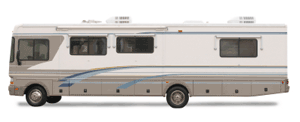 More people are traveling to the national parks (that are open) . It helps with social distancing, but also as the weather gets warmer people want to get outdoors. The stay at home period is over and with the measured opening, relaxing of travel and economic restrictions more Americans are hitting the road with their recreational vehicles.
Your RV is your pride and joy – whether you live in it year round or just take it out a few times a year for those on-the-road getaways. It also represents a significant investment that needs protection against damage or financial risk.
Depending on your needs, you can buy coverage on your RV either as an add-on to your standard Personal Auto insurance or as a separate Recreational Vehicle policy. Either way, since the vehicle is also a home on wheels, it faces a variety of exposures:
- Damage to the vehicle from fire or collision
- Theft
- Liability for injury to third parties from an accident
- Loss of or damage to possessions inside the vehicle (for example, an expensive sound system, laptops or tablet, flat screen TV or other portable valuables). To estimate this exposure, you should take an inventory of these expensive items and list their replacement cost.
- Loss or damage to such external elements as satellite dishes or antennas (some insurers might require separate coverage “riders” on these).
Also, bear in mind that some RV policies have an annual mileage limit, which probably won’t be a concern if you only use your vehicle a few times each summer. However, if you’re on the road year round, you’ll need to consider the impact of this limitation.
If you have any questions on the amount and type of RV insurance you’ll need, feel free to get in touch with us.
Read more
