 What do you most appreciate about being a dad? With Father’s Day approaching on June 15, there’s no better time than today to protect your health. Learn about the top health risks men face and ways to combat these risks so that you can enjoy many more years with your children.
1. Heart Disease
The top killer of men, heart disease, stroke and peripheral vascular disease are preventable. However, you will need to address the leading causes of heart disease. Do that when you stop smoking, lower your blood pressure, reduce your bad cholesterol levels and get your diabetes under control. An exercise regimen and healthy diet also help.
2. Lung Cancer
The top cancer among men is also the most preventable. Because smoking is the cause of 90 percent of lung cancer cases, talk with your health insurance company about available cessation programs and tools that assist you in getting healthy today.
3. Prostate Cancer
The second-leading cancer in men, prostate cancer can be prevented when men undergo an annual prostate-specific antigen (PSA) blood test and rectal exam. These tests should begin by age 50 or sooner if this cancer runs in your family or if you eat a high-fat diet.
4. Diabetes
If diabetes isn’t controlled, you could contract vascular disease, which leads to heart attacks, amputations, blindness, kidney failure and nerve damage. Medical treatment, a balanced diet, routine exercise and an active lifestyle can help you prevent or control diabetes.
5. Suicide
Four times as many men than women commit suicide. Men are also more likely than women to resist treatment for depression, frustration and other challenges. Asking for help is a sign of strength and can help you cope with life before you feel self-hated or a desire to commit suicide.
As a dad, focus on your health this Father’s Day. Schedule a physical exam with your primary care physician, and commit to living a healthier lifestyle. Your children will thank you.
Read more
 June is the most popular month of the year for weddings, and you want your special day to be perfect. What happens, though, when things don’t go as planned? Purchase wedding liability insurance to cover your loss or hardship.
Who Does Wedding Liability Insurance Protect?
The average wedding costs $20,000. Traditionally, the bride’s parents paid for the wedding. Today, though, the couple usually foots at least a portion of the bill. Protect your investment with wedding liability insurance.
This coverage can protect you and the venue, including the rehearsal dinner location and reception hall. Whether you get married in a traditional church or synagogue, plan a destination wedding or choose a nontraditional venue like a museum, park, zoo or forest, you can be covered if accidents happen.
What Does Wedding Liability Insurance Cover?
Accidents and other unfortunate incidents can wreak havoc on your wedding day.
- A guest may trip and injure himself while walking down the aisle before the ceremony.
- Someone may get sick after eating the shrimp cocktail appetizers.
- A bridesmaid might knock over an expensive item in the reception hall as she tries to catch the bouquet.
- One of your guests may drink too much and fall while dancing.
These and other accidents could result in expensive lawsuits or medical liabilities for you and your loved ones.
Purchase liability insurance to protect yourself. The policy gives you peace of mind that even if something happens, you have financial coverage. It’s not a fun expense like your dress, cake or rings, but it is important as you start your marriage on solid financial footing.
What are Some Features of Wedding Liability Insurance?
When choosing liability coverage, look for a policy that meets your needs. There are several features you may wish to consider.
- It should cover you, your soon-to-be spouse and both sets of parents.
- The locations of your rehearsal dinner, ceremony and reception should be covered for one low price.
- It can be purchased up to the day of your wedding.
- The coverage may include liquor liability to protect you and the venue against alcohol-related accidents.
- If you purchase coverage online, a certificate of insurance is emailed to the venue.
- You may receive a discount if you also purchase wedding cancellation insurance.
- The limit options should be flexible to meet your needs and budget.
Your agent can discuss all these details with you as you choose the features that you want.
How do you get Wedding Liability Insurance?
We can provide you with this valuable coverage. Get in touch today about how to get a wedding liability insurance policy that protects you on your special day.
Read more
 A nationwide study by the Washington National Institute for Wellness Solutions (IWS) found that only 10% of middle-class workers believe that they have enough savings to cover medical emergencies and the long-term cost of a critical illness.
Diseases such as cancer, heart disease, or Alzheimer’s can be life-changing financially, as well as personally. Although most respondents said that, even with Medical and Disability Income insurance, they would need out-of-pocket funds to cover their expenses from a serious medical condition, they lack the savings to fall back on. Nearly half (45%) felt they would never recover financially from a battle with Alzheimer’s or dementia; for cancer, the percentage is 38%.
Out of 1,001 survey participants between the ages of 30 and 66 and annual household incomes of $35,000 to $99,999, 75% have saved less than $20,000. Among these, half have less than $2,000 in savings – and one in four have no current savings.
One-fourth of respondents “did not know” what resources they would use to help offset their expenses, says IWS. Others would use credit cards (28%), loans from friends and family (23%) or financial institutions (19%) to help cover what insurance doesn’t.
Washington National Insurance Co president Barbara Stewart advises employees to give themselves a reality check about the financial burden of critical illness. “Find out what your current insurance will – and will not – cover” says Stewart, “and then assess your overall financial health. Identify the gaps between the resources you would need and the options you have.”
We recommend that you offer your employees Critical Illness coverage as a voluntary benefit that will provide an extra layer of financial protection when they face the challenge of a serious disease. Give us a call.
Read more
 The Federal Emergency Management Agency (FEMA) previously reported that over 40 percent of businesses affected by a disaster do not reopen. Of course, the COVID-19 pandemic is unprecedented and that number is likely to be higher as the economy reopens.
We hope these tips will help, as America re-opens.
Seek Assistance
Several organizations are available to help your business rebuild after a disaster strikes. Here is a link to federal information on disaster assistance – https://www.sba.gov/funding-programs/disaster-assistance
- The Small Business Administration – Apply for a low-rate, long-term loan through the SBA’s Office of Disaster Assistance.
- Your bank – Talk to your banker about a low-cost loan or other financial assistance. Paycheck Protection Plan is still available.
- Insurance agent – File a claim and discuss your ongoing needs.
- Community – Ask your community, including neighbors, clients and vendors, to help clean up, rebuild and return to business as usual.
When disaster strikes, your business must be prepared. These steps can help. If you don’t have these steps in place, consider implementing them today in preparation for the next disaster.
Review Your Business Contingency Plan
If you don’t already have one – create a business contingency plan. It’s part of your emergency preparedness strategy. This backup plan outlines the steps you’ll take if you ever face a disaster, and it will address:
- Business continuity. COVID-19 or other pandemics do not qualify for this coverage. It may be a while before we have clarity on this from insurers and courts.
- Emergency response
- Crisis communications
- Information technology
- Incident management
- Employee assistance
Some of the questions this document answers include:
- Who is the go-to contact?
- How will we accept, fill and track orders?
- What alternatives are available if our vendors are non-operational?
- What’s the best way to secure data?
Examine your business contingency plan today and make sure it addresses all your needs. With it, your business can regroup quickly after a disaster strikes.
Review Your Insurance and Risk Protection
You probably carry typical business insurance such as liability, property and employee coverage. Read these policies carefully, and store copies of your insurance documents in a safe place where they are easily accessible any time.
If you see gaps in your coverage or notice that you don’t have coverage for certain disasters, purchase additional policies. An umbrella coverage or flood insurance are two examples of insurance products that protect your business. For more details on how to prepare insurance-wise for an emergency of any kind, talk to your insurance agent.
Read more
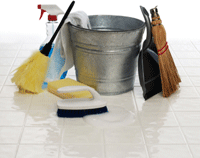
March 19 was the first day of spring – which makes this a good time to think about some “spring cleaning” around your workplace.
A thorough cleaning can enhance safety by eliminating hazards. Why not welcome in the spring by taking a careful look at some occasional and infrequent housekeeping tasks?
For example, clutter builds up in most work areas, creating such hazards as fire, tripping and blocked exits. Spring cleaning is the perfect time to dispose of:
Trash. Got a pile of broken pallets on the loading dock? Dumped a lot of construction debris on the back lot? Remove anything not in use that has piled up from the site.
Equipment. That frayed sling or wobbly ladder might be out of service, but if it’s not easy to repair, why is it still there?, even if it has a “do not use” tag on it, someone in a hurry or not paying close attention might use it anyway — and regret it afterward.
Chemicals. Old or unused chemicals create unnecessary workplace hazards. They might be flammable or toxic. What’s more, many chemicals that aren’t dangerous when purchased can become so as they deteriorate over time. Dispose of chemicals that are no longer in use, have passed their use-by dates, or have missing or illegible labels.
Clean and Repair. Besides clearing out the clutter, your spring cleaning can address infrequent needs that will boost worker safety and health. For example, maybe it’s time to clean and/or service:
Signs and labels. Signs and labels are important for workplace safety, warning workers of low clearances, identifying machinery controls and power sources, showing workers which direction materials in pipes are flowing, and much, much more. However, they also take a lot of abuse. Replace damaged signs and illegible labels, clean signs that have become too grimy to read, and re-hang signs that have been knocked askew.
Heating, ventilation, and air conditioning (HVAC) systems. A health hazard evaluation by the National Institute for Occupational Safety and Health found that properly maintained HVAC systems were associated with a decreased incidence of lower respiratory symptoms, allergies, and asthma among building occupants. Proper maintenance controls mold, bacteria, allergens, and other contaminants within the system.
Offices. University of Arizona researchers found that office phones, computer keyboards and mice, and desktops harbor 400 times more infectious bacteria than office toilet seats. Yet in most offices, vacuuming and emptying the trash are the only regular cleaning performed. Encourage workers to take disinfecting wipes to office surfaces — not just once a year, but daily if possible — to reduce infectious illness transmission in the workplace. Also, have your cleaning crew do an extra thorough job from time to time.
Remember, the cleaner your workplace, the safer your workers. Our risk management professionals would be happy to chat further– just give us a call.
Read more
 Short-term disability insurance is an important resource you may have heard about through your job or private insurance agent. Understand what short-term disability insurance is as you decide if it’s right for you.
Short-Term Disability Insurance Defined
Short-term disability insurance is a benefit that covers a temporary disability caused by an illness or injury. Usually in effect for a short time period, it pays the policy holder up to 66-2/3 percent of their weekly earnings. It may also include a benefit that helps an ill or injured employee return to work.
The waiting period to file a short-term disability insurance claim is up to two weeks after you become ill or injured. Be prepared to show medical proof of your illness or injury. Benefits usually last from three to six months. Your policy will have a maximum per-month benefit cap.
Why You Need Short-Term Disability Insurance
Short-term disability insurance is designed to provide financial assistance if you suffer an illness or are injured. The top five reasons people purchase short-term disability insurance include:
- Pregnancy
- Injuries
- Joint disorders
- Digestive issues
- Cancer
If one of these or any illness or injury affects you and you have to take time off work, do you have enough financial resources to manage your living expenses and other financial obligations? In essence, short-term disability insurance protects you and your resources. It covers your living expenses and gives you peace of mind until you can return to work.
An Example of how Short-Term Disability Insurance Works
Here’s an example of how short-term disability insurance can help you.
Let’s say you acquire a bad infection and must be on bed rest for a few weeks. Instead of worrying about money, tapping into your savings, racking up credit card debt or pushing to return to work before you’re healed, rely on short-term disability insurance.
Your policy only covers a portion of your weekly income, but it is a big help. If your salary is $32,000 with weekly gross earnings of $615.38, your weekly short-term disability insurance benefit will be approximately $406.15. You can use that money to pay any expenses, including rent, groceries or other bills.
Who Should Buy Short-Term Disability Insurance?
Short-term disability insurance is important for almost anyone, especially if you don’t have a big nest egg saved for emergencies. Review your financial portfolio with your financial advisor as you decide if a short-term disability insurance policy is right for you.
How to Buy Short-Term Disability Insurance
Talk to your Human Resources manager about short-term disability insurance. You can also purchase a policy through your personal insurance agent. It’s invaluable coverage that protects you and your financial security.
Read more
