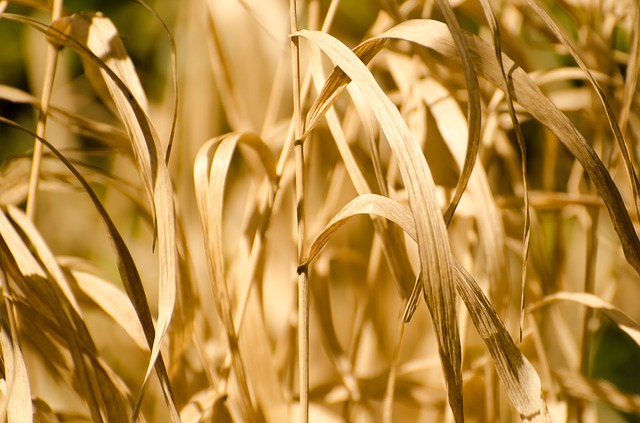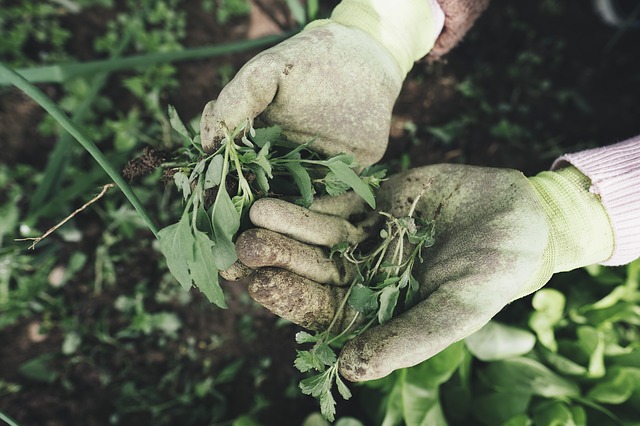
As a farmer or rancher, you may produce a variety of products. Maybe you grow grain, flowers or fruit, raise cattle, horses or alpacas, or manage fish ponds, chicken barns or a custom farming fleet. A farms/ranches business owners policy is essential for protecting your livelihood.
What is a Farms/Ranches Business Owners Policy?
A regular homeowners’ policy covers your home if it’s damaged, and it may give you some liability coverage. This policy won’t give you the protection you need for your farm or ranch business, outbuildings or livestock, though. You need a specialized farms/ranches business owners policy with several layers of protection.
What Does a Farms/Ranches Business Owners Policy Cover?
Farm and ranch owners may customize their business owners insurance policy. In general, your farms/ranches business owners policy covers:
House – Repair or replace your farm or ranch house and any possessions
Liability – Cover medical and legal expenses you may incur if someone is injured while visiting your farm or ranch.
Livestock – Receive financial reimbursement if your livestock are stolen, attacked by dogs or wild animals, accidentally drown or are shot, suffer electrocution or die during a natural disaster or collision.
Machinery and equipment – Replace damaged, lost or stolen tractors, wagons and other machinery and equipment you own, borrow, rent or lease for farm or ranching activities.
Structures – Cover farm/ranch structures, including barns, pens, fences, silos, machine sheds and other buildings, that may be damaged, stolen or vandalized during a weather incident or other incident.
Additionally, you may customize your farms/ranches business owners policy with a schedule that’s based on your specific farm or ranch operation. If something on your farm or ranch is not listed on the schedule, it may not be covered if it’s damaged, lost, stolen or vandalized.
Ask your insurance agent about these optional coverages, too.
- Accidental Direct Physical Loss
- Amendatory Deductible on Cab Glass
- Chemical Drift
- Custom Farming
- Crop Dusting
- Equipment Breakdown
- Extra Expense
- Fire on Growing Grain
- Hired Auto
- Incidental Business
- Limited Pollution Liability
- Loss of Earnings
- Seasonal Coverage
Where do you Buy a Farms/Ranches Business Owners Policy?
A farms/ranches business owners policy is a valuable investment. To purchase a policy, talk to your insurance agent. Discuss your unique needs, business and budget and create a policy that’s right for you. For example, you may choose a policy with high liability limits if you conduct school tours on your farm or ranch, and the size of your farm or ranch affects the amount of coverage you will buy.
A farms/ranches business owners policy gives you peace of mind and valuable protection for your home and your business. Understand what it is as you operate your farm or ranch.
Read more
Summer Weather Safety Tips
Severe weather causes thousands of injuries and hundreds of deaths each year in the United States. Stay safe this summer by taking the following precautions:
- Create a disaster plan and a disaster supplies kit. Check the American Red Cross website for guidance.
- Identify a safe place to take shelter.
- Check the weather forecast before working outdoors.
- Set up severe weather alerts on your cellphone.
- Purchase a National Oceanic and Atmospheric Administration (NOAA)
“Weather Radio All Hazards” receiver unit with a warning alarm tone and battery.
Many Farmers Upset Over Cuba Policy
On June 16, 2017, President Donald Trump signed a presidential directive rolling back parts of former President Barack Obama’s efforts to improve the United States’ trade relationship with Cuba. Farmers saw the directive as a step backward, as it is expected to tighten restrictions on exports and complicate agricultural trade.
Shipments of U.S. grain and soy to Cuba have soared between 2016 and 2017, thanks to Obama’s 2014 diplomatic breakthrough. Within the first four months of 2017, the United States shipped 142,860 tons of grain and soy to Cuba, up from 49,090 tons during the same period of 2016. Although U.S. farmers have just gotten a taste of the profitability from exporting to Cuba, Trump’s move breakthrough is expected to cost U.S. farmers $125 million per year.
President of the U.S. Grains Council Tom Sleight said in a recent statement that, “Trump’s move could cut off near-term sales and stymie economic development that would drive longer-term demand growth.” Although the amount of exports to Cuba are small in comparison to total U.S. exports—corn exports were close to 56 million tons last year—every bit helps as farmers face a decline in farm income for the fourth consecutive year.
$20 Million Raised for Vertical Farms
Indoor agricultural startup Bowery has raised $20 million in Series A funding to build more farms, plant more crops and hire more people. The urban farming startup is one of many that intend to reimagine farming by growing produce vertically in warehouses across the country, as opposed to planting crops in sprawling fields that are reliant upon good weather.
Co-founder Irving Fain stated that since vertical farms can be built in any city, produce would be more accessible to customers and reach them more quickly.
According to Research and Markets, the vertical farm market is expected to grow to $5.8 billion by 2022.
Read more
During a recent visit to Wisconsin, President Donald Trump vowed to defend American dairy farmers who’ve been affected by Canada’s trade practices. Canada’s dairy sector is protected by high tariffs and controls on domestic production to support prices that farmers receive.
Last year, Canada’s dairy farmers agreed to sell milk ingredients used for cheesemaking to Canadian processors at prices competitive with international rates. Industry groups in New Zealand, Australia, the European Union, Mexico and the United States complained the new, competitive prices undercut exports to Canada.
The U.S. dairy industry groups want Trump to urge Prime Minister Justin Trudeau to end Canada’s pricing policy that has disrupted many U.S. dairy exports. They’re also asking for a prioritization of dairy market access in North American Free Trade Agreement talks. Trump has already threatened to eliminate the trade agreement with Canada if it doesn’t change its trade policies.
Ottawa’s ambassador David MacNaughton blames U.S. producers’ problems on overproduction rather than Canadian policy. The Dairy Farmers of Canada said it was confident that Ottawa would continue to protect and defend the dairy industry.
Pace of Corn Planting is Behind
According to the U.S. Department of Agriculture’s weekly Crop Progress Report, every corn-producing state in America is behind last year’s planting pace, with the exception of Indiana.
The state lagging behind the most is Missouri, with only 17 percent of its corn crop planted as of Easter Sunday. At the same time last year, Missouri farmers had planted 53 percent of the state’s corn crop.
North Dakota, South Dakota, Michigan, Wisconsin and Ohio didn’t have planting data listed in the Crop Progress Report at the time of publication.
Planting Safety Tips
As farmers prepare for planting season, it is worth remembering the following safety tips:
- Be mindful while transporting goods on public roadways.
- Watch for children, as they’re often attracted to large, noisy equipment.
- Follow instruction labels when applying products such as pesticide, herbicide or fungicide. Consider keeping photos of the instructions on your smartphone for convenience.
- Service all farm equipment regularly.
- Store fuel away from machine sheds and other buildings.
- Get adequate amounts of sleep, and follow a healthy diet.
Read more
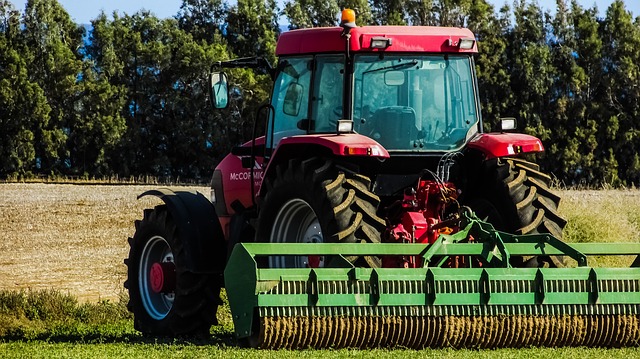
Even though farm machinery manufacturers try to ensure that their products are safe by equipping them with safety guards, agricultural work presents many hazards. Many times, workers suffer injuries because of human error from taking a shortcut, ignoring warning signs, not paying attention or not following safety rules.
Here are some of the most common farm machinery hazards, as well as several safety recommendations to reduce your risk of injury:
Shear Points and Cutting Points
- Shear points occur when the edges of two objects move close together and can cut soft material (example: auger).
- Cutting points occur when an object moves forcefully and is able to cut (example: sickle blade).
To avoid injuries, remain alert while operating machines with shear and cutting points. Also, advise others to watch out because some cutting machinery can throw objects while in use.
Pinch Points
- Pinch points are created when two rotating objects move closely together, one moving in a circle.
- Hands and feet can get caught in pinch points, or other body parts can get pulled into pinch points when loose clothing becomes entangled in the machine.
To avoid injuries, wear tight-fitting clothing and never reach over or work near rotating parts. Also, identify places where pinch points can occur and avoid these areas.
Wrap Points
- When exposed machine parts rotate, they create wrap points. Loose clothing can get caught in the moving parts, and consequently pull workers into the machine.
To avoid injuries, shield potential wrap points before beginning your work. If wrap points cannot be shielded, paint them a bright color to remind yourself that they are there.
Crush Points
- Crush points occur when objects move toward one another, or one object moves toward a stationary object. Workers can be crushed in between.
Block equipment securely to avoid fatal crushing injuries.
Free-wheeling Parts
- Some equipment with moving parts continues to spin after being shut off.
To avoid injuries, wait until the machinery has completely stopped before touching it. This can take several minutes.
Hydraulic Systems
- When servicing, adjusting or replacing parts on machines with hydraulic systems, workers can face high-pressure blasts of hydraulic oil. This can cause injury and/or burns to the skin.
To avoid injuries, do not inspect hydraulic hoses with your hands because the hydraulic fluids can puncture the skin.
Take time to become familiar with the potential hazards of the machinery you work with and remember to always put safety first!
Read more
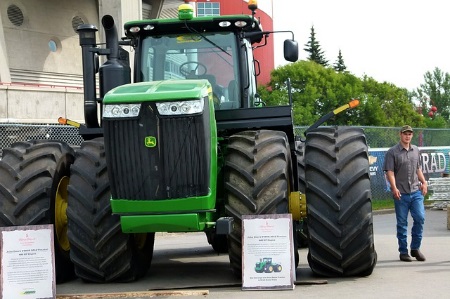 In most aspects of life there exists insurance to help in protecting assets in the case of damage or unfortunate loss. When it comes to farms this is no exception; however, the typical business insurance or ordinary car insurance will not meet the bar when it comes to insuring the farm and tractors. It is advisable that if your business is farming or you are thinking about purchasing a weekend farm getaway that you consult with an insurance professional with experience in farming.
There is a famous saying that “knowing is half the battle,” so our goal is to review a few areas that have specific insurance needs. This way when you meet with an insurance professional you can get on the right track. As a general rule farm property is covered under specifically qualified policies to include farm machinery, livestock, farm trailers and even irrigation equipment. Depending on the coverage there may even be automatic coverage for new equipment up to $100,000 for the first 60 days – similar to a new born child being under the parents insurance until the child is individually registered. There are other types of equipment such as antennas and satellite radio devices typical on farms in extremely rural areas. In addition to coverage for these types of items there are other optional coverages that should be considered.
Depending on the exact type of farm things like chicken coups, silos, fences and feed racks have the ability to be covered under a farm policy. For those living in the city the details of a chicken farm and the equipment to keep it functioning are just not a reality. However for the farmer, these are essential aspects to their daily life. This is precisely why insurance companies carefully address all the details involved in farm life. Additional coverages are even defined as to the type of use of the equipment, because farm life can vary drastically.
One of our insurance professionals will review your farm and equipment to explain all available coverages and its intricacies.
Content provided by Transformer Marketing.
Read more
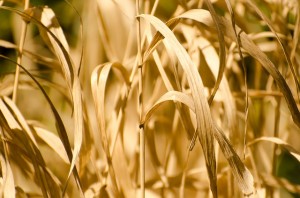 As with any business, agricultural producers face risks of all kinds. However, the two most important risks facing farmers are yield and price. Fortunately, producers can buy insurance that reduces their exposure to low yields or low prices. Unavoidable risks protected by crop insurance include:
* Heat
* Hail
* Drought
* Frost
* Freeze
* Pests
* Excess Moisture
Since the 1930s, crop insurance has been available to agricultural producers in the United States. However, it was in the 1990s that the United States government promoted crop insurance by offering new products and more insurance premium subsidies.
The Risk Management Agency (RMA), is part of the United States Department of Agriculture is the governing authority for the crop insurance program and is in charge of the Federal Crop Insurance Corporation (FCIC). Private insurance companies contract with RMA to service crop insurance sold through independent insurance agencies. As with other disaster insurance programs, such as the National Flood Insurance Program, the private sector sells crop insurance, as the private sector is more efficient and rapidly adjudicates claims.
Crop insurance is unique in that companies selling Federal Crop insurance have a mandate to sell to any farmer, even those who are at high risk, at the same premium set in advance by the Federal government. Even farmers in high-risk drought areas such as California get policies without special underwriting standards or higher premium rates.
Without crop insurance, agricultural producers would have difficulty in achieving financial stability, a more difficult time in getting and repaying loans. Crop insurance allows agricultural producers to help forward marketing.
Essential facts about United States Crop Insurance
* Farmers share in the cost of the program
* Agricultural producers are personally responsible for managing risk
* Under the program, the producer gets tailored risk management solutions
* Quick indemnity pay outs
* The crop insurance program is dynamic; it can quickly adjust and self-correct
* Payments to producers never exceed actual insured losses
* Insurance is allowable collateral for loans
* Growers have no payment limits that cut protection from losses
* Insured growers have the benefit of private sector efficiency
* The program has the flexibility to meet World Trade Organization support limits
The United States crop insurance program provides so much more than just protection from risk. It plays a vital role in keeping the agriculture industry functioning.
Contact our office to make sure you are completely covered.
Content provided by Transformer Marketing.
Sources: http://www2.ca.uky.edu/cmspubsclass/files/cgwalters/Understanding%20Crop%20Insurance.pdf, http://www2.ca.uky.edu/cmspubsclass/files/cgwalters/Understanding%20Crop%20Insurance.pdf, http://www.cropinsuranceinamerica.org/just-the-facts/is-crop-insurance-like-other-forms-of-insurance/, https://www.cropinsurers.com/images/pdf/focus-on-congress/Importance_of_Crop_Insurance_in_the_US.pdf
Read more