 (I work as a claims adjuster for a major insurance company and have made a liability decision on a minor parking lot accident in which both parties told the exact same story. Unfortunately my client was majority at fault, but we would only be paying 60% of the other party’s repairs. I call my customer and leave a message regarding the liability decision and my phone number. He calls me back a short time later.)
Customer: “I can’t believe you did this!”
Me: “I’m sorry, sir?”
Customer: “How could you do this without calling me first! You decided I was at fault!”
Me: “Sir, I took a recorded statement from you and from the other party and outlined exactly the kinds of things would factor into the decision.”
Customer: “But you didn’t call me first!”
Me: “I did call you; I took your statement.”
Customer: “But then you made a decision!”
Me: “Sir, it’s my job to make a decision, as you know, and I don’t need your permission or approval to do so.”
Customer: “I know! But I can’t believe you did that!”
Me: “Sir, are you contesting liability? You both told the exact same story and given the facts and damage to both vehicles, you’re both telling the truth. No matter how we look at it, you were backing out and didn’t pay attention to what was behind you.”
Customer: “I know! I agree that’s what happened!”
Me: “Then why are you upset? How can we resolve this?”
Customer: “You made this decision!”
Me: “Sir, I had to make a decision. Again, are you questioning the liability decision? Do you have other information to add?”
Customer: “No!”
Me: “Sir, then please tell me what you want me to say because I simply don’t understand how to resolve this for you.”
Customer: *pauses* “Well, you know what? I’m just mad about the whole thing. You haven’t done anything wrong.”
Me: “Okay…”
Customer: “I’m really sorry. I work in customer service and I hate when people call and yell at me, and that’s what I’m doing to you. You made the right decision, I accept it, and I’m sorry for yelling at you. I just… needed to yell at someone.”
Me: *trying not to laugh* “Well… thank you, then. I can definitely understand that!”
Customer: “Thank you for being so patient with me. I’m really sorry, again, to have yelled at you and hope the rest of your day goes better.”
Me: “Thank you.” *we go on to resolve claim payment and I explain repair procedures, etc.*
Manager: “I heard you talking and picked up to listen in. I didn’t know what he was angry about either!” *laughing* “I’ll put a few notes in file about how you handled the call.”
(A few minutes later, a team leader comes up to my desk.)
Team Leader: “Hey, I just wanted to let you know I just took a call from a guy who said he just yelled at you for no reason. He wanted to make sure your supervisor knows he thinks you’re excellent at your job, you’ve provided great customer service and he’s happy with the outcome of his claim. I’m passing this on to your team leader and manager.”
(I STILL laugh about that call, and think it’s one of the reasons I was promoted shortly afterward. Thank you, sir!)
Content provided by http://notalwaysright.com/tag/insurance
Read more
 Keeping in mind that there are many types of coverage and each individual consumer will have different specific insurance needs, there may be several reasons to consider consolidating your various policies with a single carrier. For most people, the pros of consolidation usually outweigh the cons, but here are some points from both sides:
Cost. Consumers often find there’s a cost benefit in consolidating their coverage with a single carrier. While the exact number will vary from company to company, it’s very possible to save 15% or more. Specialist companies still exist, but many generalist insurers have diversified their product lines to include an array of business and personal insurance and financial products. Since an insurance carrier is gaining customer loyalty and reducing their marketing costs when an existing customer purchases additional products, they’re usually willing to pass a portion of their savings on to their consumers.
Gaps. Depending on the types of coverage you’ve purchased and your unique situation, certain coverage gaps could be reduced when you consolidate your insurance portfolio. Take purchasing General and Professional Liability through the same carrier as an example. An accountant, for example, would have little risk of their professional services leading to property damage or bodily injury, but a travel agent, for example, routinely makes professional recommendations that could have physical consequences for their clients. The travel agent might be unaware that a lodging they recommend to a client is undergoing renovations. The client slips and falls due to unsafe conditions and sues the travel agent for not knowing the condition of the lodging before recommending it. If the travel agent has General and Professional Liability through two different carriers, then he/she may find the two carriers pointing the finger in opposite directions and disclaiming coverage. Whereas, if the travel agent has both coverages under the same carrier, then the disclaiming concern is moot since there isn’t another company to point the finger at.
Tailoring. Many carriers have learned to anticipate the common problems associated with coverage gaps, such as in the example discussed above. These carriers have created tailored packaged policies or programs with multiple different coverage options. These options interlock, but don’t unnecessarily duplicate coverage or dangerously leave gaps between coverages. Umbrella policies perform best when written by the carrier of your primary coverage(s).
Cons. As with most everything in life, there are cons to consolidation. It’s important that you look at the financial strength of the insurance carrier. If an insurance carrier is poorly rated by any of the rating services that monitor insurers, then the increased risk of going with an insurer that has questionable financial strength might outweigh any of the cost, gap, and tailoring pros. Another con is that the insurer might quickly change their hunger for a certain product and leave you having to find replacements for multiple policies. Research the company’s track record – have they typically stuck it out during bad and good times or have they timed the market to make a quick dollar and exit? Although most generalist insurers have diversified their offerings, it’s possible to miss out on some coverage benefits still only being offered by specialists.
In closing, consider the above points and how each could or wouldn’t meet your needs. In most cases, you’ll find that coverage consolidation and the right carrier creates a winning scenario for all parties involved.
Content provided by Transformer Marketing.
Read more
 From drinking or texting while driving to using a designated driver, there is a disconnect between what teenagers acknowledge as risky behavior and what they actually admit to doing behind the wheel, according to a survey from Liberty Mutual Insurance and SADD (Students Against Destructive Decisions).
While teens know certain behaviors and situations are risky, many don’t apply that knowledge when it comes to getting behind the wheel. For example, a good number say that it is acceptable for a designated driver to have alcohol or that a designated driver is simply the most sober person in a group. Also, a majority of teens admits to using a cell phone while driving despite knowing the danger.
Drink and Drive
According to the survey results, teens claim to understand the dangers surrounding drinking and driving:
- The majority (86 percent) of teen drivers consider driving under the influence of alcohol to be extremely or very distracting
- Only 1 percent of teens define driving under the influence of alcohol as acceptable
- Only 5 percent of teens admit to at least sometimes driving under the influence of alcohol
However, when asked about actual driving behavior involving alcohol, driving “under the influence” takes on a different definition:
- One in 10 teens who say they never drive under the influence acknowledge that they occasionally drive after having an alcoholic beverage
- More than two-thirds of teens (68 percent) who admit to driving under the influence of alcohol say they have done so after having more than three alcoholic beverages
According to the National Highway Traffic Safety Administration, a quarter of fatal crashes involving young drivers resulting from drinking and driving.
“While many teens seem to have gotten the message about these driving dangers, the real challenge is to make sure they understand that even a sip of alcohol or a quick text at a red light can be deadly,” said David Melton, driving safety expert with Liberty Mutual Insurance and managing director of global safety. “Teens need to realize it’s not acceptable to put an allowable limit to their engagement in these behaviors – they need to be eliminated entirely when they are behind the wheel.”
Defining ‘Designated’
While underage drinking is never acceptable and always illegal, many teens and parents consider a designated driver to be a safe alternative to impaired driving. In fact, more than half of parents (58 percent) encourage teens to use designated drivers to avoid driving under the influence, and almost half of teens (47 percent) admit to using one.
However, teens’ definitions of “designated” are concerning:
- Designated Means “Basically Sober”: 21 percent of teens define their designated driver as allowed to have “a little” alcohol or other drugs, as long as they aren’t too impaired to drive
- Designated Means “Least Impaired”: 4 percent of teens describe their designated driver as the “most” sober person in the group
“With teens reporting these lax definitions of what it means to be ‘under the influence,’ a zero tolerance approach is the only answer to prevent potential tragedy,” said Stephen Gray Wallace, senior advisor for policy, research and education at SADD. “The parents and community have a responsibility to initiate and maintain an open dialogue with teens about exactly what driving under the influence means.”
SADD is peer-to-peer youth education, prevention, and activism organization.
Talking and Texting
According to the U.S. Department of Transportation, more than 3,300 deaths were reported in 2012 alone as the result of distracted driving, many attributed to talking or texting on a cell phone. Teens seem to understand the dangers of these behaviors:
- Nearly all (96 percent) teen drivers understand that using a cell phone while driving – either talking or texting – is at least slightly distracting
- 62 percent of teen drivers think texting and driving is extremely or very distracting
However, according to the new data, teen drivers often do not grasp the dangers of what it actually means to use a phone while driving:
- The majority of teen drivers (86 percent) still admit to using a cell phone behind the wheel
- Nearly half (47 percent) of the teen drivers who say they never text while driving still admit to texting at a red light or stop sign
- 68 percent of teen drivers admit to reading or replying to text messages while driving
“It’s critical not only for teens, but all drivers to understand that any time you pull out your phone when you are driving, whether you’re moving or at a stoplight, your attention is diverted and you put yourself, passengers and others on the road at risk,” said Melton. “If you need to use your phone while driving, find a safe place to pull off the road to make a call or send a text. It’s not worth the risk to respond at a stop sign or before the light turns green.”
About the Study
Liberty Mutual Insurance and SADD commissioned ORC International to conduct a qualitative and quantitative methodology to measure teen driving attitudes and behaviors. The study was initiated with a series of focus groups held in Philadelphia, Pa., and Dallas, Texas from May 29 – May 30, 2013, followed by a survey of 2,537 eleventh and twelfth graders from across the country. Overall the findings from the study can be interpreted at a 95 percent confidence interval with an error margin of +/- 1.68 percent. Error margins for subsets such as licensed drivers will be wider. Additionally, the study surveyed 1,000 parents of high school aged teenage drivers, providing an overall error margin of +/- 2.94 percent.
Content provided by http://www.insurancejournal.com/news/national/2014/03/18/323582.htm
Read more
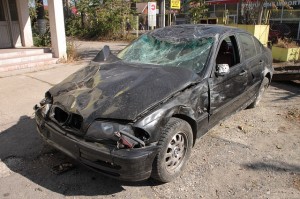 A benefit of the Affordable Care Act may be a drop in car insurance premiums as health care providers shoulder more of the treatment costs tied to accidents and injuries, according to a new report from a leading think tank.
The nonprofit Rand Corporation says the rise in the number of people with medical coverage under the ACA, also known as Obamacare, could result in a “modest” drop in claims against auto insurers. In turn, the cost savings could be passed to consumers as insurance companies and state regulators evaluate and refine coverage rates, according to Rand’s report, “How Will the Affordable Care Act Affect Liability Insurance Costs?”
“The Affordable Care Act is unlikely to dramatically affect liability costs, but it may influence small and moderate changes in costs over the next several years,” says David Auerbach, a Rand policy researcher and the study’s lead author. “For example, auto insurers may spend less for treating injuries, while it may cost a bit more to provide physicians with medical malpractice coverage.”
Besides auto insurance rates, expenses tied to homeowners insurance, workers’ compensation and general business liability insurance may also fall once the ACA further takes hold. But on the downside, expenses for malpractice coverage could rise, according to the report.
Obamacare to trim insurance costs by up to 5 percent?
“Researchers say the changes could be as much as 5 percent of costs (for auto, home and the other forms of liability insurance) in some states, but caution there is considerable uncertainty surrounding such estimates,” the study notes.
Auerbach and Rand point out that liability insurers currently reimburse tens of billions of dollars each year for medical care related to car crashes and workplace injuries, among other claims. “For example, auto insurers collectively paid $35 billion for medical costs associated with accidents in 2007, about 2 percent of all U.S. health care costs in that year,” according to Rand.
The reason for a possible jump in malpractice claims faced by doctors and health providers is simple: Rand says that more claims could be filed as more people get medical coverage.
“Insured individuals have more contacts with physicians, make more visits and receive more procedures,” the report says. “Such a shift could drive malpractice costs modestly higher.”
The malpractice figures are already significant. The study points out:
In 2012, nearly 12,000 medical malpractice claims paid on behalf of individual physicians and other providers accounted for $4.3 billion in costs. A substantial additional number of claims were paid on behalf of institutions, such as hospitals, some of which self-insure, that are not included in the $4.3 billion number.
The study was sponsored by Swiss Re, which stresses the powerful effects the ACA may ultimately have on the insurance industry and elsewhere. “Businesses and policymakers need to understand how and why their risk profiles might change as the Affordable Care Act is implemented,” Jayne Plunkett, Swiss Re’s head of casualty reinsurance, said in a statement.
A surge in medical insurance enrollments
In a separate survey, Rand estimated “a net gain of 9.3 million in the number of American adults with health insurance coverage from September 2013 to mid-March 2014.” While noting that any survey has a margin of error, Rand added that its findings didn’t include those who signed up for coverage in late March and early April. That enrollment surge could “dramatically affect” the total figures, Rand said.
Rand estimated that Americans without insurance fell to 15.8 percent, from 20.5 percent.
Of those who secured new medical coverage between September and March, 8.2 million didn’t buy it on the ACA’s federal or state-run exchanges, but through an employer. Rand says the increase was likely because of a drop in unemployment, which opened the door for many to be eligible for workplace plans, and ACA incentives encouraging employees to get coverage.
Rand added that 3.9 million secured health insurance through the exchanges, 36 percent of them previously uninsured. That number was expected to rise as the March and April numbers came in.
In declaring the ACA an unfolding success, the Obama administration recently said that more than 7 million people signed up for coverage through the marketplace exchanges.
Content provided by: http://www.moneytalksnews.com/2014/04/21/obamacare-may-reduce-auto-insurance-rates/#Kqdfh4ZHhsjylE1J.99
Read more

We’re often asked when is a car so old that it’s no longer a wise investment to continue buying collision insurance for it. The answer depends on your individual situation.
First, what’s the true worth of the car? Any repair or replacement costs following a collision will be based on the value of the vehicle at the time of the claim. Also consider your deductible amount. For example, if your car is now worth $2,000 and your deductible for collision claims is $500, insurance will pay no more than $1,500 for your loss.
Once you’ve estimated the maximum that your policy is likely to pay for a collision, ask yourself whether the value of the car would create a significant financial hardship if it were totaled in an accident without insurance. Is the cost of collision coverage reasonable, considering the maximum you can receive at the time of a claim? Don’t forget peace of mind — if dropping collision will make you lose sleep at night over a possible loss, it’s better to keep your coverage and get some rest.
If you’re considering whether it’s still worth insuring your older car for collision, call our personal auto representatives. We’ll be happy to review your current coverage, give you the book value of your vehicle, and estimate the changes in cost of your insurance if you make any changes. Let us help you make the best decision.
Content provided by Transformer Marketing.
Read more
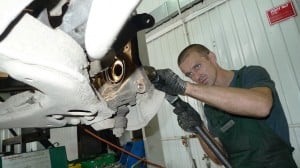 You hope nothing will go wrong with your car, especially late at night or far from home. Yet we all know that breakdowns can happen unexpectedly. We recommend taking a risk management approach to car safety — assume the worst will happen and prepare for it in advance.
Start by getting a good emergency kit. Whether you purchase one or build it yourself, your kit should contain at least a working flashlight, flares, reflective triangles, distress sign, first aid supplies, and basic tools.
Before leaving the house, make sure your cell phone is fully charged. Take along some spare change or a telephone calling card in case you break down in a “dead” area for your cellular provider.
If your vehicle breaks down, pull off the road as far as possible on the right shoulder (or in the center median, if getting to the shoulder is impossible). Activate your hazard lights and place flares or reflective triangles far enough behind your vehicle to warn oncoming traffic of your presence. Many authorities advise against you attempting to change your tires or jump your battery while traffic is present. Open your hood, then stay in your vehicle and wait for help.
If a stranger approaches, it’s safest to talk through a closed window. Don’t ask them to assist in repairing your vehicle. If they wish to help, ask them to call your auto club or the police.
For more recommendations on helping minimize the risks of everyday events, give our Personal insurance experts a call. As always, we’re happy to help.
Read more

 (I work as a claims adjuster for a major insurance company and have made a liability decision on a minor parking lot accident in which both parties told the exact same story. Unfortunately my client was majority at fault, but we would only be paying 60% of the other party’s repairs. I call my customer and leave a message regarding the liability decision and my phone number. He calls me back a short time later.)