
Professional liability insurance is essentially there to protect your reputation as a professional.
Things happen. There are unforeseeable circumstances that can botch even the easiest job in the most capable hands. When that happens, most contractors, consultants, professionals and business owners are more than happy to help cover the cost to the client, to injured parties and so on. That’s why the insurance policy is there.
Professional liability is there to protect specifically against claims of negligence by covering the court costs. These are the cases that we fight not because we don’t want to foot the bill, but because a reputation is on the line, and at the end of the day, all any professional really has to lean on is a trusted name. That is the foundation of success in any field. You can lose your office space, you can lose your clients, you can lose some of your best employees, and you can always rebuild from there. Once your name has been stripped of value, however, there’s not much left to do. Top talent will avoid the association with a negligent employer and clients and customers will jump ship.
These are the cases that you want to fight even at a financial loss. Even if you know that you’re not at fault for a visitor who suffered an injury on your property, it may make more sense to take responsibility than to fight it in court and spend more money in front of the judge than you would have on the doctor bill. The more comprehensive your professional liability policy, the less likely you are to have to do this when your reputation is on the line.
Of course, you can’t always have the case dismissed, so professional liability will cover the costs awarded to the plaintiff in a civil suit should you lose the case, meaning that you will be covered even where general liability coverage does not kick in. However, the real value in the policy is in allowing you to defend yourself against that civil suit in the first place, and, wherever possible, protecting your reputation within your industry.
Medical professionals rely on malpractice insurance for the same reasons, while insurers and lawyers will rely on errors and omissions, or E&O insurance. In any field where a professional mistake can prove incredibly costly or harmful, you will find some form of professional liability insurance being sold.
Read more

During a recent visit to Wisconsin, President Donald Trump vowed to defend American dairy farmers who’ve been affected by Canada’s trade practices. Canada’s dairy sector is protected by high tariffs and controls on domestic production to support prices that farmers receive.
Last year, Canada’s dairy farmers agreed to sell milk ingredients used for cheesemaking to Canadian processors at prices competitive with international rates. Industry groups in New Zealand, Australia, the European Union, Mexico and the United States complained the new, competitive prices undercut exports to Canada.
The U.S. dairy industry groups want Trump to urge Prime Minister Justin Trudeau to end Canada’s pricing policy that has disrupted many U.S. dairy exports. They’re also asking for a prioritization of dairy market access in North American Free Trade Agreement talks. Trump has already threatened to eliminate the trade agreement with Canada if it doesn’t change its trade policies.
Ottawa’s ambassador David MacNaughton blames U.S. producers’ problems on overproduction rather than Canadian policy. The Dairy Farmers of Canada said it was confident that Ottawa would continue to protect and defend the dairy industry.
Pace of Corn Planting is Behind
According to the U.S. Department of Agriculture’s weekly Crop Progress Report, every corn-producing state in America is behind last year’s planting pace, with the exception of Indiana.
The state lagging behind the most is Missouri, with only 17 percent of its corn crop planted as of Easter Sunday. At the same time last year, Missouri farmers had planted 53 percent of the state’s corn crop.
North Dakota, South Dakota, Michigan, Wisconsin and Ohio didn’t have planting data listed in the Crop Progress Report at the time of publication.
Planting Safety Tips
As farmers prepare for planting season, it is worth remembering the following safety tips:
- Be mindful while transporting goods on public roadways.
- Watch for children, as they’re often attracted to large, noisy equipment.
- Follow instruction labels when applying products such as pesticide, herbicide or fungicide. Consider keeping photos of the instructions on your smartphone for convenience.
- Service all farm equipment regularly.
- Store fuel away from machine sheds and other buildings.
- Get adequate amounts of sleep, and follow a healthy diet.
Read more
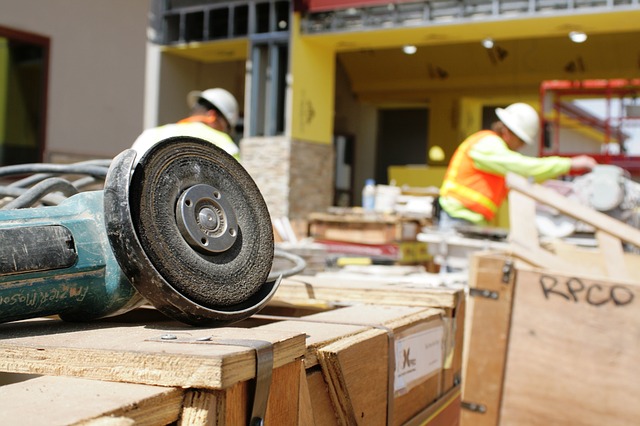
When the project is finished, it belongs to the client, it belongs to whoever owns the land. In the meantime, there’s a lot of shared risk. If a hurricane blows the whole jobsite into the sea, the client is out whatever you’ve spent on construction materials, but the builder could be out of a job if there’s no builder’s risk policy in place to recover the losses.
The builder does the work, the client finances the project, and until it’s finished, you’re in this together, sharing the risks associated with building something. Their project and your job are both on the line.
So who buys the builder’s risk insurance?
Many contractors insist on the client making the purchase. It’s the client that collects the payout on the claim, it’s the client who will own the finished property, and all the material on the site has been purchased with funds allocated by the client. This is the simplest, easiest solution. Anyways, if the builder is expected to buy the policy, then they’re probably going to weigh that into the budgeting process, essentially requiring the client to foot the bill either way.
On the other hand, buying the policy yourself, as a builder, can help to protect you against certain circumstance. Suppose, for instance, that disaster strikes, and it kills the client’s enthusiasm for the project. They recoup their losses, and leave you out of a job. Furthermore, a builder may simply be more familiar with the ins and outs of insuring a construction project. If you’re working with someone who is new to the process or someone who just wants a home built and isn’t interested in becoming a real estate mogul, then it may make more sense to handle all the red tape for them.
You’re generally going to have to provide proof of builder’s risk coverage on most major projects, and if you already know how to do that, it’s a lot easier than telling someone where to go to get these papers stamped, who to call for a fair price on the policy, how much coverage to buy and so on.
Ultimately it depends on the project. If the client is trustworthy and experienced in these matters, then you may want to let them handle it. Otherwise, you can streamline the process and get to work much quicker by buying the policy yourself rather than walking an inexperienced client through it.
Read more
Safety in your everyday small business operations is essential for your employees, customers and success. Understanding and maintaining safety guidelines can be challenging, though. OSHA offers numerous resources that benefit your company. Take advantage of these resources as you ensure your small business maintains safety guidelines and stays compliant with current laws at all times.
OSHA’s Cooperative Programs
Your small business must cooperate with OSHA to maintain safety and remain compliant with laws, but you may not know where to start. OSHA offers five cooperative programs that help your small business prevent workplace injuries, illnesses and fatalities. Available programs include:
- Alliance Program
- OSHA Strategic Partnership Program (OSPP)
- Voluntary Protection Programs (VPP)
- OSHA Challenge Program
- On-site Consultation Program’s Safety and Health Achievement Recognition Program (SHARP)
All states with OSHA-approved programs offer this cooperative program option, and you can search the website to learn more about each program.
On-Site Consultation Program
Get personalized advice with a free and confidential on-site consultation. The consultant will not give penalties or citations because the purpose of the consultant’s visit is solely to:
- Identify workplace hazards
- Share advice on how to become compliant with OSHA guidelines
- Implement injury and illness prevention programs
While the program prioritizes high-hazard worksites, it’s available to all small and medium-sized businesses and is completely free.
Diverse Workforce/Limited English Proficiency Coordinators
When your workforce employs Spanish speakers or a diverse workforce, you may need education, outreach and training assistance. Schedule a seminar or workshop with an OSHA Diverse Workforce/Limited English Proficiency coordinator. Every 10 OSHA regions has one coordinator who can help you train and prepare your employees effectively.
Compliance Assistance Specialists (CAS)
When you’re ready to host a seminar or workshop on safety challenges or compliance issues, contact a CAS. In states under federal jurisdiction, the OSHA area offices have a CAS on staff who will provide training resources and promote OSHA cooperative programs.
Training Institute (OTI) and Training Education Centers
Access a variety of OSHA trainings, including technical advice, seminar and workshop speakers, or audiovisual aids, through the Training Institute and Training Education Centers. This resource provides basic and advanced safety and health courses as well as small business seminars.
Penalty Reductions
Non-compliance with OSHA guidelines can result in large penalties. However, your small business’s size and number of employees may reduce the penalties. Learn more as you assess your eligibility for penalty reductions.
OSHA safety guidelines protect your employees and small business since they reduce injuries, illnesses and fatalities. OSHA guidelines can be confusing, though. Maintain compliance when you take advantage of these OSHA resources. They help your small business remain safe and successful.
Read more
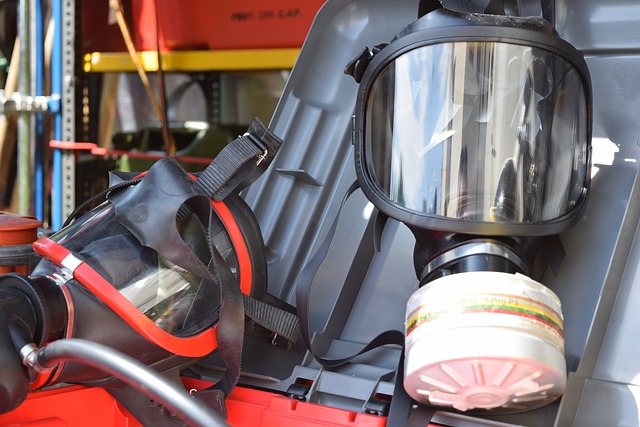
Choosing the right respirator relevant to the nature of the employment is critical to a worker’s safety. Exposure to different hazards means that not just any respirator will suffice.
Two main classes of respirators are available:
Air-Purifying Respirators (APR)
These respirators are designed to filter air borne contaminants such as fumes or noxious dust. Other forms of APR models use a canister or cartridge containing a material that absorbs the contaminants.
APRs are tight fitting to the face and have different designs. These designs include particulate respirators, powered air-purifying respirator (PAPR), gas masks and chemical cartridge respirators. They come in four different designs, including:
Full Face Piece
Fully covers the face from underneath the chin to an area above the eyes. This feature provides added protection to the eyes, especially from chemical irritants.
Half-Face Mmask
Gives protection from beneath the chin to and including the nostrils.
Quarter-Mask – Protects the Mouth and Nose.
Mouth bit respirator – Normally used for escaping a hazardous situation only. Contains a bit which is inserted into the mouth and nose clip to seal the nostrils closed.
Supplied-air respirator (SAR)
These respirators provide breathable air via an air line or a compressed work tank. SARs come in two different types. The first has a loose fitting respiratory inlet, such as a helmet or a hood which envelopes both the neck and head, that is supplied purified air through airlines. This type may have face pieces which fit loosely.
The other form of SAR has either a half or full face piece and has very snug respiratory inlets.
Choosing the Most Suitable Respirator
Selecting the most suitable respirator must be performed by an expert, such as a safety professional. The expert will consider the appropriate apparatus only after they have identified and evaluated the potential respiratory hazard and considered the relative limitations of the respiratory apparatus for the situation.
Key Questions to Ask
Here are some factors an employer should consider when determining whether a respirator may be required:
Establish the existence of a hazard by considering warnings about the material, like its chemical components or the nature of the particulates that might be released through the work performed.
Determine whether there is limited oxygen present.
Is the hazard airborne such as a particulate, fume, or vapor?
Ask whether the respirator will be used for an emergency or in combating fires.
Evaluate whether the work is strenuous and will be performed in hazardous atmospheric circumstances.
Is there any agent present which might be possibly fatal, carcinogenic, skin absorbable or acts as an irritant?
Will the work be conducted in a confined space or will the worker be exposed to abnormal temperatures?
The key is that respirators should be used to suit the work. The proper choice of respirator is vital to the health and safety of workers in many types of employment.
Read more
According to a report by the U.S. House of Representatives’ Committee on Education and Labor, a staggering 69 percent of all workplace injuries and illnesses may not be represented in the Bureau of Labor and Statistics Survey of Occupational Injuries and Illnesses, which many trust as a gauge of the safety of American workplaces. On a corporate level, not reporting or underreporting workplace injuries can have serious ramifications for the organization and the employer, which can include fines, exorbitant and unnecessary, health costs and more.
Research has found that the employer’s behavior, policies and attitude are key determinants in a worker’s decision to report an injury. Not only is it essential that employees are educated on the importance of reporting injuries, it is also important to examine your company policies so you are not inadvertently discouraging reporting. The consequences of underreporting can be severe.
Consequences of Underreporting
The unfortunate trend of injury underreporting can have serious ramifications at both the industry and company level. Widespread underreporting can be quite damaging to workers’ compensation rates on a large scale. Employers may not realize it, but such an underreporting problem may lead to more audits by insurance companies of their clients and higher rates for everyone. Many employers erroneously believe that reporting injuries leads to audits and higher rates.
Underreporting may lead to more audits by insurance companies and higher rates for everyone industry-wide. Many employers believe that reporting injuries leads to audits and higher rates.
At the company level, underreporting injuries can be quite costly for the employer. If it is an OSHA-reportable incident, the employer may face significant fines if it is not properly recorded or reported.
In addition, often when an injury isn’t reported or properly cared for immediately, it worsens and leads to higher health care costs and more lost time. Even if it is never reported as a workplace injury, the employer still loses out on health care costs and productivity.
If it is eventually reported, it becomes much more difficult to prove that it was workplace-related. Additionally, a study reported by the Hartford Financial Services Group found that injuries reported four or five weeks after the incident are 45 percent more expensive than injuries reported within the first week due to increased health costs and possible legal fees, or even a lawsuit, associated with late reporting.
One of the best ways to control workers’ compensation costs is through early reporting and intervention. Not only will it save money in health bills and legal fees, but it will also help to constantly improve your safety program. When there is an injury, consider it an opportunity to examine current safety procedures and decide if there is a suitable change that could be made to prevent similar injuries in the future.
Thus, prompt reporting can be a productive element to your safety program in your quest to always strive for the safest work environment. Rather than accepting a vicious circle where injuries are not reported and thus nothing is done to fix the problem, leading to more injuries, take advantage of injury reporting as a proactive solution to safety.
Reasons for Underreporting
There are several reasons why employees may not report injuries immediately or at all.
Incentive Programs
Many employers have reward or incentive programs to promote their safety initiatives, such as rewards for going a certain number of days without an injury. This can create a negative attitude toward reporting an injury, since doing so could cost that employee, a co-worker or a superior a reward or bonus.
Having incentive programs are a good idea, but a more effective strategy is to reward positive, safe behaviors. This can include reporting a safety hazard, attending a safety meeting or training class or equipment maintenance. Rather than rewarding for days without an injury, reward behaviors that strive to avoid injury, or even reward employees for prompt reporting when an injury occurs.
Fear of Negative Ramifications
Some employees fear that reporting an injury will create an image of them as weak to their co-workers and managers. He or she also may fear that such an image will be a detriment to his or her career.
Dispel this fear by assuring all employees that reporting an injury will have no negative impact on their job, and ensure follow through on all levels of the company. Work to promote a safety culture where prompt injury reporting is encouraged and praised. Injury reporting should never be frowned upon, even subtly or behind closed doors. If employees find out you are angry about a reported injury, he or she is less likely to report an injury in the future.
Some companies have a policy mandating drug testing after any incident whether or not there is evidence of drug use. This deters some employees from reporting injuries as well. Consider making the drug testing conditional depending on the circumstances of the injury and whether there is evidence that drug use was a factor.
For more information about injury reporting or your company’s workers’ compensation and safety programs, please contact Scurich Insurance at 831-661-5697 today.
Read more
