
Why is job safety and health important?
In 2013, 4,585 employees died from occupational incidents, and there were a staggering 3.0 million total recordable cases of workplace injury and illness.
On average, each of these 3.0 million cases required eight days away from work, which means U.S. employers as a whole paid for millions of days of lost work time. Experts estimate that workplace injuries and illnesses cost U.S. businesses more than $125 billion annually. Effective job safety and health programs not only help reduce worker injuries and illnesses, they save employers money in the long run.
How does OSHA contribute to job safety and health?
The primary goal of the Occupational Safety and Health Administration (OSHA) is to carry out the Occupational Safety and Health Act (OSH Act), which Congress originally passed in 1970. The OSH Act has undergone several amendments and revisions since its inception, but it is still in place “to assure so far as possible every working man and woman in the Nation safe and healthful working conditions and to preserve our human resources.” OSHA contributes to job safety and health by enacting regulations that forward this ideal.
Title 29 of the Code of Federal Regulations (CFR), Parts 1902-1990, houses all the OSHA standards, though OSHA also allows states to enact occupational safety and health laws of their own under federally-approved plans. State-run programs are at least as strict, and sometimes more so, than federal standards. This ensures a minimum standard of job safety and health that all employers must follow to protect employees.
Are all employees covered by the OSH Act?
The OSH Act covers all employees except public employees in state and local governments and those who are self-employed. Public employees in state and local governments are covered by their state’s OSHA-approved plan, if applicable.
Federal employees are covered under the OSH Act’s federal employee occupational safety and health programs, which are outlined in 29 CFR Part 1960. United States Postal Service employees, however, are subject to the same OSH Act coverage provisions as those in the private sector.
Other federal agencies that have issued requirements affecting job safety or health include the Mine Safety and Health Administration (MSHA) and some agencies of the Department of Transportation (DOT), including the Federal Motor Carrier Safety Administration (FMCSA). Employees in these industries are subject to their respective regulations.
Additionally, businesses in the retail, service, finance, insurance and real estate sectors that are classified as low-hazard are exempt from most OSHA requirements, as are small businesses with 10 or fewer employees. Exceptions are discussed in 29 CFR Part 1904, which also explains which OSHA regulations exempt employers are still required to follow.
What are your responsibilities as an employer?
If you are an employer covered by the OSH Act, you must provide your employees with jobs and a place of employment free from recognized hazards that are causing, or are likely to cause, death or serious physical harm. You must also comply with the OSHA statutory requirements, standards and regulations that require you to:
- Provide well-maintained tools and equipment, including appropriate personal protective equipment (PPE)
- Provide medical assistance and guidance for employees sustaining workplace injuries/illnesses
- Provide required OSHA training
- Report accidents that result in fatalities to OSHA within eight hours
- Report accidents that result in the hospitalization of three or more employees to OSHA within eight hours
- Keep records of work-related accidents, injuries, illnesses and their causes
- Post annual injury/illness summaries for the required period of time
What are your rights as an employer?
When working with OSHA, you may do the following:
- Request identification from OSHA compliance officers
- Request an inspection warrant
- Receive a reason for inspection from compliance officers
- Have an opening and closing conference with compliance officers
- Accompany compliance officers on inspections
- Request an informal conference after an inspection
- File a notice of contest to citations or proposed penalties
- Apply for a variance from a standard’s requirements under certain circumstances
- Be assured of the confidentiality of trade secrets
- Submit a written request to the National Institute for Occupational Safety and Health (NIOSH) for information on potentially toxic substances in your workplace
What are employees’ responsibilities?
All employees are obligated to help prevent exposure to workplace safety and health hazards by becoming familiar with and adhering to all applicable OSHA requirements.
What are employees’ rights?
With regards to OSHA regulations, employees have the right, among other actions, to:
- Review employer-provided OSHA standards, regulations and requirements
- Request information from the employer on emergency procedures
- Receive adequate, OSHA-required safety and health training on toxic substances and emergency action plan(s)
- Ask the OSHA area director to investigate hazardous conditions or violations of standards in the workplace
- Have his or her name withheld from the employer when filing a complaint with OSHA
- Know what actions OSHA took as a result of the employee’s complaint and have an informal review of any decision not to inspect or issue a citation
- Have an employee representative accompany the OSHA compliance officer on inspections
- Observe monitoring and measuring of toxic substances or harmful physical agents and review related records (including medical records)
- Review the Log of Work-Related Injuries and Illnesses (OSHA 300 Form), if applicable, at a reasonable time
- Request a closing discussion following an inspection
- Object a citation’s set abatement period
- Seek safe and healthful working conditions without your employer retaliation
Why is OSHA important to your business?
OSHA plays a key role in making your facility a safe, healthy place to work. Beyond providing the tools and guidance to work toward an injury- and illness-free workplace, OSHA is important in identifying businesses that are not committed to safety. Employers that do not carefully follow OSHA regulations often face hundreds of thousands, if not millions, of dollars in fines.
How can you get more information on safety and health?
OSHA provides free publications, standards, technical assistance and compliance tools to help you understand the nuances of the regulations. OSHA’s website also offers extensive assistance by way of workplace consultation, voluntary protection programs, grants, strategic partnerships, state plans, training and education to guide you in your quest for workplace safety. To learn more about OSHA and the critical elements of a successful safety and health management system in your workplace, visit www.osha.gov.
This document is an introductory guideline. It does not address all potential compliance issues with OSHA standards. It is not meant to be exhaustive or construed as legal advice. Contact your licensed commercial property and casualty representative at Scurich Insurance or legal counsel to address applicable compliance requirements. © 2009-2012, 2015 Zywave, Inc. All rights reserved.
Read more
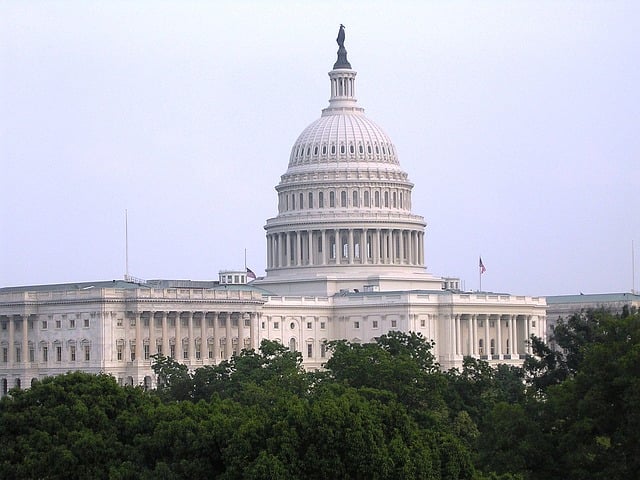
If you rely on government contracts for your work, then you probably have some questions about the federal hiring freeze. Namely: Is it good or bad for contractors?
The answer: it remains to be seen, but probably not. It may well turn out to be a boon for contractors. Bridges still need to be built, and by freezing the hiring of salaried government employees, the government will be forced to find somebody to put the work in, and more often than not, that’s going to be contractors.
Furthermore, a lot of the work that we do in government contracting is not federal work, rather, we’re being hired by cities, by the state department and so on. We’re being paid on state funds to do state work, rather than being hired for federal work by the federal government. The federal government does pay for construction work as needed, of course, but most contractors are not waiting for these jobs. Most contractors are working locally, and being paid by local government.
Additionally, the executive order putting a freeze on federal hiring comes with a lot of exceptions. Just to name a few examples, the freeze does not apply to the post office, industry exchange programs, intelligence agencies, or seasonal employment. The list of exceptions is only getting longer every day, as these exceptions have been clarified over time.
Finally, while President Trump has issued a statement saying that government organizations shall not be permitted to use contractors to work around federal hiring freezes, this statement was issued in a memo, not in binding law.
At some point in the future, the federal hiring freeze may extend to contractors, but for the time being, it may actually be giving contractors greater bargaining power. A year ago, a government contractor was usually being pursued for one of two reasons: Either they possess specialized knowledge, training or abilities that the government is in need of, such as underwater welding, or they’re cheaper than paying a salaried, year-round government employee. Now, government contractors will be the first choice, over federal employees, for many jobs, creating more opportunities for contractors, and, in many instances, allowing contractors to command a higher rate of pay.
Whether or not you agree with President Trump’s attempt to curb government spending via the federal hiring freeze, the bottom line is that, at least for the time being, it’s nothing for government-contracted workers to worry about.
Read more
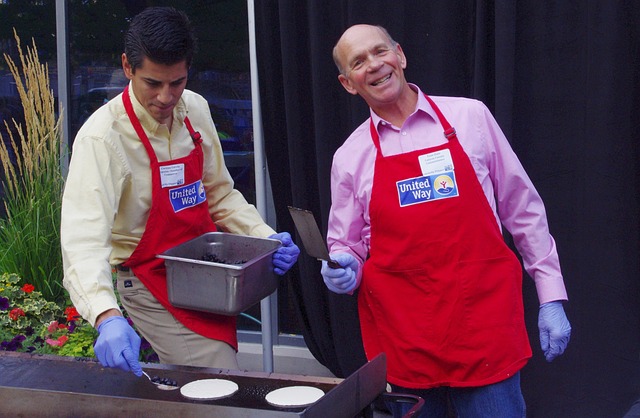
The challenge in running a non-profit is that it still takes money and resources. Just because you’re not interested in getting rich off of this idea doesn’t mean that money is not an issue. If a worker suffers an injury on the job, their compensation has to come from somewhere.
Something that may come as a surprise to many: Volunteers are not typically covered by worker’s compensation policies. In more states than not, worker’s compensation only covers, well, workers. If you are paying actual employees at food banks workers’ compensation insurance will cover their injuries. Likewise Meals on Wheels insurance policy will cover the organization’s workers. If you’re working with unpaid volunteers this is not the case.
Your volunteers may wind up covered by a general liability claim, but this is not always the case. If you want to make sure that your people are covered no matter what, then you’re probably going to have to bring them in as paid employees, or at the very least, under an internship program that includes medical and worker’s compensation benefits and so on.
A problem with relying exclusively on volunteers for your workforce is that you don’t really get to pick your staff from the best and brightest. Many who volunteer will bring their A-game, they will take the task just as seriously as they would take their day job. This isn’t always the case, unfortunately, and without any payment or compensation or even the safety net of worker’s compensation to draw talent, you wind up taking what you can get.
Non-profit doesn’t mean nobody gets paid. Non-profits are usually devoted to a humanitarian cause and their primary concern is not making anybody rich, but making a difference, but that doesn’t mean that everyone involved is simply donating time and resources without compensation. Typically you’re going to have benefactors and other income streams that will allow you to hire qualified people for your food bank, and provide them with the appropriate coverage they need in order to provide them, and you, with peace of mind.
To put it bluntly: a volunteer force is a great idea in concept. In reality, you’re asking some of the kindest, most generous people in the world to foot the bill themselves if they get hurt on the job. That’s a recipe for, if not a lawsuit, at least a guilty conscience. The most effective way to make a difference in the long term is to get some money behind your cause and treat your workers like you would paid employees at any other business.
Read more

Buffer Liability Insurance is a useful risk transfer tool as the P&C insurance cycle transitions from a soft to hard market. A “soft” market is ideal for consumers, as it is the best time to find insurance coverage and the lowest premiums.
On the other hand, a “hard market” occurs as insurance companies, who have had to pay out a lot in claims for catastrophic events, subsequently increase premiums and decrease the amount of coverage they’re willing to underwrite. For the last two decades, the insurance industry has largely experienced a soft market period, and Buffer Liability Insurance was usually not needed. However, with today’s changing market, this insurance is becoming more popular.
Buffer Liability Insurance Basics
Buffer Liability Insurance is any layer of insurance (or risk retention) that resides between the primary layer and the excess layers. For example, if the primary layer coverage is $100,000 and the excess layer attachment point is $500,000, a buffer layer of $400,000 is required. In the past, if you had both Primary Layer Insurance and Excess Insurance, there was essentially no gap between those coverages; if your primary layer capped at $1 million, the excess layer insurance would kick in at that point.
However, now insurance carriers are less willing to write high primary insurance limits. That, coupled with a hardening market, will make excess insurance more expensive to purchase; this means the excess layer will kick in at a significantly higher point than the primary cap. This creates a gap between the primary layer and the excess layer, indicating the need for Buffer Liability Insurance. The wider the gap, the more Buffer Liability coverage that’s needed.
Who Should Consider Buffer Liability Insurance?
Buffer Liability Insurance is important for large risks that can be difficult to insure, such as the following:
- Truckers, emergency vehicles and auto fleets with more than 500 vehicles
- Employers who self-insure their workers’ compensation
- Companies with a poor loss history that want liability coverage over the usual primary layer
- Condo owners and apartment building owners who have Habitational Insurance
As the insurance market begins to harden, protect your business from all of the risks that can occur. To learn more about adding Buffer Liability Insurance to your current insurance coverage, contact us today.
Read more

Taking the time to understand the language and symbols on your commercial automobile insurance policy may seem like trying to learn a new language, but it is important to fully understand your policy so you know how you’re protected.
Here are a few general guidelines that are helpful when deciphering your policy:
- Each symbol represents the type of vehicle protected by the applicable liability or physical damage limit.
- The symbol may apply to the type of vehicle covered or the vehicle’s ownership status.
- The various terms within your policy have specific definitions that you should become familiar with.
- The symbols are different on coverage for liability as compared to physical damage coverage.
Liability Coverage Auto Symbols
1 = Broadest symbol; covers any “auto.” (ANY AUTO)
2 = Covers any “auto” owned by the insured, including those attained after the policy begins. It also applies to trailers used with owned vehicles. (OWNED AUTOS ONLY)
3 = Covers only private passenger “autos” owned by the insured. (OWNED PRIVATE PASSENGER AUTOS ONLY)
4 = Covers all “autos,” other than private passenger vehicles owned by the insured. This includes vehicles that are attained after the policy begins and also applies to trailers used by an owned vehicle. (OWNED AUTOS OTHER THAN PRIVATE PASSENGER AUTOS ONLY)
5 = Applies to “autos” owned by the insured that are garaged or licensed in no-fault benefit law states. (OWNED AUTOS SUBJECT TO NO-FAULT)
6 = Applies to “autos” that are garaged or licensed in states where uninsured motorist coverage is required. (OWNED AUTOS SUBJECT TO A COMPULSORY UNINSURED MOTORIST LAW)
7 = Covers only the “autos” and trailers listed on the policy. (SPECIFICALLY DESCRIBED AUTOS)
8 = Covers “autos” that the insured leases, hires, rents or borrows for their own use. It does not cover “autos” that are leased, hired, rented or borrowed for employee or family member usage. (HIRED AUTOS ONLY)
9 = Covers “autos” that the insured does not own, lease, hire, rent or borrow, but are used for business purposes. These “autos” may be owned by employees or family members, but must be used for the insured’s business or personal matters. (NON-OWNED AUTOS ONLY)
Physical Damage Coverage Automobile Symbols
1 = Covers “autos” owned by the insured, including those attained after the policy begins. (OWNED AUTOS ONLY)
2 = Covers only private passenger “autos” that are owned by the insured. (OWNED PRIVATE PASSENGER AUTOS ONLY)
3 = Covers all “autos” other than private passenger vehicles owned by the insured. (OWNED AUTOS OTHER THAN PRIVATE PASSENGER AUTOS ONLY)
4 = Applies to “autos” that are listed on the policy. This also covers trailers used with a listed vehicle. (SPECIFICALLY DESCRIBED AUTOS)
5 = Covers “autos” that the insured leases, hires, rents or borrows for his/her own use. This does not cover “autos” leased, hired, rented or borrowed for use by an employee or family member. (HIRED AUTOS ONLY).
At times, there may not be an applicable symbol for the type of coverage provided. In those instances, a special symbol is used and added to the policy by way of an endorsement. The endorsement will contain a complete description and explanation of the symbol’s meaning, and the symbol will also appear with the applicable coverages on the policy.
It is imperative that you understand these symbols to ensure that you are properly covered. Consult Scurich Insurance today to learn more automobile insurance policy symbols, their meanings and how this applies to your coverage.
Read more

Directors and officers are responsible for making the tough choices that can make—or break—a company’s fortunes. In doing so, they must consider the best interests of employees, customers and shareholders, while also keeping in mind corporate best practices. Limited or imperfect information and tight deadlines add to the overall complexity of the decision-making process and can lead to poor outcomes or even outright mistakes.
D&O insurance protects executives against the consequences of any alleged or actual “wrongful acts” they commit while performing regular supervisory duties.
To hire and retain talented directors and officers, companies need to give them the freedom to make corporate decisions without the fear of being personally liable for losses stemming from those decisions. Directors & officers (D&O) insurance protects executives against the consequences of any alleged or actual “wrongful acts” they commit while performing regular supervisory duties. Without D&O coverage, executives’ personal assets are at risk in the event of a lawsuit.
A class action lawsuit was brought against a mining company and its board of directors, accusing them of allegedly misrepresenting the cost of construction on one of their mines. When the costs exceeded the initial prediction and were projected to keep increasing, share prices plunged. The suit was filed on behalf of shareholders that had bought shares at the prices calculated after the construction costs were misrepresented. Defense costs reached about $7 million, which D&O insurance helped cover when the lawsuit was successfully defended.
Keep in mind that there are some limitations to D&O coverage. It does not cover cases in which fraudulent, criminal or intentional wrongful acts are committed, or when acts are committed for personal gain.
No matter the size of your company, costly mistakes made by directors and officers can happen, which is why it’s important to take steps to insure your executives against losses stemming from an incident. Contact Scurich Insurance today to learn about the D&O coverage solution that’s right for you.
Read more
