 The insurance that you chose for your business is designed to cover some of life’s potential obstacles that could stand in the way of your success. In addition, it is made to offer you solutions that allow you to meet the requirements of any laws that are pertinent to your particular situation at the time when you purchase the policy. What happens if such a law changes and, as a result, brings a change to your liability as well?
In most cases, laws are not passed and implemented right away. This lag in time is built in so that those affected can make the necessary changes in order to remain compliant with the new regulations. For this reason, any insurance policy that you purchase will have the necessary provisions to comply with upcoming laws already built in so you can rest assured that you and your business are covered.
Many insurance companies communicate freely with their clients. Business accounts that might be affected by a law that is set to go into effect are typically notified long before the change is implemented. This notification typically involves a brief outline of the applicable law as well as any changes to premiums or any further actions that the client must take.
The beginning of the new year is the optimal time for a business to make an appointment with their insurance provider to go over their policy. Updates to the policy can be implemented to protect the business if any pending laws will affect them. In addition, such reviews often reveal other ways for businesses to save while also providing them with better protection.
Read more
 Ringing in the new year often means that it is a great time to take an inventory of your business. Far beyond simply an inventory of any supplies that you might possess though, a thorough inventory of your business practices could bring to light some weak spots that could stand to be shored up. Periodic examinations such as these can help make your business both stronger and more successful.
As April 15th, Tax Day, quickly approaches, many businesses spend a great deal more time scrutinizing their financial records. While this is a job that can certainly be overseen by you, for the most objective view of your financial situation, enlist in the help of an outside agency. The company that you entrust with completing your taxes each year can be a good resource for this type of review.
The business insurance policy you have in place is a crucial element of its success. Not only does it protect you in the event that something unexpected happens, it also ensures that your employees are treated well, giving your company the reputation of being a great place to work. Each year, though, it is a good idea to make an appointment with your insurance carrier.
At this appointment, you and the representative from your insurance company can go over your business insurance policy to ensure that it is still providing the type of coverage that meets the needs of your business. New regulations regarding the insurance industry as well as laws that could potentially affect you are often implemented at the beginning of the year. Working with your insurance agent to customize a policy to meet the growing needs of your business will help get the year off to a good start and ensure your continued success.
Read more
 Business insurance is a necessary step in ensuring that your company is compliant with any applicable laws. While many of those laws are designed to protect the public, your insurance is also designed to protect your business — and by extension — yourself as well. After all, if you are like most business owners, you put a great deal of yourself as well as your own financial backing into ensuring that your business is a success.
While no one likes to think about it, the fact is that catastrophic events sometimes befall businesses. Indeed, many types of insurance are designed to minimize the effects of these types of events on the business to help ensure that it can emerge from it relatively unscathed. One such type of insurance is involves including a discretionary payroll expense endorsement on the policy.
As you look toward the new year, now is the time to decide if an endorsement for discretionary payroll expense is a good move for your business. While you are probably like most businesses and you want to make sure that your employees are paid first, there are some times when this is does not make good business sense. It is for times such as these that this type of endorsement was designed.
If your business income is interrupted — either due to a crisis or another reason — a discretionary payroll expense endorsement allows you to pay those employees that are deemed necessary. Similarly, you can specify which classes of employees should not be paid under a particular set of circumstances. Doing so can help you protect your bottom line as your business begins to recover.
Read more
 Since 1984, Monterey County has participated in the National Flood Insurance Program (NFIP). This participation, as well as the continued compliance with federal regulations, allows county residents to purchase flood insurance. Even if your business is far from any form of water such as rivers or creeks, it could still be affected by the intricate system of drainage improvements and facilities that the county maintains in an effort to protect its residents and their properties.
Federal Mandates
If you wish to relocate your business to an area that lies within the 100 year floodplain as determined by Monterey County engineers, or build within that area, federal regulations mandate that you purchase flood insurance in order to take advantage of any federally backed financial assistance for doing so. Even if you are not planning to move your business and you are happily ensconced in your current location, purchasing flood insurance is a wise business decision.
Weather Conditions Warranted Protection
Businesses that are not located within the flood plain are still at risk for being damaged due to flooding. Weather occurrences such as El Nino, for example, can cause extreme amounts of water to be dumped in areas that are ill-equipped to deal with such an onslaught of weather. Weaken structural supports like building foundations, or even elements of the property itself such as hills, can allow water to breech the boundaries of your business and cause flooding.
Industrial Accidents Pose a Concern
Water main breaks are incidences that do not occur often but the results can be devastating if you have not prepared for the possibility prior to it occurring. Not only will you need to be concerned with paying for the costs of replacing your damaged inventory and property out of your own pocket, you might struggle with losing sales from your customers during this period of time.
Flood insurance is a way to gain peace of mind that allows you to rest easier at night. Knowing that your business – and its assets – are protected in the event of an unexpected flood is a smart business move for the longevity of your company.
Read more

In
Secretary of Labor v. United States Postal Service the question was whether an employee’s indication of an industrial injury on a FMLA request form triggered an OSHA recordkeeping obligation. To make a long story short, that claimant complained she was having an allergic reaction to dust produced by machinery she worked with. Her doctor provided her a note stating she was not to return to work at that machine. She eventually filled out an FMLA leave request form.
As this was going on, her complaint and that of another employee triggered an OSHA investigation. None of the inspections or analysis generated by her physician or OSHA found any kind of violation of OSHA standards or the exact allergic substance she was reacting to. The OSHA inspector was none the less concerned the company had not recorded her allergic reaction in the OSHA injury logs, a violation for which they were cited.
The Occupational Safety and Health Review Commission overturned a decision by the lower court and ruled due to privacy provisions associated with the FMLA, the employer was required to not share this information with the OSHA coordinator or the employee’s supervisor. The only time it would be appropriate to do so is for job accommodation purposes or emergency medical treatment.
The Commission also ruled the obligation to report an OSHA injury could come from someone’s position or other unique circumstances. According to the Commission no such facts existed to generate the obligation. Which is rather surprising given it was abundantly clear she claimed to be having allergic reactions to working around the machinery and told numerous people about it.
The court reminded employers they should separate FMLA files from the work comp or injury ones.
Take home lesson: do NOT share medical information across the organization unless that person has a “need to know”, there is an accommodation to consider, or there is some kind of emergency. Keep FMLA requests private and don’t automatically share the info with the OSHA
compliance team.
Don Phin, Esq. is VP of Strategic Business Solutions at ThinkHR, which helps companies resolve urgent workforce issues, mitigate risk and ensure HR compliance. Phin has more than three decades of experience as an HR expert, published author and speaker, and spent 17 years in employment practices litigation. For more information, visit
www.ThinkHR.com.
Read more
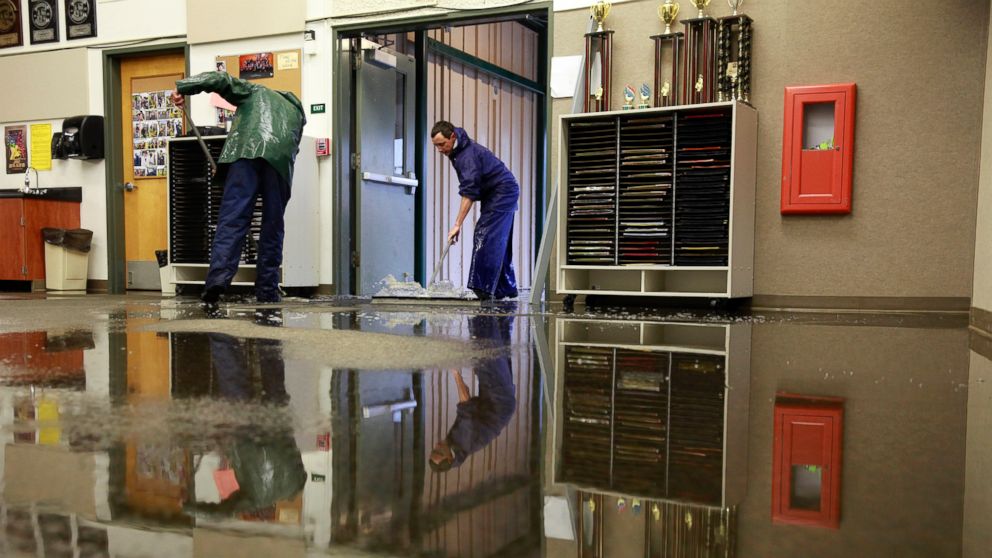 Since 1984, Monterey County has participated in the National Flood Insurance Program (NFIP). This participation, as well as the continued compliance with federal regulations, allows county residents to purchase flood insurance. Even if your business is far from any form of water such as rivers or creeks, it could still be affected by the intricate system of drainage improvements and facilities that the county maintains in an effort to protect its residents and their properties.
Federal Mandates
If you wish to relocate your business to an area that lies within the 100 year floodplain as determined by Monterey County engineers, or build within that area, federal regulations mandate that you purchase flood insurance in order to take advantage of any federally backed financial assistance for doing so. Even if you are not planning to move your business and you are happily ensconced in your current location, purchasing flood insurance is a wise business decision.
Weather Conditions Warranted Protection
Businesses that are not located within the flood plain are still at risk for being damaged due to flooding. Weather occurrences such as El Nino, for example, can cause extreme amounts of water to be dumped in areas that are ill-equipped to deal with such an onslaught of weather. Weaken structural supports like building foundations, or even elements of the property itself such as hills, can allow water to breech the boundaries of your business and cause flooding.
Industrial Accidents Pose a Concern
Water main breaks are incidences that do not occur often but the results can be devastating if you have not prepared for the possibility prior to it occurring. Not only will you need to be concerned with paying for the costs of replacing your damaged inventory and property out of your own pocket, you might struggle with losing sales from your customers during this period of time.
Flood insurance is a way to gain peace of mind that allows you to rest easier at night. Knowing that your business – and its assets – are protected in the event of an unexpected flood is a smart business move for the longevity of your company.
Read more
