
Hiring youth workers—many times to fill seasonal positions—can be an integral component to your organization’s hiring plan. Early work experience can also be a great opportunity for teenagers to learn important skills.
To promote positive and safe work experiences, the U.S. Department of Labor (DOL) has a series of regulations relating to the employment of minors. These provisions are designed to protect young workers by restricting the types of jobs that they perform and the number of hours they work. It is important to follow all federal, state and local laws regarding the employment of minors to ensure that your business remains compliant and protects its reputation.
Listed below are some age-specific workforce regulations, as presented by the DOL’s YouthRules! initiative.
Rules for Workers Under 14 Years of Age
In general, youth workers who are under the age of 14 are limited on what type of jobs they can do. Workers who are under 14 years of age are only permitted to do the following jobs:
- Deliver newspapers to customers
- Babysit on a casual basis
- Work as an actor or actress in movies, TV, radio or theater
- Work as a homeworker gathering evergreens or making evergreen wreaths
- Work for a business owned entirely by their parents as long as it is not in mining, manufacturing or any of the 17 hazardous occupations
There are different rules in place for minors in this age group who work in agriculture. States also have specific rules for youth workers under 14 years old, and employers must follow both.
Rules for Workers 14 to 15 Years of Age
Similar to workers under 14 years of age, youth workers who are 14 to 15 years old are limited on what types of jobs they can do and what hours they can work.
Job Restrictions
In general, youth workers within this age range are only permitted to do certain jobs, which include the following:
- Work an approved retail position
- Work an intellectual or creative position, such as computer programming, teaching, tutoring, singing, acting or playing an instrument
- Run errands or complete delivery work by foot, bicycle and public transportation
- Complete cleanup and yard work that does not include using power-driven mowers, cutters, trimmers, edgers or similar equipment
- Work in connection with cars and trucks, such as dispensing gasoline or oil and washing or hand polishing
- Work in a kitchen or the food service industry reheating food, washing dishes, cleaning equipment or doing some limited cooking
- Clean vegetables and fruits, wrap, seal, label, weigh pricing and stock items as long as these tasks are performed in areas separate from a freezer or meat cooler
- Load or unload objects for use at a worksite including rakes, hand-held clippers and shovels
Additionally, 14 and 15-year-olds who meet certain requirements can perform limited tasks in sawmills and woodshops, and 15-year-olds who meet certain requirements can perform lifeguard duties at traditional swimming pools and water amusement parks.
If an occupation is not specifically permitted, it is prohibited for youth between the ages of 14 and 15.
Working Hour Restrictions
Workers who are 14 to 15 years old are also limited in what hours they can work. Generally, all work must be performed outside of school hours. In general, youth in this age range may not work the following:
- More than three hours on a school day, including Friday
- More than 18 hours per week when school is in session
- More than eight hours per day when school is not in session
- More than 40 hours per week when school is not in session
- Before 7 a.m. or after 7 p.m. on any day, except from June 1 through Labor Day, when nighttime work hours are extended to 9 p.m.
A “school day” or “school week” for youth workers who are home schooled, attend private school or no school, is any day or week when the public school where they live while employed is in session. There are some exceptions to the hours standards for 14- and 15-year-olds if they have graduated from high school, are excused from compulsory school attendance, or are enrolled in an approved work experience, career exploration program or work-study program. Click here for more information on hours restrictions for youth workers in this age group.
Wage Requirements
In most cases, 14- and 15-year-olds must be paid the federal minimum wage, $7.25 per hour. Minimum wage eligibility varies depending on the type of job and location. Additionally, workers who are younger than 20 and eligible for the minimum wage may be paid as little as $4.25 per hour for the first 90 consecutive calendar days of their employment.
There are different rules for 14- and 15-year-olds working in agriculture and states also have rules, and employers must follow both.
Rules for Workers 16 to 17 Years of Age
Although there are no federal rules limiting the hours 16- and 17-year-olds may work, there are restrictions on the types of jobs they can do.
Job Restrictions
Workers who are 16 to 17 years old may work any job that has not been declared hazardous by the Secretary of Labor. Visit the YouthRules! webpage on workplace hazards for more information on banned occupations for workers under 18 years of age.
Wage Requirements
In most cases, 16- and 17-year olds must be paid the federal minimum wage, $7.25 per hour. Minimum wage eligibility varies depending on the type of job and location. Additionally, workers who are younger than 20 and eligible for the minimum wage may be paid as little as $4.25 per hour for the first 90 consecutive calendar days of their employment.
There are different rules for 16- and 17-year-olds working in agriculture and states also have rules, and employers must follow both.
Rules for Workers 18 Years of Age and Older
Once a youth worker turns 18, most youth work rules no longer apply. There are no limits to the number of hours or types of jobs an 18-year-old can work.
Wage Requirements
In most cases, 18-year-olds must be paid the federal minimum wage, $7.25 per hour. Minimum wage eligibility varies depending on the type of job and location. Additionally, workers who are younger than 20 and eligible for the minimum wage may be paid as little as $4.25 per hour for the first 90 consecutive calendar days of their employment. States also have rules, and employers must follow both.
Summary
Federal and state rules regarding young workers strike a balance between ensuring sufficient time for educational opportunities and allowing appropriate work experiences. Complying with these rules ensures that your organization is providing a safe work environment for teen workers to obtain appropriate early work experience.
Read more
Creating a Preventive Maintenance Program
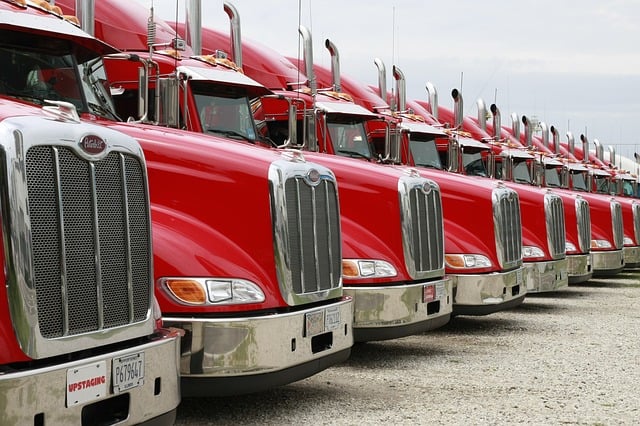
Commercial vehicles often operate over long hours and in grueling conditions, and it’s important to know the condition of your entire fleet so it can remain financially viable. Taking the time to create a preventive maintenance program can help you save in the long run by avoiding unexpected downtime and ensuring fleet reliability.
Let our team help you create a preventive maintenance program and prevent costly breakdowns. Call us at 831-661-5697 and ask to see our new resource, “Preventive Maintenance Program Guide and Toolkit.” This guide walks you through the steps needed to create an effective program and also includes supplemental policies and checklists to help ensure the program’s success.
FMCSA Proposes Simplifed Process for CDL Applicants
The Federal Motor Carrier Safety Administration (FMCSA) has proposed two changes that will help simplify the process of obtaining a commercial driver’s license (CDL). The agency stated that one of the primary motivators for the proposals was to help fill a national shortage of qualified truck and bus drivers.
The following is a summary of the two proposed changes:
- Military licensing and state CDL reciprocity—This proposal would allow applicable state agencies to waive the CDL knowledge test for qualified veterans and certain active duty personnel.
- Commercial learner’s permit validity—This rule would extend the expiration date of CDL learner’s permits from six months to one year.
The FMCSA is currently seeking public comments on the proposals before it moves forward in the rule-making process. For more details on the rules, visit the agency’s website.
Supreme Court Declines to Hear Challenge to ELD Rule
The Supreme Court recently announced that it will not hear a challenge to the FMCSA’s electronic logging devices (ELD) rule. The challenge was brought by the Owner-Operator Independent Drivers Association, which stated that the ELD rule violates constitutional rights that protect against warrantless searches.
As a result of the Supreme Court’s decision, the ELD rule is expected to come into force on its planned Dec. 18, 2017, compliance date. The FMCSA believes that the rule will result in annual savings of over $1 billion by reducing the amount of required paperwork for commercial motor carriers.
Read more
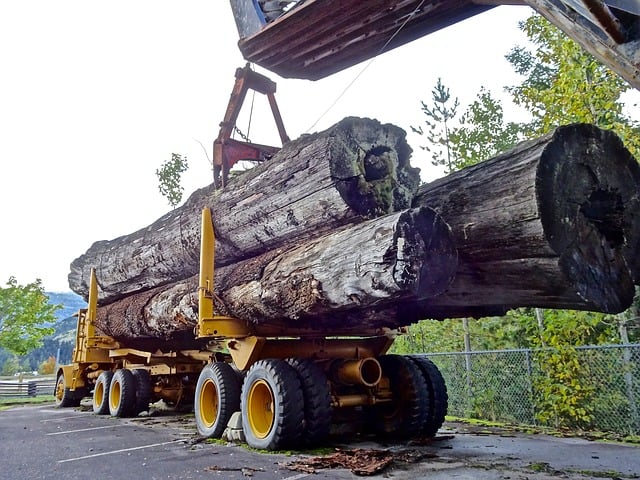
Electricity is one of the leading causes of death for tree-care workers. Tree branches can sometimes be close to power lines, and when trees are uprooted by powerful storms, there is a chance they can take power lines and transformers down with them. Live power lines can pose serious hazards if not fixed properly. Tree-care workers need to know how to stay safe in such conditions.
| Electricity is one of the leading causes of death in the tree-care industry. Workers need to know how to keep themselves and the public safe when electricity poses risks at the worksite |
Be Prepared
- If there is a power line present, never assume that it is safe to touch.
- Assess the worksite for fall and falling object hazards.
- Have an emergency plan.
- Wear properly insulated footwear and other personal protective equipment in case electricity travels through the ground unexpectedly.
- Consider asking the utility company to de-energize nearby power lines.
Follow Safe Work Practices
- Maintain a distance of at least 10 feet from overhead lines, and more than 10 feet if the voltage to ground is over 50 kilovolts.
- Avoid direct and indirect contact with an energized conductor, such as a power line or a tool touching a power line.
- Stand away from grounding elements, as power can travel through the ground.
Wear the Right Gear
- Wear proper gloves and shoes for hazards present wherever tree work is being performed.
- When electrical hazards are present, use rope that provides appropriate insulation and is free of moisture and contaminants.
Be Alert
- Assume that all power lines are energized at all times.
- Anticipate when limbs might fall onto power sources.
- It only takes a moment for a fatality to occur. Always stay alert and be prepared for potential hazards.
Read more

Another global cyber attack was activated on Tuesday, leaving companies across Europe, Australia and even the United States struggling to respond.
This outbreak may be the most sophisticated of a series of attacks initiated after hacking tools were stolen from the National Security Agency and leaked online in April. Similar to the WannaCry attacks in May, the most recent hack involves taking control of computer systems and asking users for digital ransom in order to regain access.
According to a spokesperson from Microsoft, the latest software update used to patch EternalBlue—the Windows software vulnerability that caused previous attacks—should protect against this attack. However, the companies affected may have failed to properly install it. As of Wednesday morning, the following companies had been affected:
- Ukrainian institutions that include the Infrastructure Ministry, postal service, central bank and the country’s largest telephone company
- Russian oil company Rosneft
- The world’s largest container-shipping company A.P. Moller-Maersk
- U.S. pharmaceutical giant Merck
- U.S. food company Mondelez International
- French bank BNP Paribas
- French construction materials company Saint-Gobain
- British marketing company WPP
- German railway company Deutsche Bahn
Although the perpetrators of this outbreak are still unknown, computer specialists have noticed similarities between the ransomware used in this attack and last year’s Petya attack. Like WannaCry, Petya is a quickly spreading worm that affects vulnerable systems. Unlike WannaCry, Petya has multiple ways to spread. This could explain why even victims who applied the EternalBlue patch were affected.
If the most recent attack is related to Petya, it could be far more damaging than WannaCry. Unlike WannaCry, Petya lacks a kill switch to prevent it from spreading. Also, Petya locks and encrypts entire hard drives, while WannaCry only locked individual files.
At the time of this news brief, 30 victims had paid the bitcoin ransom of $300, according to online records, but it isn’t yet clear whether they’ve regained access to their systems. Complicating matters, German email provider Poseo shut down the email account of the hackers in a move that could make it impossible for hackers to restore their victims’ computer access once ransom is paid.
Scurich Insurance will continue to monitor the situation. Contact us if you have any further questions regarding how you can avoid disruptive business interruptions from cyber attacks.
Read more
Executive Order on Apprenticeships Expected to Help Manufacturers
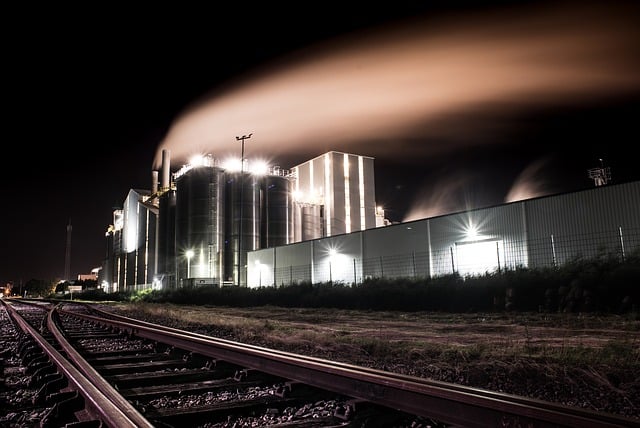
President Donald Trump recently signed an executive order that will expand apprenticeship programs across the country. As a result of the order, the number of available apprenticeships is expected to increase and the federal government will increase spending for apprenticeship programs to $200 million per year.
Many manufacturers use apprenticeships to meet employment requirements and help students get hands-on experience that can’t be achieved in a classroom. A larger emphasis on apprenticeships may also help fill an anticipated employee shortage in the manufacturing industry. According to the Manufacturing Institute, there will be 3.4 million manufacturing jobs to fill over the next 10 years.
Although the executive order didn’t set specific goals for the number of apprenticeships to be added, experts believe that up to 5 million apprenticeships could exist in the next 10 years. A clause included in the executive order may also allow existing internships to be categorized as apprenticeships.
Machining Safety Tips
Using machines is common for every manufacturer, but ignoring machining safety can expose you to incredibly high costs. OSHA issued $6.8 million in penalties for machining safety violations in 2015, and the associated costs of medical bills, damaged equipment and replacement personnel is much higher.
Before your employees use any machine, you should conduct a review to ensure that they’re properly trained and that all equipment is in working condition. Also, make sure that machine guards are in place to prevent injuries and that employees wear any required personal protective equipment. For more resources on machining safety, contact us at 831-661-5697 today.
Air Bag Manufacturer Files for Bankruptcy
Japanese auto part supplier Takata recently filed for bankruptcy after many years of managing the largest product recall in U.S. history. At least 16 deaths have been attributed to the company’s faulty air bag inflators, and over 69 million vehicles have been recalled as a result.
Although Takata recently pleaded guilty to a felony charge as part of an agreement with the Justice Department, mounting costs from the recall and associated lawsuits overwhelmed the manufacturer. However, Takata executives stated that filing for bankruptcy will allow them to reorganize their finances and continue shipping replacement parts for affected vehicles.
Read more

As a farmer or rancher, you may produce a variety of products. Maybe you grow grain, flowers or fruit, raise cattle, horses or alpacas, or manage fish ponds, chicken barns or a custom farming fleet. A farms/ranches business owners policy is essential for protecting your livelihood.
What is a Farms/Ranches Business Owners Policy?
A regular homeowners’ policy covers your home if it’s damaged, and it may give you some liability coverage. This policy won’t give you the protection you need for your farm or ranch business, outbuildings or livestock, though. You need a specialized farms/ranches business owners policy with several layers of protection.
What Does a Farms/Ranches Business Owners Policy Cover?
Farm and ranch owners may customize their business owners insurance policy. In general, your farms/ranches business owners policy covers:
House – Repair or replace your farm or ranch house and any possessions
Liability – Cover medical and legal expenses you may incur if someone is injured while visiting your farm or ranch.
Livestock – Receive financial reimbursement if your livestock are stolen, attacked by dogs or wild animals, accidentally drown or are shot, suffer electrocution or die during a natural disaster or collision.
Machinery and equipment – Replace damaged, lost or stolen tractors, wagons and other machinery and equipment you own, borrow, rent or lease for farm or ranching activities.
Structures – Cover farm/ranch structures, including barns, pens, fences, silos, machine sheds and other buildings, that may be damaged, stolen or vandalized during a weather incident or other incident.
Additionally, you may customize your farms/ranches business owners policy with a schedule that’s based on your specific farm or ranch operation. If something on your farm or ranch is not listed on the schedule, it may not be covered if it’s damaged, lost, stolen or vandalized.
Ask your insurance agent about these optional coverages, too.
- Accidental Direct Physical Loss
- Amendatory Deductible on Cab Glass
- Chemical Drift
- Custom Farming
- Crop Dusting
- Equipment Breakdown
- Extra Expense
- Fire on Growing Grain
- Hired Auto
- Incidental Business
- Limited Pollution Liability
- Loss of Earnings
- Seasonal Coverage
Where do you Buy a Farms/Ranches Business Owners Policy?
A farms/ranches business owners policy is a valuable investment. To purchase a policy, talk to your insurance agent. Discuss your unique needs, business and budget and create a policy that’s right for you. For example, you may choose a policy with high liability limits if you conduct school tours on your farm or ranch, and the size of your farm or ranch affects the amount of coverage you will buy.
A farms/ranches business owners policy gives you peace of mind and valuable protection for your home and your business. Understand what it is as you operate your farm or ranch.
Read more
