
Buffer Liability Insurance is a useful risk transfer tool as the P&C insurance cycle transitions from a soft to hard market. A “soft” market is ideal for consumers, as it is the best time to find insurance coverage and the lowest premiums.
On the other hand, a “hard market” occurs as insurance companies, who have had to pay out a lot in claims for catastrophic events, subsequently increase premiums and decrease the amount of coverage they’re willing to underwrite. For the last two decades, the insurance industry has largely experienced a soft market period, and Buffer Liability Insurance was usually not needed. However, with today’s changing market, this insurance is becoming more popular.
Buffer Liability Insurance Basics
Buffer Liability Insurance is any layer of insurance (or risk retention) that resides between the primary layer and the excess layers. For example, if the primary layer coverage is $100,000 and the excess layer attachment point is $500,000, a buffer layer of $400,000 is required. In the past, if you had both Primary Layer Insurance and Excess Insurance, there was essentially no gap between those coverages; if your primary layer capped at $1 million, the excess layer insurance would kick in at that point.
However, now insurance carriers are less willing to write high primary insurance limits. That, coupled with a hardening market, will make excess insurance more expensive to purchase; this means the excess layer will kick in at a significantly higher point than the primary cap. This creates a gap between the primary layer and the excess layer, indicating the need for Buffer Liability Insurance. The wider the gap, the more Buffer Liability coverage that’s needed.
Who Should Consider Buffer Liability Insurance?
Buffer Liability Insurance is important for large risks that can be difficult to insure, such as the following:
- Truckers, emergency vehicles and auto fleets with more than 500 vehicles
- Employers who self-insure their workers’ compensation
- Companies with a poor loss history that want liability coverage over the usual primary layer
- Condo owners and apartment building owners who have Habitational Insurance
As the insurance market begins to harden, protect your business from all of the risks that can occur. To learn more about adding Buffer Liability Insurance to your current insurance coverage, contact us today.
Read more
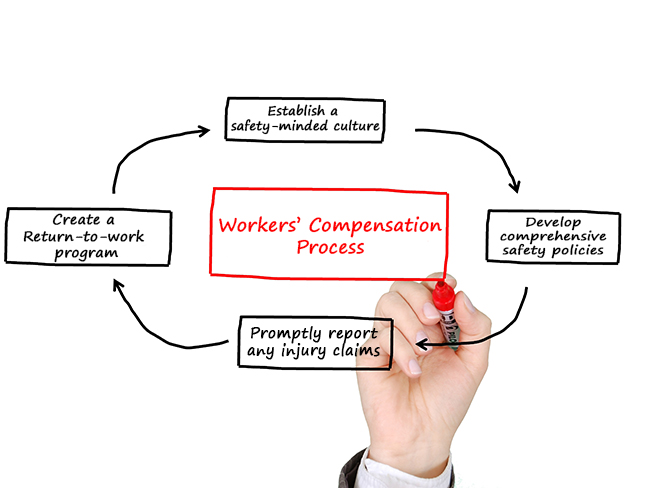
For the unprepared, workers’ compensation (WC) issues can be both confusing and costly. Fortunately for employers, there are ways to actively engage WC issues to influence their outcomes.
Through management controls and active involvement in the WC process, your organization can effectively influence related costs. To do so you will have to establish a number of your own processes that guide decision making throughout your organization.
By developing a cohesive workers’ compensation process, you can play an active role in reducing related costs.
Areas requiring WC management can be divided into three main categories. These categories include facets that may range from the simple to the complex, but as a whole, address vital issues that can negatively influence WC costs in your company.
Workplace Safety Means Fewer Claims
Simply put, reducing claims reduces costs. Establishing a safety-minded culture throughout every level of your company is essential to keeping workers injury free. However, establishing such a culture isn’t an overnight solution. To be successful, an ongoing commitment to safety must be made. Such a commitment must be supported by management and given the necessary resources to succeed.
Developing comprehensive safety policies for employees builds a firm foundation for your safety culture to grow. Such policies also encourage OSHA compliance, further improving your safety efforts while helping you avoid costly fines.
Mitigate Loss After an Injury
Unfortunately, even with all the right programs in place, it is still possible for accidents to happen. When a workplace incident occurs how you respond can greatly influence the outcome of the claim. Prompt claim reporting is essential to keeping costs down.
It is also important to have a designated injury management coordinator, someone who can supervise open claims and work with both employees and medical personnel to facilitate the timely recovery.
The longer an employee is out of work the more expensive their claim will be. Return-to-work programs that allow injured employees to come back to work at a limited capacity during the recovery process, are one of the most effective tools business owners have to reduce the severity of a claim.
Managing Your Mod
Insurers use what is known as an experience modification factor, or mod, to calculate the premiums you pay for workers’ compensation coverage. By managing your exposures and promoting safety it is possible to manage your mod and decrease your premium rates.
Like a good safety program, controlling your mod is an ongoing process. To reap the benefits of lower premiums you will have to keep in regular contact with your insurance provider to ensure they have the most accurate data to use in their calculations.
Read more

If an employee is away, restricted or transferred for an extended period of time, follow these guidelines for completing the OSHA 300 form:
- Enter an estimate of the days the employee will be away.
- Begin counting days on the day after the injury occurred or the illness began, and update this number when you know the actual number of days.
- The count of days away from work ends on the date the physician or other licensed health care professional recommends that the employee return to work, whether or not the employee returns earlier or later than that date.
- When there is no physician recommendation, enter the actual number of days the employee is off work.
- Include weekend days, holidays, vacation days or other days off in the number of days recorded if the employee would not have been able to work on those days due to a work-related injury or illness.
- When the number of calendar days away from work or days of job transfer or restriction is greater than 180, enter 180 in the “Total Days Away” column.
- If an employee leaves the company for a reason unrelated to the injury or illness, stop counting days away from work or restriction/job transfer.
- If an employee leaves the company because of the injury or illness, estimate the total number of days away or days of restriction/job transfer and enter that estimate.
- Log the number of days away only on the 300 Log for the year in which the incident occurred.
- If the employee is still away from work because of the injury or illness when you prepare the annual summary, estimate the total number of calendar days you expect the employee to be away from work, use this number to calculate the total for the annual summary and then update the initial log entry later when the day count is known or reaches the 180-day cap.
- Never split the number of days between years and enter two amounts for two different years. Only record each injury or illness once.
Read more
 A resurgent construction industry needs to do a better job of keeping workers safe. That’s the bottom line of a recent report by Marsh Risk Consulting.
Based on data from the U.S. Bureau of Labor Statistics, the study, “Building Safety and Leadership in the Construction Industry,” notes that the industry’s 2012 fatality rate increased to 9.5 per 100,000 workers from 9.1 per 100,000 in 2011. The 775 construction-sector deaths in 2012 marks the first annual increase in work-related fatalities since 2006.
According to Marsh, fatalities will probably continue to rise without concerted industry-wide safety improvements, as an ongoing shortage of experienced construction workers leads to widespread promotion of unskilled workers into supervisory roles. “The increase in new construction activity is bringing an influx of new, inexperienced workers,” states the report. “In this environment, some contractors are stretching their hiring standards to meet project demands.”
Marsh recommends that construction firms focus on training management to ensure effective leadership and help build a culture of safety throughout their organizations.
“As the economy grows and the number of new construction projects picks up, now is not the time to be lax on safety,” warns John Moore, a construction safety specialist in Marsh’s workforce strategies practice. “Inadequate safety performance can lead to employee turnover and legal, financial and reputational risks. Investing in high-quality leadership will go a long way toward retaining valued workers and maintaining a safe work environment.”
The more you do to keep your workers, safe, the better for all concerned– and the lower your insurance costs. We stand ready to offer our advice on developing, implementing, and enforcing workplace safety standards. Just give us a call.
Read more
 Following these principles of leadership will help you and your employees focus on job safety:
- Don’t walk by. It is everyone’s responsibility to prevent any potentially unsafe acts and conditions they witness from turning into accidents.
- STOP! Encourage employees to stop working whenever they feel unsafe, no matter what reason they give.
- Focus on a safe working environment. If you expect your workers to work safely, make their workplace as safe as possible.
- Don’t blame the worker first. Unsafe ways of working, accidents, incidents, and ill health aren’t necessarily the worker’s fault. The problem often comes from less obvious causes, such as decisions by management.
- Use your workforce for ideas. Employees often have a more accurate idea than you or your managers about which safety and health practices will work, because they deal with these issues every day.
- Be patient. Don’t expect quick wins. Improvements will emerge over time, but only if you stick with them.
- Explain your decisions. Just telling workers that something is wrong or a safety risk isn’t enough. If they’re to act on the information you provide, they need to know why and how to avoid harm.
- Lead by example. Your behavior sends powerful signals. If you carry out your job in a safe way, your workers are more likely to do the same. If you don’t, they won’t imitate you.
- Focus on co-operation. Treat your subcontractors in the same way as employees by encouraging them to communicate with each other.
- Don’t neglect occupational health. If you look after the health, as well as the safety, of your workers today, you’re less likely to create problems for them or your business tomorrow.
Sound advice!
Read more
 Viagra is the most frequently counterfeited product on the market. Running a close second – and of far more concern to workplace safety experts – come electrical components. The Electrical Safety Foundation International has identified more than 1 million fake parts that can easily fail, putting workers at risk of serious injury or death from electrical accidents.
To protect your employees against this danger (and make sure that you’re getting the parts you’re paying for), manufacturers offer these guidelines:
- Buy from an authorized dealer whenever possible. However, bear in mind that counterfeit parts are often mixed in with the genuine article, making them difficult for reputable dealers to detect. Also, a broker might be your only source for discontinued items.
- Examine the packaging. Check for such obvious discrepancies as logos that are missing or don’t look right, misspelled or badly edited text, etc.; and make sure that shipping documents and parts numbers on the packaging match.
- Check the product. To make sure that a part looks and feels right, lay it next to a genuine component and see if they match. If they don’t, have an expert examine the product using a microscope, X-ray, or ion chromatography technology that can detect tampering.
- Test the part. Because many counterfeits can pass basic functionality tests, it makes sense to send any suspicious products to an independent lab for testing under a variety of conditions. This is the best way to detect actual manufacturer components that were discarded because of damage or quality control failures. Don’t choose a lab based strictly on price; ask for a detailed listing of its procedures and inspect the facility in person.
Read more