Many Americans are unfortunately becoming aware of the increasing problem of auto theft, vandalism and how it affects your insurance rates. Every 27 seconds a car is stolen. It is estimated that at least 1 million cars will be stolen this year alone. Auto theft affects your insurance premiums so much so that there are instances where individuals living in certain locations are unable to even secure a regular auto insurance policy because of the risk of vehicle theft.
It’s bad enough that someone would vandalize or steal your car. To make matters worse, you will be the one who ends up paying increased policy rates. You should also know that if you own a car that is considered by auto insurance companies as being high risk for theft, you could pay higher rates as well.
What kind of theft coverage do most standard auto insurance policies cover anyway?
Comprehensive Coverage
Automobile theft is covered by your automobile insurance policy’s comprehensive coverage. If you are paying for comprehensive insurance coverage, you are paying rates determined by the likelihood of your car being stolen. Your auto insurance company will also review the car theft rates in your area, and whether your car’s make and model is frequently targeted by thieves.
If you would like more information on Scurich Insurance and what services we can provide for you, we have a great website
Scurich Insurance Services has been serving the Monterey Bay Area since 1924. Our mission is to partner with our customers and provide them superior service and value. We are a member of United Valley Insurance Services, Inc., a cluster of over 70 California Independent Insurance agencies, which produced over $530,000,000 of annual premium last year.
At Scurich Insurance Services we understand your business and our community. Our customers look to us for comprehensive solutions. We have established relationships with more than 40 of the nation’s leading insurance providers, which allows us to deliver multiple, competitively-priced options and a team of experts to guide you through the process.
When you need to file a claim, change a policy or process a certificate you can depend on Scurich Insurance Services to respond quickly to your request.
Scurich Insurances can provide commercial packages, farm bureau discounts, farm packages, workers compensation, professional liability, umbrella, group benefits group life & health personal auto , home, life, health and much more. We can also help you plan wisely and guide you in the evaluation of risk management, We serve Watsonville, California and surrounding areas. We represent over 50 Insurance carriers to better protect your business.
Watsonville is a city in Santa Cruz County, California, United States. The population was 51,199 according to the 2010 census. Watsonville is a small farming community on the central coast of California. The city is home to people of varied ethnic backgrounds.
There is a large Hispanic population, small group of Croats, and a Filipino, Caucasian, and Japanese population of people that live and work in Watsonville. The economy centers predominantly around the farming industry. The city is known for growing strawberries, apples, lettuce and a host of other vegetables.The Pajaro Valley has a climate that is usually pleasant – around 60 to 70 degrees Fahrenheit – year round.
This climate makes Watsonville an attractive coastal environment for the neighboring inland communities with very hot summers. The Pajaro Valley Unified School District has an attendance of about 18,000 students kindergarten through 12th grades. There are several private religious-based schools in Watsonville such as Notre Dame School, Monte Vista Christian, Salesian Sisters and St. Francis. There are also several charter schools and the non-religious independent Pre-K through 12th grade Mount Madonna School. These schools provide a wide range of educational options for local families. Watsonville is generally conservative on the political spectrum and average in relationship to the neighboring communities of Salinas, Castroville, and Prunedale.
The larger coastal town directly north of Watsonville is the city of Santa Cruz. Santa Cruz is a draw for many young college students who attend Cabrillo College or UC Santa Cruz. Because Watsonville and Santa Cruz are beach towns, they draw many visitors from San Jose and from the inland Valley areas. Like neighboring Salinas in Monterey County, Watsonville produces a variety of fruits and vegetables, primarily apples, strawberries, blackberries, raspberries, and table mushrooms.
Also located in Watsonville, CA is Scurich Insruance which is family owned and locally ran. If you want more information on Scurich Insurance click the link to be directed!
There are many types of disasters, all of which can devastate your business and ruin the lives of your employees, your shareholders, your stakeholders and yourself.
Natural disasters
earth quake disaster, environmental disaster, national disaster, weather disasters, natural disasters, fire disasters, earthquake, tsunami, typhoon, floods, tornado, lightning, blizzards, freezing temperatures, heavy snowfall, pandemic, fallen trees, chemical spill, bombing, nuclear attack, biological attack, plane crash disaster, environmental disasters, theft, severe hail storms, natural disasters, national disaster, nuclear disaster, environmental disaster, volcano disaster,
Manmade Disasters
In today’s world it is an unfortunate fact of life that there are people deliberately and negligently causing disasters all over the world. Disruption of communications, interruption in shipments, destruction of records and production equipment are all ordinary results of manmade disasters and a prudent business will prepare for their occurrence.
Customer Defined Disasters
Customer specific disasters also have the potential to devastate their business. power loss, excess temperatures, broken plumbing, felled trees, loss of communications, utility failure, work stoppage, deliberate disruption, loss of utilities, loss of supplies, equipment failure, loss of key supplier, loss of key vendor, intentional damage and destruction
Even if your company is not in the disaster area your business can still be effected by a disaster. This often occurs when suppliers, customers, communication nodes, in transit shipments etc are in the disaster area.
Is your business protected? Do you have any gaps in your current policies?
Scurich Insurance has been covering local business owners, like you, safeguard against the above possibilities. For a free quote, visit Scurich Insurance and get started now before something happens and your business is left in ruin.
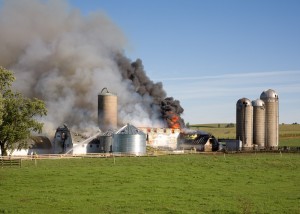
Prevention on the outside Be sure to carry out certain fire protection measures before a fire starts:
Create “Defensible Space” – Remove flammable vegetation from around your home or structures and replace with fire-resistant plants. This safety zone for firefighters should be at least 100 feet. Also, clear away dead leaves and debris from your roof and gutters.
Mark road signs and buildings clearly – Fire-fighting personnel must be able to immediately locate and safely travel to your home or business in order to protect it.
Establish an emergency water supply – Keep a minimum of 2,500 gallons of water (roughly the size of an above-ground pool, 10 feet in diameter) available to firefighters.
Make your home and buildings fire safe – Modify your structures to resist fire damage. Siding materials such as brick and stucco resist fire much better than wood. Also, build or re-roof with fire resistive or noncombustible materials (Class A offer the best protection).
Prevention on the inside Fires are caused by a combination of fuel, air and heat. Therefore, removing one of the three elements is key in preventing devastating fires. Beware of fire ignition sources such as:
Electrical – Many fires result from defects in, or misuse of, the electrical system. Wiring may fail due to faulty installation, overloading, physical damage, aging or deterioration. Inspect all exposed wiring regularly. Make sure heating units are working properly.
Farm machinery – Equipment fires may be the result of defective fuel or ignition systems, smoking, overheated engines, sparks from exhaust or grinding equipment, or improper refueling. Turn off the engine and allow it to cool before refueling. Repair leaks in fuel lines, pumps and filters. Use and store fuels properly. Keep them in well-ventilated areas.

 Many Americans are unfortunately becoming aware of the increasing problem of auto theft, vandalism and how it affects your insurance rates. Every 27 seconds a car is stolen. It is estimated that at least 1 million cars will be stolen this year alone. Auto theft affects your insurance premiums so much so that there are instances where individuals living in certain locations are unable to even secure a regular auto insurance policy because of the risk of vehicle theft.
 Scurich Insurance Services
 Watsonville is a city in Santa Cruz County, California, United States. The population was 51,199 according to the 2010 census. Watsonville is a small farming community on the central coast of California. The city is home to people of varied ethnic backgrounds.
 There are many types of disasters, all of which can devastate your business and ruin the lives of your employees, your shareholders, your stakeholders and yourself.