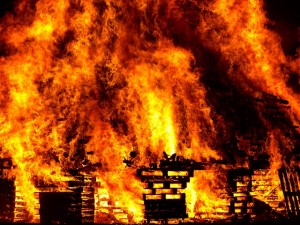
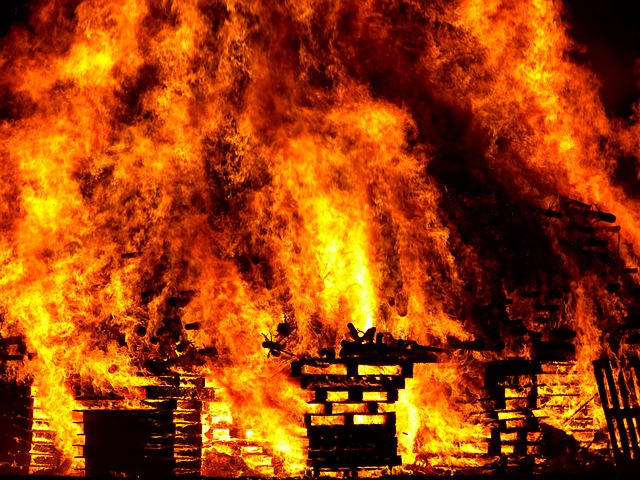
 U.S. states plagued by historic drought are bracing for an early wildfire season with a cost that may rise as high as $1.8 billion, or almost $500,000 more than what’s available to control the blazes.
Oklahomans fought seven fires in May during what is normally the state’s quietest period. Flames scorched four times as many acres in Texas from January through May as in the same period a year earlier. California is also far ahead of its usual pace and is bracing for hundreds more containment battles throughout the most populous U.S. state.
“Drought has set the stage for a very busy and very dangerous fire season,” said Daniel Berlant, a spokesman for Cal Fire, as the Sacramento-based California Department of Forestry and Fire Protection is known. “From Jan. 1 through the end of April, we responded to 1,250 wildfires. In an average year for that same time period, we would have responded to fewer than 600.”
The 2014 season is repeating a pattern of destruction established over the past decade by a combination of high temperatures, parched vegetation and more people living in wooded areas. Fires feeding on plentiful dry grass, brush and hardwood are requiring more personnel and money to bring them under control. More than twice as many acres burned across the U.S. through May 9 this year than during the same period in 2013, according to the Boise, Idaho-based National Interagency Fire Center.
“With climate change contributing to longer and more intense wildfire seasons, the dangers and costs of fighting those fires increase substantially,” Rhea Suh, assistant secretary for policy, management and budget at the U.S. Interior Department said May 1 in a statement.
Diverting Funds
Federal officials expect to spend about $470 million more than the $1.4 billion that’s been allocated, according to a congressionally-mandated report released May 1. Increasing fire costs required the U.S. Forest Service and Interior Department to divert funds from other programs in seven of the last 12 years, the study showed. Millions of additional dollars in state and local funds are spent each year on persistent and ever- increasing blazes.
In Arizona, last year’s record-setting fire season saw 19 members of the Granite Mountain Interagency Hotshot Crew — firefighters who work behind the lines to control the spread of flames — die in the Yarnell Hill fire, the biggest loss of life from a single fire in 80 years. Colorado experienced its most destructive wildfire in history. A conflagration in Yosemite National Park that threatened San Francisco’s water supply became the largest ever in the Sierra Nevada.
Snowpack Low
With snowpack that provides water for a third of California’s farms and cities at only 18 percent of average in some places after the driest year in state history, officials expect to spend $221 million in emergency funds fighting fires by June 30, said Cal Fire’s Berlant.
In a normal year, the agency would start hiring seasonal firefighters this month. Instead, Governor Jerry Brown, a Democrat running for re-election, ordered 125 firefighters hired for the northern part of the state in January and kept seasonal crews in the south on the job longer.
Cal Fire was “never able to transition out of fire season in 2013,” according to a statement. The agency returned to peak staffing in March in San Diego, Riverside and San Bernardino counties, where equipment and facilities are staffed around the clock.
Dead brush and shrubs are drying out faster than usual in conditions more typical of mid-June than May, according to an outlook for May through August compiled by the interagency fire center.
“Fuels should remain critically dry for most of the upcoming fire season,” the report said, and be “receptive to ignition and fires that are highly resistant to control efforts.”
The risk of significant blazes will also come earlier than usual over much of the U.S. northwest, particularly in Oregon and Alaska, the outlook found. Because of substantial snowpack, the fire potential in the northern Rocky Mountains will be below normal, according to the analysis.
Colorado Governor John Hickenlooper, a Democrat running for re-election, said yesterday that several fire-prone areas saw below-average precipitation this winter including the southwest and the southeast, in the grip of an extreme drought.
‘Mitigate Danger’
“It’s up to everyone to make sure they are taking the right steps to mitigate the danger and be prepared,” Hickenlooper said in a statement. “With forecasts and planning, plus the addition of new resources related to wildfire response, we are doing what we can at the state level.”
After record-setting wildfire seasons back-to-back, Hickenlooper signed legislation setting aside almost $20 million to buy two fire-spotting planes and hire four helicopters and four large tankers for the effort.
Triple-digit temperatures that came early this year to the panhandles of Texas and Oklahoma dried grasses on what already looked like a moonscape, said Mark Svoboda, a climatologist at the National Drought Mitigation Center at the University of Nebraska-Lincoln.
Dust Bowl-like conditions in those areas and in southeastern Colorado and northern New Mexico, last seen during the 1930s, are increasing fire risk, he said.
“The droughts in California and Texas and Oklahoma are once-in-a-generation types of droughts with conditions we haven’t seen since the 1970s,” Svoboda said. “In California, the population has doubled since the 1970s, putting more structures at risk and increasing the potential loss due to fire.
Content provided by http://www.insurancejournal.com/news/national/2014/05/13/328902.htm
Read more
 Approximately 15 million people worldwide have a stroke every year. Of these, almost 6 million die, while a further 5 million are left permanently disabled. But although stroke is the one of the leading causes of death globally, many people remain unaware of the signs and symptoms to look out for, therefore putting their health at risk.
The American Heart Association/American Stroke Association(AHA/ASA) state that around 1 in 3 Americans are unable to recall the warning signs of stroke.
Furthermore, a recent AHA/ASA study revealed that many women in the US are unaware of stroke warning signs, even though they are at much greater risk of stroke than men.
“This lack of recognition of stroke signs and symptoms could be a significant barrier to reducing death and disability related to stroke in the US,” says Dr. Lori Mosca, who led the study. “This is critically important because delays in getting care costs lives and hinders functional recovery.”
May is National Stroke Awareness Month – an annual campaign introduced in 1989 that aims to increase public awareness of stroke in an attempt to tackle the condition once and for all.
In line with this campaign, this week’s spotlight feature looks at the signs and symptoms of stroke, the risks associated with the condition and what can be done to increase stroke awareness.
What is stroke?
A stroke occurs when an artery or blood vessel becomes blocked, restricting blood flow to the brain. This leads to brain cell death, and, subsequently, brain damage.
How a person is affected by stroke depends on where in the brain the stroke occurs and how much of the brain is disturbed. Many stroke patients experience impaired speech, movement and memory. In severe cases, patients may suffer paralysis or even death.
There are two main types of stroke – ischemic stroke and hemorrhagic stroke. Ischemic stroke is the most common, accounting for around 87% of all strokes. This occurs when the arteries are blocked by blood clots or a gradual build-up of plaque and other fatty deposits.
Hemorrhagic stroke occurs when a blood vessel in the brain splits, leaking blood into the brain. Although only 13% of all strokes are caused by this, it is responsible for more than 30% of all stroke deaths.
The risk factors
There are many risk factors for stroke, many of which are out of our control. For example, individuals over the age of 55 are at greater risk of stroke, as are African-Americans, Hispanics and Asian/Pacific Islanders. Individuals who have a family history of stroke or TIA (Transient Ischemic Attack) are also more likely to have stroke themselves.
And women are more likely to have stroke than men. In the US, around 55,000 more women than men have a stroke every year.
Individuals with high blood pressure are one and a half times more likely to have a stroke than those with normal blood pressure.
But there are also risk factors for stroke that are within our control – one of the most important being high blood pressure, or hypertension. According to the National Stroke Association, people who have high blood pressure are one and a half times more likely to have stroke than those who have normal blood pressure.
“The No. 1 stroke risk factor is high blood pressure. It’s important to check your blood pressure regularly and talk to your doctor about healthy levels for you,” says Dr. Jeffrey L. Saver, professor of Neurology at the University of California Los Angeles and a spokesperson for the ASA.
High cholesterol also increases the risk of stroke, as cholesterol can block blood flow in the arteries. Furthermore, high cholesterol can raise the risk of heart disease and atherosclerosis – risk factors for stroke in themselves.
Smoking is another risk factor. Compared with non-smokers, those who smoke are at double the risk of stroke. It reduces the amount of oxygen in the blood, meaning the heart has to work harder to pump blood around the body. This means blood clots find it easier to form in the arteries, which can cause a blockage.
Those who are overweight or obese are also at increased risk of stroke. Excessive weight can increase the risk of high blood pressure, high cholesterol and diabetes.
Read the entire article here.
Content provided by http://www.medicalnewstoday.com/articles/276240.php
Read more
 Keeping in mind that there are many types of coverage and each individual consumer will have different specific insurance needs, there may be several reasons to consider consolidating your various policies with a single carrier. For most people, the pros of consolidation usually outweigh the cons, but here are some points from both sides:
Cost. Consumers often find there’s a cost benefit in consolidating their coverage with a single carrier. While the exact number will vary from company to company, it’s very possible to save 15% or more. Specialist companies still exist, but many generalist insurers have diversified their product lines to include an array of business and personal insurance and financial products. Since an insurance carrier is gaining customer loyalty and reducing their marketing costs when an existing customer purchases additional products, they’re usually willing to pass a portion of their savings on to their consumers.
Gaps. Depending on the types of coverage you’ve purchased and your unique situation, certain coverage gaps could be reduced when you consolidate your insurance portfolio. Take purchasing General and Professional Liability through the same carrier as an example. An accountant, for example, would have little risk of their professional services leading to property damage or bodily injury, but a travel agent, for example, routinely makes professional recommendations that could have physical consequences for their clients. The travel agent might be unaware that a lodging they recommend to a client is undergoing renovations. The client slips and falls due to unsafe conditions and sues the travel agent for not knowing the condition of the lodging before recommending it. If the travel agent has General and Professional Liability through two different carriers, then he/she may find the two carriers pointing the finger in opposite directions and disclaiming coverage. Whereas, if the travel agent has both coverages under the same carrier, then the disclaiming concern is moot since there isn’t another company to point the finger at.
Tailoring. Many carriers have learned to anticipate the common problems associated with coverage gaps, such as in the example discussed above. These carriers have created tailored packaged policies or programs with multiple different coverage options. These options interlock, but don’t unnecessarily duplicate coverage or dangerously leave gaps between coverages. Umbrella policies perform best when written by the carrier of your primary coverage(s).
Cons. As with most everything in life, there are cons to consolidation. It’s important that you look at the financial strength of the insurance carrier. If an insurance carrier is poorly rated by any of the rating services that monitor insurers, then the increased risk of going with an insurer that has questionable financial strength might outweigh any of the cost, gap, and tailoring pros. Another con is that the insurer might quickly change their hunger for a certain product and leave you having to find replacements for multiple policies. Research the company’s track record – have they typically stuck it out during bad and good times or have they timed the market to make a quick dollar and exit? Although most generalist insurers have diversified their offerings, it’s possible to miss out on some coverage benefits still only being offered by specialists.
In closing, consider the above points and how each could or wouldn’t meet your needs. In most cases, you’ll find that coverage consolidation and the right carrier creates a winning scenario for all parties involved.
Content provided by Transformer Marketing.
Read more
 The arrival of summer means days at the pool, family barbeques, picnics, sports and other outdoor activities. Follow these tips this summer to keep your whole family happy and healthy:
Staying active in the summer months
The arrival of spring and summer means days at the pool, family picnics, baseball and other outdoor activities. Here are some tips to keep your family physically active in the warmer months:
- Hydrate! Drink plenty of water before, during and after physical activity to avoid dehydration. For low-calorie flavor, add slices of your favorite fruits such as melon, oranges, berries or even cucumber or mint to a pitcher of water and refrigerate for two hours.
- Protect your family from the sun: wear wide-brimmed hats, always apply water-resistant sunscreen with at least SPF 15 and reapply sunscreen every 2 hours.
- Heat safety: avoid intense activities between noon and 3 p.m. when the sun is at its strongest.
- Dress for the heat: wear lightweight, light colored clothing, choose light, breathable fabrics such as cotton, and wear sunglasses to protect your eyes.
- Head indoors: when the heat gets unbearable, try indoor activities at your local YMCA or rec center like basketball, swimming, yoga or racquetball.
Heart-Healthy Cookout Ideas
Warmer weather may mean it’s time to break out the grill, here are some tips and ideas for a healthier grilling cookout:
- Go fish! Fish, especially oily fish like tuna and salmon have great nutritional benefits including omega-3 fatty acids. Rub a fillet with lemon juice and parsley or rosemary for enhanced flavor.
- Make a better burger: if you’re grilling burgers, be sure to buy lean or extra lean beef, drain off the excess fat after cooking and avoid making huge patties – remember that a serving of meat is about the size of a deck of cards (3 oz). Add finely chopped green pepper to your beef to get in some veggies.
- Baked fries: Slice white or sweet potatoes into sticks, lightly spray with olive oil cooking spray, pepper and paprika and bake on a cookie sheet for 40 minutes at 375 degrees.
- Veggie kabobs: load up skewers with mushrooms, peppers, cherry tomatoes, zucchini, yellow squash or other veggies. Spray lightly with olive oil cooking spray and grill until slightly blackened.
- Try grilled corn on the cob: leave the husks on, and grill for about 30 minutes over medium flame, rotating occasionally. Remove from grill, let cool for about 5 minutes, remove husks and enjoy!
Healthy Road Trip
Road trips can take a toll on everyone – here are some ideas to keep things healthier while on the open road:
- Make “rest breaks” active: pick a road stop or park and get the family out of the car to take a brisk 10-minute walk and move around. Not only will it burn off some energy, but it can also help the driver feel rejuvenated and more alert.
- Pack healthy snacks: finding healthier snacks at road stops can be difficult. Pack apples, grapes, raisins, whole grain fiber-rich crackers or another favorite low fat, low sodium healthy snack to take with you.
- Pack to play: plan to incorporate regular physical activity into your daily routine while you’re away from home. Pack a football, soccer ball, Frisbee, or paddle balls so that you can be physically active throughout your downtime.
- Reach for water: sitting in the car for long periods of time can make it tempting to drink soda, which has extra calories and added sugar. Pack water (flavored or regular), fat free or lowfat (1%) milk and small portions of 100% juice to quench your thirst.
Summer Snack Ideas
Try some fun and refreshing summer snacks that the entire family can enjoy:
- Fruit pops: Homemade freezer pops are an easy, fun treat for kids to make. Mash up fruit like peaches, grapes, berries or watermelon and put them in paper cups, insert a popsicle stick, freeze overnight and enjoy!
- Cool and crisp: keep a variety of colorful veggies on hand that stay cool and crunchy for a refreshing treat – baby carrots, cucumber slices, and celery sticks are just a few ideas.
- Fruit smoothies: blend your favorite fresh fruits with fat-free or low-fat yogurt and ice for a refreshing drink or freeze and eat with a spoon like a frozen ice chill.
- Mix it up: make your own trail mix using your favorite unsalted, oil free nuts, seeds and dried fruits (just be sure to keep your servings to 1.5 ounces or 1/3 cup).
- Just slice and serve: summer months are peek season for most fruits, just slice and serve – the whole family will enjoy the refreshing natural sweetness and juices just the way nature made ‘em!
Enjoy your summer, the healthy way!
Content provided by https://www.heart.org/HEARTORG/GettingHealthy/NutritionCenter/HealthyEating/Summer-Tips-for-a-Healthy-Heart_UCM_303868_Article.jsp
Read more
 From drinking or texting while driving to using a designated driver, there is a disconnect between what teenagers acknowledge as risky behavior and what they actually admit to doing behind the wheel, according to a survey from Liberty Mutual Insurance and SADD (Students Against Destructive Decisions).
While teens know certain behaviors and situations are risky, many don’t apply that knowledge when it comes to getting behind the wheel. For example, a good number say that it is acceptable for a designated driver to have alcohol or that a designated driver is simply the most sober person in a group. Also, a majority of teens admits to using a cell phone while driving despite knowing the danger.
Drink and Drive
According to the survey results, teens claim to understand the dangers surrounding drinking and driving:
- The majority (86 percent) of teen drivers consider driving under the influence of alcohol to be extremely or very distracting
- Only 1 percent of teens define driving under the influence of alcohol as acceptable
- Only 5 percent of teens admit to at least sometimes driving under the influence of alcohol
However, when asked about actual driving behavior involving alcohol, driving “under the influence” takes on a different definition:
- One in 10 teens who say they never drive under the influence acknowledge that they occasionally drive after having an alcoholic beverage
- More than two-thirds of teens (68 percent) who admit to driving under the influence of alcohol say they have done so after having more than three alcoholic beverages
According to the National Highway Traffic Safety Administration, a quarter of fatal crashes involving young drivers resulting from drinking and driving.
“While many teens seem to have gotten the message about these driving dangers, the real challenge is to make sure they understand that even a sip of alcohol or a quick text at a red light can be deadly,” said David Melton, driving safety expert with Liberty Mutual Insurance and managing director of global safety. “Teens need to realize it’s not acceptable to put an allowable limit to their engagement in these behaviors – they need to be eliminated entirely when they are behind the wheel.”
Defining ‘Designated’
While underage drinking is never acceptable and always illegal, many teens and parents consider a designated driver to be a safe alternative to impaired driving. In fact, more than half of parents (58 percent) encourage teens to use designated drivers to avoid driving under the influence, and almost half of teens (47 percent) admit to using one.
However, teens’ definitions of “designated” are concerning:
- Designated Means “Basically Sober”: 21 percent of teens define their designated driver as allowed to have “a little” alcohol or other drugs, as long as they aren’t too impaired to drive
- Designated Means “Least Impaired”: 4 percent of teens describe their designated driver as the “most” sober person in the group
“With teens reporting these lax definitions of what it means to be ‘under the influence,’ a zero tolerance approach is the only answer to prevent potential tragedy,” said Stephen Gray Wallace, senior advisor for policy, research and education at SADD. “The parents and community have a responsibility to initiate and maintain an open dialogue with teens about exactly what driving under the influence means.”
SADD is peer-to-peer youth education, prevention, and activism organization.
Talking and Texting
According to the U.S. Department of Transportation, more than 3,300 deaths were reported in 2012 alone as the result of distracted driving, many attributed to talking or texting on a cell phone. Teens seem to understand the dangers of these behaviors:
- Nearly all (96 percent) teen drivers understand that using a cell phone while driving – either talking or texting – is at least slightly distracting
- 62 percent of teen drivers think texting and driving is extremely or very distracting
However, according to the new data, teen drivers often do not grasp the dangers of what it actually means to use a phone while driving:
- The majority of teen drivers (86 percent) still admit to using a cell phone behind the wheel
- Nearly half (47 percent) of the teen drivers who say they never text while driving still admit to texting at a red light or stop sign
- 68 percent of teen drivers admit to reading or replying to text messages while driving
“It’s critical not only for teens, but all drivers to understand that any time you pull out your phone when you are driving, whether you’re moving or at a stoplight, your attention is diverted and you put yourself, passengers and others on the road at risk,” said Melton. “If you need to use your phone while driving, find a safe place to pull off the road to make a call or send a text. It’s not worth the risk to respond at a stop sign or before the light turns green.”
About the Study
Liberty Mutual Insurance and SADD commissioned ORC International to conduct a qualitative and quantitative methodology to measure teen driving attitudes and behaviors. The study was initiated with a series of focus groups held in Philadelphia, Pa., and Dallas, Texas from May 29 – May 30, 2013, followed by a survey of 2,537 eleventh and twelfth graders from across the country. Overall the findings from the study can be interpreted at a 95 percent confidence interval with an error margin of +/- 1.68 percent. Error margins for subsets such as licensed drivers will be wider. Additionally, the study surveyed 1,000 parents of high school aged teenage drivers, providing an overall error margin of +/- 2.94 percent.
Content provided by http://www.insurancejournal.com/news/national/2014/03/18/323582.htm
Read more
 Jose Pineda Rivas could use the cash. He’s got rent to pay, and his tooth hurts so badly he needs to see a dentist.
But these days, money for fieldworkers like Rivas in this drought-parched stretch of California is about as scarce as rain. And the situation is likely to get worse before it gets better.
The 61-year-old farmhand, who lives in a small home with his wife and a friend’s family, is hardly making enough to cover basic expenses, let alone pricey dental work. He thinks he can afford to get his aching tooth removed, he said. But actually replace it?
Not a chance.
As he tipped back his straw hat and morosely gazed at his flip phone on a recent day, Rivas explained that the crew boss at a nearby tomato farm was supposed to contact him about returning to work. But the call hadn’t come.
It’s the same desperate story all over the Central Valley.
Like many fieldworkers in Mendota, a rural community 35 miles west of Fresno dubbed the Cantaloupe Center of the World, Rivas finds his seasonal job of more than two decades at risk of disappearing because of the statewide drought.
Drought leaves field barren
Fields that normally come to life by April with the planting of tomatoes and melons have been left barren due to insufficient water. And that means less farm work to go around.
“Usually this time of year, we’ll all be going out and weeding and laying irrigation line,” Rivas said in Spanish. “None of that work has happened, and who knows when it will?”
A near-record dry winter has put California in the grip of its worst drought in decades. While many parts of the state have yet to feel any real impact – no cutbacks, no stiff rationing – that’s not the case in the farm towns of the San Joaquin Valley, where water is the touchstone of the economy and underpins the region’s standing as the most agriculturally productive in the nation.
About 20,000 farm jobs statewide stand to be lost this year out of 400,000, the bulk of them in the valley, said Jeffrey Michael, director of the Business Forecasting Center at the University of the Pacific in Stockton.
The estimate does not include thousands of additional jobs supporting agriculture: the truck drivers, packers and processors, as well as the merchants, real estate agents and teachers serving these farm communities.
“We know that this year unemployment is going to be significantly worse than it’s been in a long time,” said Michael, whose job loss projections are based on the amount of farmland likely to be fallowed.
The lost work, he added, will only compound hardship that bedevils many valley towns where unemployment rates consistently rank among the highest in the state.
In Mendota, where about half of the 11,000 residents are in families living below the federal poverty line, the jobless rate stood at 37 percent as of the last count in March, according to state data.
The mayor of Mendota suggested that unemployment could hit 50 percent by summer as the effects of the drought fully play out – a level higher than what was seen during the recent recession.
Read the entire article here.
Content provided by http://www.sfgate.com/news/article/California-drought-Jobs-money-dry-up-in-farm-5431129.php
Read more

 U.S. states plagued by historic drought are bracing for an early wildfire season with a cost that may rise as high as $1.8 billion, or almost $500,000 more than what’s available to control the blazes.