
5 Tips to Improve Your Mental Health
Staying healthy is about more than paying attention to your physical body—your mental health directly influences how you think, feel, react and maintain relationships. If you don’t take steps to promote your mental health, you may find that anxiety, depression and irritability can take control of your life.
According to the National Alliance on Mental Illness, about 1 in 5 adults experience some form of mental illness in a given year, but less than half of them seek professional treatment. And, even if you haven’t been diagnosed with a mental illness, taking steps to improve your mental well-being can improve your physical health and help you maintain positive relationships.
Here are five tips you can use to help improve your mental health:
- Talk with those who care about you. Simply talking to friends, family members or co-workers can help you overcome a personal problem and stay connected.
- Take a break from digital distractions. Although smartphones and other modern technology make it easy to stay connected with others, focusing too much on digital media can make it easy to ignore close relationships and the world around you.
- Take care of your body. Your brain is still part of your physical body, so it’s important to exercise regularly, maintain a healthy diet and get enough restful sleep.
- Set realistic goals and focus on taking the first step. Many projects or errands can seem overwhelming when taken as a whole. Try planning out steps for large tasks and concentrate on what you need to do first.
- Get help when you need it. Although there can be negative social stigmas about seeking help for mental or emotional problems, mental health professionals are trained to help manage stress and mental illnesses with therapy or medication.
The Dangers of Carbon Monoxide
Carbon monoxide (CO) is a toxic gas that’s produced by the incomplete burning of any fuel, including gas, fire and wood. Many of the appliances in your home produce harmless amounts of CO. However, if these appliances aren’t properly maintained or ventilated it could lead to a hazardous buildup of CO. And, because the gas is colorless, odorless and tasteless, it can be easy to remain unaware of potentially dangerous levels of CO in your home.
Symptoms of mild CO poisoning can include flu-like symptoms, such as headaches, nausea and weakness. However, exposure to large amounts of CO for an extended period can be fatal. Follow these steps to prevent a buildup of CO in your home:
- Install CO detectors on every level of your home. Also, never assume that your home’s smoke alarms can also detect CO.
- Check your appliances every year to ensure that they’re in safe working order and have sufficient airflow around them. Appliances that emit CO include fireplaces, water heaters, portable generators, power tools, lawn equipment, and gas- or wood-burning cooking appliances.
- Never leave a car or other motorized vehicle running in an attached garage, even if the garage door is open.
- Never rely on ovens, gas grills or other appliances to heat your home.
- Contact a specialist to ensure that your chimneys, vents and flues are providing sufficient ventilation to your home.
For more information on protecting your home from CO and other dangerous gases, such as radon and natural gas leaks, contact us today at 831-661-5697.
Removing Distractions Before You Drive
Distracted driving is a serious and deadly problem. According to the National Highway Traffic Safety Administration, distracted driving leads to over 3,000 deaths and 375,000 injuries every year. Although many conversations about distracted driving focus on cellphones, the truth is that any distraction can be enough to cause a deadly accident. The following list includes some of the ways you can remove distractions and keep yourself safe on the road:
- Get plenty of rest before you drive. Studies have shown that fatigued drivers perform just as poorly as those who drive while intoxicated.
- Know where you’re going and the road conditions before you drive. Looking at a map or having to focus on the weather can take your attention off of the road and surrounding traffic.
- Secure any items in your vehicle that may roll around. You may be tempted to reach for them while you’re driving.
- Don’t use your cellphone or a hands-free device while driving. If you absolutely must contact someone, pull over to the side of the road first.
Read more
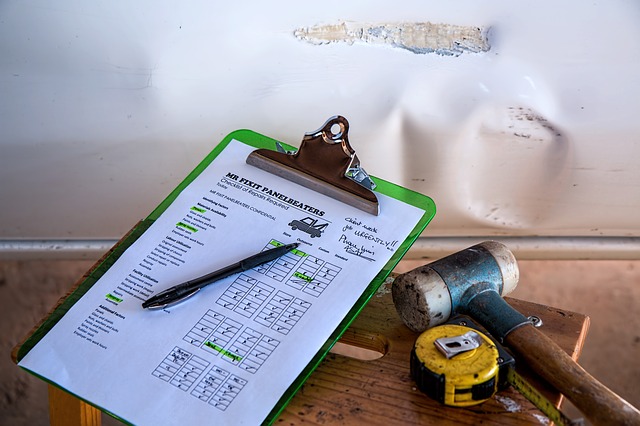
Auto insurance is meant to protect you by covering your bills after an accident. However, the amount of compensation can vary greatly depending on the type of claim that’s made by insurance carriers and the value of your vehicle. The decision to have your vehicle repaired or declared a total loss directly impacts how much you receive.
Determining a Claim
If you’re in an accident, the at-fault driver’s insurance carrier will analyze the approximate value of your vehicle before the accident as well as the cost to repair it afterward. Typically, the pre-accident value of your vehicle is determined by finding its actual cash value. This value is found by taking the price of a similar replacement vehicle in your area and then subtracting any pre-accident depreciation, such as your vehicle’s mileage and history.
If the cost to repair your vehicle is less than its actual cash value, insurers will usually opt to compensate you for the repairs. However, if the cost is too high or if the vehicle can’t be restored to a safe condition, insurers may declare it a total loss.
Total Loss Claims
If your vehicle is declared a total loss, you’ll be compensated with the full actual cash value of your vehicle, minus any applicable policy deductible.
If the cost to re
However, if a financed or loaned vehicle is declared a total loss, the insurer will pay the remaining balance to the finance company first. Here’s a breakdown of the two most common scenarios that occur when a financed vehicle is declared a total loss:
- The actual cash value of the vehicle is greater than the remaining balance of the loan. In this scenario, the insurer pays off the loan and then gives you the amount by which the actual cash value exceeds the loan balance.
- The actual cash value of the vehicle is less than the remaining balance on the loan. In this scenario, you are responsible for the difference between the actual cash value and the remaining loan balance.
Repairs and Diminished Value Claims
Getting a check for the full cost of your vehicle’s repairs may seem like a best-case scenario. However, repairs can substantially reduce your vehicle’s value. Even if it drives better than ever after being repaired, the fact that it was in an accident will taint its history and lead to a lower price if you ever choose to sell it. However, you can file a diminished value claim against an insurance carrier to try to recover any value that’s lost as a result of repairs.
If the cost to re
Most states and insurance contracts prevent policyholders from bringing diminished value claims against their own insurers. However, if another driver is at fault for an accident and his or her insurance pays for your repairs, you may be able to use a diminished value claim to recover any lost value.
If the cost to re
Because few vehicles are appraised immediately before they’re involved in an accident, it can be hard to prove that value has been lost after they’re repaired. Here are some tips you can use before and after an accident to prepare yourself for a successful diminished value claim:
- Check third-party websites to get an approximate value for your vehicle’s make and model.
- Take your vehicle to a pre-owned dealership after an accident for an appraisal. You can then ask for a letter that shows that your vehicle’s lower-than-average value is due to its repairs or accident history.
- Keep documentation about any repairs or enhancements to your vehicle. These documents can help show a more detailed history of your vehicle when determining its value.
- Contact us at 831-661-5697 for more information about diminished value claims and to discuss the specifics of your situation.
Be Prepared
There are few things more dangerous and stressful than getting into an accident. Contact Scurich Insurance today, we can provide you with a variety of auto resources, including our infographic, “5 Things to Do if You Get in a Car Accident.”
Read more

Using renewable energy sources is a wonderful way to preserve Mother Nature and do wonders for your pocket book. There are two types of alternate energy sources that are particularly popular ways to conserve: wind generators and solar power.
Solar Power
Solar power does not release any pollutants, so it’s a great way to be eco-friendly and save a bundle on your utility bills. Some additional benefits include:
- The federal government passed the Energy Law in August of 2005, which provides homeowners up to a 30 percent tax credit for the cost of a solar energy system, up to $2,000.
- Solar panels can convert energy straight into heat can heat water and/or swimming pools easily.
- Solar panels provide electricity long after the sun goes down because of the storage batteries in the panels.
Wind Generators
Wind generators produce energy as the naturally occurring wind spins the turbine. Some things to keep in mind include:
- The amount of energy produced each day will vary; however, wind power is free and tends to significantly reduce electricity bills.
- Your local utility company may have rules against using wind energy.
- Wind generators are costly to purchase (though electricity savings far outweigh initial costs in the long run).
- Many municipalities provide tax breaks for using alternative energy.
Safety First
Conservation is key in preserving resources for future generations. By using alternative energy sources, you are not only helping the planet now, you are doing your part to conserve for your children’s future.
Read more

In the event that someone is injured on your property and you are found legally responsible, you could be faced with a costly financial burden. In fact, without a personal umbrella liability insurance policy, any expenses beyond the limits of your standard policy are your responsibility. This applies to your homeowners, renters, automobile and watercraft insurance policies.
Personal umbrella liability insurance provides an extra layer of protection over your personal assets for when your standard liability coverage is exhausted.
Personal umbrella liability insurance provides an extra layer of protection over your personal assets for when your standard liability coverage is exhausted.
Engaging in everyday activities can put you at risk for a lawsuit. Simple things like having a swimming pool or entertaining guests in your home can increase the chance that someone will get injured and sue you. To minimize your risk, consider a personal umbrella liability policy.
Why is a personal umbrella liability policy important?
It works to fill the gaps in your coverage and provides the following benefits:
- When litigation ensues, it’s typically for a large amount. If you get into a car accident and injure several people, you could be sued for millions of dollars; well beyond the limits of your automobile policy. You can also be held responsible if your dog bites someone, if your child injures another kid in a fight at school or if a handyman hurts himself at your home.
- Umbrella policies cover legal fees because the insurance company assumes the risk, not you.
- Coverage is inexpensive and easy to obtain. Just give us a call to add it on to your current policy.
- You’ll have peace of mind knowing that you are covered in case of a fluke occurrence.
How much coverage do you need?
Take into consideration your total personal assets and your potential for personal risks when determining how much coverage you need.
A wide range of factors, such as whether you have hired help, if you have teen drivers at home or if you operate your business out of your home, will determine how much coverage is appropriate for your circumstances.
What are the policy limits?
A $1 million limit is typical and higher limits are available.
Contact us today to determine how much coverage is right for you.
Read more
 A home might seem like one of the safest places for a child to play, but household furniture carries many unforeseen dangers, especially for young children.
Deadly Consequences
A child is killed every two weeks due to falling furniture in the United States—70 percent are caused by TVs alone. Injuries are even higher, with over 25,000 per year. Preventive measures should be taken to ensure children are safe at home.
Preemptive Protection
Parents will often “baby-proof” their house when expecting a child. This typically includes rounding off sharp table corners and installing baby locks. Surprisingly, properly anchoring heavy furniture is often overlooked.
Preventing Tip-overs
- Use sturdy furniture to hold your TV and other appliances.
- Mount flat-screen TVs whenever possible.
- Closely follow assembly instructions for TVs and furniture.
- Secure top-heavy furniture with anti-tip brackets.
- Remove enticing objects from the top of heavy furniture to discourage children from climbing.
Furniture Tip-over Myths
- Heavy furniture will not fall over. This is a common misconception. Even base-heavy furniture can be hazardous when children open the drawers and climb on them.
- Rooms where children aren’t allowed don’t need precautions. Even a brief opportunity to wander in a bedroom or office can end in tragedy if the child plays on heavy furniture. Tip-overs happen quickly, and it is dangerous to leave a room unprotected.
- Latched dresser drawers are sufficient. Latches made for cabinets are not a substitute for an anchor. Young children can figure out the latches or even open drawers wide enough to begin climbing.
- Older children know they shouldn’t climb. Children aren’t masters of reason and can be compelled to climb if they see a toy sitting on top of a dresser. Additionally, children do not commonly think of shelves or dressers as dangerous, so climbing seems low-risk.
- Sturdy furniture is safe. No matter the weight, no matter how sturdy, all furniture can pose a risk if not properly anchored. The quality of furniture does not lower the danger.
Remember, taking a few extra precautions now can save a child’s life in the future. Play it safe and anchor heavy furniture.
Read more
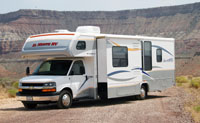 If you’ve just bought a recreational vehicle. and can’t wait to get on the road. will Auto insurance protect your pride and joy?
That depends. You might want to get an endorsement to your Auto policy that would provide coverage. However, since your R. means so much more to you than just transportation, it’s best to get specialized insurance that a typical Auto policy won’t cover. Recreational Vehicle insurance combines Auto, Homeowners, Renters, and Travel coverages into a single policy that will also insure generators, water pumps and refrigerators – items that standard Auto or Homeowners policies would not cover.
The amount of coverage will depend on the value of the RV and its contents, as well as your driving record.
Before you hit the open road, give us a call our office for a comprehensive policy on your vehicle so that you can get behind the wheel with peace of mind.
Happy trails!
Read more
