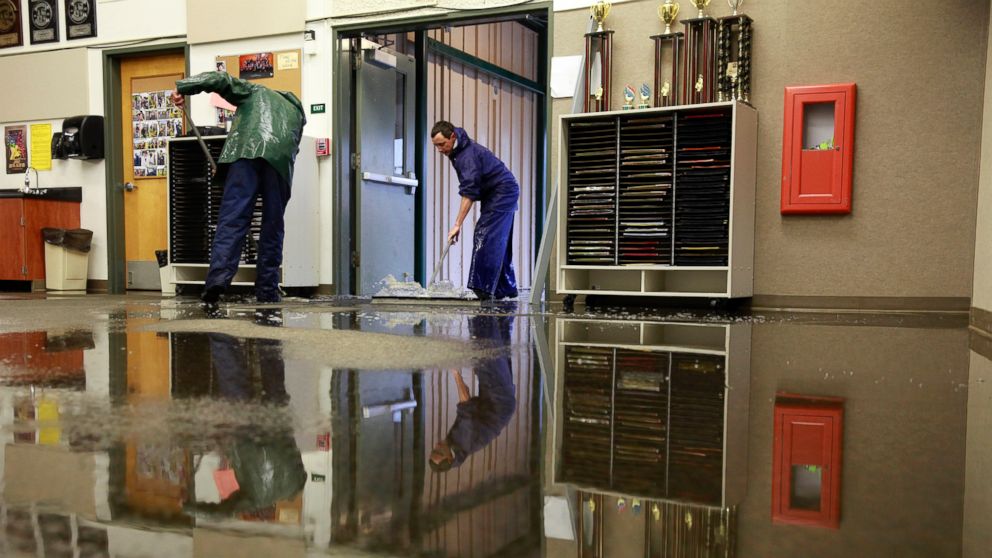
 Since 1984, Monterey County has participated in the National Flood Insurance Program (NFIP). This participation, as well as the continued compliance with federal regulations, allows county residents to purchase flood insurance. Even if your business is far from any form of water such as rivers or creeks, it could still be affected by the intricate system of drainage improvements and facilities that the county maintains in an effort to protect its residents and their properties.
Federal Mandates
If you wish to relocate your business to an area that lies within the 100 year floodplain as determined by Monterey County engineers, or build within that area, federal regulations mandate that you purchase flood insurance in order to take advantage of any federally backed financial assistance for doing so. Even if you are not planning to move your business and you are happily ensconced in your current location, purchasing flood insurance is a wise business decision.
Weather Conditions Warranted Protection
Businesses that are not located within the flood plain are still at risk for being damaged due to flooding. Weather occurrences such as El Nino, for example, can cause extreme amounts of water to be dumped in areas that are ill-equipped to deal with such an onslaught of weather. Weaken structural supports like building foundations, or even elements of the property itself such as hills, can allow water to breech the boundaries of your business and cause flooding.
Industrial Accidents Pose a Concern
Water main breaks are incidences that do not occur often but the results can be devastating if you have not prepared for the possibility prior to it occurring. Not only will you need to be concerned with paying for the costs of replacing your damaged inventory and property out of your own pocket, you might struggle with losing sales from your customers during this period of time.
Flood insurance is a way to gain peace of mind that allows you to rest easier at night. Knowing that your business – and its assets – are protected in the event of an unexpected flood is a smart business move for the longevity of your company.
Read more
 The holidays simply would not be the same without lots of bright lights. Not only do they add to the festive look of this time of the year, they also bring back many memories. There are a lot of people who think the holidays are not complete without tons of lights strung everywhere.
With all those lights, though, you might come to an unpleasant realization when you plug in some unrelated electrical device and you find yourself in the dark. Overloading your circuits is easier than you might think. There are safety mechanisms put into place in electrical systems that are correctly installed, but losing a section of the electricity in your home when you plug in that last string of lights can put a damper on your holiday celebration.
While implementing a temporary fix to your overloaded circuits is pretty easy, a long term solution that works year after year is always best. If you find yourself flipping breakers – for more modern homes – or blowing fuses – for those older homes that still use them – then simply unplug a few items, flip the breaker or replace the fuse and move on. As for those devices that you had to remove from the overloaded circuit, resist the urge to use electrical cords that snake throughout your home since they will only add to the list of potential hazards.
Instead, opt to move them completely. Before bringing out the lights and other decorations that require electricity, make a plan for the outlets that you do have. While you can add a power strip to one outlet to increase its capacity, stick to those that have three sockets to ensure that you do not have the same overloaded circuit problem.
Because overloaded circuits are still a fire hazard – in spite of the safety mechanisms that are built into your electrical system – you will want to contact a qualified electrical contractor to have more outlets installed as soon as possible.
Read more
 Despite the explosive growth of online identity theft, the great majority of personal information is stolen or lost in other ways, according to one recent study.
A nationwide survey of claims data by Travelers insurance company found that nearly three in four cases of identity fraud (73%) did not involve cyber-crime. According to Travelers, such stolen or misplaced items as wallets and pocketbooks were the most common known causes of these claims. The theft of drivers licenses, Social Security cards, or other forms of personal identification ranked second. Burglaries ranked third, followed by cyber breaches, including Internet scams and old-fashioned forgeries.
To protect yourself against all varieties of identity theft, experts recommend these guidelines:
- Check your monthly financial statements to detect any suspicious activity (in case you find any discrepancy, contact the financial institution immediately).
- Carry only essential credit cards
- Keep critical documents in a secure place
- Avoid scams by not disclosing personal information if you receive an unsolicited request
- Shred old bills and financial statements
- Store purses and wallets in a safe place
- Never print account information on an outgoing mail envelope
- Be careful about sharing personal information on social media
- Ask for a free report annually from the national credit reporting agencies.
You might also consider purchasing Identity theft insurance. Many policies provide coverage for lost or stolen funds; long distance calls to resolve, report, or discuss the fraud; the cost of notarizing fraud affidavits, certified mail, or other documents needed to restore compromised credit; loan re-application fees due to incorrect credit information; and attorney fees (if pre-approved).
For more information, please get in touch with our agency.
Read more
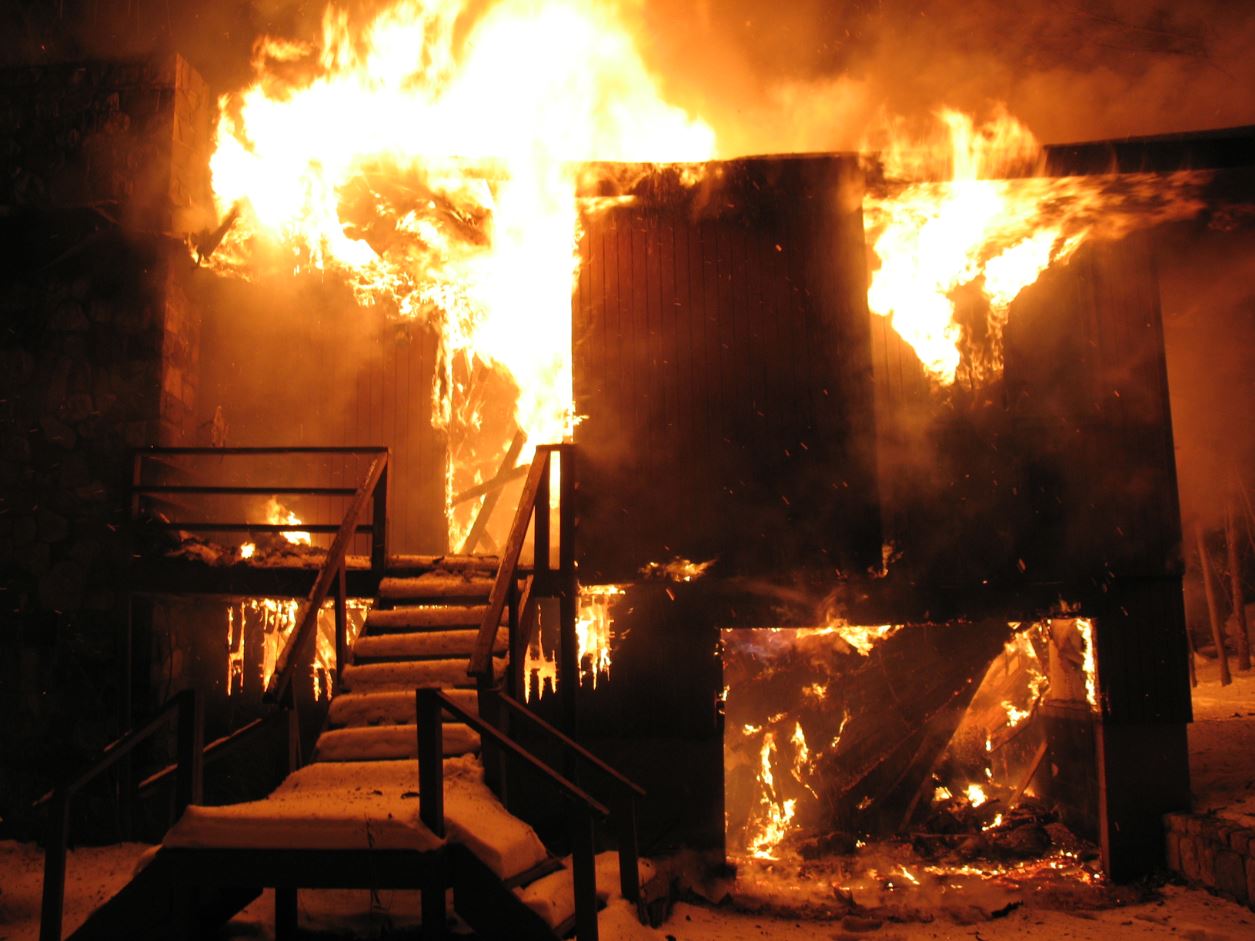 Roughly 374,000 fires occur in homes across the U.S. each year, 54% of them occur in the winter. Protect your home and family from being a statistic when you create a fire emergency plan. It helps you stay safe as you recognize Child Safety Protection.
1. Discuss Fire Safety Tips
Obviously, you want to extinguish candles, cigarettes and other open flames immediately. You also need to supervise meal prep in the kitchen to ensure nothing catches on fire. However, did you know that fabric can be flammable when it lies near the heater? Teach your family to prevent these and other fire hazards.
2. Hang Smoke Detectors
To ensure everyone can safely escape a fire, place smoke detectors on every floor of your home where you can hear them day and night. Since smoke rises, place them on the ceiling or high on the walls.
3. Locate Fire Extinguishers
Fire extinguishers need to be accessible. Place one in the kitchen under the sink or in the pantry. Other smart locations include near the entrance and exit doors and at least one on each floor. Once they’re securely attached to the wall, ensure your adult and teen family members know how to use them.
4. Choose the Exits
Your home’s layout determines where you can safely exit. In each room, choose two door or window exits that assist your family in safely escaping a house fire. If you have a second story, store an escape ladder near the window, and make sure you know how to use it properly.
5. Designate an Outdoor Meeting Spot
Whether your family meets at a neighbor’s house or a tree across the street, designate an outdoor base camp. Call 911 from this spot after everyone safely escapes the fire.
6. Practice the Plan
Even the best fire emergency plan will be ineffective if your family members don’t know what to do when a fire starts. Test the fire alarms and teach your kids what they sound like. Then, practice escaping out of the nearest exit and meeting at your designated spot.
Your family’s fire emergency plan can keep you safe as you recognize Child Safety Protection Month. Additionally, talk to your insurance agent and ensure you have adequate home insurance for your house and possessions. Insurance won’t prevent fires, but it will give you peace of mind this month and year round.
Read more
The holidays are  upon us and alcohol will be flowing at company parties throughout the land. Beware! If an employee or guest gets inebriated at a social function sponsored by your business and then injures another person, you could be held liable.
Consider this scenario: After polishing off four eggnogs in an hour at the company’s Christmas party, one of your workers toddles off to his car. The employee almost makes it home when he runs a red light and T-bones a car. The car is damaged and injures the driver. The driver then sues your business for negligence in allowing the employee to drive home although he was clearly “under the influence” at the company party.
What’s more, under state and local “social host” laws, your business might face a fine or even imprisonment for continuing to serve alcohol to an adult who is legally drunk.
Under your comprehensive general liability policy is a clause for host liquor liability. The insurance company will pick up the tab for property damage and bodily injuries, up to “each occurrence” or “general aggregate” limits for the CGL. This coverage will also pay for court costs, legal fees, and other expenses – and these payments will not apply to the limits.
Be sure not to confuse host liquor liability insurance with Liquor Liability coverage, which protects businesses that manufacture, serve, or sell alcoholic beverages (such as liquor stores, bars, and taverns) against claims for injuries caused by intoxicated customers. If you’re in one of these businesses, you’ll need both types of policy.
To learn more, feel free to get in touch with our agency at any time.
Read more
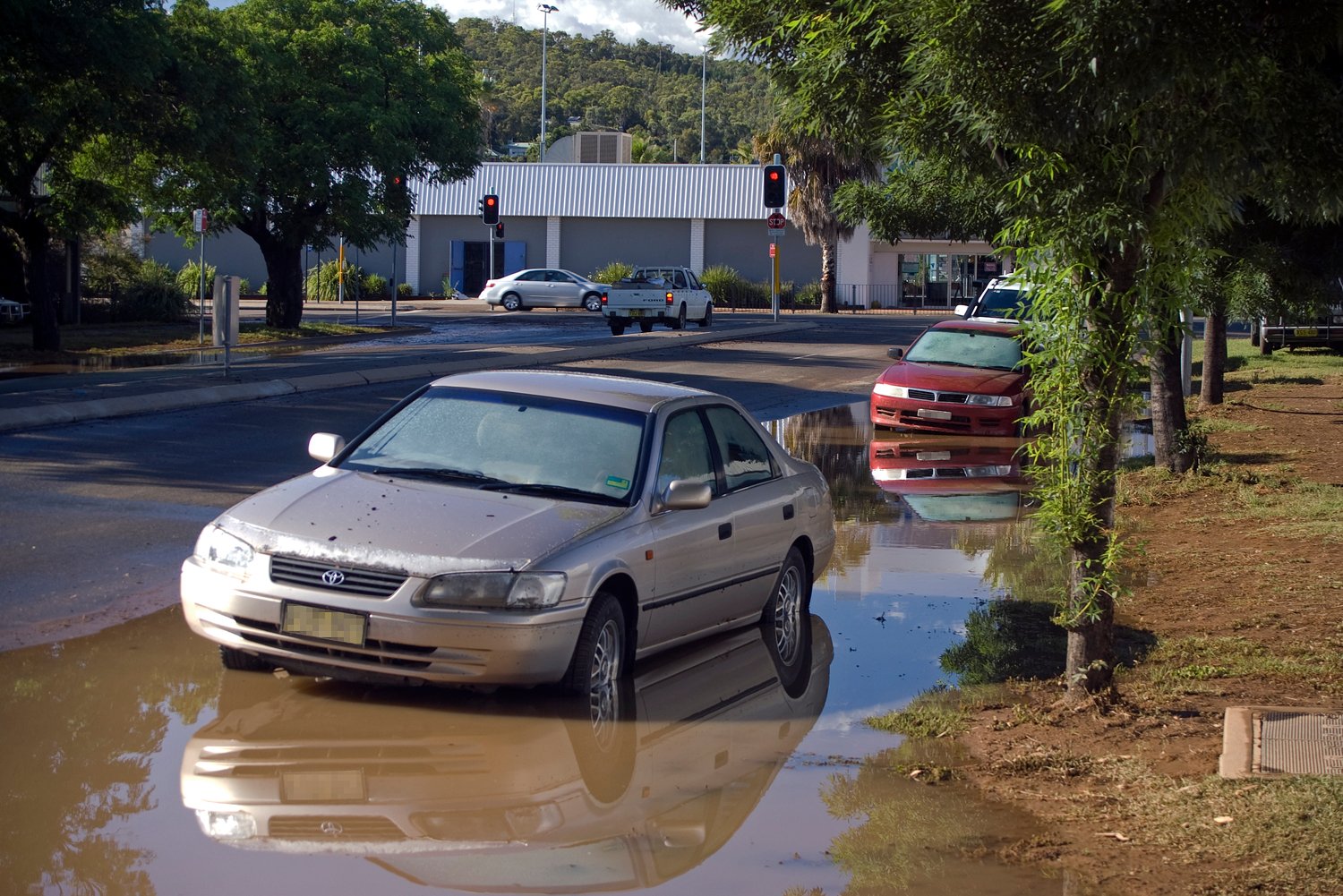 As the winter months approach, more people will find themselves driving on wet roads from the additional amount of rainfall. Unfortunately, many drivers experience rate hikes in insurance premiums as a result of minor fender-benders in the rain; however, by taking a few small steps to improve driving skills during wet roads, drivers can avoid the majority of road condition-related accidents.
Tires
Ultimately, your tires are the only real thing touching the pavement, and in so doing, they are the only thing capable of coming to a stop when you apply the brakes. Every three-months or when you have an oil change, check the tread depth of your tires. If the tread has worn away to less than one-fourth inch, you need to replace the tires. The simplest means of checking the tread depth uses a penny. Turn a penny upside-down and stick it with Lincoln’s head pointing towards the inside of the tire. If you are able to see his head, your tread is too low.
Windshield Wipers
While windshield wipers may not sound like they will prevent a terrible accident, they allow you to have clarity when driving during the rain or while the road is still wet. As the blades age, they crack, chip, and wear away. If you notice unusual streaking or a lack of removal of raindrops, you need to replace your windshield wipers. Most modern vehicles possess universal windshield wiper attachments, and you can change them in less than 5-minutes.
Headlights and Taillights
Every six-months, check the clarity of your headlights, taillights, turn signals, and any other safety lights on your vehicle. Dull lights can result in other drivers being unable to see your vehicle approaching. Furthermore, you will not be able to see the road clearly, especially during heavy rain.
Slow Down
Although making sure your tires, windshield wipers, and lights work properly, you still need to be careful with your speed when the road is wet. High speeds and wet roads result in delayed reactions to potentially hazardous situations with other drivers. Take plenty of time while driving on wet roads, and you will stay safe and keep your insurance premiums in check.
Read more
