 Most business owners would agree that it’s important to maintain insurance to protect business assets. But, many business owners do not know that they will not be able to contract with other companies (landlord’s, vendors, large customers, etc.) without certain insurance coverage.
When they think about insurance, business owners generally consider protection against hazards such as fire, flood or theft at their company sites. This is obviously an important protection to have. However, there are other types of hazards that may not be quite as high on the list, but protection could be every bit as important to offset significant financial losses. Here are five examples that underscore the need for comprehensive business insurance protection:
Company vehicle contents
If you operate a business with employees on the road making service calls to customers, chances are there is valuable equipment contained in the company vehicles. But a typical auto insurance policy would probably not cover the contents of a company vehicle if that valuable equipment is lost or stolen.
Tenant property improvement insurance
Do you rent space to conduct your business? Have you built out the interior of your space or made improvements to accommodate your business needs? If so, you probably made a considerable investment in the improvements. But many property insurance policies don’t include the value of the improvements made by a tenant to the existing structure. If you’ve invested in improvements, it’s worth taking a look at securing coverage to protect it.
Home-based business equipment
More and more people are working at home at least part of the time, even if they maintain an office or site elsewhere. Most don’t have insurance on the business equipment they keep at home; many assume their homeowner’s insurance would cover it. However, homeowner’s insurance generally does not cover business equipment. If you have expensive business equipment at home, you may want to consider purchasing additional protection.
Business interruption insurance
Remember the series of hurricanes that hit Florida? The wild fires that damaged cities and towns in California? The flooding that disrupted life in the Midwest? In addition to the effect that disasters have on individuals, they can bring businesses to a standstill for weeks or even months. Business interruption insurance can provide a way to get back on your feet.
Key person insurance
In many companies, the knowledge and skills of a single person or a top few are absolutely essential to the enterprise’s success. Key person insurance can help a company recover if an essential employee dies or becomes disabled for a lengthy time. The coverage can provide needed funds that allow the company to continue operating during a search for a successor or until the key employee returns.
As you can see, there are many hazards businesses face that aren’t covered under a typical insurance policy. However, you can get extra protection with the types of coverage outlined here. Since you invest so much time, money and effort into your business, it pays to make sure you have the protection you need. Call us for a consultation today!
Read more
How many times do you walk by fire extinguishers without checking those tags or past first aid kits without peeking inside to assure the contents are complete?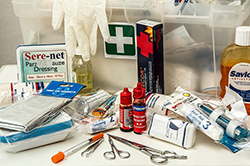
Most executives do not spot check these life saving tools. That task is delegated to maintenance. But these decisions are life and death, not simply profit or loss. Show your employees you care; that you lead their safety program rather than follow pro forma insurance checklists.
Start your spring cleaning here: walk through your operation and stop occasionally to check if you can easily spot the nearest fire extinguisher. Read the label. Is it appropriate for the work area?
Stand at each fire extinguisher station and visualize successful deployment. Is it easy and natural? Can you travel unharmed to the nearest fire exit using the fire extinguisher to clear a path?
Observe any long pathways between fire extinguishers and exits. Would another canister or different fire suppression device or system help?
Take some notes as you walk through the operation. Review these observations with the person tasked to keep the equipment updated.
Repeat the above exercise with regard to first aid kits. Are they easy to spot? Easy to access one-handed? Do they have instructions for calling emergency help?
These exercises do not require a great deal of time or scheduling. Simply make a point of checking these items every quarter, something of an internal surprise inspection.
Add ten minutes every three months to your walk-through routine. It doesn’t need scheduling or ceremony. Simply observe, become conscious of the emergency response routine. Are fire exits clogged with storage or debris? Are aisles kept unobstructed?
Is a specific person charged with de-icing fire escapes? As you walk through your operations, take notes of these questions. Think through an emergency evacuation, then review the written plan for your company. Does it make common sense? Does it raise questions for your risk manager or safety specialist?
Does your at-hire training include safety orientation and procedures? How about on-going communications on safety issues? Both directions?
Corporate officers lead the safety culture. Make these inspections in view of employees. They will engage you if they have proper concerns. They are a great resource.
Read more
Numerous environmental conditions at your workplace and/or home can cause you to suffer an allergic reaction that ranges from mild to life-threatening. Consider these tips as you reduce allergens and protect yourself.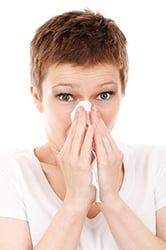
Common Allergens
Depending on your job and workplace, you may be exposed to numerous allergens as you work. Consider this partial list.
- Latex gloves or equipment
- Ink toner
- Cleaning chemicals
- Floor wax
- Perfume
- Cigarette smoke
- Dust
- Food, including nuts and dairy
- Mold
- Asbestos
- Aerosols
- Paint fumes
- Dye
- Pollen
- Pet dander
Possible Allergic Reactions
The allergic reaction you experience can be mildly annoying or severe and life threatening. Be aware of these possible reactions.
- Contact dermatitis
- Sneezing
- Pain
- Swelling around your mouth or elsewhere
- Hives
- Itching
- Trouble breathing
- Anaphylactic shock
What to do if you Have an Allergic Reaction
Seek medical treatment as soon as you suspect you’re having an allergic reaction. To provide the best possible treatment, your doctor or emergency medical personnel may ask for a list of possible allergens to which you may have been exposed.
How to Prevent Allergic Reactions
While you can’t always prevent allergen exposure, you can advocate for an allergen-free work environment. Ask about switching to natural cleaning supplies or banning peanut butter as you remove allergens that affect you and your co-workers.
You may also take protective measures. Wear gloves, use a respirator or open a window as you reduce exposure to your known allergens.
Request special accommodations, too, especially if you have a known allergy. According to the Americans With Disabilities Act (ADA), you’re considered disabled if your allergy limits your activity level. In this case, you can request that your employer improve ventilation throughout the building or allow you to work a different shift when allergen use is limited.
What Does Workers’ Compensation Cover?
By law, your employer must provide a safe work environment. If you suffer an allergic reaction to chemicals, cleaning supplies or something else and can’t perform your job, you may be eligible to file a Workers’ Compensation claim.
Workers’ Compensation benefits could cover your medical treatment, a portion of your lost wages and other expenses. However, you must prove that the allergic reaction stemmed from something at work and not food, medication or another environmental condition you encounter at home or elsewhere.
If working conditions or environmental factors cause you to suffer an allergic reaction, you can file a Workers’ Compensation claim. Discuss your specific case with your Human Resources manager and doctor as you protect yourself at work.
Read more

If you received Unemployment in 2020, then this will be good news. President Joe Biden signed the American Rescue Plan Act of 2021 on Thursday March 11th 2021.
The COVID relief bill provides a tax break on unemployment benefits received in 2020, up to $10,200.
If you have filed 2020 taxes already, you are instructed to wait for further instructions before filing an amended return.
Read more at the IRS website.
Read more
Umbrella insurance protects insureds from financial devastation. It’s a common policy homeowners purchase because it protects their home and other assets when an insurance claim exceeds existing homeowners or auto insurance policy limits. However, it could be a smart investment for renters, too. 
It Supplements Existing Liability Protection
Typically, basic liability protection only includes $100,000 in coverage. An umbrella policy can offer $1 million or more in additional coverage. Both types of coverage offer financial protection and peace of mind.
It’s Inexpensive
For $1 million in liability protection, renters could pay as little as $300 a year. Claude Lilly, Clemson University College of Business and Behavioral Science dean, also reminds renters that an addition million may only cost $100 more. This inexpensive investment protects a renter’s possessions, auto and other assets as it gives the insured peace of mind.
It Complements Exposures
The hobbies a renter enjoys can make an umbrella policy a necessity. For instance, the renter’s dog bites a contractor or guest, resulting in thousands of dollars in medical expenses and an expensive lawsuit. The umbrella coverage kicks in after the basic renter’s insurance policy funds are exhausted, and it provides the financial protection the renter needs.
Likewise, owning a swimming pool, hunting as a hobby or playing golf can each be fun activities, but they also have the potential to turn into expensive lawsuits. Renters should invest in an umbrella policy that covers expenses associated with a claim or liability related to the exposures they enjoy.
Consider Net Worth
Each renter can decide how much umbrella insurance to purchase. Overall, the renter’s current assets and net worth determine the basic coverage amount.
Buy Based on Future Earnings
A renter who’s found liable for an auto accident could face wage garnishment. Purchasing an umbrella policy that takes future earnings into account ensures the renter is adequately covered and can pay the judgment without losing his or her home and other assets.
Remember Slander, Libel and Invasion of Privacy Protection
Umbrella coverage does more than protect financial assets after an accident or lawsuit. It also protects renters who are victims of slander, libel or privacy invasion. The protection an umbrella policy offers against these challenges makes it a wise investment.
Overall, umbrella insurance provides beneficial coverage for every consumer, including renters. An insurance agent can offer additional counsel and advice regarding how much umbrella insurance to purchase.
Read more
 With easing up on Pandemic lock down restrictions, people are booking travel trips in record numbers.
Well, March is here, and it’s a popular month to visit tropical locations or start planning your next getaway.
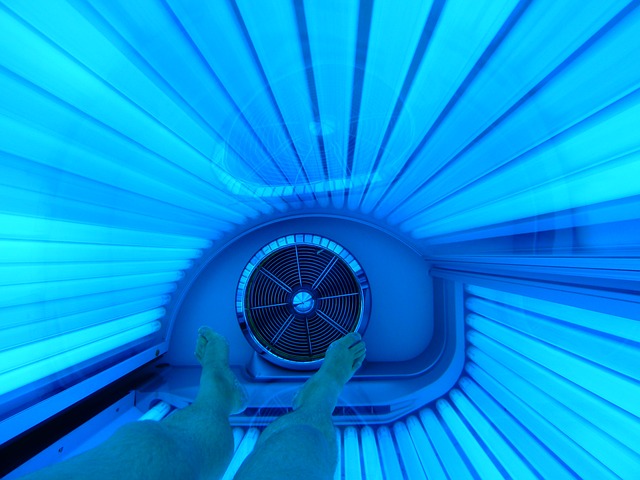
Not everyone needs a tan. But, if you do schedule a few indoor tanning sessions, your risks of getting cancer increase when you use indoor tanning salons. Stay safe when you consider several tanning safety tips.
Take Melanoma Seriously
The Memorial Sloan-Kettering Cancer Center in New York City found that 54 percent of college students who tan don’t see it as significantly risky. They argue that many things cause. No one’s immune to cancer, though, and indoor tanning actually increases your chances of getting melanoma by 90 percent if you’re under 35.
Melanoma is serious. Even a small amount that’s roughly three grains of salt deep can spread to your lymph nodes and other organs. If that happens, your risk of dying from melanoma increases to 85 percent. Think about your future before you hit the tanning bed.
Protect Your Skin
Squamous and basal cell carcinomas are two common non-melanoma cancers. They don’t spread as fast as melanoma, but they can create skin scars that last the rest of your life.
Indoor tanning also produces sun spots and wrinkles and can damage the retinas in your eyes. These effects of tanning do not disappear as you age but do continue to affect your appearance and health.
Resist Peer Pressure
Women especially have a huge need to focus on their appearance. Tanning can help you fit in with your peers and look attractive. Giving in to peer pressure can also kill you.
Use Exercise and Fashion to Change Your Appearance
Golden-brown skin hides cellulite bumps and can help you look thin. Toning exercises produce the same results, though, and don’t include a cancer risk.
You can also wear clothing that complements your figure, shape and skin tone. Talk to your hairdresser, too, about the right hair style and accessories for you.
Understand the Addictive Risks of Tanning Beds
Even after being diagnosed with skin cancer, researchers find that some dermatology patients continue to visit the tanning salon. Those individuals try but are unable to cut back on their visits and avoid family, friends and hobbies to visit the tanning salon. Be aware of the addiction risk of tanning before you get started.
Despite the risks, you may still choose to tan. If so, use a reputable salon. The staff will evaluate your skin tone and recommend the right amount of tan time for you. Read the waiver, too. It outlines tanning risks.
Tanning can be dangerous. Proceed with caution as you prepare for your next tropical vacation. For more safety tips, talk to your doctor. Oh, and call us if you need Travel Insurance. 🙂
Read more
