
5 Tips to Improve Your Mental Health
Staying healthy is about more than paying attention to your physical body—your mental health directly influences how you think, feel, react and maintain relationships. If you don’t take steps to promote your mental health, you may find that anxiety, depression and irritability can take control of your life.
According to the National Alliance on Mental Illness, about 1 in 5 adults experience some form of mental illness in a given year, but less than half of them seek professional treatment. And, even if you haven’t been diagnosed with a mental illness, taking steps to improve your mental well-being can improve your physical health and help you maintain positive relationships.
Here are five tips you can use to help improve your mental health:
- Talk with those who care about you. Simply talking to friends, family members or co-workers can help you overcome a personal problem and stay connected.
- Take a break from digital distractions. Although smartphones and other modern technology make it easy to stay connected with others, focusing too much on digital media can make it easy to ignore close relationships and the world around you.
- Take care of your body. Your brain is still part of your physical body, so it’s important to exercise regularly, maintain a healthy diet and get enough restful sleep.
- Set realistic goals and focus on taking the first step. Many projects or errands can seem overwhelming when taken as a whole. Try planning out steps for large tasks and concentrate on what you need to do first.
- Get help when you need it. Although there can be negative social stigmas about seeking help for mental or emotional problems, mental health professionals are trained to help manage stress and mental illnesses with therapy or medication.
The Dangers of Carbon Monoxide
Carbon monoxide (CO) is a toxic gas that’s produced by the incomplete burning of any fuel, including gas, fire and wood. Many of the appliances in your home produce harmless amounts of CO. However, if these appliances aren’t properly maintained or ventilated it could lead to a hazardous buildup of CO. And, because the gas is colorless, odorless and tasteless, it can be easy to remain unaware of potentially dangerous levels of CO in your home.
Symptoms of mild CO poisoning can include flu-like symptoms, such as headaches, nausea and weakness. However, exposure to large amounts of CO for an extended period can be fatal. Follow these steps to prevent a buildup of CO in your home:
- Install CO detectors on every level of your home. Also, never assume that your home’s smoke alarms can also detect CO.
- Check your appliances every year to ensure that they’re in safe working order and have sufficient airflow around them. Appliances that emit CO include fireplaces, water heaters, portable generators, power tools, lawn equipment, and gas- or wood-burning cooking appliances.
- Never leave a car or other motorized vehicle running in an attached garage, even if the garage door is open.
- Never rely on ovens, gas grills or other appliances to heat your home.
- Contact a specialist to ensure that your chimneys, vents and flues are providing sufficient ventilation to your home.
For more information on protecting your home from CO and other dangerous gases, such as radon and natural gas leaks, contact us today at 831-661-5697.
Removing Distractions Before You Drive
Distracted driving is a serious and deadly problem. According to the National Highway Traffic Safety Administration, distracted driving leads to over 3,000 deaths and 375,000 injuries every year. Although many conversations about distracted driving focus on cellphones, the truth is that any distraction can be enough to cause a deadly accident. The following list includes some of the ways you can remove distractions and keep yourself safe on the road:
- Get plenty of rest before you drive. Studies have shown that fatigued drivers perform just as poorly as those who drive while intoxicated.
- Know where you’re going and the road conditions before you drive. Looking at a map or having to focus on the weather can take your attention off of the road and surrounding traffic.
- Secure any items in your vehicle that may roll around. You may be tempted to reach for them while you’re driving.
- Don’t use your cellphone or a hands-free device while driving. If you absolutely must contact someone, pull over to the side of the road first.
Read more

During a recent visit to Wisconsin, President Donald Trump vowed to defend American dairy farmers who’ve been affected by Canada’s trade practices. Canada’s dairy sector is protected by high tariffs and controls on domestic production to support prices that farmers receive.
Last year, Canada’s dairy farmers agreed to sell milk ingredients used for cheesemaking to Canadian processors at prices competitive with international rates. Industry groups in New Zealand, Australia, the European Union, Mexico and the United States complained the new, competitive prices undercut exports to Canada.
The U.S. dairy industry groups want Trump to urge Prime Minister Justin Trudeau to end Canada’s pricing policy that has disrupted many U.S. dairy exports. They’re also asking for a prioritization of dairy market access in North American Free Trade Agreement talks. Trump has already threatened to eliminate the trade agreement with Canada if it doesn’t change its trade policies.
Ottawa’s ambassador David MacNaughton blames U.S. producers’ problems on overproduction rather than Canadian policy. The Dairy Farmers of Canada said it was confident that Ottawa would continue to protect and defend the dairy industry.
Pace of Corn Planting is Behind
According to the U.S. Department of Agriculture’s weekly Crop Progress Report, every corn-producing state in America is behind last year’s planting pace, with the exception of Indiana.
The state lagging behind the most is Missouri, with only 17 percent of its corn crop planted as of Easter Sunday. At the same time last year, Missouri farmers had planted 53 percent of the state’s corn crop.
North Dakota, South Dakota, Michigan, Wisconsin and Ohio didn’t have planting data listed in the Crop Progress Report at the time of publication.
Planting Safety Tips
As farmers prepare for planting season, it is worth remembering the following safety tips:
- Be mindful while transporting goods on public roadways.
- Watch for children, as they’re often attracted to large, noisy equipment.
- Follow instruction labels when applying products such as pesticide, herbicide or fungicide. Consider keeping photos of the instructions on your smartphone for convenience.
- Service all farm equipment regularly.
- Store fuel away from machine sheds and other buildings.
- Get adequate amounts of sleep, and follow a healthy diet.
Read more
Safety in your everyday small business operations is essential for your employees, customers and success. Understanding and maintaining safety guidelines can be challenging, though. OSHA offers numerous resources that benefit your company. Take advantage of these resources as you ensure your small business maintains safety guidelines and stays compliant with current laws at all times.
OSHA’s Cooperative Programs
Your small business must cooperate with OSHA to maintain safety and remain compliant with laws, but you may not know where to start. OSHA offers five cooperative programs that help your small business prevent workplace injuries, illnesses and fatalities. Available programs include:
- Alliance Program
- OSHA Strategic Partnership Program (OSPP)
- Voluntary Protection Programs (VPP)
- OSHA Challenge Program
- On-site Consultation Program’s Safety and Health Achievement Recognition Program (SHARP)
All states with OSHA-approved programs offer this cooperative program option, and you can search the website to learn more about each program.
On-Site Consultation Program
Get personalized advice with a free and confidential on-site consultation. The consultant will not give penalties or citations because the purpose of the consultant’s visit is solely to:
- Identify workplace hazards
- Share advice on how to become compliant with OSHA guidelines
- Implement injury and illness prevention programs
While the program prioritizes high-hazard worksites, it’s available to all small and medium-sized businesses and is completely free.
Diverse Workforce/Limited English Proficiency Coordinators
When your workforce employs Spanish speakers or a diverse workforce, you may need education, outreach and training assistance. Schedule a seminar or workshop with an OSHA Diverse Workforce/Limited English Proficiency coordinator. Every 10 OSHA regions has one coordinator who can help you train and prepare your employees effectively.
Compliance Assistance Specialists (CAS)
When you’re ready to host a seminar or workshop on safety challenges or compliance issues, contact a CAS. In states under federal jurisdiction, the OSHA area offices have a CAS on staff who will provide training resources and promote OSHA cooperative programs.
Training Institute (OTI) and Training Education Centers
Access a variety of OSHA trainings, including technical advice, seminar and workshop speakers, or audiovisual aids, through the Training Institute and Training Education Centers. This resource provides basic and advanced safety and health courses as well as small business seminars.
Penalty Reductions
Non-compliance with OSHA guidelines can result in large penalties. However, your small business’s size and number of employees may reduce the penalties. Learn more as you assess your eligibility for penalty reductions.
OSHA safety guidelines protect your employees and small business since they reduce injuries, illnesses and fatalities. OSHA guidelines can be confusing, though. Maintain compliance when you take advantage of these OSHA resources. They help your small business remain safe and successful.
Read more
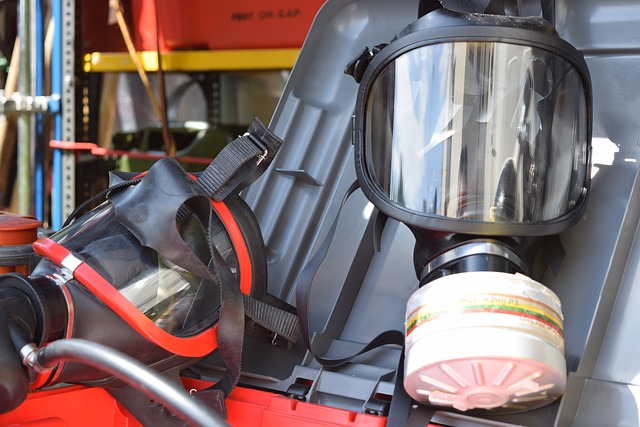
Choosing the right respirator relevant to the nature of the employment is critical to a worker’s safety. Exposure to different hazards means that not just any respirator will suffice.
Two main classes of respirators are available:
Air-Purifying Respirators (APR)
These respirators are designed to filter air borne contaminants such as fumes or noxious dust. Other forms of APR models use a canister or cartridge containing a material that absorbs the contaminants.
APRs are tight fitting to the face and have different designs. These designs include particulate respirators, powered air-purifying respirator (PAPR), gas masks and chemical cartridge respirators. They come in four different designs, including:
Full Face Piece
Fully covers the face from underneath the chin to an area above the eyes. This feature provides added protection to the eyes, especially from chemical irritants.
Half-Face Mmask
Gives protection from beneath the chin to and including the nostrils.
Quarter-Mask – Protects the Mouth and Nose.
Mouth bit respirator – Normally used for escaping a hazardous situation only. Contains a bit which is inserted into the mouth and nose clip to seal the nostrils closed.
Supplied-air respirator (SAR)
These respirators provide breathable air via an air line or a compressed work tank. SARs come in two different types. The first has a loose fitting respiratory inlet, such as a helmet or a hood which envelopes both the neck and head, that is supplied purified air through airlines. This type may have face pieces which fit loosely.
The other form of SAR has either a half or full face piece and has very snug respiratory inlets.
Choosing the Most Suitable Respirator
Selecting the most suitable respirator must be performed by an expert, such as a safety professional. The expert will consider the appropriate apparatus only after they have identified and evaluated the potential respiratory hazard and considered the relative limitations of the respiratory apparatus for the situation.
Key Questions to Ask
Here are some factors an employer should consider when determining whether a respirator may be required:
Establish the existence of a hazard by considering warnings about the material, like its chemical components or the nature of the particulates that might be released through the work performed.
Determine whether there is limited oxygen present.
Is the hazard airborne such as a particulate, fume, or vapor?
Ask whether the respirator will be used for an emergency or in combating fires.
Evaluate whether the work is strenuous and will be performed in hazardous atmospheric circumstances.
Is there any agent present which might be possibly fatal, carcinogenic, skin absorbable or acts as an irritant?
Will the work be conducted in a confined space or will the worker be exposed to abnormal temperatures?
The key is that respirators should be used to suit the work. The proper choice of respirator is vital to the health and safety of workers in many types of employment.
Read more

According to a report by the U.S. House of Representatives’ Committee on Education and Labor, a staggering 69 percent of all workplace injuries and illnesses may not be represented in the Bureau of Labor and Statistics Survey of Occupational Injuries and Illnesses, which many trust as a gauge of the safety of American workplaces. On a corporate level, not reporting or underreporting workplace injuries can have serious ramifications for the organization and the employer, which can include fines, exorbitant and unnecessary, health costs and more.
Research has found that the employer’s behavior, policies and attitude are key determinants in a worker’s decision to report an injury. Not only is it essential that employees are educated on the importance of reporting injuries, it is also important to examine your company policies so you are not inadvertently discouraging reporting. The consequences of underreporting can be severe.
Consequences of Underreporting
The unfortunate trend of injury underreporting can have serious ramifications at both the industry and company level. Widespread underreporting can be quite damaging to workers’ compensation rates on a large scale. Employers may not realize it, but such an underreporting problem may lead to more audits by insurance companies of their clients and higher rates for everyone. Many employers erroneously believe that reporting injuries leads to audits and higher rates.
Underreporting may lead to more audits by insurance companies and higher rates for everyone industry-wide. Many employers believe that reporting injuries leads to audits and higher rates.
At the company level, underreporting injuries can be quite costly for the employer. If it is an OSHA-reportable incident, the employer may face significant fines if it is not properly recorded or reported.
In addition, often when an injury isn’t reported or properly cared for immediately, it worsens and leads to higher health care costs and more lost time. Even if it is never reported as a workplace injury, the employer still loses out on health care costs and productivity.
If it is eventually reported, it becomes much more difficult to prove that it was workplace-related. Additionally, a study reported by the Hartford Financial Services Group found that injuries reported four or five weeks after the incident are 45 percent more expensive than injuries reported within the first week due to increased health costs and possible legal fees, or even a lawsuit, associated with late reporting.
One of the best ways to control workers’ compensation costs is through early reporting and intervention. Not only will it save money in health bills and legal fees, but it will also help to constantly improve your safety program. When there is an injury, consider it an opportunity to examine current safety procedures and decide if there is a suitable change that could be made to prevent similar injuries in the future.
Thus, prompt reporting can be a productive element to your safety program in your quest to always strive for the safest work environment. Rather than accepting a vicious circle where injuries are not reported and thus nothing is done to fix the problem, leading to more injuries, take advantage of injury reporting as a proactive solution to safety.
Reasons for Underreporting
There are several reasons why employees may not report injuries immediately or at all.
Incentive Programs
Many employers have reward or incentive programs to promote their safety initiatives, such as rewards for going a certain number of days without an injury. This can create a negative attitude toward reporting an injury, since doing so could cost that employee, a co-worker or a superior a reward or bonus.
Having incentive programs are a good idea, but a more effective strategy is to reward positive, safe behaviors. This can include reporting a safety hazard, attending a safety meeting or training class or equipment maintenance. Rather than rewarding for days without an injury, reward behaviors that strive to avoid injury, or even reward employees for prompt reporting when an injury occurs.
Fear of Negative Ramifications
Some employees fear that reporting an injury will create an image of them as weak to their co-workers and managers. He or she also may fear that such an image will be a detriment to his or her career.
Dispel this fear by assuring all employees that reporting an injury will have no negative impact on their job, and ensure follow through on all levels of the company. Work to promote a safety culture where prompt injury reporting is encouraged and praised. Injury reporting should never be frowned upon, even subtly or behind closed doors. If employees find out you are angry about a reported injury, he or she is less likely to report an injury in the future.
Some companies have a policy mandating drug testing after any incident whether or not there is evidence of drug use. This deters some employees from reporting injuries as well. Consider making the drug testing conditional depending on the circumstances of the injury and whether there is evidence that drug use was a factor.
For more information about injury reporting or your company’s workers’ compensation and safety programs, please contact Scurich Insurance at 831-661-5697 today.
Read more

When damage to your property occurs, you may wonder, “Does my homeowners policy cover damage caused by my guests?”
In general, the answer is yes.
However, the real question you should be asking yourself is “Do I want to use my homeowners’ policy to cover damage caused by my guests?”
Part of the benefit of being a homeowner is being able to entertain friends, family and other guests. But what happens when something goes wrong and a guest causes damage? While in a perfect world the guest would apologize and offer to cover the damage, the reality of the situation can be much more complicated.
The answer to this question can be much more complicated. Your guests are responsible for the costs involved with fixing any damage they cause. By instead using your homeowners’ policy to cover the damage, you may end up costing yourself in the long run in the form of increased rates and premiums.
What is covered under homeowners’ insurance can vary from policy to policy. You should review your policy for any situations excluded from coverage. Things to watch out for:
- Your policy may only cover the house or structure, meaning things like walls and floors.
- Coverage may apply only to accidental damage.
Never wonder if you have the appropriate coverage for a certain situation—always consult your policy to make sure you and your family have the protection you need. When questions arise, contact Scurich Insurance for answers.
Guest Liability
When a guest gets hurt on your property as a result of a danger they were not warned about, you are liable for their injuries. However, if a guest damages your property they, not you, are liable for the cost to fix it. Dealing with friends or family who are reluctant to pay for damages can be a sticky situation, but they do have a legal responsibility to reimburse you for the costs you incur. If they refuse to pay, you may have grounds for legal action.
Read more
