 Farmers in California, where Gov. Jerry Brown declared a state of emergency last month, are facing hard choices as a drought threatens to ruin their crops. They must weigh the costs of paying for irrigation against the chance that their fields will never get enough water this season.
A striking picture illustrates the severity of the situation, as Northern California’s Folsom Lake, a reservoir northeast of Sacramento, is seen in January at only 17 percent of its capacity. In July 2011, “the lake was at 97 percent of total capacity and 130 percent of its historical average for that date,” according to NASA.
The federal agency says it is working with the California Department of Water Resources to help the state manage its water resources. Last month, NASA released other images showing the drought’s severity. As NPR member station KQED reported, the state’s snowpack is shown in January 2013 and last month. Much of it did not return.
Here are other updates on the situation:
NASA said today that it’s working to share satellite and weather data with California farmers and water officials to help them avoid wasting water, and to use it in the most efficient way possible. The space agency says a trial run of its Satellite Irrigation Management Support system in 2012 and 2013 “demonstrated sustained yields while reducing the amount of water used by up to 33 percent relative to standard practice.”
Growers of almonds — a state crop valued at $5 billion in 2012 — have been pulling trees out of the ground while they’re still in their prime, in desperate actions driven by high water costs. The AP spoke to a grower who watched crews rip 20 percent of his orchard out of the ground. A man who does that work for a living says business is up 75 percent because of the drought, and his crews are working from sunup to sundown.
Forecasts of rain and snow were welcomed by many Californians, as parts of the state could see more rain this week than they’ve had in the previous eight months together. But Time’s Bryan Walsh warns that even with that rainfall, “much of California will still be below average for precipitation this month. Since February tends to be the wettest month for California, that means that the state still has a larger and larger rainfall deficit to make up if this drought is to ever end.”
Contact Scurich Insurance Services today to get a review of your agriculture insurance.
Content provided by http://www.npr.org/blogs/thetwo-way/2014/02/25/282624536/california-s-drought-a-shocking-photo-and-other-updates
Read more
 Another Winter Olympics season has come and gone and it was a nail-biter, right up until the end. The United States had received the most medals up until the closing weekend, when Russia dominated in the events. Russia came through in the end, earning a total of 33 medals with 13 gold medals, 11 silver medals and 9 bronze medals. The United States came in second,m earning a total of 28 medals with 9 gold medals, 7 silver medals and 12 bronze medals. Norway came in third with 26 medals, 11 of the medals are gold, 5 silver and 10 bronze medals. Here is the breakdown between Russia and the United States.
Russia won the gold in the following categories:
Biathlon-Men’s Relay
Bobsleigh-Four Men and Two Men
Cross Country-Men’s 50 km
Figure Skating-Ladies, Pairs, Team
Short Track-Men’s 1000m, Men’s 500 Men’s 5000m
Skeleton-Men
Snowboard Men’s Parallel Giant Slalom
Snowboard Men’s Parallel Slalom
The United States won the gold in these categories:
Alpine Skiing-Men’s Giant Slalom, Women’s Slalom
Figure Skating-Ice Dance
Freestyle Skiing-Men’s ski halfpipe
Freestyle Skiing-Men’s ski slopestyle
Freestyle Skiing-Women’s ski halfpipe
Snowboard-Men’s slopestyle
Snowboard-Women’s halfpipe
Snowboard-Women’s slopestyle
The complete list of all 2014 Sochi Olympic winners is here.
Congratulations to all Olympians!
Content provided by Transformer Marketing and http://graphicsweb.wsj.com/documents/sochi-medal-count/
Read more
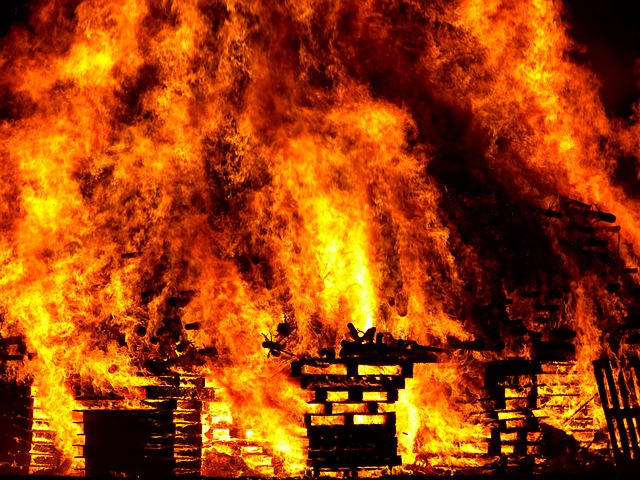
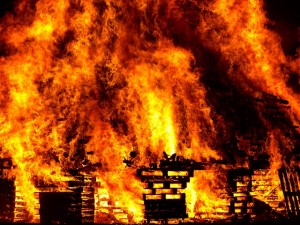 California’s worst drought in decades is feeding what may become a devastating wildfire season, one that is starting about five months early.
Extremely dry conditions have sparked 487 wildfires so far in 2014, compared with only 2 for the same period a year ago, according to the state Forestry and Fire Protection Department, known as Cal Fire. Potential power failures, home losses, lost tourism dollars and crop damage could jeopardize the world’s 10th largest economy as California struggles to emerge from the deepest recession since the 1930s.
“Having this occur statewide is unprecedented, certainly in my career,” Cal Fire Director Ken Pimlott, who started out as a firefighter almost 30 years ago, said in a telephone interview last week. “We anticipate the potential for a very long and sustained fire season throughout the rest of the year.”
For a state already reeling from a drought that officials say could be one of the worst in California’s history, fires would only add to the misery. They could damage critical power lines and cause blackouts, disrupt water supplies and destroy sensitive ecosystems, said Bill Stewart, a forestry specialist at the University of California at Berkeley.
Last year, prolonged dry conditions led to the third- largest fire in California’s history. The “Rim Fire” shut power lines and hydroelectric generators, charred parts of Yosemite National Park and threatened the Hetch Hetchy Reservoir watershed, which supplies 85 percent of the drinking water to San Francisco.
‘Poster Child’
The Rim Fire has become the “poster child” for future wildfires in California and the U.S. West, according to a 2013 report from CoreLogic Inc., a real estate data and analytics firm. Homes valued at about $78 billion in total are at risk from wildfires, estimates CoreLogic.
Fires could even pose a risk for the state’s $22 billion wine industry. In 2008, smoke from smoldering wildfires in Mendocino County contaminated crops of pinot noir grapes, said Bill Pauli, a grower and general partner of Yokayo Wine Company in Ukiah, California.
“Some wines had the odor of someone who had been standing next to a barbecue,” Pauli said in a telephone interview. “It was not a good situation and we all hope it doesn’t happen again.”
Extra Firefighters
Fire season usually begins around May and typically ends in November with the onset of winter storms, according to Cal Fire. This year, the department says it has hired 125 additional firefighters, staffed 25 extra fire engines and retained crews and aircraft that would normally be idle this time of year. The state has banned campfires and smoking in several parks.
“Right now, all of our planning is for the worst-case scenario,” said Pimlott of Cal Fire. “We want to make sure we are ready.”
The wildfire danger is of more concern to Los Angeles Mayor Eric Garcetti than the prospect of running out of water because of the drought, he said during an interview at Bloomberg News’s Los Angeles office.
“I think we are going to see fire season around the clock for much of the year,” Garcetti said. “We are going to have to keep deployments much higher.”
The city expects to spend an extra $12 million this year on fire department coverage due to the dry conditions, Garcetti said.
Transmission Lines
At the same time, utilities including PG&E Corp. and Sempra Energy’s San Diego Gas & Electric are implementing plans normally reserved for high-fire season, such as stepping up patrols of electrical lines and bringing fire crews along for routine repairs.
“Wildfires are always a risk in California,” said Alvin Thoma, director of power generation at San Francisco-based PG&E. “With the dry conditions we’ve had, the soil moisture content right now is much lower than usual, so that makes wildfires much more of a concern.”
The California ISO, the state grid operator, said it will keep an “eagle eye” on high-voltage transmission lines, which will be needed to import more power this summer to make up for dwindling hydro-electric supplies and the retirement of a 2,200- megawatt nuclear plant in Southern California. The state typically imports one-quarter of its power needs, according to the ISO.
“The wild card is always fires,” said Stephanie McCorkle, a spokeswoman for California ISO. “They can affect the transmission and that literally cuts imports that we can’t afford to lose.”
Extra Vigilant
If lines go down, the grid operator can reroute electricity and ramp up local generation production, McCorkle said.
Edison International’s Southern California Edison utility, owner of the San Onofre nuclear plant that was retired last year, will need to be extra vigilant if the dry conditions continue, said Chairman and Chief Executive Officer Ted Craver.
“You can’t say there wouldn’t be some combination of events, a heat storm and a fire that takes out a transmission line,” Craver said in a telephone interview.
Upgrades to power networks and new gas generation that has come online in the past two years will help “the grid to be able to withstand the shocks,” Craver said.
Although rainstorms in the past week have provided some respite, the odds are that the drought will persist along with the risk of more wildfires, according to Cal Fire.
“Everybody is probably sitting back on pins and needles,” said Thomas Jeffery, a senior hazard scientist at CoreLogic. “The potential for a really disastrous wildfire season is very high.”
Content provided by http://www.claimsjournal.com/news/west/2014/02/11/244295.htm
Read more
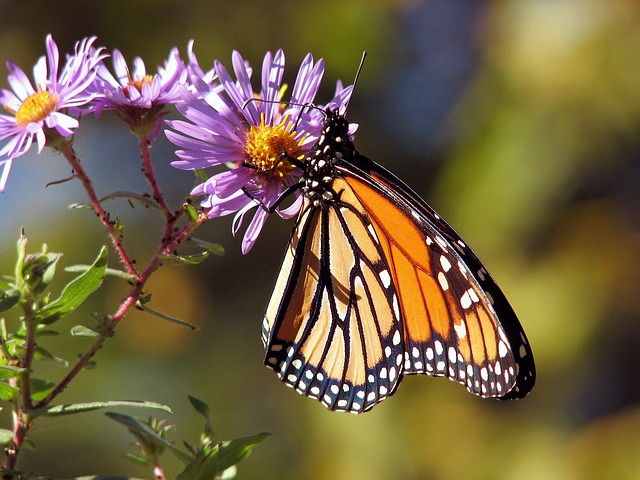
 PACIFIC GROVE, Calif. —Studies show the number of monarch butterflies making their annual migration is dwindling. So much so, experts are worried they are in danger of disappearing altogether.
Although there has been a drop in the number of monarchs migrating through Pacific Grove over the years, die hard butterfly fans are hopeful the monarchs will make a comeback.
The Monarch Butterfly Sanctuary in Pacific Grove acts as a temporary home to hundreds of Monarchs, all migrating from the U.S. to Canada.
Experts say their numbers have dropped severely.
The number of butterflies wintering in Mexico is the lowest level ever recorded, too, but butterfly fans in Pacific Grove remain optimistic that they will continue to show up.
Migration is an inherited trait and although no butterflies live to make the full round trip, it’s unclear how they remember the route back to the same patch of forest each year.
Scientists theorize they may rely on magnetic fields, the position of the sun, polarization of the sun’s rays, scenting or pure genetic instinct.
Content provided by: http://www.ksbw.com/news/central-california/monterey/monarch-butterfly-population-dwindles/-/5738820/24238720/-/rc821rz/-/index.html#ixzz2sHWUeyo6
Read more
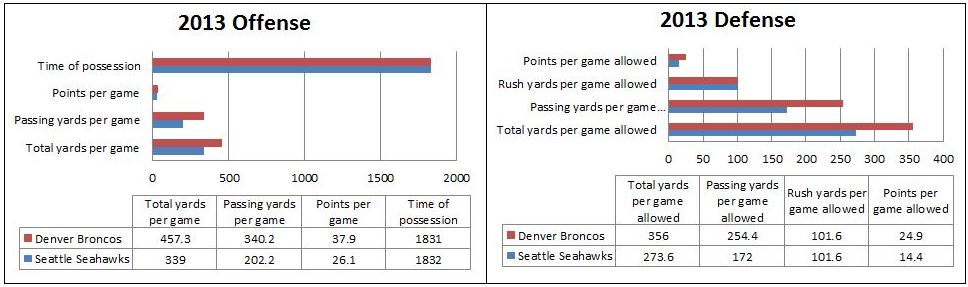
 The best defense in the NFL meets the best offense in the NFL this weekend for what is going to be nothing short of an electrifying, on the edge of your seat Superbowl game. The hype with surrounding whether or not Peyton can play in cold weather (which he proved to everyone he can when he led the Broncos to a 58-21 win over the Titans in 15 degree weather), is adding so much more to this game.
Create your own Supperbowl!
We have all seen them. The huge party platters in the shape of a football stadium. We have the recipe here for you.
Denver is on a mission. Last year, they were knocked out of the race for the Superbowl when the Ravens beat the Broncos in double overtime. This year, Peyton and Company’s offense boasts more points scored and yards gained than any other team. In the past, Denver has been to the Superbowl six times and have won twice.
Seattle is looking for retribution. The last time Pete Carroll led the Seahawks to the Superbowl was in 2005 against the Pittsburgh Steelers. At Ford Field, the Steelers beat the Seahawks 21-10. To this day, calls the referees made that day were nothing short of questionable and may have cost the Seahawks the game. This will be the second appearance for Seattle at the Superbowl.
The match up:
Content provided by Transformer Marketing, NFL.com and http://www.buzzfeed.com/emofly/how-to-build-a-snack-stadium?bffbfood
Read more
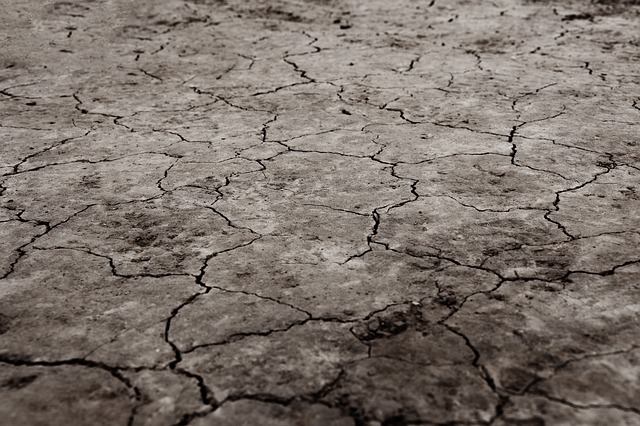
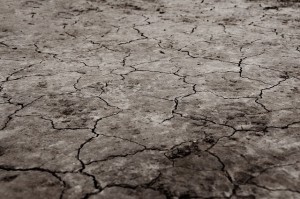 Last week Governor Jerry Brown declared California is in a drought. A drought simply stated is a shortage of precipitation, whether it comes from rain or snow. There just simply isn’t any moisture in our lands. Problems that can stem from a drought can become catastrophic. Withered crops, high fire dangers, water shortages and livestock dying are just a few of the effects that a drought has on our land. Unemployment is another effect that a drought will bring. The loss of crops means no employment. In 2009, about 10,000 people lost their job due to the drought.
According to Brown, who was in San Francisco last week, “The drought accentuates and further displays the conflicts between north and south and between urban and rural parts of the state. So, as governor, I’ll be doing my part to bring people together and working through this.”
During this dry season, the rest of us need to be diligent as well. Conserve as much water as we can, including washing dishes all at once, don’t light fires when you’re camping and use only propane stoves. Right now, California is in danger of becoming a matchbox just waiting for the match to strike.
According to 58 year old Kevin Kester, “I am a fifth-generation cattle rancher, and it has never been this bad ever in my lifetime — and from my family’s history, it’s never been anywhere close to this bad ever.” The last drought that was comparable to the one we’re in now, according to his family’s history was in the 1890’s.
Contact us today for a quote for your agribusiness.
Content provided by Transformer Marketing and http://www.register-pajaronian.com/v2_news_articles.php?heading=0&story_id=15820&page=72
Read more

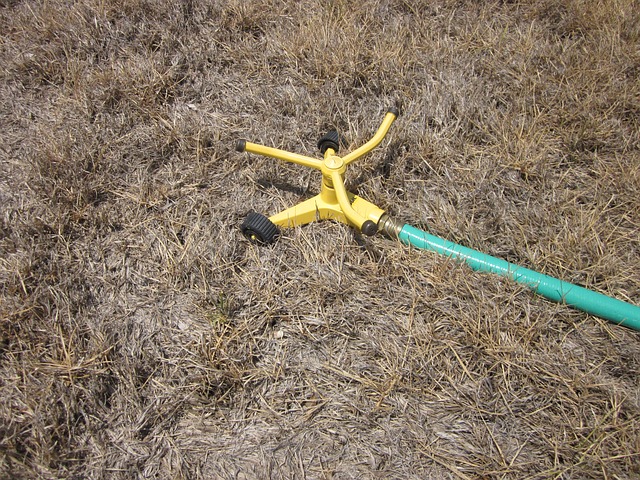 Farmers in California, where Gov. Jerry Brown declared a state of emergency last month, are facing hard choices as a drought threatens to ruin their crops. They must weigh the costs of paying for irrigation against the chance that their fields will never get enough water this season.