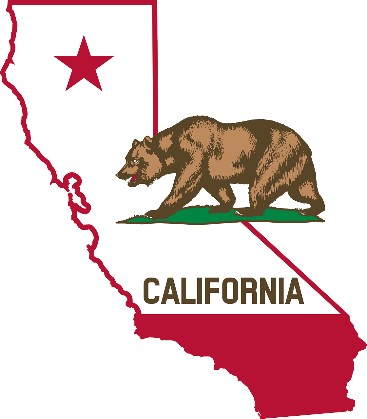
 Getting into an accident is an inconvenience and there are certain states that don’t make it any easier. When you file a claim auto insurance rates have a tendency to rise. Did you know that if you file a claim for anything $2,000 and higher can cause your insurance to jump up to 40% in some places?
If you live in one of the places listed below, you could find yourself on the short end of the stick when it comes to rate increases.
- Massachusetts rates jump up 67% when claims are filed.
- California claims will get you a 62% increase.
- New Jersey has 59% increase.
- North Carolinians will see a 47% increase.
- Minnesota raises their rates 45%.
If you have a claim that is $2,000 or less and you can afford the repair, it would be better for your insurance rates in the long run to pay out of pocket than it would be to file the claim.
On the flip side of things, here are the states that have the lowest rate increases:
- Maryland with just a 20% increase.
- Alabama at 22%.
- Michigan & Wyoming both have a 23% increase.
- Oklahoma has a 25% increase.
If you find yourself in this situation, Scurich insurance services can help. Anyone of our friendly staff will be able to help guide you through this process.
Content provided by Transformer Marketing.
Sources: http://www.ibamag.com/news/5-states-where-you-dont-want-to-file-an-auto-claim-16616.aspx
Read more

You are thinking so many things when you are getting ready to file a claim. ‘I wish I hadn’t done that, ’or ‘I should tell them I’m sorry or any number of responses that could be running through your mind. But before you indulge in them, you need to know what not to say to the insurance company.
- Sorry. Yes it is good to have manners, and apologizing for your actions is noble, but in the case of a car accident, let the police sort out the details and assign the blame.
- Whiplash. Certain phrases have a punch behind them. This would be one of those terms. It became so widely used in fraudulent claims that anytime anyone says whiplash, adjusters generally will call the attorney.
- Intentional. Don’t go around saying that your spouse destroyed your car intentionally. Insurance is there to cover accidents and bad judgment calls, but your insurance will not cover intentional damage.
- I’m fine, really. You may want to put your friends and family members at ease, but let a doctor make that determination.
- Ride-Sharing. Ride sharing has become extremely popular nowadays. The catch? You can’t use your personal insurance if you are a driver for a ride-sharing company and get involved in an accident.
For more information or to report a claim, contact our office today.
Content provided by Transformer Marketing.
Sources: http://www.moneytalksnews.com/2014/07/23/12-words-never-to-say-to-your-insurance-company/?utm_source=newsletter&utm_campaign=email-2014-07-23&utm_medium=email
Read more
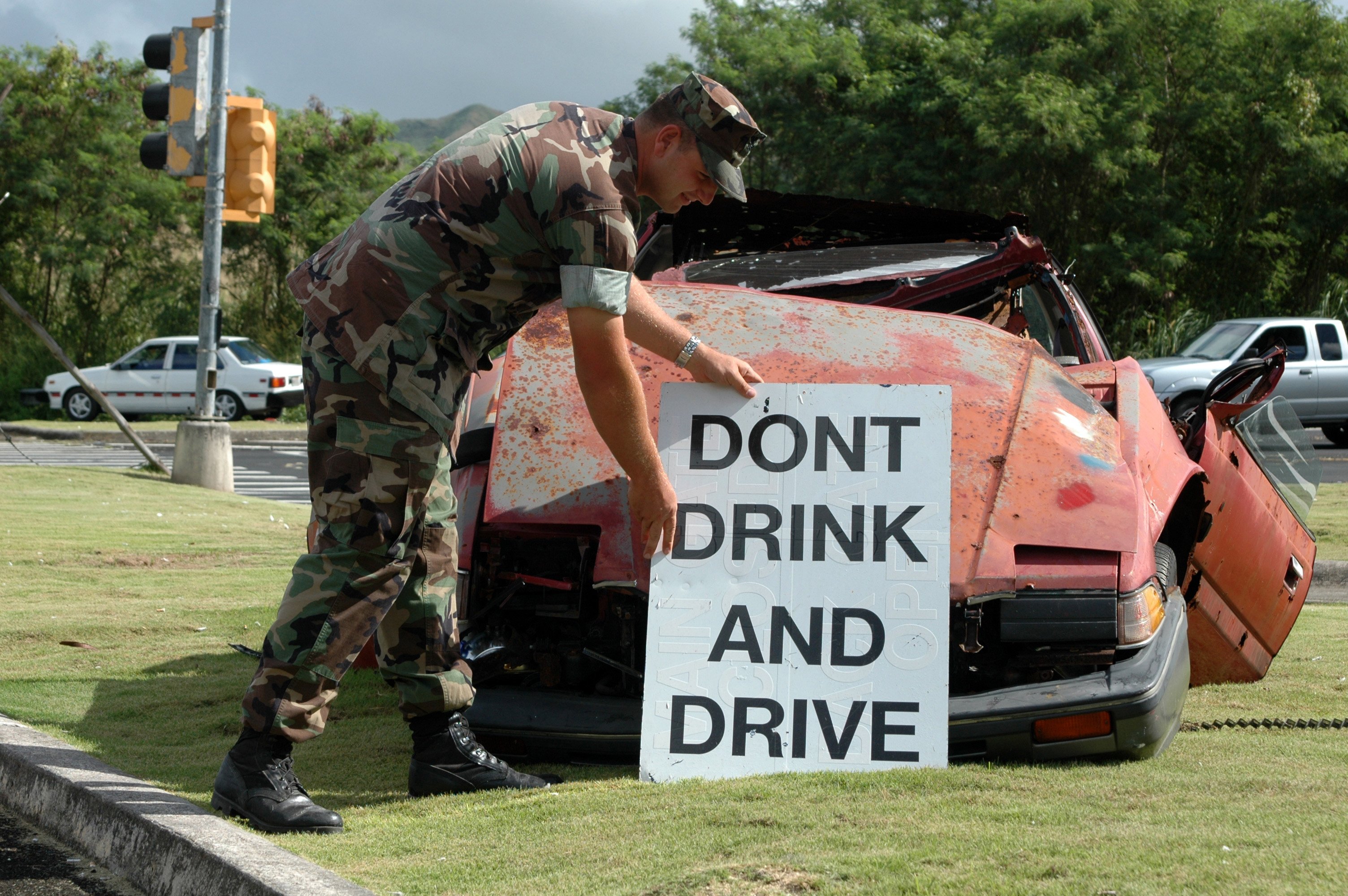 On Saturday, August 9th a 2014 Ford Fusion was involved in a one car crash that left one person dead. 24 year old, Gwynne Coye of Aptos, a passenger in the vehicle, was killed and the driver, Marquis Edwards was arrested. Murder, Felony evading a police officer resulting in death, and other charges were filed against Marquis Edwards.
If Marquis is convicted on all counts, he faces life in prison. His next court date is Aug. 22nd.
Watson Murder Law
The Watson Murder Law was enacted after the case of People v. Watson. Defendant Watson had several prior convictions for drinking and driving. In this case, his actions resulted in the death of another human being. Implied malice is the term prosecutors use in order to charge a defendant with murder. When you drink and drive, a person knows that their actions can cause the death of another human, hence implied malice. Generally, murder charges in a drinking and driving case are only imposed against a defendant who has prior convictions for DUI.
Insurance and DUI
If you have been convicted of a DUI, you could find yourself without insurance. If you find an insurance company who will provide coverage, they will need to provide you with an SR-22 so you can file with your local DMV.
Scurich Insurance Services can assist you with any questions you may have if you are in this situation.
Content provided by Transformer Marketing.
Sources: http://www.santacruzsentinel.com/santacruz/ci_26332756/driver-charged-murder-santa-cruz-crash
http://www.avvo.com/legal-guides/ugc/california-dui-murder-aka-the-watson-murder-rule
Read more
How do you decide how much coverage to purchase for your car? Do you go by the minimum requirements of your state or do you get as much as you can in case of a catastrophe?
Here’s what your average looks like for others who choose the coverage:
- 46% of drivers have bodily injury coverage is at $50,000 per person and $100,000 per accident.
- 59% of drivers have $50,000 worth of property damage liability coverage.
- 60% of the drivers have collision coverage.
- 61% of the drivers have comprehensive coverage.
- 74% of the drivers have a $500 deductible with comprehensive and collision insurance.
Are you still undecided about what’s the best coverage for you? Here are a few tips to consider:
- Did you know that doubling up on your liability insurance only costs a small fraction of what you’d pay now? A $50,000 policy doesn’t cost much more than a $25,000 one.
- Raise your deductible will get your bill lowered. The catch? You need to be able to pay the deductible before your insurance will kick in.
- Shop! Shop around for the best possible insurance for your needs.
Stop by our office today for more information on how to get the most out of your car insurance!
Content provided by Transformer Marketing.
Sources: http://www.moneytalksnews.com/2014/08/14/how-much-auto-insurance-do-you-need-dont-guess/
Read more
Labor Day: How it Came About; What it Means
Labor Day, the first Monday in September, is a creation of the labor movement and is dedicated to the social and economic achievements of American workers. It constitutes a yearly national tribute to the contributions workers have made to the strength, prosperity, and well-being of our country.
Labor Day Legislation
Through the years the nation gave increasing emphasis to Labor Day. The first governmental recognition came through municipal ordinances passed during 1885 and 1886. From these, a movement developed the movement to secure state legislation. The first state bill was introduced into the New York legislature, but the first to become law was passed by Oregon on February 21, 1887. During the year four more states — Colorado, Massachusetts, New Jersey, and New York — created the Labor Day holiday by legislative enactment. By the end of the decade Connecticut, Nebraska, and Pennsylvania had followed suit. By 1894, 23 other states had adopted the holiday in honor of workers, and on June 28 of that year, Congress passed an act making the first Monday in September of each year a legal holiday in the District of Columbia and the territories.
Founder of Labor Day
More than 100 years after the first Labor Day observance, there is still some doubt as to who first proposed the holiday for workers.
Some records show that Peter J. McGuire, general secretary of the Brotherhood of Carpenters and Joiners and a cofounder of the American Federation of Labor, was first in suggesting a day to honor those “who from rude nature have delved and carved all the grandeur we behold.”
But Peter McGuire’s place in Labor Day history has not gone unchallenged. Many believe that Matthew Maguire, a machinist, not Peter McGuire, founded the holiday. Recent research seems to support the contention that Matthew Maguire, later the secretary of Local 344 of the International Association of Machinists in Paterson, N.J., proposed the holiday in 1882 while serving as secretary of the Central Labor Union in New York. What is clear is that the Central Labor Union adopted a Labor Day proposal and appointed a committee to plan a demonstration and picnic.
The First Labor Day
The first Labor Day holiday was celebrated on Tuesday, September 5, 1882, in New York City, in accordance with the plans of the Central Labor Union. The Central Labor Union held its second Labor Day holiday just a year later, on September 5, 1883.
In 1884 the first Monday in September was selected as the holiday, as originally proposed, and the Central Labor Union urged similar organizations in other cities to follow the example of New York and celebrate a “workingmen’s holiday” on that date. The idea spread with the growth of labor organizations, and in 1885 Labor Day was celebrated in many industrial centers of the country.
Labor Day Legislation
Through the years the nation gave increasing emphasis to Labor Day. The first governmental recognition came through municipal ordinances passed during 1885 and 1886. From them developed the movement to secure state legislation. The first state bill was introduced into the New York legislature, but the first to become law was passed by Oregon on February 21, 1887. During the year four more states — Colorado, Massachusetts, New Jersey, and New York — created the Labor Day holiday by legislative enactment. By the end of the decade Connecticut, Nebraska, and Pennsylvania had followed suit. By 1894, 23 other states had adopted the holiday in honor of workers, and on June 28 of that year, Congress passed an act making the first Monday in September of each year a legal holiday in the District of Columbia and the territories.
A Nationwide Holiday
The form that the observance and celebration of Labor Day should take was outlined in the first proposal of the holiday — a street parade to exhibit to the public “the strength and esprit de corps of the trade and labor organizations” of the community, followed by a festival for the recreation and amusement of the workers and their families. This became the pattern for the celebrations of Labor Day. Speeches by prominent men and women were introduced later, as more emphasis was placed upon the economic and civic significance of the holiday. Still later, by a resolution of the American Federation of Labor convention of 1909, the Sunday preceding Labor Day was adopted as Labor Sunday and dedicated to the spiritual and educational aspects of the labor movement.
The character of the Labor Day celebration has undergone a change in recent years, especially in large industrial centers where mass displays and huge parades have proved a problem. This change, however, is more a shift in emphasis and medium of expression. Labor Day addresses by leading union officials, industrialists, educators, clerics and government officials are given wide coverage in newspapers, radio, and television.
The vital force of labor added materially to the highest standard of living and the greatest production the world has ever known and has brought us closer to the realization of our traditional ideals of economic and political democracy. It is appropriate, therefore, that the nation pay tribute on Labor Day to the creator of so much of the nation’s strength, freedom, and leadership — the American worker.
Scurich Insurance Services wishes you a Happy Labor Day!
Scurich Insurance Services has proudly served the Monterey Bay area since 1924. Scurich will take care of all of your insurance needs. Are you a business owner, did you get a new car or maybe you are looking to protect your family in the event of a tragedy? Give us a call, we can help!
We are located at:
Scurich Insurance Services
320 East Lake Avenue, PO Box 1170
Watsonville, CA 95077-1170
Office: 1-831-722-3541
Toll Free: 1-800-320-3666
Information provided by: http://www.dol.gov/opa/aboutdol/laborday.htm
Read more
Information provided by: Read more at http://www.moneytalksnews.com/2013/08/07/dont-get-swept-away-cars-and-flood-insurance/#K01tpMfW6B8iMqqH.99
July is known for being a peak summer month filled with sunny days, but this year it also turned out to be a notorious month for flash floods across the country.
- On July 3, a flash flood in Lebanon, N.H., forced evacuations and caused an estimated $6.5 million in damage, according to The Associated Press.
- On July 10 in South Pittsburg, Tenn., floodwaters from relentless rain spawned a newborn river that swept through neighborhoods, shops and City Hall, according to a Times Free Press report. The rapids, which came without warning, “hit with the force of an earthquake, tossing cars, killing wildlife and lifting sheets of asphalt the size of trucks,” the report said.
- By July 26, western North Carolina had suffered through four flash floods in the past four months, the last one being the most severe in decades, according to the Charlotte Observer.
- On July 29 in Arizona, things were no better for the 33 passengers on a tour bus outside of Flagstaff as flash flood waters swept the bus hundreds of yards until it flipped on its side on an embankment, according to the AP. Fortunately, passengers escaped with no injuries.
Drivers are advised to avoid driving during a flood if at all possible for a very good reason: According to the Federal Emergency Management Agency, nearly half of all deaths during a flood are vehicle-related.
When asked for tips for driving in a flood, Carroll Lachnit, features editor for automotive research site Edmunds.com, says, “Don’t do it.”
Driving tips for flash floods
While the best advice is to stay off the roads, sometimes drivers get caught in an unexpected flood.
“The classic ‘turn around, don’t drown’ statement that gets repeated during every major storm is excellent advice,” says Lachnit. “Never drive through flooded areas. If it’s raining heavily and you’re driving in a familiar location where you know there are vulnerable areas, then you need to avoid them.”
Lachnit says you should never drive beneath an underpass during a heavy rainstorm because they are prone to flooding.
Another tip for driving when flooding begins is to be wary of water levels. “According to FEMA it takes only 1 foot of water to float almost any car,” she says. “Even an SUV can be swept off a bridge (or down a road) in a foot of water. Six inches of water reaches the bottom of most cars, which means you could lose control of your car or wash out into the flood.”
If you’re on the road and see signs of high water or stranded vehicles, Lachnit says, you should pull over or take a different route. If you see water rising above the bottom of the tires of the car in front of you, that’s an indication to turn around. You can sometimes guess how deep the water is compared with the curb, but you may not know about flood damage to the roadbed underneath.
If your car gets caught in a flash flood and stalls or you lose control, FEMA recommends that you get out if you can before it gets carried downstream.
If it’s too late to climb out and your car is beginning to be submerged, Lachnit says, it’s important not to panic.”Once your car is submerged you should be able to open your doors, so you’re supposed to hold your breath and climb out,” she says. “If you’re caught in a stream of rushing water, point your feet up and downstream so you flow with the water to avoid getting hurt on rocks under the surface.”
In addition to the danger of floodwaters, heavy rainstorms create major visibility problems.
When driving in heavy rain, slow down, put extra space between your car and the car in front of you, and don’t slam on your brakes or make any sudden turns, says Lachnit.
“If you have anti-lock brakes like most cars, don’t pump the brakes,” she says.
All of these tips are meant to prevent an accident or a water-damaged car, but sometimes an event that results in an insurance claim is inevitable. It’s important to have the right car insurance so that you don’t end up financially swept away.
“If you don’t have comprehensive and collision coverage on your car insurance policy, you need to get it before hurricane or flood warnings are given for your area,” says Penny Gusner, a consumer analyst for CarInsurance.com. “Insurance companies can’t add new coverage or write a new insurance policy when a storm warning has been issued.”
Here’s the insurance coverage you could need if you’re caught in a flood:
Comprehensive. “Comprehensive insurance covers any type of damage to your car up to its actual cash value that’s caused by natural events instead of an accident,” says Gusner. “So if your car is damaged by rising water or a flood, you could make a claim with your comprehensive coverage.”
Collision. If you hydroplane during a storm and flip your car or hit something like another car or a tree, collision insurance will pay to repair it or will pay the actual cash value of the car. Gusner says you’ll have to pay your deductible regardless of whether the accident was your fault, someone else’s or caused by the storm.
Rental car reimbursement. “Rental reimbursement coverage is optional and pays you a certain amount of money per day or per week for a rental car to drive while your car is being repaired,” says Gusner. “If you have another car or another way of getting around without your car, then you don’t need it.”
Gap. “If you owe more money on your car than it’s worth, gap insurance will pay the difference,” says Gusner. “For instance, if you owe $15,000 on your car loan but your car is only worth $12,000, gap insurance will reimburse your lender for the extra $3,000.” You can get gap insurance from your regular car insurance provider or from your car financing company, but it’s usually more expensive from your lender.
“Your insurance company expects you to take care of your car, so make sure you don’t cause more damage by driving it after a flood with the check engine light on,” says Gusner.
Scurich Insurance Services has proudly served the Monterey Bay area since 1924. Scurich will take care of all of your insurance needs. Are you a business owner, did you get a new car or maybe you are looking to protect your family in the event of a tragedy? Give us a call, we can help!
We are located at:
Scurich Insurance Services
320 East Lake Avenue, PO Box 1170
Watsonville, CA 95077-1170
Office: 1-831-722-3541
Toll Free: 1-800-320-3666
Read more
